Yogyakarta – A lecturer at the Faculty of Biology, Universitas Gadjah Mada (UGM), Dr. Siti Nurbaiti, S.Si., had the opportunity to participate in the 2026 Training-Workshop on Transformational Agricultural Innovation Systems (TrAInS) for the New Future organized by the Southeast Asian Regional Center for Graduate Study and Research in Agriculture (SEARCA). The program brought together 19 selected participants from across Southeast Asia, including the Philippines, Indonesia, Malaysia, Cambodia, Thailand, and Vietnam. Participants came from diverse professional backgrounds, ranging from academia, policymaking to industry practice. The TrAInS program aimed to enhance participants’ understanding and capacity to develop transformative and inclusive Agricultural Innovation Systems (AIS), particularly in addressing the challenges of sustainable agricultural development and adapting to global changes.
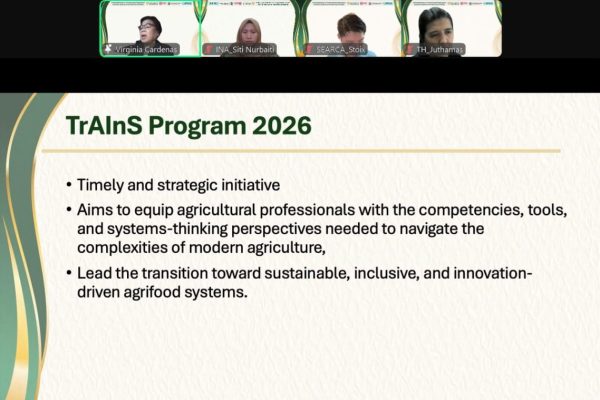
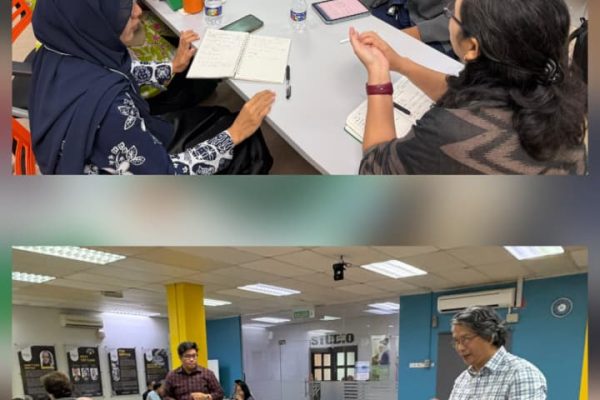

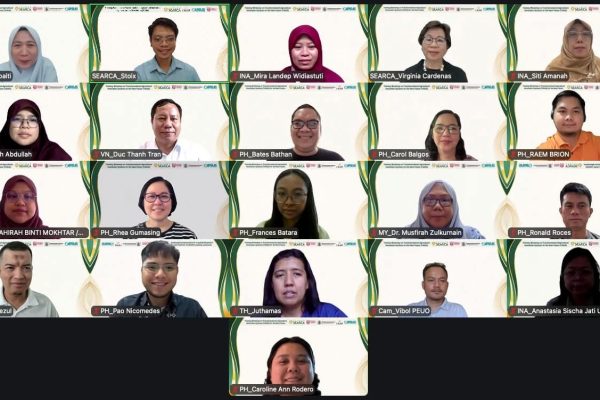

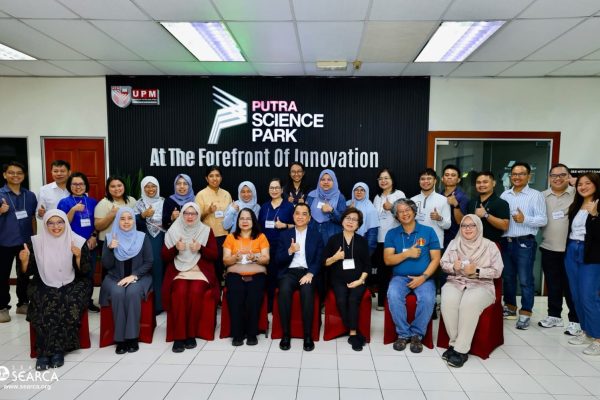
The program consisted of a series of online sessions held on 6, 8, 13, and 15 April 2026, followed by in-person sessions conducted at Universiti Putra Malaysia (UPM), Selangor, Malaysia, from 27–29 April 2026. As part of the program requirements, participants completed a pre-assessment on the current state of agricultural innovation systems in their respective countries. The assessment served as a foundation for scenario development and action planning throughout the workshop. During the online sessions, participants attended lectures delivered by international experts covering various topics, including the role of policy in driving agricultural innovation, the importance of integrating research, extension, and policymaking, and strategies to accelerate technology adoption through technology transfer and digital extension approaches. Participants were also encouraged to appreciate the value of multidisciplinary collaboration and the need to shift from purely academic perspectives toward more application-oriented and impact-driven approaches. Another key topic discussed during the program was the integration of indigenous knowledge into agricultural innovation systems. Through case studies from different countries, participants gained insights into how local knowledge can significantly contribute to the sustainability of agricultural systems when appropriately incorporated into policies and field practices.
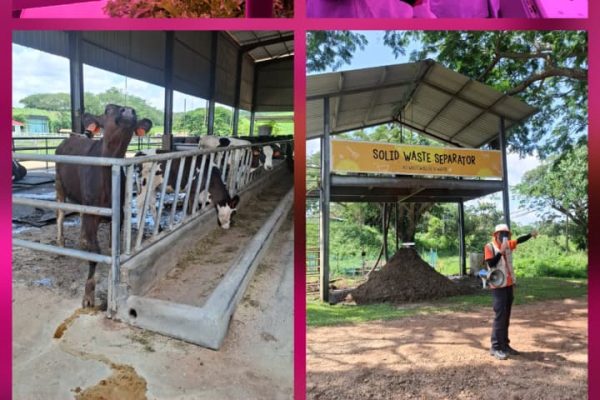
During the in-person sessions at UPM, participants explored real-world case studies and visited several innovation facilities within Putra Science Park UPM, including Plant Factory, Farm Fresh, and Bio-Angle Vacs. Plant Factory UPM is an advanced artificial intelligence-based vertical farming facility that enables crop cultivation under precisely controlled environmental conditions, including light intensity, temperature, humidity, nutrient supply, and CO₂ concentration, thereby improving productivity and resource-use efficiency. Participants also visited Farm Fresh, one of Malaysia’s leading agribusiness companies, which collaborates closely with UPM in developing integrated dairy farming systems. Another visit was made to Bio-Angle Vacs, a biotechnology company specializing in the development of animal vaccines and veterinary health products. These visits provided participants with valuable insights into the innovation value chain, ranging from research and development (R&D) and product testing to commercialization and industry adoption.
As part of the workshop, participants were also required to develop an action plan to apply AIS concepts within their respective contexts. One initiative proposed by Dr. Nurbaiti focuses on strengthening the production system of pigmented rice as a functional food. The proposed initiative emphasizes the importance of farmer engagement through a gradual and participatory approach, stronger partnerships with industry stakeholders, and increased consumer awareness. In addition, farmer-to-farmer learning was proposed as a strategy to accelerate innovation adoption and improve marketing practices at the grassroots level.
Participation in this program is expected to strengthen the capacity of UGM Faculty of Biology lecturers in bridging basic research and field implementation, fostering collaborative opportunities, and contributing more broadly to the development of agricultural innovation systems in Indonesia. Through active engagement in programs such as TrAInS, the Faculty of Biology UGM continues to support scientific advancement that is not only academically excellent but also generates tangible benefits for society and sustainable development. Furthermore, the program contributes to the achievement of several Sustainable Development Goals (SDGs), particularly SDG 2 (Zero Hunger), SDG 4 (Quality Education), SDG 9 (Industry, Innovation and Infrastructure), and SDG 17 (Partnerships for the Goals).