On Tuesday, June 16, 2026, the Community Service Team of the Faculty of Biology, Universitas Gadjah Mada, officially initiated a series of activities under the program entitled “Golden Kamper Chicken Farming Technology Through the Application of a Dual-Input Incubator as an Effort to Develop an Independent Core-Plasma System to Support Zero Hunger (SDG 2)” through its first socialization event. The activity was held in Hargowilis, Kokap, Kulon Progo, Special Region of Yogyakarta. The program targeted members of the Reka Amartani Livestock Farmer Group, who enthusiastically participated in the event from the opening session, presentation, until the closing activities. The program commenced with remarks from the project leader, Prof. Dr. Budi Setiadi Daryono, M.Agr.Sc. In his opening speech, he expressed his hope that the program would provide tangible benefits to the local community by enhancing poultry productivity and supporting sustainable livestock development.
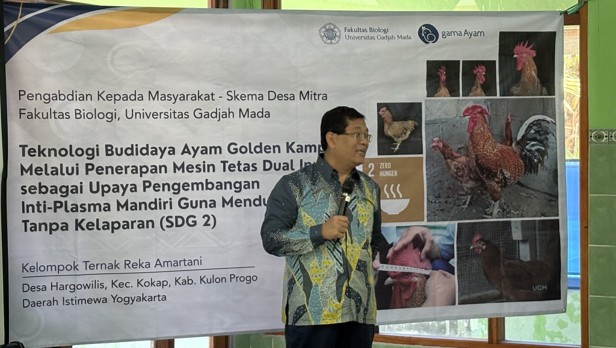
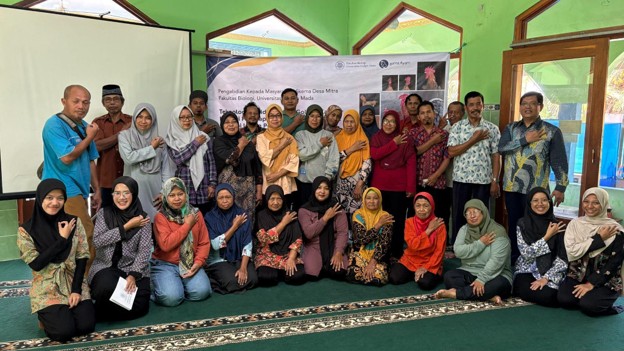
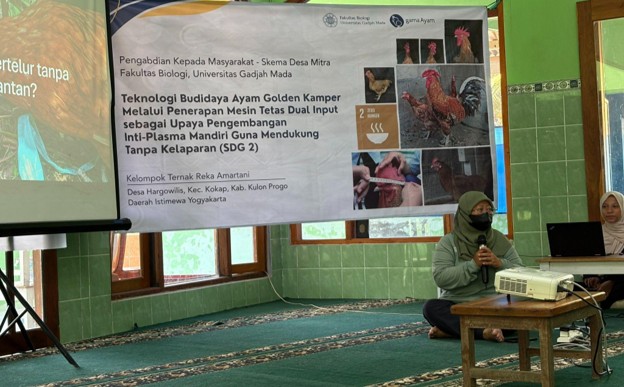
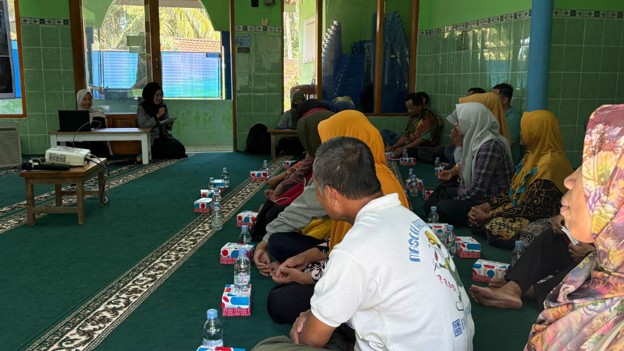
Following the opening remarks, the event continued with a presentation entitled “Getting to Know the Chicken Reproductive System: The Secret Behind Productive Layers and Healthy Chicks” delivered by Zuliyati Rohmah, S.Si., M.Si., Ph.D. The session was designed to provide participants with fundamental knowledge of the chicken reproductive system, factors affecting egg productivity, and the importance of reproductive management in successful poultry farming. The presentation further explained the structure and function of the reproductive organs in chickens, the process of egg formation, and various factors influencing the production of high-quality eggs. Participants were also introduced to the relationship between animal health, nutrition, rearing conditions, and successful egg incubation. At the end of the session, a group photo was taken to document the participation of both the community service team and the attendees.
This inaugural socialization activity marks the first step in a broader community empowerment program aimed at introducing Golden Kamper chicken farming technology, including the application of a dual-input incubator as an innovation to improve productivity and strengthen farmers’ self-reliance. The program is expected to support the development of an independent and sustainable core-plasma farming system while contributing to the achievement of Sustainable Development Goal (SDG) 2: Zero Hunger through the empowerment of community-based livestock farming. In the coming months, a series of follow-up activities will be carried out, ranging from farming assistance and capacity-building programs to the implementation of incubation technology that supports increased chicken population and productivity in Hargowilis. Through collaboration among the project team, resource persons, and local community members, the program is expected to create new opportunities for productive, independent, and sustainable livestock enterprises that can improve the welfare of rural communities.