The training “Quantitative and Qualitative Analysis of Histological Slides (Immunohistochemistry and Semiquantitative Analysis)” was held on April 9–10, 2026, at the Faculty of Medicine, Public Health, and Nursing (FKKMK), Universitas Gadjah Mada University (UGM). This training aimed to improve researchers’ understanding of immunohistochemistry techniques, a paraffin-based histological analysis that utilizes immunological principles (antibodies) to detect specific proteins or antigens in tissue. Furthermore, the training emphasized the importance of method optimization, quality control, and problem-solving in slide preparation and analysis, which support the assurance of quality education (SDG 4).
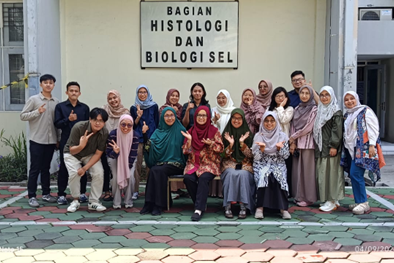
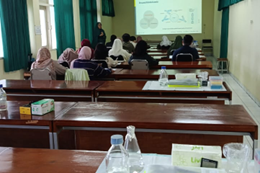
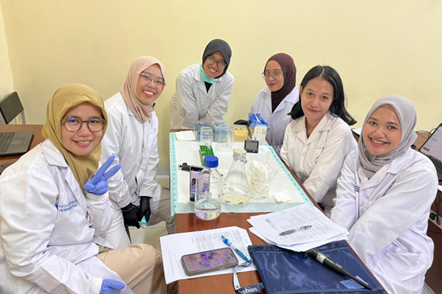
During the two-day training, Dr. Ardaning Nuriliani, S.Si., M.Kes., and Sefi Nur Anggaeni, S.Si. as participants from the Laboratory of Animal Developmental Structure, Faculty of Biology, UGM, received comprehensive material covering the basics of immunohistochemistry and quality control, optimization techniques, and staining troubleshooting, as well as analysis of immunohistochemistry staining results. This activity also included practical sessions, including semi-quantitative analysis by converting the immunopositive area fraction into a score, as well as hands-on practice staining rat liver, spleen, cerebellum, and spinal cord tissue using Iba1 as a marker for macrophages and microglia. This approach provided practical experience that strengthened participants’ theoretical understanding. The training speakers were Dr. Rina Susilowati, Ph.D., and Dian Eurike Septyaningtrias, S.Ked., M.Sc., Ph.D.
Through this training, participants gained in-depth insight into the semi-quantitative interpretation of immunohistochemistry results based on the intensity and distribution of positive staining in the tissue. This activity was deemed highly beneficial in improving competency in the fields of histology and pathology, particularly in supporting tissue analysis-based research that supports the promotion of healthy and prosperous lives (SDG 3). Appreciation is expressed to the Faculty of Biology, UGM, for its moral and material support that enabled participation in this activity. We hope that the knowledge gained can be implemented in the development of future biological research and strengthen collaboration with the FKKMK, UGM, which supports SGDs 17 (Partnerships to Achieve Goals).
Contributors: Ardaning Nuriliani, Sefi Nur Anggaeni