On Sunday, September 20, 2026, the Faculty of Biology, Universitas Gadjah Mada (UGM), conducted an educational socialization program on the utilization of fermented coconut dregs as an alternative chicken feed ingredient at the Wedomartani Village Hall, Ngemplak, Sleman, Special Region of Yogyakarta. The program, supervised by Dr. Ardaning Nuriliani, S.Si., M.Kes., was attended by community representatives from three hamlets: Sempu, Malangrejo, and Wonosari (Pajangan). This initiative is part of the ongoing implementation of the UGM Faculty of Biology’s Partner Village (Desa Mitra) program.
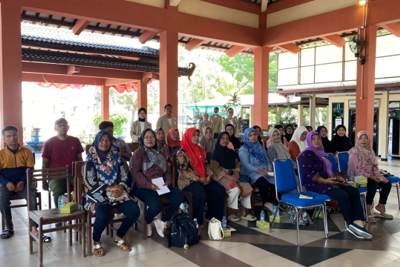
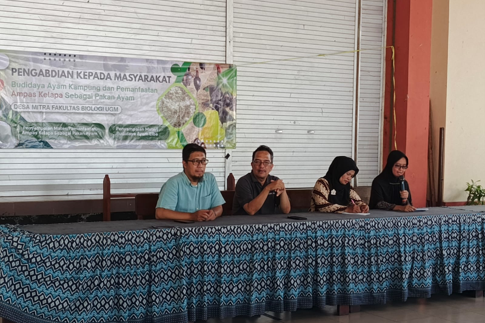
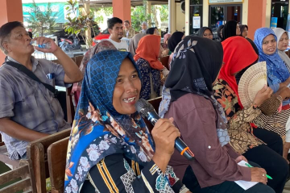
The activity aimed to introduce the application of coconut dregs as a feed ingredient through the fermentation process while simultaneously enhancing the community’s capacity to manage local resource potential effectively and sustainably, aligning with SDG 12 (Responsible Consumption and Production). The opening remark address by a representative of the Wedomartani Village Women Farmers Group, Mrs. Titik Puji Lestari, followed by welcoming remarks from Dr. Ardaning Nuriliani, S.Si., M.Kes., as the supervisor of the Program Desa Mitra
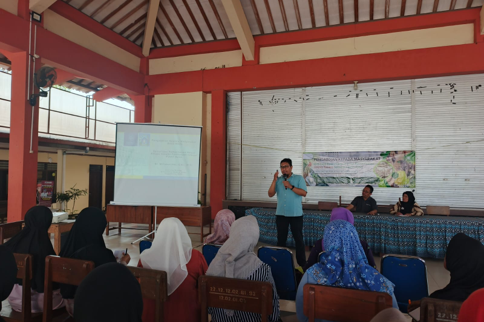
The session featured Dr. Miftahul Ilmi, S.Si., M.Si., as the primary speaker, who elucidated the potential of coconut dregs for poultry feed, emphasizing the importance of understanding their physical and nutritional characteristics prior to use. The community was introduced to the principles of processing coconut dregs through fermentation utilizing yeast or tempeh mold. Furthermore, the speaker detailed the fundamental stages of this fermentation process. The presentation also provided practical examples of small-scale processing and formulated feed mixtures that incorporate fermented coconut dregs as a key component. The independent production of chicken feed using such high-protein ingredients is expected to improve the quality of eggs produced by the residents’ poultry, thereby directly supporting SDG 3 (Good Health and Well-being).
The session lasted for approximately one hour, from 1:00 to 2:00 PM Western Indonesia Time (WIB), and was followed by an interactive discussion and Q&A session. The participants’ enthusiasm was evident from the diverse questions raised, including inquiries regarding the shelf life and proper storage methods of the fermented feed. This discussion served as an excellent opportunity for attendees to obtain more specific, actionable insights regarding the utilization of fermented coconut dregs.
Participant feedback was formally evaluated through a questionnaire completed by 23 respondents. All respondents stated that they had gained a better understanding of how to utilize fermented coconut dregs as chicken feed following the session. They unanimously agreed that the delivered material was easy to comprehend and expressed a strong desire for further mentoring in the production of this fermented feed. Moreover, 95.7% of the respondents indicated an active interest in learning more or attempting to process coconut dregs as a feed ingredient independently.
Through this initiative, the community is expected to acquire practical knowledge regarding alternative feed ingredients and to explore opportunities for developing locally sourced poultry feed. This program actively supports the achievement of the Sustainable Development Goals (SDGs), particularly SDG 12 (Responsible Consumption and Production), by repurposing agricultural byproducts into valuable feed components. Additionally, the activity aligns with SDG 4 (Quality Education) through the active transfer of knowledge and skills to the local community, and SDG 17 (Partnerships for the Goals) by fostering institutional and community collaboration.
Contributors: The 2026 UGM Faculty of Biology Partner Village Community Service (PkM) Team in collaboration with Wedomartani Partner Village, supervised by Dr. Ardaning Nuriliani, S.Si., M.Kes.
Tags: SDG 3 (Good Health and Well-being), SDG 4 (Quality Education), SDG 12 (Responsible Consumption and Production), SDG 17 (Partnerships for the Goals).