Student Activities
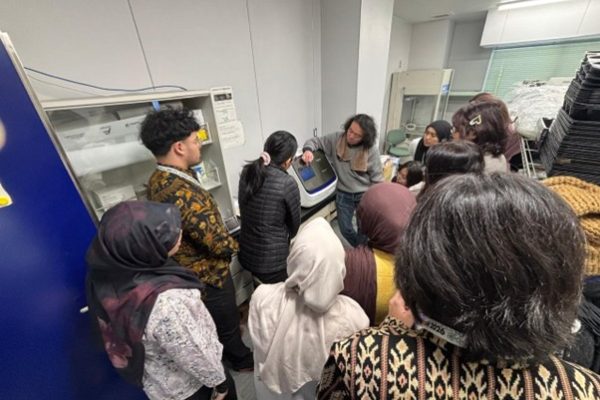
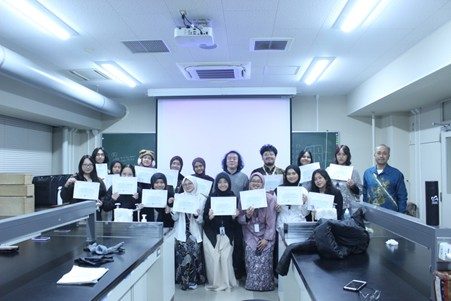
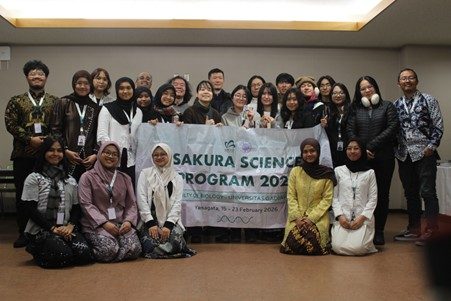
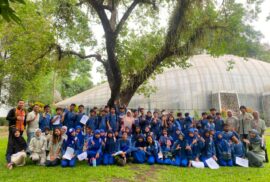
Yamagata, Japan – February 2026 — Following the completion of the lecture sessions on the first day, participants of the Sakura Science Program 2026 continued with an intensive laboratory practicum from day two to day five at Yamagata University, Japan.
Over the course of four days, the program focused on the application of molecular biology techniques to analyze the diversity and evolutionary relationships of several orchid species from various countries, including Indonesia. The practicum was designed as a comprehensive learning experience, integrating hands-on laboratory work with phylogenetic data analysis.
Hands-On Molecular Techniques
Participants were divided into four groups to ensure that each student gained direct experience in every stage of molecular analysis. The techniques practiced included:
- DNA extraction
- Polymerase Chain Reaction (PCR)
- Gel electrophoresis
- Targeted Sanger sequencing
- Phylogenetic analysis using MEGA software
Throughout the sessions, students demonstrated high enthusiasm and engagement. Rather than merely observing demonstrations, they performed each procedure independently under the guidance of professors and laboratory assistants.
Amarthya Aulia Vadela shared that the experience significantly deepened his understanding of molecular techniques:
“I learned many new techniques. This experience was very different from our preparation sessions because we conducted each step ourselves.”
Similarly, Nayla Dwiputri Adelis expressed her appreciation:
“I feel very fortunate to perform molecular techniques directly, which I had previously only seen demonstrated.”
From PCR to Phylogenetic Trees
One of the key highlights of the practicum was conducting Sanger sequencing on marker genes obtained through PCR. Participants then analyzed the sequence data using MEGA (Molecular Evolutionary Genetics Analysis) software to construct phylogenetic trees and interpret evolutionary relationships among species.
For some students, bioinformatics analysis presented a new challenge. Ahmad Faidullah Haqqi reflected:
“At first it felt difficult, but after trying it myself and understanding the workflow, the analysis became much smoother.”
Meanwhile, Tasya Syifa Alfadhiilah shared:
“I had never taken a course covering this type of analysis before, so I was worried I wouldn’t be able to follow. However, after Jun-sensei explained it clearly and I tried it myself, I found it really exciting and enjoyable.”
A particularly meaningful experience came from Kaylana Fikria Akbar, a first-year student who was newly introduced to molecular biology:
“As a first-year student, I was completely new to molecular biology, so at first I doubted whether I could understand each process. However, with guidance from Jun-sensei and the assistants who explained everything clearly, I found the activities exciting and became even more interested in learning these techniques and their applications.”
These reflections highlight that the program not only enhanced technical skills but also built academic confidence among students at different levels of study.
Reflection from the Academic Supervisor
The academic supervisor from the Faculty of Biology UGM, Dr. Luthfi Nurhidayat, M.Sc., emphasized the significance of the experience for student development:
“This program provides a highly comprehensive learning experience. Students not only understand molecular concepts theoretically, but also go through the complete research workflow—from DNA extraction to phylogenetic analysis. Direct interaction with professors and exposure to laboratory standards at Yamagata University broaden their perspective on international research practices.”
He further noted that the program represents an important step in strengthening academic collaboration between the Faculty of Biology UGM and Yamagata University, particularly in the fields of molecular biology and biodiversity research.
Presentations and Warm Closing Ceremony
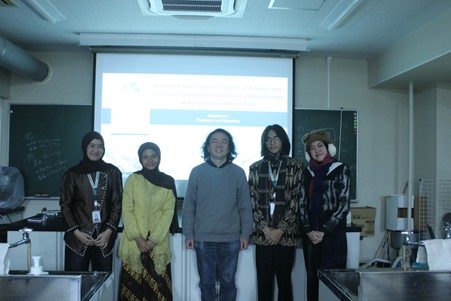
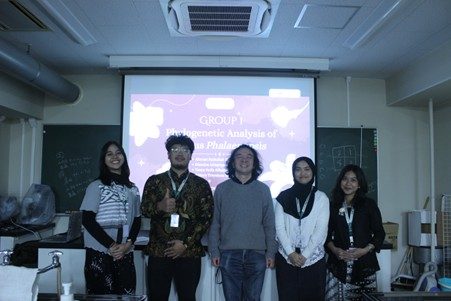
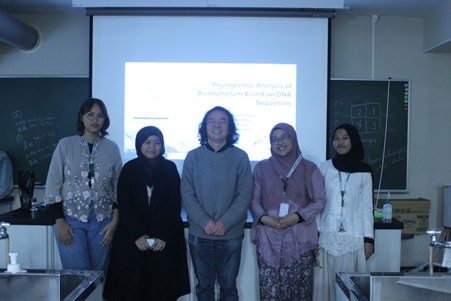
At the end of the practicum sessions, each group presented their findings, including sequence analysis results and phylogenetic interpretations. All four groups delivered strong presentations and received appreciation from Prof. Jun Yokoyama for completing their analyses and presentations within a relatively short time frame. The practicum concluded with the awarding of certificates to all participants as recognition of their active engagement during the program.
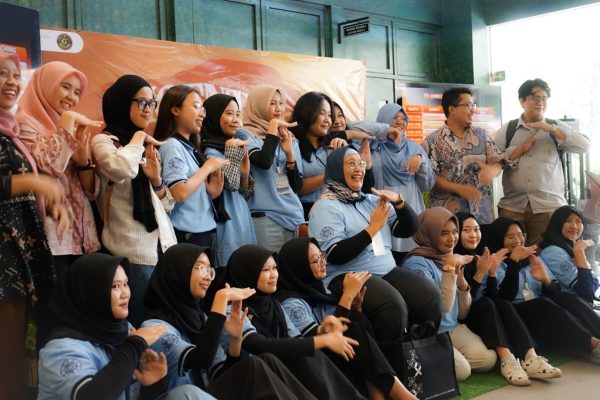
The academic activities of Sakura Science Program 2026 were then closed with a small celebration attended by professors, assistants, and participants. Despite the winter season in Japan, the atmosphere was warm and welcoming, complemented by halal Japanese cuisine. The event concluded with the presentation of tokens of appreciation to the professors and assistants in gratitude for their guidance and collaboration.
Through this intensive laboratory experience, participants not only strengthened their technical competencies in molecular biology and phylogenetic analysis but also expanded their global academic networks and research perspectives. Sakura Science Program 2026 once again demonstrates the importance of international collaboration in nurturing the next generation of globally competitive scientists.
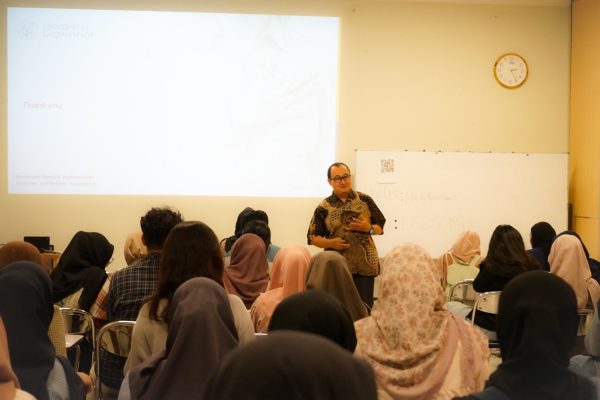
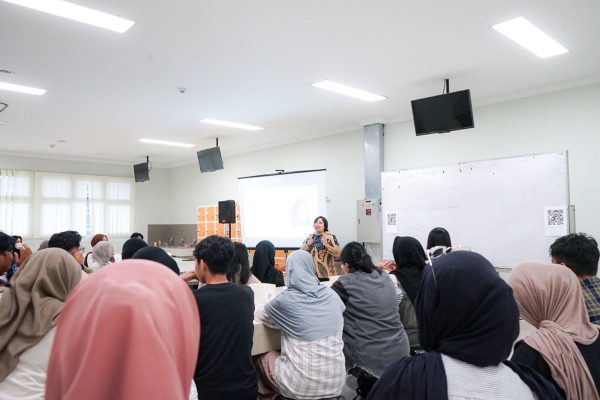
Academic Preparation Prior to Departure
Day One: Opening Lectures and Intensive Academic Sessions
- Thematic lectures and academic discussions
- DNA extraction laboratory practice
- Phylogenetic tree construction
- Student presentations
- Visits to museums
- A field excursion to Mount Gassan
Exploring Asian Insect Biodiversity
Strengthening Global Collaboration

For Alex, an Environmental Science student from the University of Melbourne, the decision to join the exchange program at UGM was a leap of faith. Drawn by the beautiful campus photos and the proximity to Australia, Alex traded the massive lecture halls of Melbourne for the intimate, “laid-back” classrooms of the Faculty of Biology at UGM.
A More Personal Way of Learning
Alex noticed a significant shift in the academic atmosphere upon arriving at UGM. Unlike the large classes at his home university, UGM offered smaller groups and much more interaction with lecturers. “I found the academic environment great,” Alex shares, noting that courses like Environmental Science, Toxicology, and Plant Anatomy were perfect for expanding his knowledge in his core field.
The teaching style, which he described as more self-managed, proved beneficial. It allowed him to balance his studies with his desire to explore the city and build deeper connections with fellow students.
Beyond Bali: Discovering the Heart of Jogja
While many Australians are familiar with Bali, Alex discovered a different side of Indonesia in Yogyakarta. His first impression was the “relaxed vibe” of the city and the surprising friendliness of the staff and students. One cultural highlight that left a lasting mark wasn’t a grand monument, but a local snack: Chicken Teriyaki Cireng Isi at the Sunmor market. “The crispy, chewy texture was so good that I’d always try to find cireng on every menu after that!”
However, the most unique aspect of Jogja for Alex was the people. Coming from a city where people can be “largely unfriendly in public,” he was moved by the spontaneous smiles, nods of acknowledgment, and conversations that started out of nowhere.
Overcoming Anxiety and Finding Perspective
One of Alex’s most “real” memories happened outside the classroom during a trip to Merapi. When a friend’s bike broke down in Kaliurang, the day turned into a surreal adventure involving an impromptu coffee shop visit and a Grab driver towing the bike all the way back to UGM.
Reflecting on his journey, Alex admits he was initially anxious about moving to an unknown country. His advice to future students is to push through that fear:
“Whatever image of Indonesia you have is almost certainly wrong—there is so much diversity and complexity. Go into it ready to have your preconceptions challenged. I can’t imagine my life if I had backed out.”
Alex summarizes his experience with three powerful words: Learning, Understanding, and Real. For him, the exchange was a reminder that despite our different backgrounds, at a fundamental level, we are all very similar.
For Esther de Groot, a Health & Life Sciences student from Vrije Universiteit Amsterdam, exchange was an opportunity to step far outside her comfort zone. Seeking a complete contrast to her life in the Netherlands, she chose the Faculty of Biology at UGM for its high reputation and the chance to immerse herself in Indonesia’s unique culture and nature.
A Fresh Academic Atmosphere
Back in Amsterdam, Esther’s studies focused primarily on human biology. At UGM, she challenged herself by diving into marine, plant, and animal biology. While different from her usual track, she found the experience rewarding, especially within the faculty’s “cosy” and welcoming environment.
“I really liked the atmosphere at the faculty. It isn’t too big and it felt like everyone knows each other,” she noted. She particularly enjoyed Environmental Pollution & Toxicology due to the engaging discussions, as well as Genetics, where the intense Thursday afternoon practicals became a highlight. “I did many practical things I had never done before, and it was so much fun with the other students.”
Embracing the “Bule” Cheer and Local Kindness
Esther’s journey was filled with unexpected moments, but one stands out as “only in Yogyakarta.” After accidentally wandering into a Comic-Con event, she and a friend found themselves playing a ‘LARP’ game. When they won, thousands of people cheered them on, chanting “Bule! Bule!”. This welcoming spirit, she says, is something that would never happen in the Netherlands.
Beyond the city, Esther’s favorite memory was a sleepless weekend tour of East Java. Witnessing the blue fire of Mount Ijen, the craters of Bromo, and the Tumpak Sewu waterfall with a newly formed group of friends remains one of the most special moments of her life.
Advice for the Next Exchange Students
Initially overwhelmed by the “chaotic” traffic and the different pace of life, Esther grew to appreciate the positive mindset of the people she met. Her biggest piece of advice for future students is to befriend local students early on.
“The most funny, interesting, and unexpected memories were mostly made with the Indonesian students. It is such a nice way to learn about the culture and there is always so much to talk about.”
Esther summarizes her time at UGM as Educational, Fun, and Cosy—a journey where she felt truly welcome from day one.
For Hilde Aris, a Clinical Sciences student from Vrije Universiteit Amsterdam, Indonesia was more than just an exchange destination—it was a journey of curiosity. Drawn by the country’s diverse culture and nature, she chose UGM and Yogyakarta, a city renowned for its vibrant student life.
A Hands-on Academic Shift
Back in the Netherlands, Hilde’s studies were deeply rooted in human biology. At the UGM Faculty of Biology, her perspective shifted toward nature and biodiversity. She found the “field-based learning” approach particularly refreshing, involving lessons outside the classroom and practical sessions on real-world issues.
Her favorite course, Environmental Pollution and Toxicology, allowed her to compare environmental challenges between the Netherlands and Indonesia. Beyond the curriculum, she appreciated the small, personal class sizes: “It encouraged active participation. I really liked this and enjoyed the classes more because of it.”
Connection Beyond the Classroom
Hilde’s experience was defined by the warmth of the people she met. One of her most cherished memories happened early on when she went to play badminton. She was invited to play by a local couple, Ana and Vino, and they ended up playing together almost every week followed by dinner. “They felt like parental figures to me during my time in Yogyakarta,” Hilde shares.
Another “only in Indonesia” moment that left a lasting impression was the Lustrum Bingo at the faculty, which turned into a massive karaoke session with both students and teachers singing “Aku Cinta Jogja.” Whether it was playing for the UGM hockey team at Pancasila Stadium or joining a neighborhood celebration for Independence Day, Hilde felt an inclusive atmosphere everywhere she went.
Advice for Future Students: “DO DO DO IT”
Hilde’s advice for those considering UGM is simple: put Indonesia at the top of your list. While exchange friends are great, she emphasizes the importance of connecting with locals.
“Really invest time in meeting local people: Indonesian classmates or even people you meet on the street. Everyone is incredibly friendly and wants to share their stories.”
Hilde describes her six months at UGM as “Cinta, Beautiful, and Special.” It wasn’t just an academic semester; it was, as she calls it, the best six months of her life.
For Zuzanna, a third-year Biomedical Sciences student from Vrije Universiteit Amsterdam, there was no better classroom than the Indonesian archipelago. Driven by a deep love for nature, she chose UGM not only for its prestige as Indonesia’s top university but also for its rich research environment and the country’s status as a global biodiversity hotspot.
Hands-On Learning in Nature’s Backyard
Zuzanna’s academic experience at the Faculty of Biology was defined by inspiration and direct interaction. She was particularly impressed by the professors’ knowledge and their ability to inspire students through their research. Unlike the large-scale lectures in the Netherlands, she found the smaller classes at UGM allowed for a much more individual and personal approach.
Her favorite memories, however, were made outside the classroom during field trips.
“I loved the Marine Ecology field trips to the mangrove forest and the beach. It provided us with hands-on experience in ecological research and we could see directly Indonesian biodiversity hotspots so close to Jogja!”
These trips weren’t just about data; they helped her understand the urgent need for conservation and the practical ways to preserve the environment.
Discovering the “Only in Indonesia” Magic
Though her first impression of Yogyakarta was “chaotic”—especially while learning to navigate the crazy traffic on a scooter—she quickly found beauty in the local culture. She grew to love the vibrant atmosphere of the campus canteen, the beautiful batik worn by her professors, and the kindness of strangers who were always ready to help.
One of her most cherished cultural memories happened in Kalimantan. While searching for dinner, she and her friends were invited to a traditional wedding pre-celebration. They witnessed the couple being bathed in water with flower petals as a blessing from their family—a rare and intimate glimpse into local traditions. For Zuzanna, seeing endemic species like orangutans, proboscis monkeys, and sun bears in the wild was a dream come true that she describes as “quite literally—only in Indonesia!”
A Heartfelt Advice: “Just Do It!”
Zuzanna will deeply miss her daily life in Yogyakarta: the 7 AM bike rides to class with Mount Merapi looming in the distance, the taste of fantastic gado-gado for lunch, and the bustle of local markets.
Her advice to future international students is simple and bold: “Just do it! It will be the most incredible adventure of your life.”
Zuzanna describes her UGM journey through three words: Passion, Relax, and Enjoyment. It was a semester that fueled her scientific curiosity while allowing her to enjoy the beautiful pace of Indonesian life.