Yamagata, Japan – February 2026 — Following the completion of the lecture sessions on the first day, participants of the Sakura Science Program 2026 continued with an intensive laboratory practicum from day two to day five at Yamagata University, Japan.
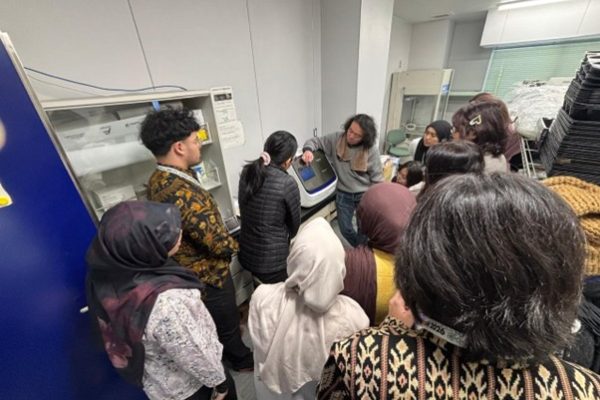

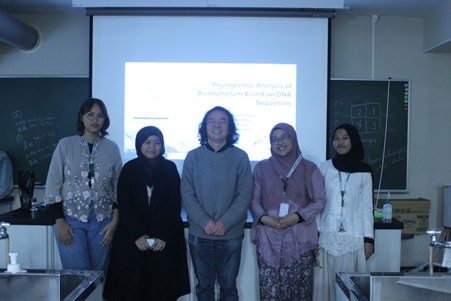
Over the course of four days, the program focused on the application of molecular biology techniques to analyze the diversity and evolutionary relationships of several orchid species from various countries, including Indonesia. The practicum was designed as a comprehensive learning experience, integrating hands-on laboratory work with phylogenetic data analysis.
Hands-On Molecular Techniques
Participants were divided into four groups to ensure that each student gained direct experience in every stage of molecular analysis. The techniques practiced included:
- DNA extraction
- Polymerase Chain Reaction (PCR)
- Gel electrophoresis
- Targeted Sanger sequencing
- Phylogenetic analysis using MEGA software
Throughout the sessions, students demonstrated high enthusiasm and engagement. Rather than merely observing demonstrations, they performed each procedure independently under the guidance of professors and laboratory assistants.
Amarthya Aulia Vadela shared that the experience significantly deepened his understanding of molecular techniques:
“I learned many new techniques. This experience was very different from our preparation sessions because we conducted each step ourselves.”
Similarly, Nayla Dwiputri Adelis expressed her appreciation:
“I feel very fortunate to perform molecular techniques directly, which I had previously only seen demonstrated.”
From PCR to Phylogenetic Trees
One of the key highlights of the practicum was conducting Sanger sequencing on marker genes obtained through PCR. Participants then analyzed the sequence data using MEGA (Molecular Evolutionary Genetics Analysis) software to construct phylogenetic trees and interpret evolutionary relationships among species.
For some students, bioinformatics analysis presented a new challenge. Ahmad Faidullah Haqqi reflected:
“At first it felt difficult, but after trying it myself and understanding the workflow, the analysis became much smoother.”
Meanwhile, Tasya Syifa Alfadhiilah shared:
“I had never taken a course covering this type of analysis before, so I was worried I wouldn’t be able to follow. However, after Jun-sensei explained it clearly and I tried it myself, I found it really exciting and enjoyable.”
A particularly meaningful experience came from Kaylana Fikria Akbar, a first-year student who was newly introduced to molecular biology:
“As a first-year student, I was completely new to molecular biology, so at first I doubted whether I could understand each process. However, with guidance from Jun-sensei and the assistants who explained everything clearly, I found the activities exciting and became even more interested in learning these techniques and their applications.”
These reflections highlight that the program not only enhanced technical skills but also built academic confidence among students at different levels of study.
Reflection from the Academic Supervisor
The academic supervisor from the Faculty of Biology UGM, Dr. Luthfi Nurhidayat, M.Sc., emphasized the significance of the experience for student development:
“This program provides a highly comprehensive learning experience. Students not only understand molecular concepts theoretically, but also go through the complete research workflow—from DNA extraction to phylogenetic analysis. Direct interaction with professors and exposure to laboratory standards at Yamagata University broaden their perspective on international research practices.”
He further noted that the program represents an important step in strengthening academic collaboration between the Faculty of Biology UGM and Yamagata University, particularly in the fields of molecular biology and biodiversity research.
Presentations and Warm Closing Ceremony
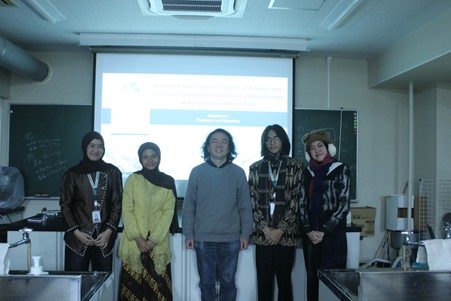
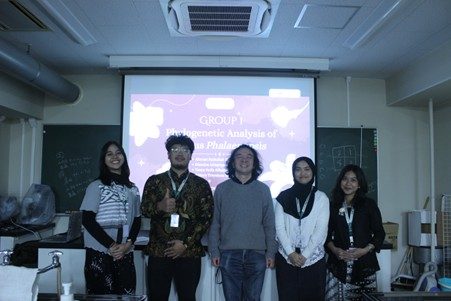
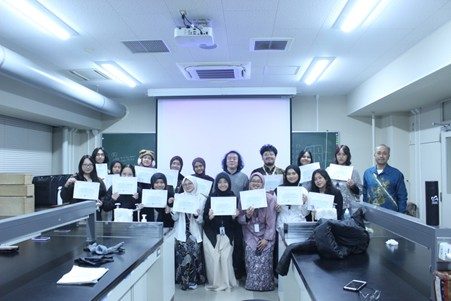
At the end of the practicum sessions, each group presented their findings, including sequence analysis results and phylogenetic interpretations. All four groups delivered strong presentations and received appreciation from Prof. Jun Yokoyama for completing their analyses and presentations within a relatively short time frame. The practicum concluded with the awarding of certificates to all participants as recognition of their active engagement during the program.
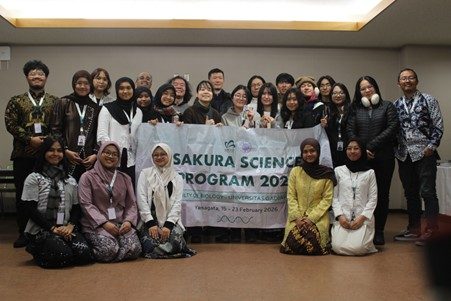
The academic activities of Sakura Science Program 2026 were then closed with a small celebration attended by professors, assistants, and participants. Despite the winter season in Japan, the atmosphere was warm and welcoming, complemented by halal Japanese cuisine. The event concluded with the presentation of tokens of appreciation to the professors and assistants in gratitude for their guidance and collaboration.
Through this intensive laboratory experience, participants not only strengthened their technical competencies in molecular biology and phylogenetic analysis but also expanded their global academic networks and research perspectives. Sakura Science Program 2026 once again demonstrates the importance of international collaboration in nurturing the next generation of globally competitive scientists.