On 5 April 2026, undergraduate (S1) students enrolled in the Ethnobotany course (Class A) at the Faculty of Biology, Universitas Gadjah Mada, participated in a field lecture activity at the Kedhaton Museum in Yogyakarta. This field lecture is based on contextual, experiential and resource-based teaching and learning approaches. It connects course material with real-world contexts, such as museum collections and historical objects, to enhance active engagement, direct observation and critical thinking among students. The Ethnobotany course (Class A) is lectured by Prof. Dr. Ratna Susandarini M.Sc. and Ludmilla Fitri Untari S.Si., M.Si.
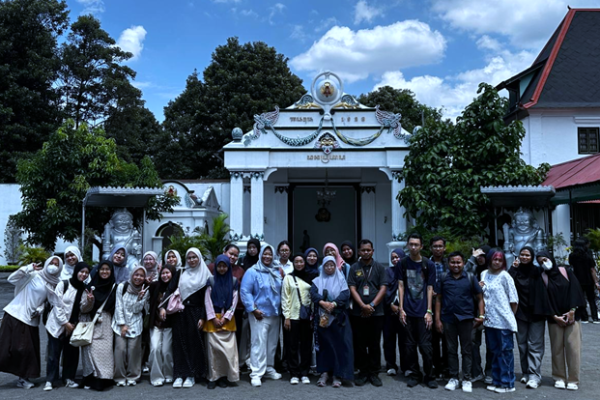
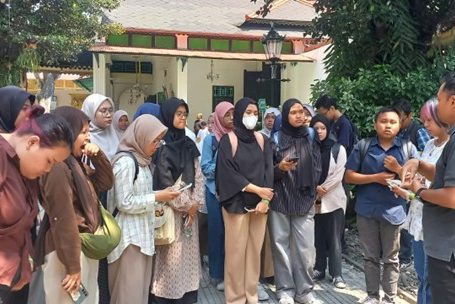
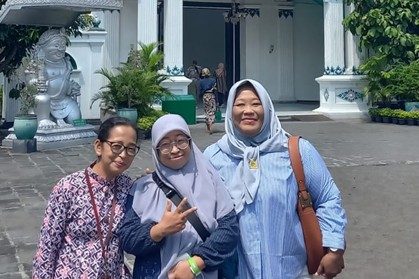
A total of 31 students, supervised by Ludmilla Fitri Untari, S.Si., M.Si., attended sessions delivered by two invited speakers: the Head of the Kedhaton Museum (RA Siti Amirul Nur Sundari, Carik Kawedanan Radyo Kartiyoso) and a member of the museum’s expert staff (Mas Jajar Praba Hanendra). A lecturer from the Faculty of Biology at UGM, Zuliyati Rohmah (S.Si., M.Si., Ph.D.Eng.), was also present.
During the session, the students studied the diversity of plants and their symbolic meanings in various Javanese rituals that represent the life cycle. These rituals include those performed during the early stage of the life cycle, which covers pregnancy and birth. This stage consists of the Mapati ceremony (held in the fourth month), the Mitoni/Tingkeban ceremony (held in the seventh month), the Brokohan ceremony, the Sepasan ceremony (held over five days), the Puputan ceremony (where the umbilical cord is detached), the Selapanan ceremony (held after 35 days), and the Tedak Siten ceremony (held when the baby takes its first steps). The middle stage of the life cycle covers adulthood and marriage, and includes circumcision, the Nontoni and proposal ceremony, the Siraman and Midodareni ceremony, the wedding ceremony (akad) and the Panggih ceremony. The final stage of the life cycle covers death and the returning journey, which represents the end of the cycle. These rituals aim to pray for God’s protection, express gratitude, and show respect to the universe. These rituals aim to ensure safety, express gratitude and show respect. By studying the symbolic meanings of the plant species used in these ceremonies, students gain an understanding of the spiritual values embedded in Javanese rituals. These spiritual values reflect the interrelationship between humans, between humans and the universe, and between humans and God the Almighty.
This local Javanese wisdom, passed down through generations, constitutes a highly valuable cultural asset that should be preserved for future generations. Students can play an active role in conserving this traditional knowledge and preventing its disappearance in modern society. Furthermore, in addition to preserving ethnobotanical knowledge, the Yogyakarta Palace (Kraton Yogyakarta) has undertaken various efforts to conserve rare plant species of high historical and cultural value.
These efforts support the achievement of several Sustainable Development Goals (SDGs): SDG 4 (Quality Education) through experiential, field-based learning; SDG 11 (Sustainable Cities and Communities) by utilising cultural heritage sites as educational media; SDG 12 (Responsible Consumption and Production) by encouraging the responsible use of natural resources; SDG 13 (Climate Action) by strengthening environmental literacy and fostering closer human–nature relationships; SDG 15 (Life on Land) by raising awareness of biodiversity; and SDG 17 (Partnerships for the Goals) by promoting collaboration among institutions to enhance the quality of education. – Ludmilla –