Yogyakarta – The Faculty of Biology, Universitas Gadjah Mada (UGM), continues to strengthen the role of biological sciences in addressing the challenges of sustainable development. This commitment was highlighted during the 71st Anniversary (Dies Natalis) celebration of the Faculty of Biology UGM, held at the Biologi Tropika Auditorium on Monday, September 21, under the theme “Sustainable Bioenergy, Going Global through Excellence.”
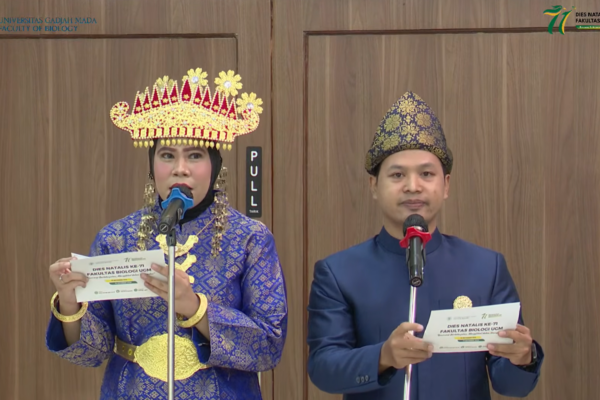
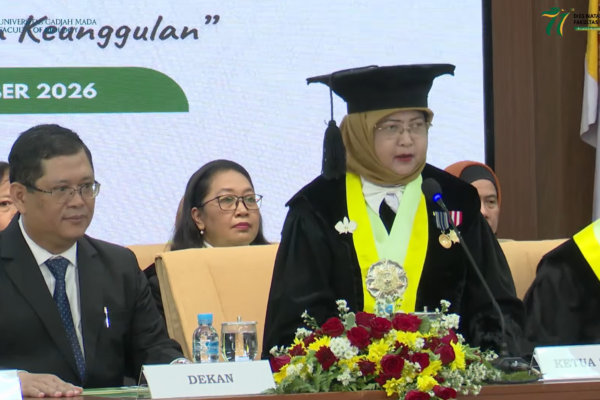
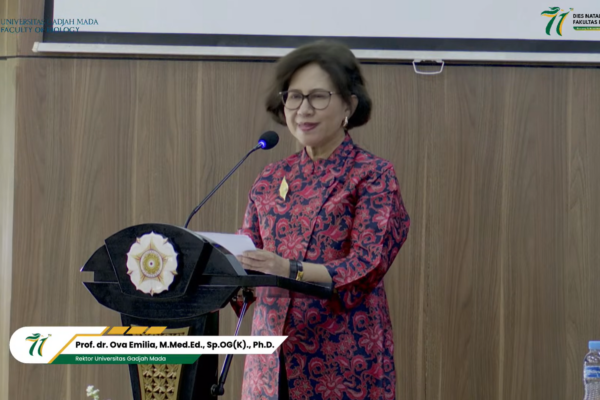
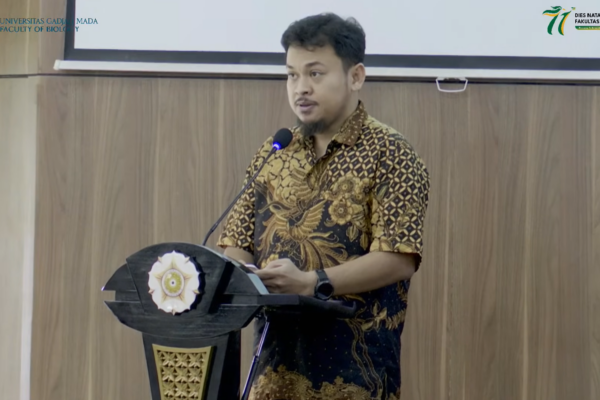
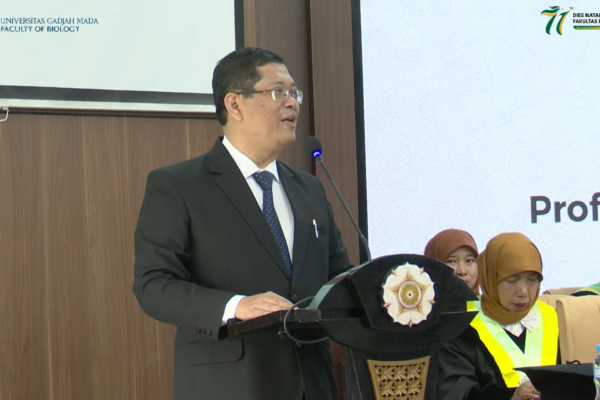
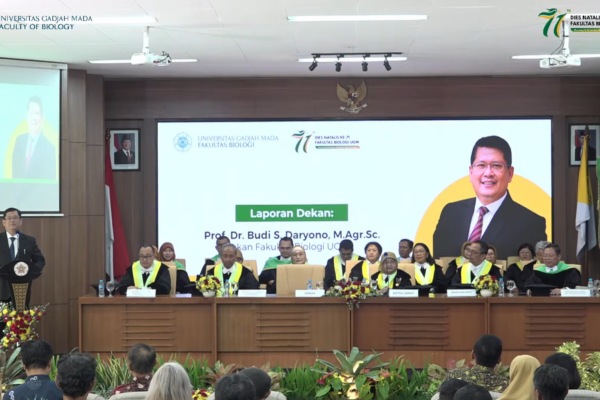
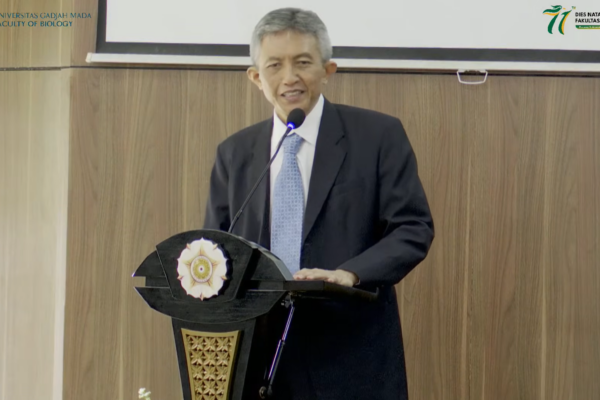
The event was opened by the Chair of the Faculty of Biology UGM Senate, Prof. Endang Semiarti, M.S., M.Sc., followed by an address from the Rector of UGM. The Rector expressed appreciation for the Faculty of Biology’s achievements, including the improvement of the Biology Study Program’s position in the QS World University Rankings by Subject 2026, from the 550–600 range to 501–550 worldwide.
In addition, the Faculty of Biology continues to develop education and professional competencies through the establishment of the Professional Study Program in Biodiversity Curation in 2024, the development of the Integrated Genome Factory (IGF), and the establishment of a Competency Testing Center (TUK) in 2022, which is currently the only Biotechnology TUK collaborating with the National Agricultural Professional Certification Agency (LSP Pertanian Nasional).
Following a prayer led by Dr. Arief Muammar, M.Sc., the event continued with a report by the Dean of the Faculty of Biology UGM. Various achievements were presented, ranging from “Unggul” accreditation for the Undergraduate, Master’s, and Doctoral programs to the development of student mobility and double-degree programs with partner universities, including the University of Leeds, Leiden University, Australian National University, and Dai Yeh University.
The Faculty of Biology has also continued to strengthen its facilities and resources, including the construction of the KPTU Building corridor and the addition of laboratory equipment. The Faculty currently has 16 Professors. In research, the Journal of Tropical Biodiversity and Biotechnology (JTBB) is indexed in Scopus (Quartile 3), while the Journal Biologi Indonesia (BIB) is Sinta 4-accredited.
Activities such as Research Day, BIOENTRI, and community engagement programs, which have reached 10 regencies/cities across 9 provinces, have also helped strengthen the Faculty’s broader societal impact.
The Faculty of Biology’s international network now spans 18 countries and 49 institutions, including through 9 double-degree programs. The Faculty has also developed BIOCAPTURE (Biology Career Preparation for the Future) as part of its efforts to prepare students and alums for the professional world.
The series of events continued with a scientific lecture delivered by Dr. Abdul Hakam Naja, M.Si., Chair of the Supervisory Board of LAZISKU KBPII. Addressing the same overarching theme, he discussed the challenges posed by climate change, sustainable development, green jobs, and the bioeconomy, as well as the importance of biological research to industrial development. Collaboration among universities, research institutions, and industry was also highlighted as an important aspect of the lecture.
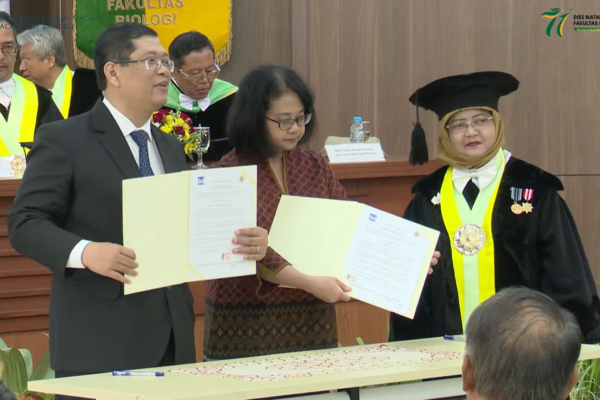
On the same occasion, a Memorandum of Understanding (MoU) was signed between the Faculty of Biology UGM and Institut Teknologi Del in the fields of education, research, and community engagement. The 71st Anniversary celebration was subsequently closed by the Chair of the Faculty of Biology UGM Senate, Prof. Endang Semiarti, M.S., M.Sc.
Through the theme “Sustainable Bioenergy, Going Global through Excellence,” the Faculty of Biology UGM continues to strengthen its contributions through education, research, community engagement, and collaboration in support of the achievement of the Sustainable Development Goals (SDGs), particularly SDG 4 (Quality Education), SDG 7 (Affordable and Clean Energy), SDG 8 (Decent Work and Economic Growth), SDG 9 (Industry, Innovation and Infrastructure), SDG 13 (Climate Action), SDG 15 (Life on Land), and SDG 17 (Partnerships for the Goals), while promoting sustainable development at both national and global levels.