The Indonesia Research and Innovation Fair (IRIFair) was held this year from 21–24 September 2026 by the National Research and Innovation Agency (BRIN) in collaboration with the Indonesia Endowment Fund for Education (LPDP) as a platform for identifying and developing Indonesia’s research and innovation talents. IRIFair serves as a platform for the exploration, exhibition, and competition of talents in research and innovation through a series of activities encompassing competitions, talent development, and recognition of promising research works.
In 2026, IRIFair was part of the BRIN Goes to School and BRIN Goes to Campus programs, featuring several main activities, including B-CREATIVE (BRIN Competition for Advanced Research and Innovation). B-CREATIVE is a research competition for final-year projects conducted by master’s degree students, designed to showcase, explore, and develop their creativity and potential as research and innovation talents.
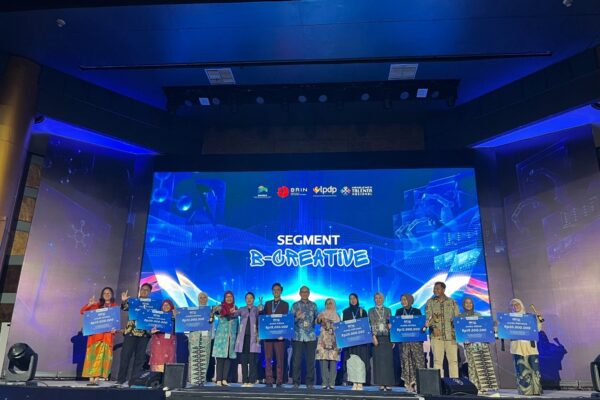
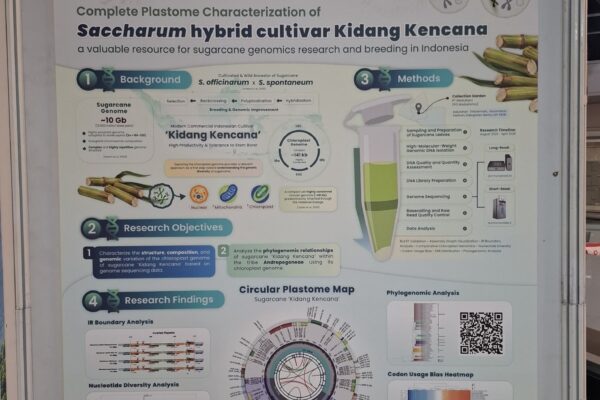
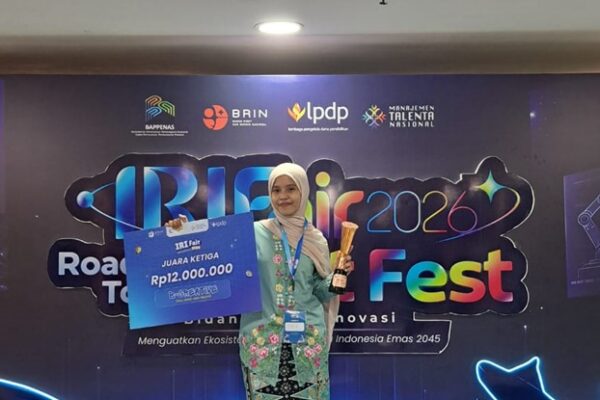
In the competition, Tiara Putria Judith, a Fast-Track Master’s student in Biology at Universitas Gadjah Mada (UGM), under the supervision of Ganies Riza Aristya, S.Si., M.Sc., Ph.D., was selected as a finalist in the Life and Natural Sciences cluster with her research entitled “Characterization of Composition and Genomic Variation of Sugarcane (Saccharum hybrid) ‘Kidang Kencana’.” The B-CREATIVE assessment consisted of a Final Research Project Presentation, 3-Minute Research Pitch, and Research Poster Exhibition. Through these stages, Tiara won Third Place in B-CREATIVE at IRIFair 2026 with her research focusing on the genomic characterization of Indonesian hybrid sugarcane, particularly the commercial cultivar ‘Kidang Kencana’.
The research was motivated by the complexity of sugarcane genetic information resulting from a long history of breeding and genetic improvement. Meanwhile, molecular-level studies of sugarcane in Indonesia remain relatively limited, highlighting the need to further develop genomic resources for sugarcane cultivars adapted to Indonesian agroecosystems. In her research, Tiara utilized advances in sequencing technologies using both long-read and short-read approaches to obtain a more comprehensive understanding of the genetic information. The chloroplast genome was used as an initial step to characterize the genomic information of the ‘Kidang Kencana’ cultivar.
The findings are expected to contribute to the enrichment of genomic resources for Indonesian hybrid sugarcane. This information provides a foundation for supporting the development of more precise, genome-based sugarcane breeding toward Smart Targeted Breeding, while strengthening the utilization of Indonesia’s sugarcane genetic resources for future research and breeding efforts.