Biology Students Win First Place in UGM Cendekia Days Essay Competition with Innovation on Sustainable Electric Nanogenerator

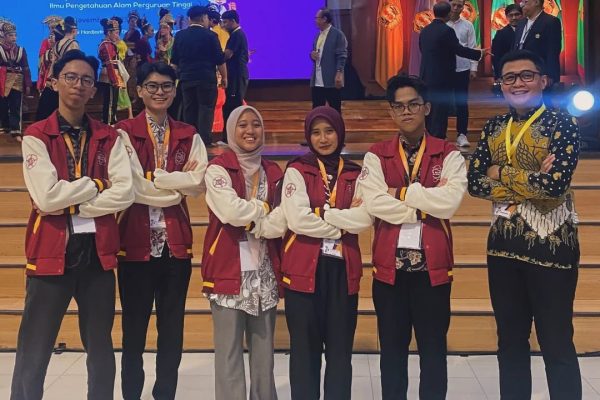
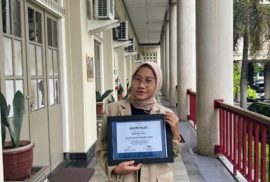
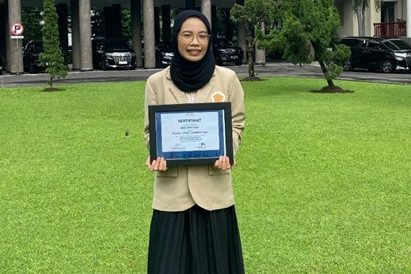
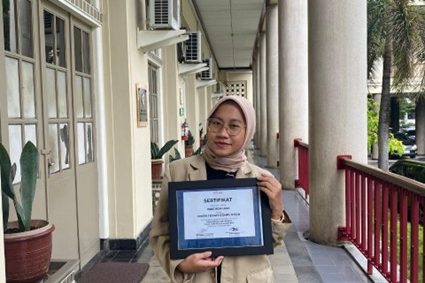
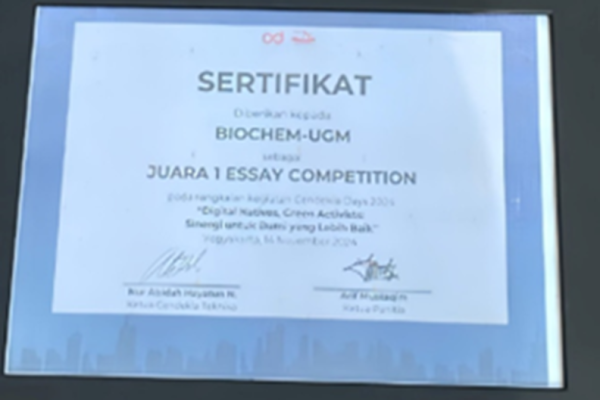
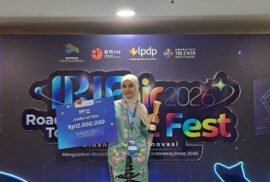
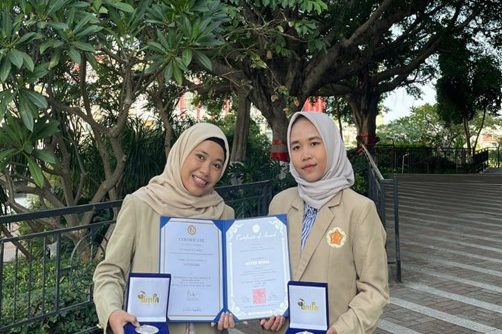
Kotimah, an undergraduate student from the 2022 cohort of the Faculty of Biology, Universitas Gadjah Mada (UGM), secured a remarkable achievement by winning first place in the Essay Competition held during Cendekia Days 2024, organized by UGM’s Cendekia Teknika. Khotimah collaborated with Rahayu Murti Ayuningtyas from the 2022 cohort of the Faculty of Engineering in the ”Biochem” team.


The Cendekia Days Essay Competition is an annual event aiming to promote critical thinking and innovation among students. The 2024 competition carried the theme: “Digital Native, Green Activists: Synergy for a Better Planet.” Participants could choose from sub-themes including energy and the environment, food security, technology and digitalization, creative industries, education, and sustainable development. The event seeks to broaden students’ knowledge in science and technology, foster innovative attitudes, and cultivate their roles as agents of change in advancing green technology for a sustainable future.
The competition, including registration and essay submission, took place from September 21 to October 12, 2024. The finalists were announced on October 26, 2024, with the top eight teams advancing to the final presentation stage on November 10, 2024, followed by the awarding ceremony on November 16, 2024. Among 152 submissions, Team Biochem achieved the highest score during the initial essay evaluation. Team Biochem successfully maintained its leading position and was ultimately awarded First Place.

The Biochem team’s essay focused on the energy and environment sub-theme, presenting their innovative concept of a Sustainable Electric Nanogenerator (SENG). SENG is a groundbreaking green energy solution designed to convert wasted mechanical energy into electricity. The innovation addresses critical environmental challenges, particularly those arising from the hydrodesulfurization process in petroleum refining, which poses significant risks of releasing hazardous per- and polyfluoroalkyl substances (PFAS) into ecosystems. These substances are associated with severe health risks, including cancer, immune system damage, and miscarriages.
The SENG innovation is polymer-based and sulfur-rich, offering three key advantages: economic feasibility, sustainability, and environmentally friendly performance. This breakthrough demonstrates the potential for transformative contributions in renewable energy technologies, aligning with global efforts to address pressing environmental issues.

Author: Kotimah

Biology Student Win Second Place in Biology Scientific Writing Competition with Innovation on Polyethylene Biodegradation Using Bacterial Enzymes

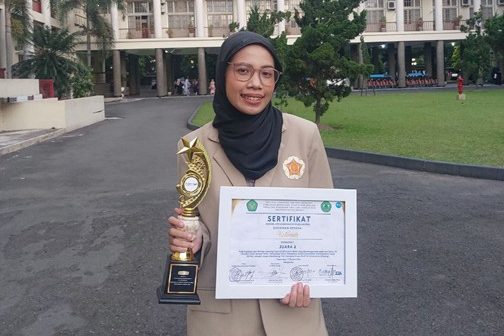
Yogyakarta – Kotimah, an undergraduate student from the Faculty of Biology, Universitas Gadjah Mada (UGM), has once again achieved a remarkable achievement by securing Second Place in the Biology Scientific Writing Competition. The event was themed “Enhancing the Role of Students in Building a Golden Indonesia 2045 through the Synergy of Culture, Innovative Education, and Ethics to Shape a Quality and Integrity-Driven Young Generation.” with sub-themes that aligned with the 17 Sustainable Development Goals (SDGs).


The competition, including registration and essay submission, took place from August 12 to September 25, 2024. The finalists were announced on October 10, 2024, with the top 3 essays advancing to the final presentation stage and awards ceremony on October 17, 2024, at Universitas Siliwangi in Tasikmalaya.

Kotimah’s essays address the global issue of plastic waste, particularly non-biodegradable polyethylene, which constitutes 35% of annual plastic production. With approximately half of all plastic products being single-use items, polyethylene waste contributes significantly to environmental degradation. Its natural decomposition can take over 500 years, during which microplastics form, disrupting ecosystems and accumulating in organisms. Current disposal methods, such as incineration and chemical degradation, often release toxic substances and require costly catalysts, further complicating the issue.

To tackle this challenge, Kotimah developed a novel approach utilizing lipase enzymes from microorganisms to biodegrade polyethylene. These lipase enzymes, sourced from the anaerobic bacterium Pelosinus fermentans, demonstrated the capability to initiate polyethylene biodegradation.

This environmentally friendly solution presents numerous benefits, such as the ability to be mass-produced using renewable resources while remaining non-toxic, effective, and sustainable. By utilizing biological methods, Kotimah’s innovation provides a viable alternative for addressing the environmental challenges posed by plastic waste.

Author: Kotimah

UGM Biology Master’s Students Win Silver Medal at Kaohsiung Invention and Design Expo (KIDE) 2024

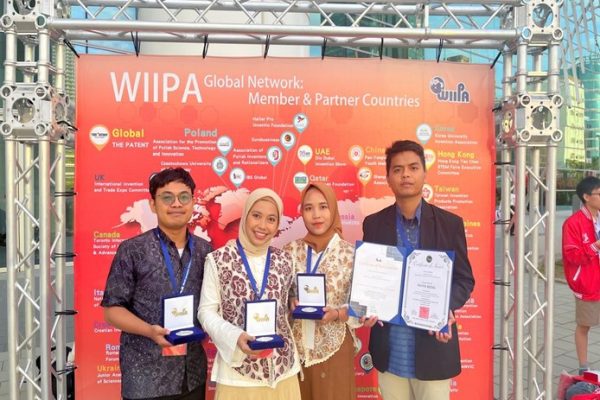
The Kaohsiung International Invention and Design Expo (KIDE) 2024 serves as a prestigious platform for researchers to present and compete their innovations at the international level. Organized by the World Invention Intellectual Property Association (WIIPA) and the Taiwan Invention Products Promotion Association (TIPPA), KIDE 2024 took place from December 5-7, 2024, in Kaohsiung, Taiwan. The competition featured 447 innovations from participants representing 31 countries.


The principle “Teamwork Makes the Dream Work” aptly describes the success achieved by two UGM Biology Master’s students, Syefrina Rosyada and Yessy Ratna Siwie, along with their interdisciplinary teammates Alan Mulana K. (Faculty of Engineering) and Sunardi (Faculty of Agriculture). Their collaboration resulted in a silver medal at KIDE 2024 for their groundbreaking innovation, the SEATTER (Seawater Converter).

The SEATTER project was inspired by the clean water crisis faced by residents of Jerowaru District in East Lombok Regency. The area experiences low annual rainfall and high sunlight intensity, which forces local communities to purchase clean water for daily needs. Addressing this challenge, the team developed SEATTER, a solar-powered desalination technology that converts seawater into clean, usable water. This innovation provides a sustainable solution for coastal communities struggling with clean water scarcity.

The SEATTER technology directly contributes to Indonesia’s efforts in achieving the Sustainable Development Goals (SDGs), specifically SDG 6: Ensure availability and sustainable management of water and sanitation for all. This innovation enhances clean water access for underserved coastal areas.

This remarkable achievement underscores the Faculty of Biology’s commitment to nurturing student potential and encouraging excellence at the international level. It is hoped that this success will inspire other students and young Indonesians to continue innovating, creating, and making meaningful contributions to science and global society.

[Writer: Syefrina Rosyada]

Collaborative Research Across Campuses, Two UGM Biology Students Win Gold in Bioinformatics and Synthetic Biology Competition

In the 2024 Bioinformatics and Synthetic Biology (BIOS) competition organized by Synbio.id from August to December 2024, UGM Biology students once again achieved remarkable success, securing a gold medal and the position of Undergraduate Runner-Up. The two students, Muhammad Ode Rahmadhani (Class of 2021) and Renada Oktavia (Class of 2021), were part of Team Can-Con, which collaborated with students from various universities: Rafly Mochamad Rivaldo from the Faculty of Medicine, Universitas Padjadjaran; Tristan Kenneth Yudhistira from the Faculty of Medicine, Universitas Brawijaya; Zaki Sidqi Aaliyya from the Faculty of Medicine, Universitas Jenderal Soedirman; and Yonathan Henry Christianto, Bryan Wu, and Ruby Belinda Gunadi from the Faculty of Computer Science, Universitas Bina Nusantara. The team, led by Muhammad Ode Rahmadhani and guided by Prof. Dr. Yekti Asih Purwestri, M.Si., explored the compound phloroglucinol’s anticancer potential against non-small cell lung cancer (NSCLC) using an in-silico metabolomics approach.


This research addressed the pressing need to discover new anticancer compounds due to the increasing prevalence of multidrug resistance and the significant side effects associated with current cancer therapies. Notably, the potential of phloroglucinol as an anticancer agent against NSCLC remains unexplored. The study aimed to unravel the pharmacological network and interactions between phloroglucinol and proteins associated with NSCLC progression. This focus is crucial as NSCLC remains one of the leading causes of cancer-related deaths in Indonesia.

The research, conducted throughout the competition, lasted from August to late November 2024. On December 1, 2024, during Synbiotechfest 2024, which also served as the Awarding Ceremony, Team Can-Con was announced as the gold medal winner and Undergraduate Runner-Up.

This outstanding achievement was made possible through the multidisciplinary collaboration of researchers from diverse academic backgrounds, which united diverse perspectives and approaches to develop a comprehensive study.

Author: M. Ode Rahmadhani