Malang, October 10, 2026 — The Smart Genetics Research Group from the Laboratory of Genetics and Plant Breeding, Faculty of Biology, Universitas Gadjah Mada (UGM), participated in the 5th International Conference of Biological and Advanced Sciences (ICoBioS) 2026, held at the UB Guest House, Universitas Brawijaya (UB), Malang, East Java, Indonesia. During the conference, the team presented its research through oral presentations covering plant genomics, DNA barcoding, and phenotypic characterization.
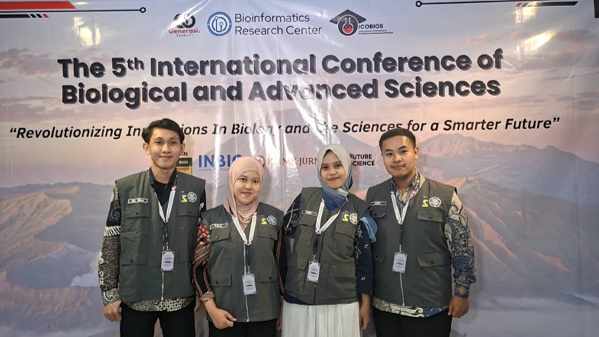
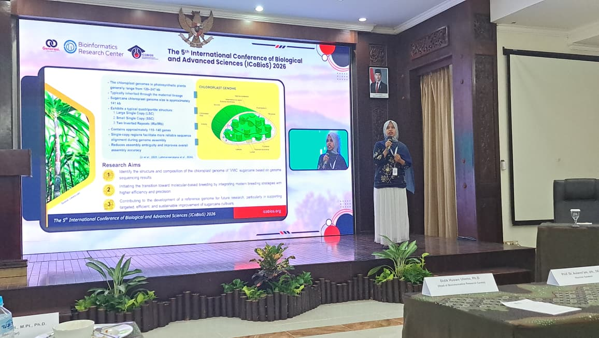
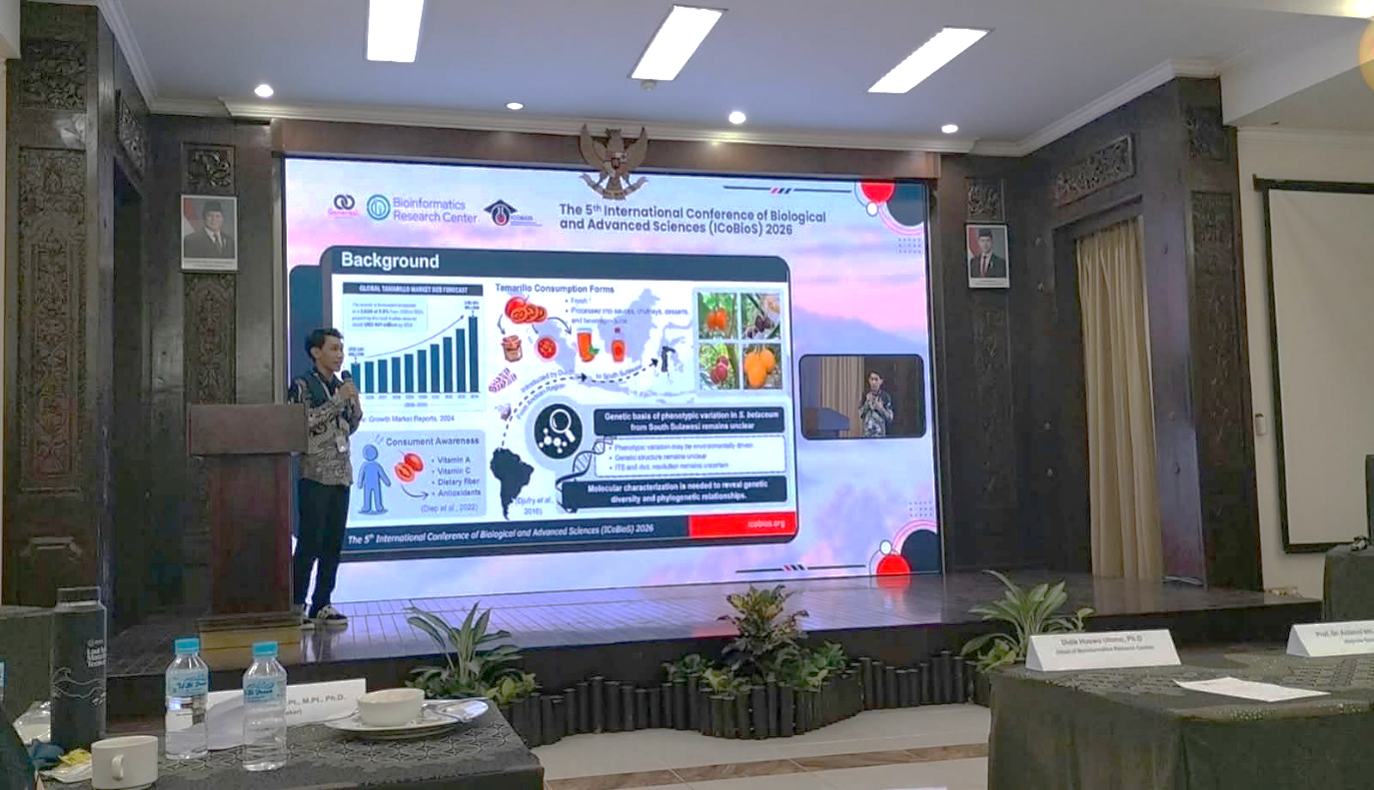
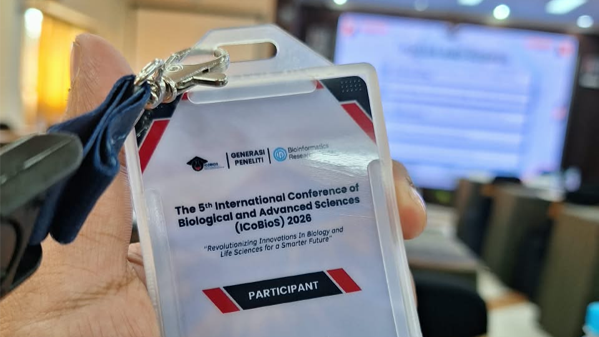
The research was presented by four members of the Smart Genetics Research Group under the supervision of Ganies Riza Aristya, S.Si., M.Sc., Ph.D., from the Laboratory of Genetics and Plant Breeding: Tiara Putria Judith, S.Si., M.Sc., Muhammad Anjas Zulfikar, S.Pd., Tika Nur Amini, S.Si., and Denianto Agung Wicaksono, S.Si. Participation in this international scientific forum provided an opportunity to share research findings with the broader academic community and exchange ideas on developments in bioscience. It also supported the development of research and scientific communication skills while opening opportunities for knowledge exchange and inter-institutional collaboration.
The research presented highlighted the application of molecular approaches to investigate plant diversity and genetic relationships. One of the main research topics was the characterization of complete chloroplast genomes in the sugarcane cultivars ‘VMC 76-16’ and ‘Bululawang’, as well as the ‘Mencir’ strawberry cultivar. Chloroplast genome characterization provides molecular information for examining plastid genome structure and serves as a valuable resource for further studies on genetic diversity, evolutionary relationships, and the utilization of plant genetic resources.
In addition to plant genomics, the team presented research on the phenotypic characterization and phylogenetic relationships of tree tomato (Solanum betaceum) from South Sulawesi, Indonesia. Molecular approaches were used to investigate genetic relationships and provide further insights into the species’ genetic diversity. The research topics also included DNA barcoding and phenotypic assessment, which support plant identification and characterization through molecular information and observable variations in plant traits.
The team’s participation also aligns with several United Nations Sustainable Development Goals (SDGs). SDG 4 (Quality Education) is reflected in research-based learning and the development of scientific communication skills. SDG 9 (Industry, Innovation and Infrastructure) is relevant to the advancement of scientific knowledge and innovation through genomics and molecular characterization approaches. Meanwhile, SDG 15 (Life on Land) relates to expanding knowledge of plant genetic diversity, which can provide a foundation for further research on genetic resources and biodiversity.
Through its participation in ICoBioS 2026, the Smart Genetics Research Group aims to strengthen academic networks, encourage knowledge exchange, and foster future research collaborations. These efforts support the continued development of research in genomics, genetics, and plant breeding within the Faculty of Biology, UGM.