The 2025 PkM-MBKM Team, led by Prof. Dr. Diah Rachmawati, S.Si., M.Si. with members Jovanka, Khansa Fauziah Rachman, Samantha Sonya Putri, and Dhea Amelia, conducted a practical workshop on herbal soap production as well as product packaging and marketing for the Women Farmers Group (KWT) Amanda on Sunday, 16 November 2025, in Padukuhan Kepuh Wetan, Wirokerten Village, Banguntapan Subdistrict, Bantul Regency, Special Region of Yogyakarta. During the program, members of KWT Amanda received hands-on guidance on utilizing home-garden commodities into marketable products. The training focused on two main topics: the practice of herbal soap making and the packaging and marketing of processed products made from butterfly pea, roselle, ginger, and lemongrass. Packaging and marketing strategies are essential aspects of increasing the added value of a product, especially for home-based business groups such as KWT. Proper packaging not only functions to protect the product but also serves as a medium for information, brand identity, and visual appeal that influences consumer purchasing decisions. Meanwhile, appropriate marketing strategies whether through direct selling or the use of digital platforms can broaden market reach, improve the competitiveness of local products, and support small-scale entrepreneurs in building sustainable economic growth.
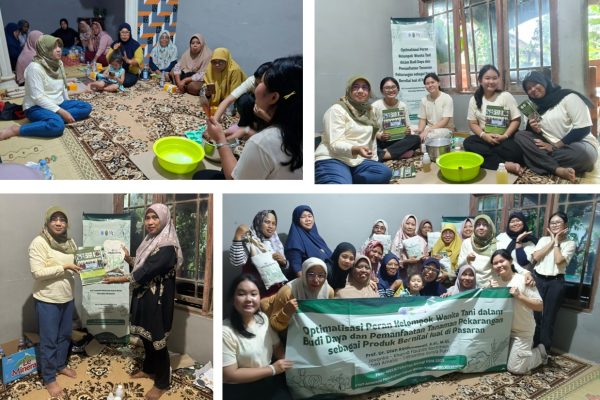
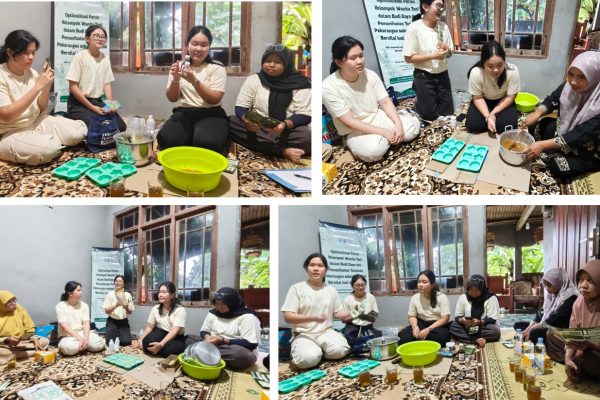
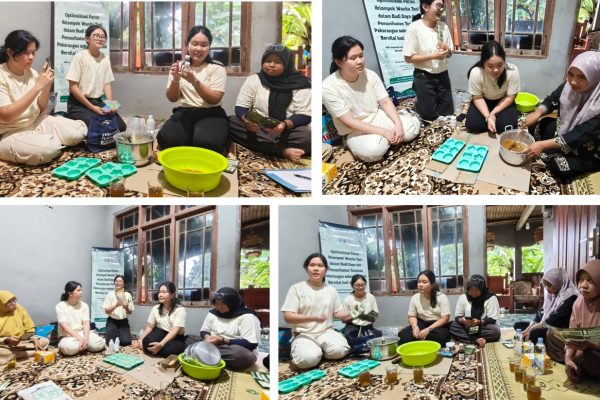
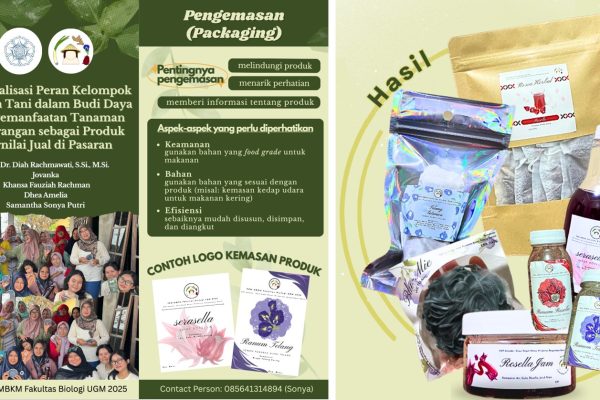
The activity began with an explanation of the herbal soap-making process, starting from the introduction of safe natural ingredients, composition comparisons, mixing techniques, and the soap molding stage. Members of KWT Amanda were also informed about the function of each ingredient, potential variations in shape and scent, as well as product safety standards to ensure consistent production. After the presentation, participants engaged in hands-on soap-making practice under the guidance of the team. The next session focused on packaging and marketing strategies for processed products made from butterfly pea, roselle, ginger, and lemongrass. The team delivered materials on basic principles of packaging design, the importance of product identity (branding), and how to create attractive and informative labels. In addition, KWT members received training on marketing local products through various channels, both direct selling and digital platforms, to strengthen the competitiveness of the products they produce.
Members of KWT actively participate in practicing making herbal soap and discussing how to independently market herbal products. Their active participation indicates that the skills provided were relevant and applicable to the development of household-scale businesses. This program is expected to enhance the utilization of home-garden resources, strengthen food resilience and independence (SDG 2), promote the use of natural and health-supporting materials (SDG 3), create opportunities for small-scale enterprises based on local potential (SDG 9), and reinforce partnerships between universities and communities (SDG 17).