On Saturday (June 27th), the Faculty of Biology’s Community Service Team held a training on biofertilizer production and biocontrol for chrysanthemum. Participants included members of Al Barokah housewives and the Family Welfare Empowerment Group of Kedungpoh Village, Nglipar, Gunungkidul. The training took place at the Al Barokah Production House, which is chaired by Tri Wahyuni. The Family Welfare Empowerment Group of Kedungpoh covers food, clothing, housing, and household management. The Faculty of Biology’s Community Service Team was represented by Dr. Dwi Umi Siswanti, S.Si., M.Sc., and Agil Faiqotul Iqbaliyah, S.Si. Dwi Umi and Agil are part of the Faculty of Biology Community Service Team which carries the theme “Escalating the Economic Value of Organic Waste Through Probiotic and Biopesticide Formulations to Realize Responsible Consumption and Production (SDG 12)”.
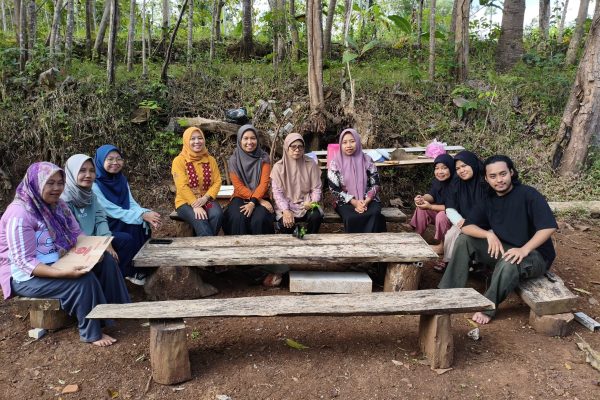
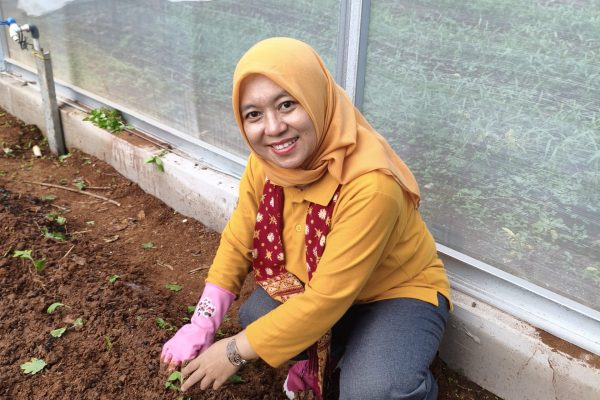
Dwi Umi, who specializes in biofertilizer formulation, presented a presentation on Biofertilizer Production for Sustainable Agriculture. This biofertilizer is made from livestock urine (cow, goat, sheep, or rabbit) with added microbial starter culture, then fermented for fourteen days until the urine odor disappears. Biofertilizer can help degrade organic matter such as litter and manure, improving plant fertility. Some of the microbes used include Azotobacter, Bacillus, and Trichoderma.
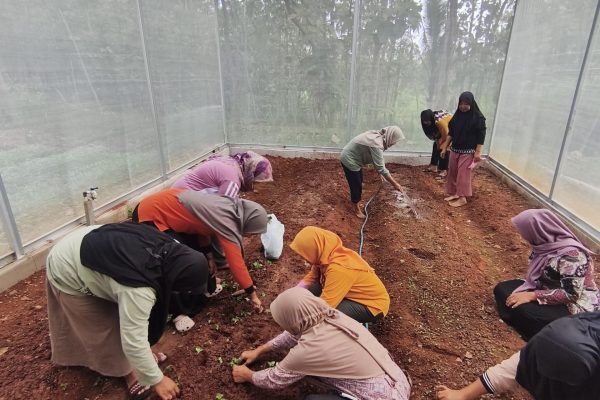
“Biofertilizer can be used as a substitute for NPK fertilizer and AB Mix, or to accelerate the production of compost and manure, due to its role in degrading organic matter,” Dwi Umi explained during her presentation. “Waste from the Al Barokah IRT (household farm) and households can be readily utilized as compost with the help of biofertilizer,” she added. Following the presentation and Q&A session, Dwi Umi and Agil led the participants to the greenhouse, which had been built using funds from the Faculty of Biology, Gadjah Mada University’s 2026 Community Service Grant. Participants practiced applying base fertilizer enriched with biofertilizer in the chrysanthemum greenhouse.
The training, which involved academics, women home industry entrepreneurs, and the Family Welfare Movement (PKK) women’s group, embodied Sustainable Development Goals 1 (No Poverty), SDG 2 (Zero Hunger), SDG 3 (Healthy and Prosperous Lives), SDG 5 (Gender Equality), SDG 12 (Responsible Consumption and Production), and SDG 17 (Partnerships to Achieve the Goals). (DUS)