A research team from the Faculty of Biology, Universitas Gadjah Mada (UGM), has successfully characterized the genetic profile of the Golden Kamper chicken through a study funded by the Faculty of Biology Lecturer–Student Collaborative Research Grant (KDM) 2026. Using DNA barcoding based on the mitochondrial cytochrome c oxidase subunit I (COI) gene, the study revealed the close genetic relationship between Golden Kamper chickens and several Indonesian local chicken breeds. The findings provide valuable baseline genetic information to support future breeding programs and the conservation of Indonesia’s poultry genetic resources.
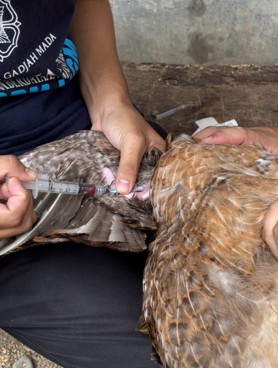
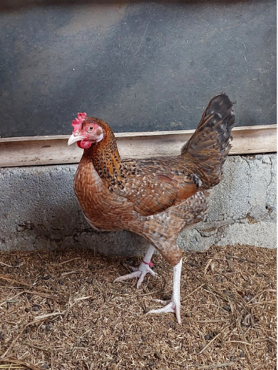
Indonesia is home to a rich diversity of local chicken genetic resources, with at least 33 recognized local chicken breeds that hold significant potential for sustainable poultry development. One of these is the Golden Kamper chicken, a dual-purpose breed developed by crossing Pelung Blirik roosters with Brown Layer hens. The breed was developed to combine desirable production traits while preserving the genetic potential of local poultry, making it a promising genetic resource for supporting food security and biodiversity conservation.
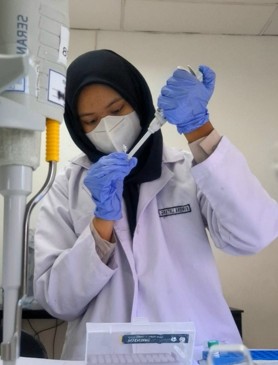
Despite its potential, genetic information on the Golden Kamper chicken remains limited. Genetic characterization is therefore essential to understand its genetic diversity and evolutionary relationship with other chicken breeds, providing a scientific foundation for breeding strategies and the long-term conservation of indigenous poultry genetic resources. In this study, researchers analyzed the mitochondrial COI gene to evaluate the genetic variation and phylogenetic relationship of Golden Kamper chickens with other chicken breeds. The results showed that Golden Kamper chickens are closely related to Manokwari, Maluku, and Kedu Jawa chickens, as well as the Red Jungle Fowl, the wild ancestor of modern domestic chickens. Furthermore, the COI gene exhibited relatively low genetic variation, indicating its conserved nature and highlighting its potential as a reliable molecular marker for chicken genetic characterization. The findings provide an important genetic baseline for the future development of Golden Kamper chickens and other Indonesian local chicken breeds. The genetic information generated through this study is expected to support molecular breeding programs, strengthen genetic resource conservation efforts, and serve as a reference for future research on the genetic diversity of Indonesian poultry.
This research was conducted under the Faculty of Biology Lecturer–Student Collaborative Research Grant (KDM) 2026, involving undergraduate students of the Faculty of Biology, Universitas Gadjah Mada, under the supervision of Prof. Dr. Budi Setiadi Daryono, M.Agr.Sc. The study also contributes to the achievement of the United Nations Sustainable Development Goals (SDGs), particularly SDG 2 (Zero Hunger) by supporting sustainable poultry breeding for food security, and SDG 15 (Life on Land) through the conservation and sustainable utilization of Indonesia’s poultry genetic resources.