• UGM
  • Simaster Portal
  • IT Center
  • Webmail
  • KOBI
  • English
    • Bahasa Indonesia
Universitas Gadjah Mada Universitas Gadjah Mada
Faculty of Biology
  • ABOUT US
    • History
    • Organization
    • Vision and Mission
    • Lectures and Staff
      • Lecturers
      • Adjunct Professor
      • Supporting Staff
    • Facility
      • Laboratories
      • Research
      • Library
      • Museum
      • Mental Health Consultation
      • Disability
  • EDUCATION
    • Undergraduate Program
      • Graduates Learning Outcome
      • Academic Callendar
      • Course
    • IUP
    • Profession Program
      • What is the Professional Study Program in Biodiversity Curator (PKKH)?
      • Admission for New Students of the Biodiversity Curator Profession Program Study
      • Information and FAQ Study Program of Biodiversity Curator Profession
    • Master Program
      • Master Program in Biology Description
      • Curriculum Structure Master Program
    • Doctoral Program
      • Vision, Mission, Objectives, Targets, Competencies, and Learning Outcomes
      • Admission Requirement for Program Doctor in Biological Sciences
      • Admission: What Documents to be prepared?
      • Curriculum
    • Regulations
    • Accreditation & Quality Assurance
  • RESEARCH
    • Journal of Tropical Biodiversity and Biotechnology
    • Berkala Ilmiah Biology
    • Research
    • Publication
  • Community Service
    • Waste Management
  • STUDENTS & ALUMNAE
    • Student Organizations
    • Prospective Career Opportunities
    • SUMMER COURSE
    • Alumnae
  • Home
  • News Release
Arsip:

News Release

Training on Organic and Inorganic Waste Processing in Tegalrejo: A Collaboration between the Faculty of Biology UGM and Pertamina Patra Niaga AFT Adi Sumarmo under the TEH SEKAR Program

Community ServiceNews Release Friday, 12 December 2025

Tegalrejo, 11 December 2025


The Faculty of Biology, Universitas Gadjah Mada, in collaboration with PT Pertamina Patra Niaga AFT Adi Sumarmo through its assisted program Tegalrejo Hijau, Sehat, dan Berdikari (Teh Sekar), held a community service activity titled “Training on Organic and Inorganic Waste Processing” on 11 December 2025 in Tegalrejo. The training was attended by 14 participants who are members of the Miguno Waste Bank.

he training aimed to enhance the community’s capacity in proper waste sorting and processing, as well as to support environmental self-sufficiency in the Tegalrejo area. Two speakers from the Faculty of Biology UGM delivered the materials: Mrs. Novita Yustinadiar, S.Si., M.Si., who presented the topic of inorganic waste processing, and Mr. Jamal Musa Holle, S.Si., M.Env.Sc., D.Phil., who explained organic waste processing techniques.

The event began with a pre-test to assess participants’ baseline knowledge regarding waste management. During the training sessions, participants received theoretical explanations and practical demonstrations on household waste processing techniques applicable to daily activities. The training concluded with a post-test to evaluate participants’ improvement and the effectiveness of the program.

Throughout the training, participants practiced creating various recycled products, such as crafts made from plastic bottles and the making of sofa cushions and bean bags using shredded plastic fillers. This activity aimed to utilize low-value plastic waste by transforming it into economically valuable products while also reducing harmful practices such as burning plastic waste. In the organic waste processing session, participants learned compost-making using the Berkeley method (layering technique in compost bags) and organic waste processing using maggots in a maggot box.

As part of the support for empowering the Miguno Waste Bank, one unit of a plastic waste shredding machine was donated to assist in processing plastic materials used as filler for sofa cushions and bean bags. Participants also received brochures and practical guides on organic and inorganic waste processing that are easy to follow and implement independently.

This training directly supports several indicators within the Sustainable Development Goals (SDGs). Contributions to SDG 3 (Good Health and Well-Being) are reflected in efforts to improve environmental quality and reduce health risks associated with improper waste management. Educational materials delivered by the speakers, along with the pre-test and post-test mechanisms, reinforce SDG 4 (Quality Education). From an environmental perspective, the activity supports SDG 6 (Clean Water and Sanitation) by reducing pollution potential, and strengthens SDG 11 (Sustainable Cities and Communities) by fostering environmentally conscious communities. Additionally, the training promotes SDG 12 (Responsible Consumption and Production) by improving practices of waste sorting, reuse, and recycling. The implementation of composting techniques aligns with SDG 13 (Climate Action) by helping reduce greenhouse gas emissions from organic waste. Overall, this activity exemplifies the implementation of SDG 17 (Partnerships for the Goals) through strong collaboration between the Faculty of Biology UGM, the Teh Sekar Program, and PT Pertamina Patra Niaga AFT Adi Sumarmo in advancing sustainable community empowerment.

Faculty of Biology UGM Strengthens International Collaboration with University of Brunei Darussalam, Supported by the Indonesian Embassy in Brunei Darussalam

CooperationNews Release Thursday, 11 December 2025

Brunei Darussalam, 9 December 2025 — The Faculty of Biology at Universitas Gadjah Mada (UGM) continues to expand its international collaboration network through a strategic partnership with the University of Brunei Darussalam (UBD), carried out with full support from the Embassy of the Republic of Indonesia (KBRI) in Brunei Darussalam. The meeting was attended by a delegation from the Faculty of Biology UGM led by the Dean, Prof. Dr. Budi Setiadi Daryono, M.Agr.Sc., accompanied by Dr. Bambang Retnoaji, M.Sc., Vice Dean for Academic and Student Affairs, and Dr. Slamet Widiyanto, M.Sc., Vice Dean for Finance, Assets, and Human Resources. The UGM delegation was warmly welcomed by the Indonesian Deputy Ambassador to Brunei Darussalam, Roos Diana Iskandar, as well as Agus Buana, Coordinator for Social and Cultural Affairs at KBRI. Meanwhile, the meeting with UBD was received by the Dean of the Faculty of Science, Lim Lee Hoon, Ph.D.; Faizah Metali, Ph.D., Programme Leader for Environmental & Life Sciences; and Dr. Ulmar Grafe from the Department of Environmental Life Sciences.


This collaboration initiative builds on the success of the 2024 student exchange program, through which the Faculty of Biology UGM hosted a student from UBD’s Faculty of Science, Nurjanah Amalia Munaf, for academic activities at UGM. During the recent meeting, both institutions agreed to strengthen cooperation in three key areas: first, the development of a two-way student exchange program between the Department of Environmental Life Sciences, Faculty of Science UBD, and the Faculty of Biology UGM; second, the implementation of joint supervision for undergraduate and master’s students from both universities; and third, the preparation of joint publications resulting from collaborative research conducted under the joint supervision scheme.

Both UGM and UBD share a strong commitment to ensuring that this collaboration opens wider opportunities for knowledge exchange, enhances research quality, and strengthens academic capacity in the life sciences. The partnership also represents a concrete contribution by both institutions toward advancing the Sustainable Development Goals (SDGs), particularly SDG 4 (Quality Education), SDG 15 (Life on Land), and SDG 17 (Partnerships for the Goals), through high-quality education, biodiversity conservation efforts, and sustainable global collaboration. With increasingly close synergy, this partnership is expected to become an important step toward more inclusive and impactful biological research and education across the Southeast Asian region.

Preserving Indonesia’s Spice Heritage: INUCoST Team of the Faculty of Biology UGM Holds Herbarium-Making Workshop with Leiden Experts and Industry Practitioners

CooperationNews Release Thursday, 4 December 2025

Yogyakarta, 3 December 2025 — The INUCoST (Indonesian-Netherlands Universities Consortium for Sustainable Futures) Team of the Faculty of Biology, Universitas Gadjah Mada (UGM), successfully held a training program titled “Hands-on Workshop: How to Make Herbarium and Identification of Nusantara Spices” on Saturday (29/11). Taking place at the Tropical Biology Auditorium, the event served as a strategic platform to promote biodiversity conservation while exploring the immense potential of Indonesia’s rich spice heritage.


The workshop was officially opened by the Dean of the Faculty of Biology UGM, Prof. Dr. Budi Setiadi Daryono, M.Agr.Sc., who also serves as the Coordinator of Work Package 2 of the INUCoST Team. In his remarks, Prof. Budi emphasized the importance of synergy between botanical sciences and industry needs to ensure the sustainability of Indonesia’s natural resources.

A key highlight of this event was the unique collaboration between international academic expertise and local industry practitioners. Serving as speakers were Prof. Dr. rer.nat. P.J.A. Kessler from Hortus Botanicus, IBL Plant Science – Institute of Biology Leiden, the Netherlands, and Asri Saraswati Iskandar, Founder of Agradaya, a social enterprise focused on the sustainable development of spices in Yogyakarta.

In the first session, Asri Saraswati Iskandar shared insights on spices from an industry perspective. She discussed the economic value and vast market potential of Indonesian spices in today’s global landscape, providing a clear picture of how biological commodities can be managed professionally while generating social impact.

The next session focused on more scientific and technical aspects with Prof. Kessler. Participants were introduced not only to plant identification theory but also engaged in hands-on herbarium preparation techniques using Nusantara spice specimens. Prof. Kessler underscored that standardized herbarium preparation is essential as a foundational taxonomic database and a valid reference for future botanical research.

This activity also aligns with several Sustainable Development Goals (SDGs), specifically SDG 4 (Quality Education), SDG 15 (Life on Land), and SDG 17 (Partnerships for the Goals). Through knowledge transfer from international experts and collaboration with industry partners, the Faculty of Biology UGM aims to strengthen human resource capacity in biodiversity conservation while fostering inclusive and sustainable global partnerships.

The enthusiasm of participants was evident from the highly interactive discussions throughout the event. By combining technical herbarium-making skills with industry perspectives, the workshop is expected to equip participants with comprehensive knowledge, empowering them to contribute to the preservation and innovative utilization of Indonesia’s spice biodiversity.

From Village to Village: Optimizing Superior Local Chicken and Catfish Seedlings in Tegalrejo Hamlet, Ngresep Village, Boyolali Regency

Community ServiceNews Release Wednesday, 3 December 2025

A community service program titled “Community-Based Production of Superior Local Chicken and Catfish Seedlings” was held on November 29, 2025, at the Baiturrahim Masjid in Tegalrejo Hamlet, Ngesrep Village, Boyolali Regency. The event was officially opened by Ms. Siti Fatonah, a representative of PT. Pertamina Patra Niaga. This program, which has been running for approximately four months, is a collaboration between the Faculty of Biology, Universitas Gadjah Mada (UGM) and PT. Pertamina Patra Niaga, emphasizing community empowerment in the livestock and aquaculture sectors. The activity supports several Sustainable Development Goals (SDGs), namely SDG 2 (Zero Hunger), SDG 8 (Decent Work and Economic Growth), SDG 12 (Responsible Consumption and Production), and SDG 17 (Partnerships for the Goals) through knowledge transfer, mentoring, and multi-sector collaboration.


During the event, Dr. med.vet.drh. Hendry Saragih, M.P. delivered a presentation on proper management practices for free-range chicken husbandry. He highlighted the importance of maintaining chicken health through effective feed management, sanitation, disease prevention, and proper coop construction. Participants also received guidance on selecting superior local chicken breeds to enhance productivity and strengthen the sustainability of community-based livestock enterprises. The program was facilitated by Dr. Ardaning Nuriliani, S.Si., M.Kes. In addition, Ms. Nur Indah Septriani, S.Si., M.Sc., Ph.D. distributed educational leaflets on proper catfish farming techniques, including pond preparation, selecting high-quality catfish fry, water quality management, and efficient maintenance practices—knowledge crucial for promoting responsible aquaculture in line with SDG 12.

The activity was attended by eight residents representing the Tegalrejo Hamlet farmer group, who participated enthusiastically and actively discussed challenges and strategies related to effective chicken and fish farming. To conclude the event, participants and speakers conducted a field visit to the model chicken coop and catfish ponds constructed by the local community. Through this program, it is expected that residents will be able to implement productive and sustainable farming practices while strengthening local partnerships as a tangible contribution to SDG 17, ultimately supporting improved economic welfare and village-level food security.

Contributors: Ardaning Nuriliani, Hendry Saragih, Nur Indah Septriani

Faculty of Biology UGM and Australian National University Extend Double Degree Collaboration and Explore New Strategic Partnership Opportunities

CooperationNews Release Tuesday, 2 December 2025

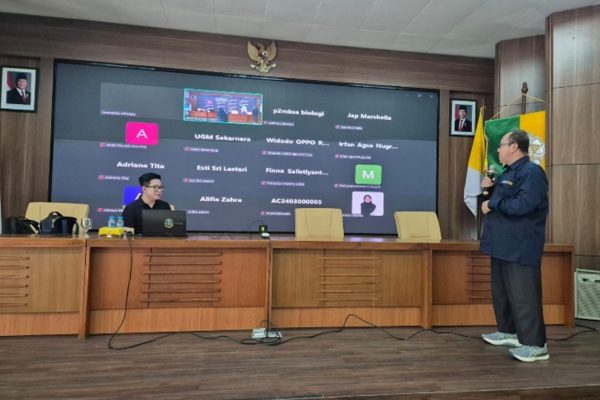
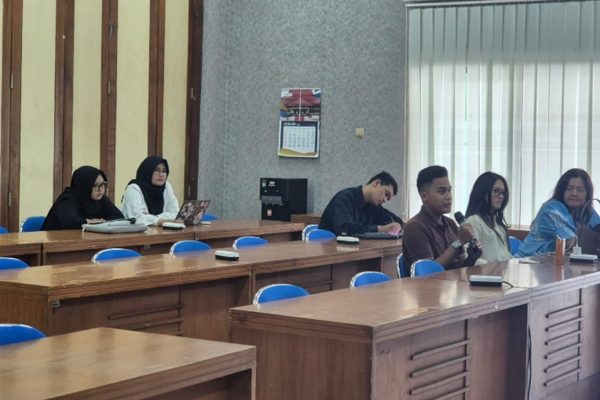
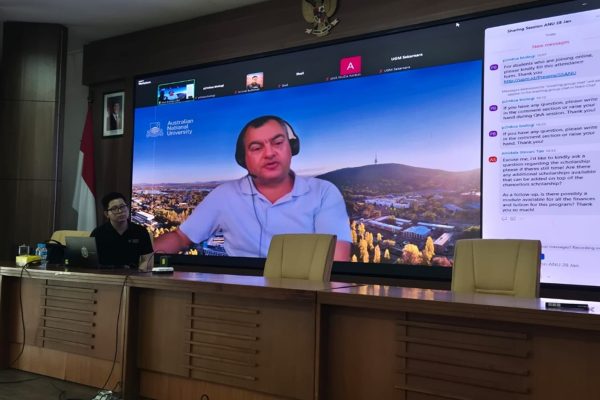
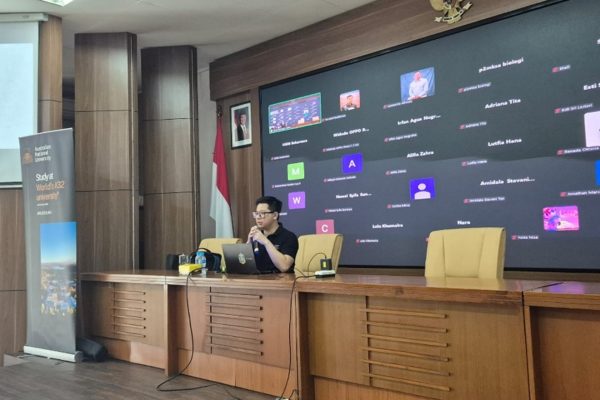
Yogyakarta, 28 November 2025 — Universitas Gadjah Mada (UGM) welcomed a delegation from the Australian National University (ANU), Australia, to discuss the extension of the undergraduate Double Degree program with the Faculty of Biology and explore broader prospects for strategic collaboration with the university. The meeting took place in the Meeting Room of the Rector’s Office at UGM. The ANU delegation was led by Professor Kiaran Kirk, Dean of the College of Science and Medicine, accompanied by Professor Stephen Eggins, Dean of the College of Systems and Society; Professor Maja Adamska, Associate Director of Education at the College of Science and Medicine, Research School of Biology; Associate Professor Jeremy Smith from the College of Systems & Society, School of Engineering; and Leonardo Alfonzo, Regional Manager for International Relations and Partnerships – STEMM.


From UGM, the meeting was attended by Prof. Dr. Puji Astuti, S.Si., M.Sc., Apt., Director of Partnerships, Alumni, and International Affairs of UGM, accompanied by Tyas Iksan Hikmawan, Ph.D., Head of the Office of International Affairs (KUI) UGM. Also present were Prof. Dr. Budi Setiadi Daryono, M.Agr.Sc., Dean of the Faculty of Biology; Dr. Eko Agus Suyono, M.App.Sc., Vice Dean for Research, Community Service, Collaboration, and Alumni; Nur Indah Septriani, Ph.D., Head of the International Affairs Office of the Faculty of Biology; and Matin Nuhamunada, Ph.D., Secretary of the Biology International Affairs Office. In addition, the meeting was attended by Prof. dr. Yodi Mahendradhata, M.Sc., Ph.D., FRSPH, Dean of the Faculty of Medicine, Public Health, and Nursing; Prof. Dr.-Ing. Ir. Agus Maryono, IPM, ASEAN Eng., Dean of the Vocational College; and Prof. Ir. Ali Awaludin, S.T., M.Eng., Ph.D., IPU, ACPE, Vice Dean for Research, Community Service, and Collaboration of the Faculty of Engineering.

Opening the discussion, Prof. Puji Astuti expressed her warm welcome and appreciation for the longstanding partnership between UGM and ANU, highlighting the strong foundation of collaboration that has been built over the years. The meeting continued with discussions on strengthening and expanding the partnership through initiatives such as the Enhancing Quality Education for International University Impacts and Recognition (EQUITY WCU) program, the New Colombo Plan, and academic collaboration schemes with potential support from the Indonesia Endowment Fund for Education (LPDP).

A major highlight of the meeting was the signing of the extension of the Double Degree Undergraduate Program between the Faculty of Biology UGM and the College of Science and Medicine ANU. The collaboration, which has been running since 2018, has been reaffirmed following the graduation of the program’s first two participants, Vanessa and Sabut, who successfully completed their studies at both UGM and ANU in 2025. On this occasion, Prof. Budi emphasized that the continuation of this program represents a strategic opportunity for UGM to broaden global academic exposure for students while enhancing their competencies through high-quality international learning experiences.

Beyond the undergraduate collaboration, discussions also explored the potential for multidisciplinary research partnerships involving the Faculty of Biology, the Faculty of Medicine, Public Health, and Nursing, the Faculty of Engineering, and the Vocational College. Both institutions exchanged ideas on potential research topics that could be developed collaboratively, including biology, public health, systems engineering, and technological innovations supporting sustainable development.

The agenda proceeded with a Faculty Tour to the Faculty of Biology UGM, specifically to the ongoing Research Day activities. The ANU delegation was introduced to various research initiatives, academic activities, and established collaborations within the faculty.

Concluding the visit, UGM and ANU expressed their shared hope that the strengthened partnership will not only advance academic excellence but also generate real contributions to society through alignment with the Sustainable Development Goals (SDGs). The collaboration supports SDG 4 on quality education through international mobility and capacity building, SDG 9 on innovation and impactful research, and SDG 17 on strengthening global partnerships. Moving forward, both institutions expect this cooperation to evolve into a model of international academic partnership that drives innovation, enhances human resource capacity, and reinforces the essential role of higher education institutions in addressing global challenges.

Faculty of Biology UGM Introduces Medicinal Plants to Strengthen Science Literacy Among SDN Pusmalang Students

Community ServiceNews Release Tuesday, 25 November 2025

Sleman, 24 November 2025 — The Faculty of Biology at Universitas Gadjah Mada (UGM) continued its community engagement efforts through the Desa Mitra (Partner Village) Program in Wukirsari Village, Cangkringan Subdistrict, Sleman Regency. In this session, the faculty team introduced Medicinal Family Plants (TOGA) to fifth-grade students of SDN Pusmalang, aiming to enhance their basic understanding of the health benefits of local plant biodiversity.


This activity is part of the Wukirsari Desa Mitra Program coordinated by Prof. Rina Sri Kasiamdari, S.Si., PhD. Faculty members who attended the event included Prof. Dr Diah Rachmawati, S.Si., M.Si.; Prof. Dra. Tuty Arisuryanti, M.Sc., PhD.; Dr. Aprilia Sufi Subiastuti, S.Si.; Dr. Wiko Arif Wibowo, S.Si.; Dr. Maryani, M.Sc.; Dr. Siti Nurbaiti, S.Si. along with doctoral student representative Sidiq Permana Putra, S.Si., M.Sc.

Held on Monday, 24 November 2025, the session was attended by more than 26 students. The teaching team consisted of Dr. Maryani, M.Sc.; Dr. Siti Nurbaiti, S.Si.; and Dr. Wiko Arif Wibowo, S.Si. During the program, the lecturers introduced various common medicinal plants, including ginger, turmeric, temulawak, kencur, lemongrass, beluntas, betel leaf, and other herbs typically found in households.

Through interactive presentations, students learned to identify the characteristics of medicinal plants, understand their health benefits, and explore simple ways to use them in daily life. The session also included direct observation of plant samples and a question–and–answer segment to reinforce their understanding.

According to Dr. Maryani, M.Sc., early exposure to medicinal plants is crucial for fostering young people’s awareness of health and Indonesia’s rich biodiversity. “Children need to reconnect with the useful plants that grow around them. Science literacy begins with simple, familiar things in their daily environment,” she explained.

As the final part of the session, the teaching team conducted a simple assessment to evaluate the students’ understanding of Family Medicinal Plants (TOGA). In this activity, students were asked to identify the names of various plants arranged on the front table. A total of 26 questions were given during the assessment. The results showed that most students were able to answer correctly, with the class achieving an average score of 60 out of 100, indicating a moderate but encouraging level of comprehension. This evaluation also demonstrated that the interactive learning method effectively supported the students’ science literacy and helped them retain essential concepts.

The activity received enthusiastic participation from the students, who enjoyed the hands-on learning experience. Teachers at SDN Pusmalang also welcomed the program, stating that it enriched students’ scientific understanding through practical and engaging activities.

This community empowerment initiative aligns with UGM’s commitment to supporting SDG 3 (Good Health and Well-being) by promoting health education rooted in local wisdom, and SDG 4 (Quality Education) by enhancing the quality of science learning at the primary school level. Moreover, the program strengthens collaborations between the academic community and local society as part of the Faculty of Biology’s ongoing scientific responsibility.

The Faculty of Biology hopes that this educational activity will inspire students to appreciate Indonesia’s biodiversity and recognise the importance of sustainably utilising local natural resources.

Synergy Between the Faculty of Biology UGM, KOBI, YIBI, and WWF in Strengthening National Biodiversity Research

CooperationNews Release Monday, 24 November 2025

Yogyakarta, 21 November 2025 — The Faculty of Biology, Universitas Gadjah Mada (UGM), welcomed a visit from the Indonesian Biodiversity Indicator Foundation (YIBI) together with World Wildlife Fund (WWF) Indonesia. The visit marked the official initiation of a collaborative partnership between the Faculty of Biology UGM and the Indonesian Biology Consortium (KOBI) with YIBI.


Held in the KPTU Meeting Room of the Faculty of Biology UGM, the meeting was attended by Prof. Ir. Ign. Pramana Yuda, M.Si., Ph.D., Chair of YIBI; Barano Siswa Sulistyawan, Ph.D., Vice Chair of YIBI (joining online); Prof. Dr. Jarulis, S.Si., M.Si., Secretary of YIBI; and Paskalina Th. Litaay, M.Sc., Treasurer of YIBI. Representing WWF Indonesia were Muhammad Ali Imron, Director of Forest & Wildlife WWF Indonesia, and Oki Hadian Hadadi. Also present were Saufina Athaya Putri Nugraha, S.PWK and R.A. Callysta Sevanda Calyacetta from YIBI, serving as Administrative Support and Data Statistics officers. The delegation was welcomed by Prof. Dr. Budi Setiadi Daryono, M.Agr.Sc., Dean of the Faculty of Biology UGM and Chair of KOBI, accompanied by Prof. Dr. Suwarno Hadisusanto, Advisor of KOBI, and Dr. Eko Agus Suyono, M.App.Sc., Vice Dean for Research, Community Service, Collaboration, and Alumni Affairs of the Faculty of Biology UGM.

Opening the discussion, Prof. Pramana Yuda expressed his strong support for the upcoming collaboration between YIBI and the Faculty of Biology UGM. Dean Prof. Budi likewise affirmed the Faculty’s commitment to advancing this partnership. Through this collaboration, YIBI, KOBI, WWF Indonesia, and the Faculty of Biology UGM aim to jointly develop the Indonesian Biodiversity Index (IBI), with a focus on enriching primary data sources, strengthening researcher collaboration, and expanding biodiversity research efforts across various regions in Indonesia.

WWF Indonesia Director Ali Imron emphasized that the IBI is expected to become a key instrument and an indicator capable of guiding national sustainable development initiatives.

The event continued with the official signing of cooperation agreements between YIBI and the Faculty of Biology UGM, as well as between YIBI and KOBI. Through this formalization, all parties hope to build a stronger collaborative ecosystem for monitoring, managing, and conserving Indonesia’s biodiversity, ensuring that research findings and generated data can be utilized to support policymaking, education, and ecosystem restoration in the future.

As a commitment to sustainable development, this collaboration also supports the achievement of several Sustainable Development Goals (SDGs), particularly SDG 13 (Climate Action), SDG 14 (Life Below Water), and SDG 15 (Life on Land). Moreover, it aligns with SDG 17 (Partnerships for the Goals) by strengthening synergy among academia, conservation organizations, and national institutions in safeguarding biodiversity as a foundation for the nation’s long-term prosperity.

Building Plant Microtechnical Expertise: Faculty of Biology UGM Guides UIN Sunan Gunung Djati Lecturers in a Two-Day Intensive Training

News Release Friday, 21 November 2025

The Faculty of Biology, Universitas Gadjah Mada, once again held a plant microtechnique training/internship program on 18–19 November 2025 at the Laboratory of Plant Structure and Development. This activity is part of a continuous effort to strengthen competencies in plant anatomy, particularly in pollen preparation techniques and embedding methods for microscopic observation.


The training featured Dr. Utaminingsih, S.Si., M.Sc., as the main instructor, accompanied by laboratory technician Mrs. Prapti, who provided technical support throughout the practical sessions. The participant in this training was Mar’atus Sholikha, M.Sc., a lecturer from the Faculty of Tarbiyah and Teacher Training, UIN Sunan Gunung Djati Bandung, who took part as part of her academic skill enhancement program.

The program opened with a lecture on the fundamental principles of plant microtechnique, including fixation, dehydration, infiltration, embedding, and pollen preparation methods for microscopic analysis. Following the conceptual session, participants engaged in hands-on laboratory practice, learning directly about pollen preparation techniques for observing exine and aperture structures, tissue embedding in paraffin, sectioning using a rotary microtome, slide preparation, and basic staining methods.

The training ran smoothly and interactively. The participant had the opportunity to discuss directly with the instructor regarding challenges and practical needs related to microtechnique activities in her home institution. Through this program, the Faculty of Biology UGM aims to expand academic collaboration networks and support the improvement of teaching and research quality in plant biology.

The Faculty of Biology UGM expresses its appreciation to the participant from UIN Sunan Gunung Djati Bandung for her active involvement and collaboration. It is hoped that the skills acquired during this training will contribute to the development of practical and research activities in her institution.

The implementation of this training for academic staff from outside Universitas Gadjah Mada also supports the realization of the Sustainable Development Goals (SDGs) by strengthening partnerships and external collaboration (SDGs 17), contributing to the well-being of society (SDGs 3), and aligning with the national agenda to promote quality education (SDGs 4).

Herbal Soap-Making Practice and Training on Packaging and Marketing of Home-Garden Processed Products

Community ServiceNews Release Thursday, 20 November 2025

The 2025 PkM-MBKM Team, led by Prof. Dr. Diah Rachmawati, S.Si., M.Si. with members Jovanka, Khansa Fauziah Rachman, Samantha Sonya Putri, and Dhea Amelia, conducted a practical workshop on herbal soap production as well as product packaging and marketing for the Women Farmers Group (KWT) Amanda on Sunday, 16 November 2025, in Padukuhan Kepuh Wetan, Wirokerten Village, Banguntapan Subdistrict, Bantul Regency, Special Region of Yogyakarta. During the program, members of KWT Amanda received hands-on guidance on utilizing home-garden commodities into marketable products. The training focused on two main topics: the practice of herbal soap making and the packaging and marketing of processed products made from butterfly pea, roselle, ginger, and lemongrass. Packaging and marketing strategies are essential aspects of increasing the added value of a product, especially for home-based business groups such as KWT. Proper packaging not only functions to protect the product but also serves as a medium for information, brand identity, and visual appeal that influences consumer purchasing decisions. Meanwhile, appropriate marketing strategies whether through direct selling or the use of digital platforms can broaden market reach, improve the competitiveness of local products, and support small-scale entrepreneurs in building sustainable economic growth.


The activity began with an explanation of the herbal soap-making process, starting from the introduction of safe natural ingredients, composition comparisons, mixing techniques, and the soap molding stage. Members of KWT Amanda were also informed about the function of each ingredient, potential variations in shape and scent, as well as product safety standards to ensure consistent production. After the presentation, participants engaged in hands-on soap-making practice under the guidance of the team. The next session focused on packaging and marketing strategies for processed products made from butterfly pea, roselle, ginger, and lemongrass. The team delivered materials on basic principles of packaging design, the importance of product identity (branding), and how to create attractive and informative labels. In addition, KWT members received training on marketing local products through various channels, both direct selling and digital platforms, to strengthen the competitiveness of the products they produce.

Members of KWT actively participate in practicing making herbal soap and discussing how to independently market herbal products. Their active participation indicates that the skills provided were relevant and applicable to the development of household-scale businesses. This program is expected to enhance the utilization of home-garden resources, strengthen food resilience and independence (SDG 2), promote the use of natural and health-supporting materials (SDG 3), create opportunities for small-scale enterprises based on local potential (SDG 9), and reinforce partnerships between universities and communities (SDG 17).
Dr. Axel Dalberg Poulsen Discusses the Diversity of Zingiberaceae in Borneo during a Guest Lecture at the Faculty of Biology UGM

CooperationNews Release Wednesday, 12 November 2025

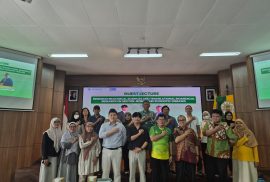
Yogyakarta, 30 October 2025 — The Faculty of Biology, Universitas Gadjah Mada (UGM), hosted a Guest Lecture featuring Dr. Axel Dalberg Poulsen from the Royal Botanic Garden Edinburgh, presenting an engaging topic titled “How Many Gingers Are in Borneo?” The event took place at the Tropical Biology Auditorium and was attended by lecturers and students of the Faculty of Biology UGM.


The lecture began with opening remarks from Prof. Dr. Budi Setiadi Daryono, M.Agr.Sc., Dean of the Faculty of Biology UGM, who expressed his appreciation for Dr. Axel’s visit. In his speech, Prof. Budi conveyed his hope that this event would serve as a gateway for further collaboration in research and academic exchange between the Faculty of Biology UGM and the Royal Botanic Garden Edinburgh.

In his lecture, Dr. Axel presented an overview of the Zingiberaceae family (gingers), which consists of around 2,000 species worldwide. On the island of Borneo alone, there are approximately 24 genera and 260 species. However, these numbers remain dynamic, as new species continue to be discovered and taxonomic classifications are periodically revised. Dr. Axel introduced several ginger species that he and his colleagues have encountered throughout the island of Borneo (Kalimantan).
He also highlighted the challenges in ginger research, including difficulties in collecting field samples, limited access to type localities, and constraints in molecular studies. Additionally, many older specimens have deteriorated and can no longer be used, necessitating recollection from their original locations.
Dr. Axel encouraged students to actively participate and collaborate in plant biodiversity research in Indonesia, particularly within the Zingiberaceae family. The session was met with great enthusiasm from students, who engaged actively during the interactive and inspiring discussion and Q&A.

This guest lecture not only provided valuable insight and inspiration for students but also reflected the Faculty of Biology UGM’s commitment to the Sustainable Development Goals (SDGs)—particularly SDG 15: Life on Land, through enhancing understanding and conservation of biodiversity, and SDG 17: Partnerships for the Goals, by fostering international collaboration in tropical biodiversity research.
123…78

Accreditation

Recent Posts

  • Unveiling the Chloroplast Genome of ‘Mencir’ Strawberry to Support Breeding of Superior Indonesian Strawberries
  • Training on Organic and Inorganic Waste Processing in Tegalrejo: A Collaboration between the Faculty of Biology UGM and Pertamina Patra Niaga AFT Adi Sumarmo under the TEH SEKAR Program
  • Faculty of Biology UGM Strengthens International Collaboration with University of Brunei Darussalam, Supported by the Indonesian Embassy in Brunei Darussalam
  • Preserving Indonesia’s Spice Heritage: INUCoST Team of the Faculty of Biology UGM Holds Herbarium-Making Workshop with Leiden Experts and Industry Practitioners
  • From Village to Village: Optimizing Superior Local Chicken and Catfish Seedlings in Tegalrejo Hamlet, Ngresep Village, Boyolali Regency
Universitas Gadjah Mada

UNIVERSITAS GADJAH MADA

FACULTY OF BIOLOGY
Teknika Selatan Street, Sekip Utara,
Yogyakarta 55281
biologi-ugm@ugm.ac.id
Phone/Fax: +62 (274) 580839

About us

  • History
  • Organization
  • Vision and Mission
  • Staff

Student Affairs

  • Student Service
  • Student Organization
  • Submission for Practical Field Work
  • Permission Field Research
  • Permission Thesis/Disertation

academic

  • Academic Regulations
  • Academic Anonncement

Accreditation

  • Image 1
  • Image 2
  • Image 3

© 2024 FACULTY OF BIOLOGY UNIVERSITAS GADJAH MADA

KEBIJAKAN PRIVASI/PRIVACY POLICY

[EN] We use cookies to help our viewer get the best experience on our website. -- [ID] Kami menggunakan cookie untuk membantu pengunjung kami mendapatkan pengalaman terbaik di situs web kami.I Agree / Saya Setuju