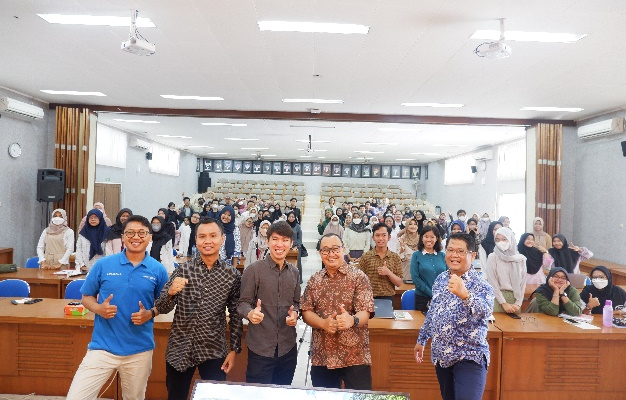
Yogyakarta, 7 September 2023 – Center for Tropical Biodiversity (Centrobio) Faculty of Biology UGM held a seminar entitled “Conservation Youth Agent: Chatting A-Z about Biodiversity”, which was held in a hybrid: online via zoom meeting and offline at the Tropical Biology Auditorium, Faculty of Biology UGM. The seminar was attended by two speakers. There are Ardiantiono, Ph.D. (Cand) from the Durrell Institute of Ecology and Conservation, University of Kent, United Kingdom, and Dr. Dwi Sendi Priyono, S.Si., M.Si. from the Faculty of Biology UGM, and guided by Akbar Reza, S.Si., M.Sc., and also attended by Prof. Dr. Budi Setiadi Daryono, M.Agr.Sc. as Dean, Dr. Eko Agus Suyono, M.App.Sc. as Vice Dean for Research, Community Service, Collaboration and Alumni Affairs, and Abdul Razaq Chasani, S.Si., M.Si., Ph.D. as Head of the Department of Tropical Biology, Faculty of Biology. The seminar was attended by more than 200 participants from various universities and institutions in Indonesia.
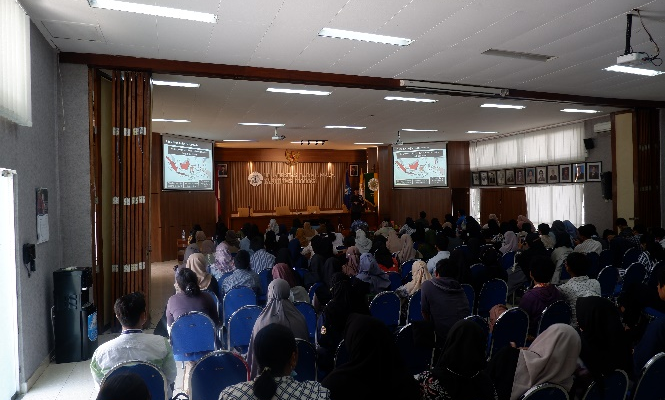
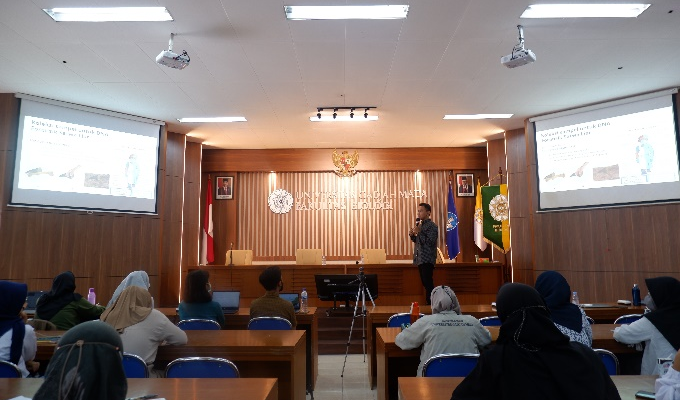

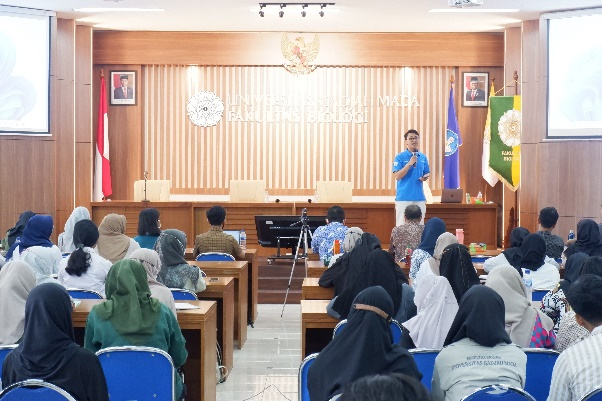
Dr. Eko Agus Suyono, M.App.Sc., Vice Dean for Research, Community Service, Collaboration and Alumni Affairs, Faculty of Biology, gave his speech. Dr. Eko said, this seminar was a great opportunity to invite young people to participate in biodiversity conservation. He also hopes that contributions to conservation and biodiversity will not stop here but will continue and continued by the youth in the future.
Prof. Budi as Dean then also gave his speech (7/9), “Centrobio as a Center for Conservation and Biodiversity Studies produces young people who are aware of conservation and biodiversity.” Prof. Budi also conveyed how the Indonesian Biology Consortium (KOBI) collaborated with Centrobio in supporting biodiversity conservation and preservation also continued with the opening of the seminar.
The next discussion session was hosted by Akbar Reza, S.Si., M.Sc., with the first speaker being Ardiantiono, Ph.D. (Cand). who presented material entitled “Research Trends of Mammal Populations in Indonesia: Gaps and Future Directions”. He explained the threats to biodiversity in the Anthropocene Era, including high human pressure, threats to biodiversity and significant population decline, as well as defaunation due to human activities which cause threats to ecosystems and human life itself, coupled with a lack of attention to these threats which have an impact on climate change and biodiversity loss. Ardiantiono then explained animal population trends in Indonesia and reviewed literature related to animal conservation and biodiversity, both the number and trends of publications and the distribution of publications throughout Indonesia. The gaps that occur in the scope of research and publications are further explained as indicated by species bias, uneven distribution of studies, limited studies with good methods and analysis, lack of long-term population studies and language and cost limitations in publications at the international level.
The next speaker is Dr. Dwi Sendi Priyono, S.Si., M.Si. who presented “Fighting Wildlife Crime with Forensic DNA”. Dr. Sendi opened the material by explaining the phenomenon of illegal trading of protected animals as well as abuse of wild animals which still occurs to this day. The role of DNA Wildlife Forensics is important in investigations of wild animals and endangered species. He explained that every living creature has unique DNA and DNA analysis works by reading the code in the organism’s body to match it to a database. This analysis would be vital when identifying incomplete specimens, animal morphology that is very similar, or tracing the origin of animals. The analysis process from specimen collection, identification, and lab analysis and storage was explained by Dr. Sendi and also about the possible contamination should be anticipated. At the end of his presentation, Dr. Sendi said that Forensic DNA analysis of Wildlife will continue to develop in the future and requires the role of today’s young biologists to participate in the conservation of biodiversity.
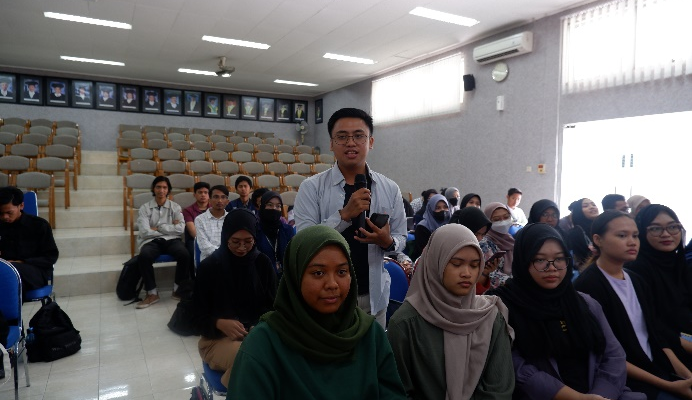
The discussion continued with questions and answers with the two speakers. The participants who attended were very enthusiastic in listening and asking interesting questions during the seminar. It is hoped that the seminar will be a great step, especially in inviting young people to participate in the scope of biodiversity conservation.
The seminar about conservation and biodiversity showed the commitment of the Faculty of Biology in its role in sustainable development in accordance with the Sustainable Development Targets (SDGs), namely good quality education (SDG 4), action to deal with climate change (SDG 13) and conservation of biodiversity which has an impact on life on water and land (SDG 14 and SDG 15).