Ain Sokhna, Egypt | October 20, 2026
Six students from the Faculty of Biology, Universitas Gadjah Mada (UGM), namely Natasyabrina, Salma Farah Yumna, Amarthya Aulia Vadela, Aditya Ilham Alim, Nauval Rajwaa Raysendria, and Muhammad Humam Rafi’i, participated in the activities of PROACT 2026 Winter School on October 20, 2026, at the Stella Di Mare Grand Hotel in Ain Sokhna, Egypt. The program also brought together exchange students from Leipzig University, Germany, and students from Badr University in Cairo (BUC), Egypt. The participation of students from different institutions and countries provided valuable opportunities to exchange knowledge, explore diverse academic perspectives, and establish international academic networks.
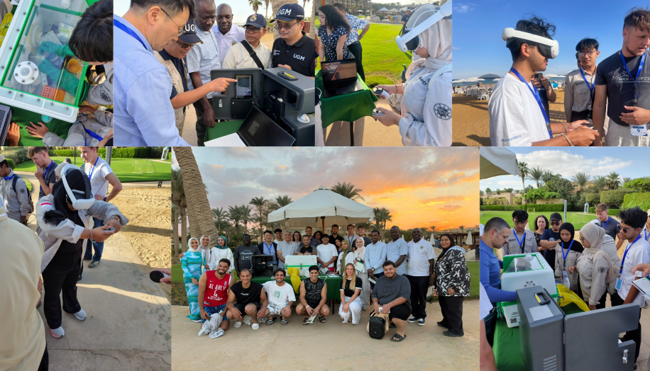
The program featured a series of interactive activities under the theme “Sand & Science: Interactive Field Operations,”including hands-on training with the Mobile Suitcase Lab, sessions on Virtual Reality (VR) and Artificial Intelligence (AI), and a demonstration of an AI-powered mosquito trap. These activities introduced participants to the application of emerging technologies in scientific research and their potential use in field-based operations.
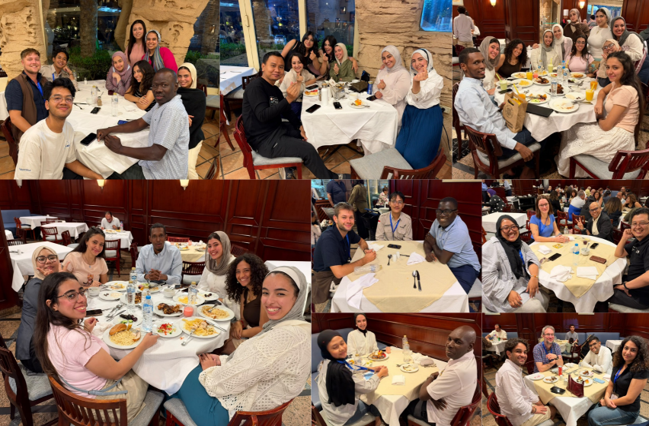
In the evening, the program continued with the “Evening Forum: Meet the Professor.” This forum was designed to encourage direct interaction between students and professors through a shared dinner and informal academic discussions. Participants were encouraged to sit with students from different groups and countries, with at least one professor assigned to each table. This arrangement aimed to promote cross-cultural communication, expand academic networks, and provide students with opportunities to engage directly with experienced academics and researchers.
The fourth day’s activities also aligned with several United Nations Sustainable Development Goals (SDGs). Technology training and knowledge exchange supported SDG 4 (Quality Education) by promoting experiential learning and student competency development. The introduction of laboratory technologies, VR, and AI contributed to SDG 9 (Industry, Innovation and Infrastructure) by highlighting the importance of innovation and technological applications in scientific research. Meanwhile, the demonstration of an AI-powered mosquito trap was relevant to SDG 3 (Good Health and Well-being), as it introduced technologies with potential applications in disease vector surveillance. Interactions among students and academics from different countries also reflected SDG 17 (Partnerships for the Goals) by strengthening international academic networks and fostering opportunities for future collaboration.
Through PROACT 2026 Winter School, UGM Faculty of Biology students gained valuable opportunities to broaden their understanding of emerging technologies, enhance their cross-cultural communication skills, and establish international academic connections. These experiences are expected to contribute to their academic and professional development while encouraging future collaborations in biological sciences and interdisciplinary research.