Sequence data analysis is an important component of modern biological research, particularly in the fields of molecular biology, genetics, and evolution. The use of computational tools and R packages provides researchers with a practical approach to processing, analyzing, and interpreting biological sequence data. To enhance participants’ practical skills in sequence data analysis, the Faculty of Biology, Universitas Gadjah Mada (UGM), organized a hands-on training session on Tuesday, October 6, 2026, at the Tropical Biology Auditorium. The training was conducted in collaboration with Tunghai University, Taiwan, with support from the Forum Mahasiswa Peneliti Genetika (Formasigen) of the Faculty of Biology UGM as a supporting organization in facilitating the collaboration. The activity focused on the use of R and various relevant R packages for analyzing biological sequence data.
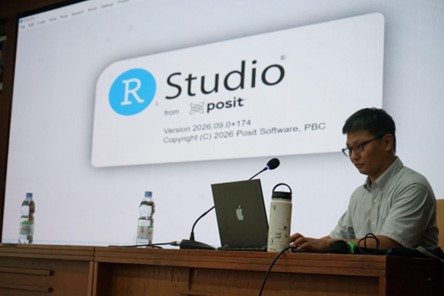
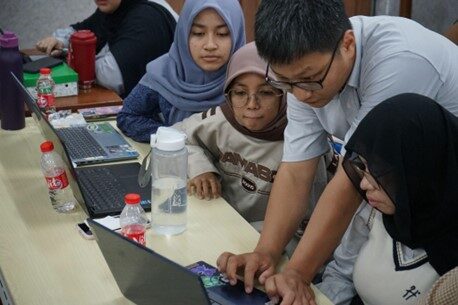
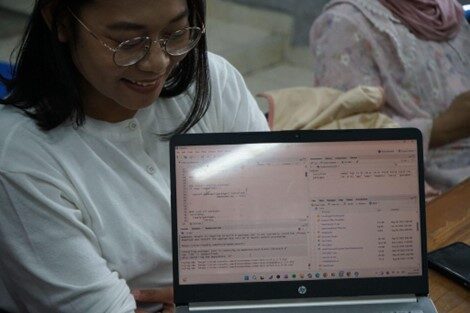
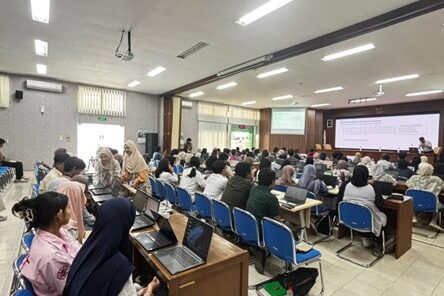
The training was led by Dr. Lan-Wei Yeh and Bo-Cheng Wang from Tunghai University, Taiwan. Participants were introduced to various practical approaches to processing sequence data using R-based computational tools. Throughout the training, participants directly practiced analytical procedures using R packages designed to support sequence data analysis. The hands-on activities provided participants with opportunities to work with sequence datasets, apply various analytical tools, and observe and interpret the resulting outputs. Through the hands-on approach, participants not only learned the theoretical concepts of sequence data analysis but also gained direct experience in using R packages for data analysis. The training also provided participants with an opportunity to explore various computational tools that can be applied to their own biological research.
The activity is expected to enhance participants’ skills in processing and analyzing sequence data using R while encouraging the application of computational approaches in molecular biology and evolutionary research. By gaining direct experience with R packages, participants are expected to further develop their ability to conduct sequence-based analyses in their future research. The hands-on training concluded with a discussion and interactive session with the participants, providing an opportunity to ask questions and further explore the application of R packages in sequence data analysis. Through this hands-on training, the Faculty of Biology UGM, together with Tunghai University and with the support of Formasigen, contributed to strengthening scientific capacity and technology-based research skills in Indonesia. The activity supports the implementation of the Sustainable Development Goals (SDGs), particularly SDG 4: Quality Education and SDG 17: Partnerships for the Goals, by providing practice-based learning opportunities and strengthening international academic collaboration.