SDG 5 : Gender Equality
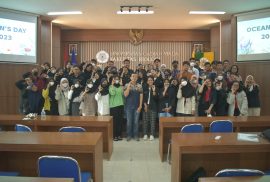
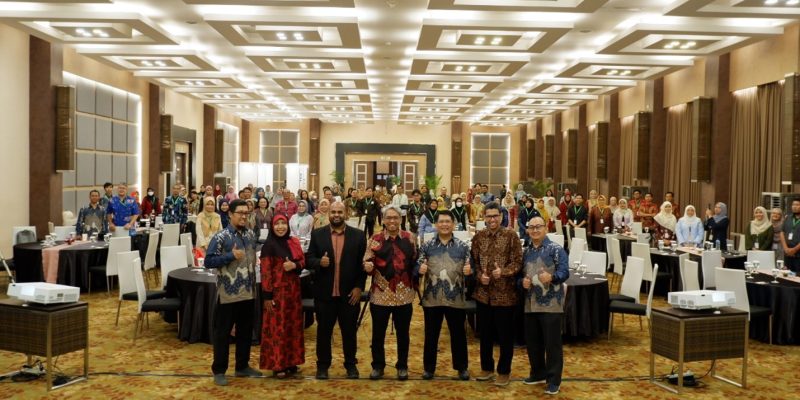
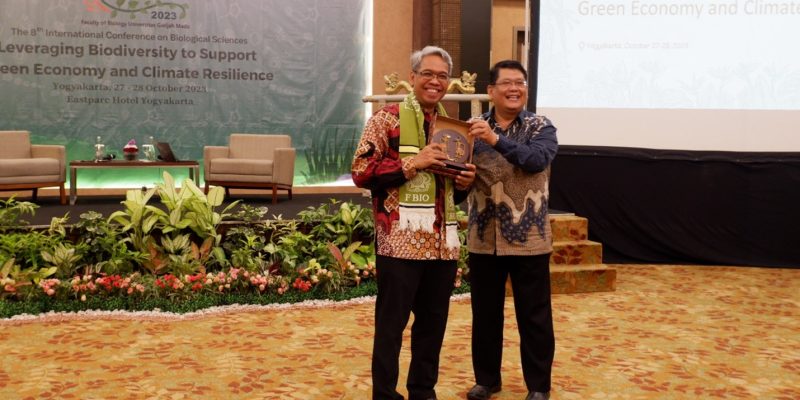
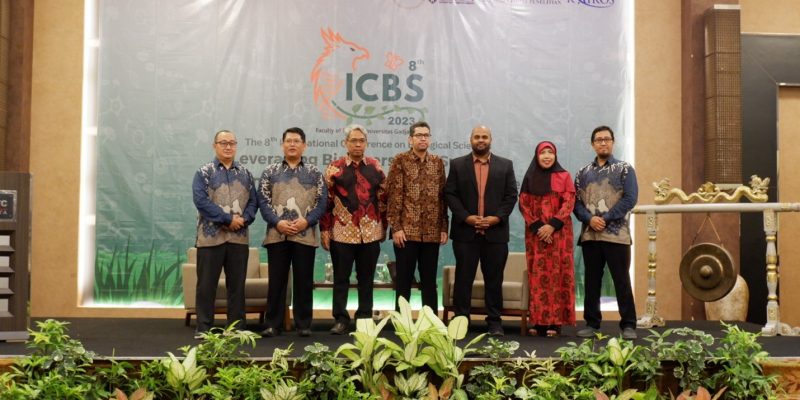
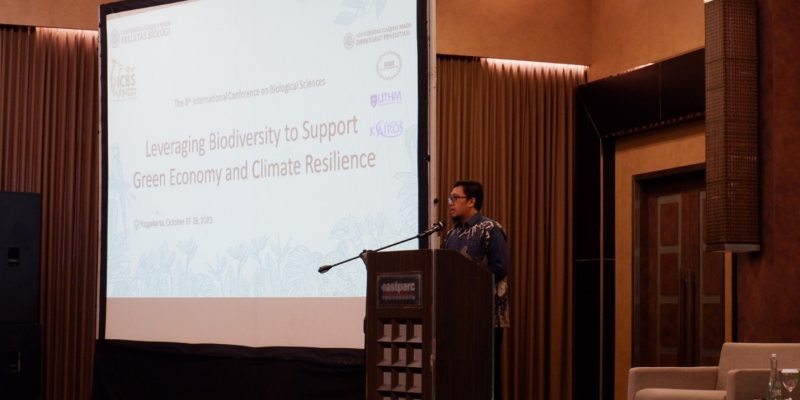
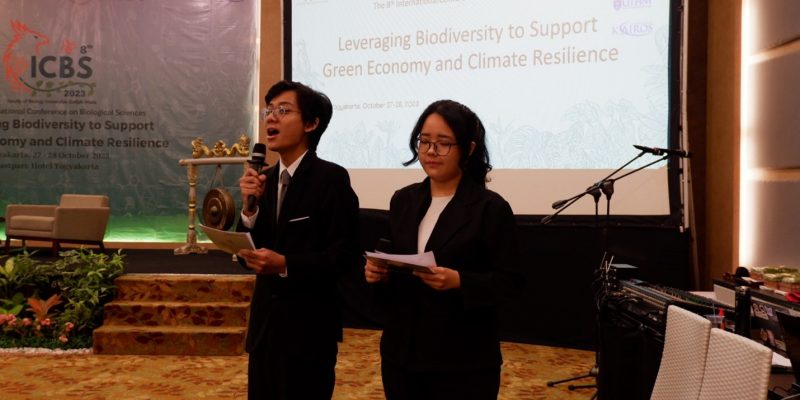
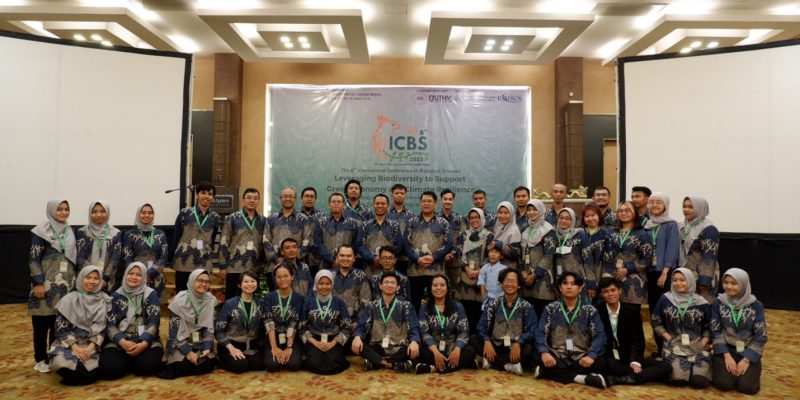
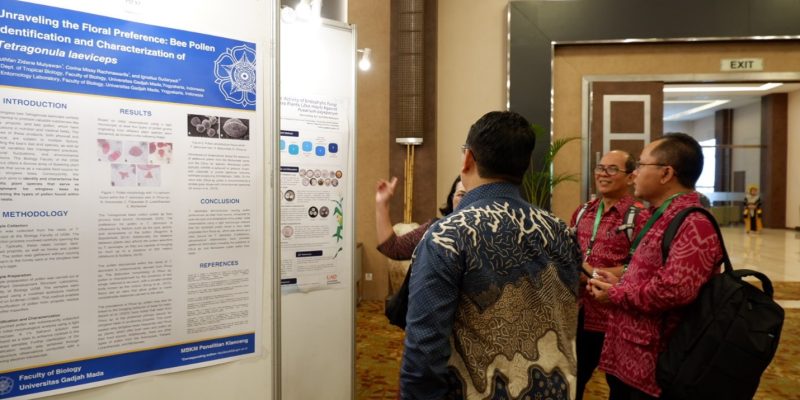
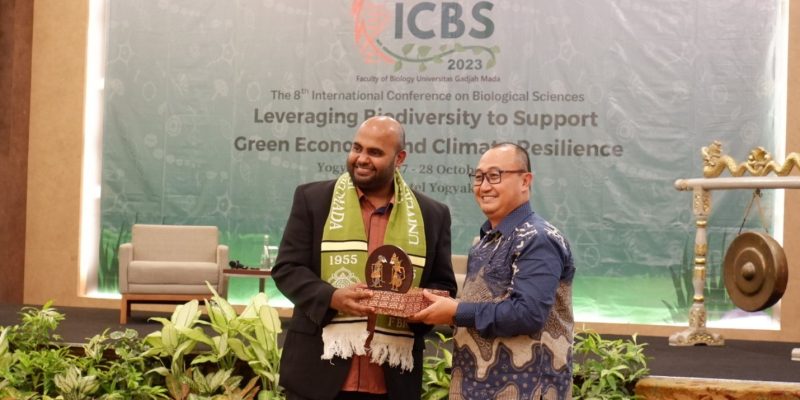
Yogyakarta, 27 October 2023 – The 8th International Conference of Biological Science (ICBS) Faculty of Biology, Universitas Gadjah Mada was held again via hybrid after the previous successful event in 2021. With the theme “Leveraging Biodiversity to Support Green Economy and Climate Resilience”, ICBS was held in collaboration with Tun Hussein Onn University Malaysia (UTHM) and the Indonesian Biology Consortium (KOBI) for two days, 27 and 28 October 2023, at the Grand Ballroom of the Eastparc Hotel Yogyakarta. This conference is part of the Faculty of Biology UGM commitment to its contribution to sustainable development goals (SDGs).
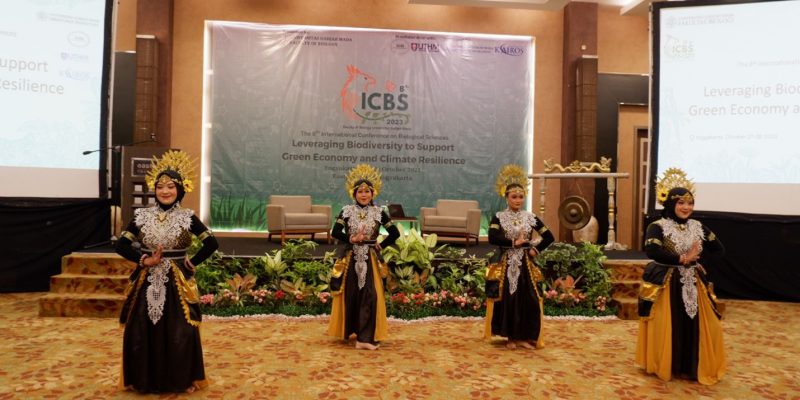
The biennial conference began with a traditional dance performance “Lintang Kemukus” performed by five female students from the Faculty of Biology UGM Executive Board of Postgraduate Student. The Lintang Kemukus Dance is a traditional dance from Banyuwangi, East Java which expresses the charm of women that radiates from the beauty of their souls and is not susceptible to being weathered and lost by changing times.
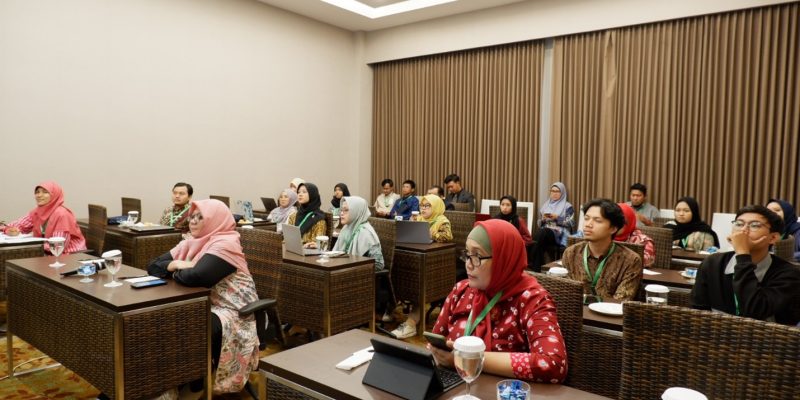
“This year’s ICBS accomodated 7 topics and received more than 150 articles from the USA, India, Australia, Mexico, Malaysia, and Indonesia which were presented offline and online,” said Dr. Miftahul Ilmi, M.Si., Chair of the Committee for the 8th International Conference of Biological Science in his speech Friday (27/10). The topics include biosystematics, functional biology, biomedical, bioinformatics, genetics, bio-nanotechnology and bioengineering. Dr. Ilmi also said that the selected articles will be published in proceedings and partner journals including BIO Web of Conferences, Journal of Tropical Biodiversity and Biotechnology (JTBB), and Indonesian Journal of Biotechnology (IJBioTech) which have been indexed by Scopus and the Directory of Open Access Journals (DOAJ).
Prof. Dr. Mirwan Ushada, STP., M.App.Life.Sc., Director of Research at UGM was also present at the opening of ICBS 2023. He conveyed the urgency of preserving biodiversity and how it is closely related to food security and the medical world. In his speech, Prof. Mirwan also revealed the contribution of technology in the development of science through Artificial Intelligence (AI). He hopes that this conference can become a forum for gathering and sharing knowledge and ideas to create a sustainable future.
“This conference aims to be a gathering place for scientists, policy makers and academics to share various information and experiences in the realization of sustainable science, especially understanding biodiversity conservation and resilience to current climate change,” Prof. Dr. Ir. Sri Suning Kusumawardani, S.T., M.T., Director of Learning and Student Affairs, Ministry of Education, Culture, Research and Technology, then gave his welcoming speech for ICBS 2023.
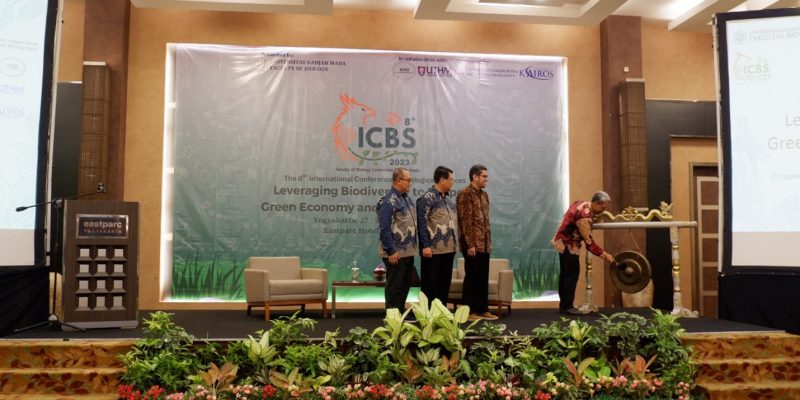
“Through this conference, we hope to be able to explore deeply how to use biodiversity to build a sustainable economy and build resilience to climate change. We also hope that all participants can contribute to discussions, collaboration and share insights in understanding related to biodiversity conservation and utilization,” said Prof. Dr. Budi Setiadi Daryono, M.Agr.Sc. in his speech. Together with Prof. Dr. Satyawan Pudyatmoko from the Ministry of Environment and Forestry of the Republic of Indonesia, Prof. Mirwan, and Dr. Eko as Vice Dean for Research, Community Service, Collaboration and Alumni Affairs, Prof. Budi opened the conference by striking the gong three times.
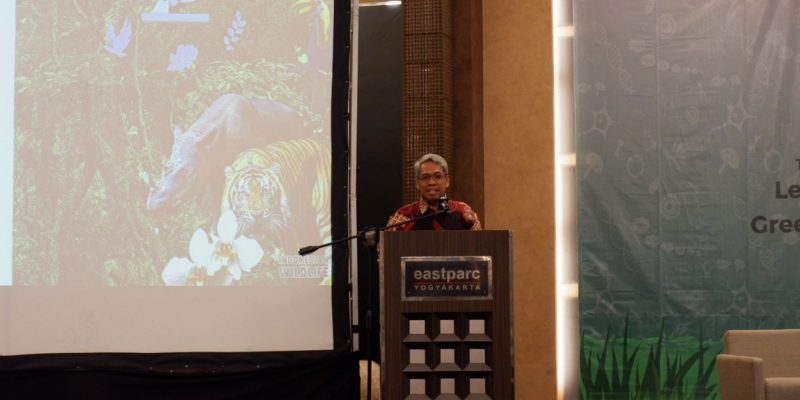
The keynote speaker at the 8th International Conference of Biological Science this time was delivered by Prof. Dr. Satyawan Pudyatmoko, Director General of Natural Resources and Ecosystem Conservation, Ministry of Environment and Forestry of the Republic of Indonesia. Prof. Satyawan conveyed how humans contribute significantly to the earth’s climate conditions and anthropogenic climate change also affects the structure and function of ecosystems which indirectly causes a decline in human welfare. He highlighted the importance of establishing conservation areas and land protection as well as biodiversity management as important steps to address climate change.
Assoc. Prof. Ts. Dr. Muhammad Abdul Latiff from Universiti Tun Hussein Onn Malaysia, was also invited to be a speaker at ICBS this time. He gave a presentation entitled “Primate-Based Tourism: Fostering Biodiversity Conservation and Empowering local Communities through Green Economy”. He highlighted the importance of synergy between primate-based tourism and community-based conservation (CBC), which is an effort to increase conservation as well as empower local communities for sustainable development.
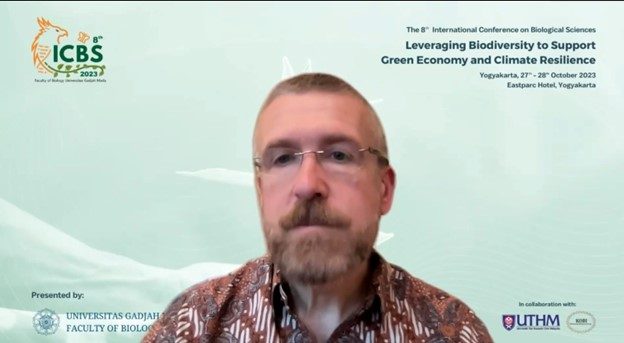
The next keynote speaker is Assoc. Prof. Dr. Michael Sauer, Head of Department of Biotechnology OMV AG from the University of Natural Resources and Life Science, BOKU, Austria. Dr. Michael presented on microbial culture for sustainable chemical production. Dr. Michael highlighted the limitations in fuel and chemical production due to limited resources and climate change. A microbial fermentation process that converts plant biomass and waste as a source of chemical production.
The 8th International Conference of Biological Science is expected to become a forum for communication and sharing for researchers to collaborate and innovate to develop biodiversity-based sustainable development. This is in line with contributions to increasing science and inclusive education (SDG 4), especially in developing biodiversity conservation (SDG 14 and 15) and handling climate change (SDG 13) through sustainable partnerships (SDG 17).
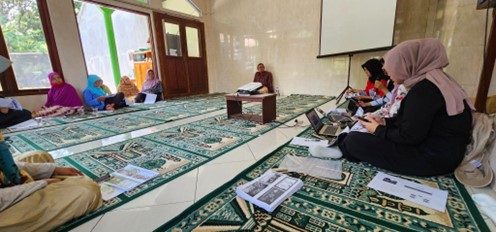
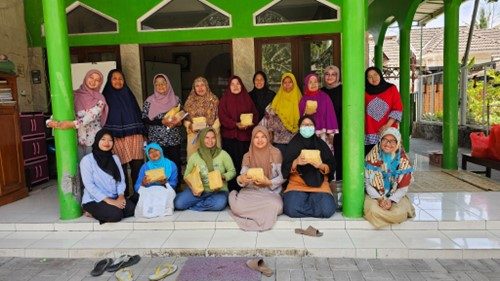
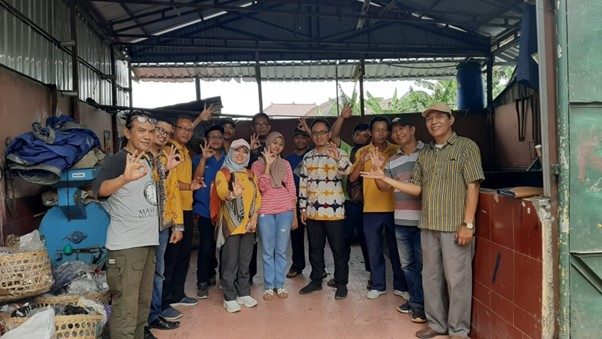
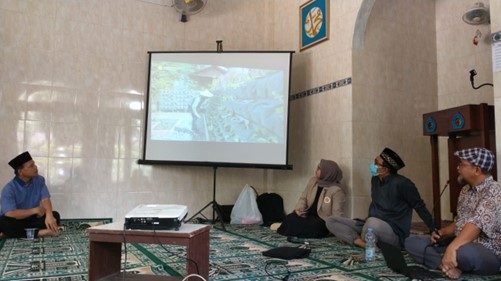
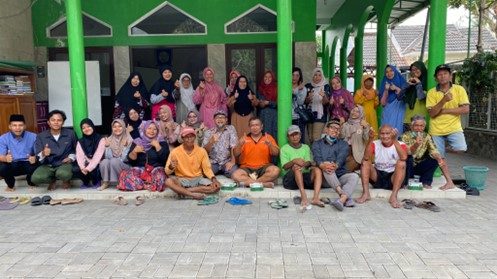
On Sunday, October 15th, 2023, the team of Merdeka Belajar Kampus Merdeka-Pengabdian kepada Masyarakat (MBKM-PkM) 2023 Faculty of Biology, Universitas Gadjah Mada, conducted another socialization activity for the residents in Pajangan, Wedomartani, Ngemplak, Sleman, Yogyakarta, regarding the production of liquid organic fertilizer (LOF) and eco-enzyme. This socialization was organized to encourage the community to manage organic waste into something beneficial, such as liquid organic fertilizer (LOF) and eco-enzyme. The speakers for this socialization were the MBKM-PkM 2023 team, consisting of five undergraduate students of Faculty of Biology, Unviersitas Gadjah Mada, class of 2020, they were Arba’ Ramadhani Artik, Arneta Yuvita, Ester Dewanti Yovita Wardani, Fadiah Sri Rahayu, and Zidni Meirizka Utami, under supervision Dr. Ardaning Nuriliani, S.Si., M.Kes. and the partner mentor Ms. Nurini Aru Sudarsi. The MBKM-PkM 2023 team conducted the socialization with the theme “Caring for the Earth Starts from Our Kitchen.” This theme included two main topics: liquid organic fertilizer and eco-enzyme. The first topic covered the importance of macro and micro nutrients for plants, the definition of organic and inorganic fertilizers, the differences between organic and inorganic fertilizers (chemical), the advantages and disadvantages of organic and inorganic fertilizers, the production process of liquid organic fertilizer, as well as its application. The second topic explained the concept of eco-enzyme, its advantages and disadvantages, its benefits, the production process of Eco-enzyme, as well as its application.
Effective management of organic waste is crucial at present, given the issues related to the limited space for waste disposal at the Piyungan Final Disposal Site in the Special Region of Yogyakarta. Producing liquid organic fertilizer (LOF) and eco-enzyme is one way to manage organic waste such as food scraps, vegetable waste, fruit waste, and leaves, turning them into something beneficial for the environment. Liquid organic fertilizer (LOF) can be used to nurture plants without worrying about chemical effects on them. Meanwhile, eco-enzyme can serve not only as a fertilizer component but also as a detergent or cleanser and pest control for plants. The production of LOF and Eco-enzyme doesn’t require significant costs; it mainly relies on organic waste from the kitchen, water, molasses solution (brown sugar, palm sugar, coconut sugar), and EM4 solution.
This socialization received a positive response and enthusiasm from the residents of Pajangan Hamlet who actively participated in the discussion sessions with the speakers. It is hoped that the socialization by the MBKM-PkM 2023 team will raise awareness and engagement, particularly among the residents of Pajangan Hamlet, in environmentally friendly practices by managing kitchen and organic waste and turning them into something useful for the environment. (SDGs 3).
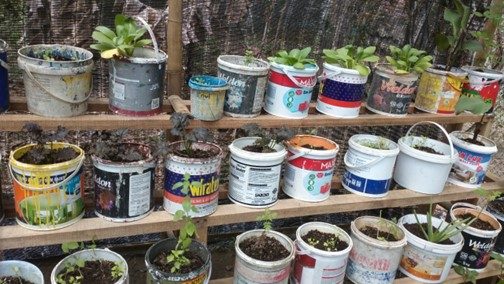
On Sunday, 8th October 2023, the Pengabdian kepada Masyarakat – Merdeka Belajar Kampus Merdeka (PkM-MBKM) Faculty of Biology, UGM 2023, 5 undergraduate students of Faculty of Biology, UGM class of 2020, namely Arba’ Ramadhani Artik, Arneta Yuvita, Ester Dewanti Yovita Wardani, Fadiah Sri Rahayu, and Zidni Meirizka Utami supervised by Dr. Ardaning Nuriliani, S.Si., M.Kes. and Ms. Nurini Aru Sudarsi as the partner mentor have carried out the socialization activities to the residents in Pajangan, Wedomartani Village, Ngemplak, Sleman, Yogyakarta. The theme of the socialization was “Improving the Community’s through Optimizing of Vacant Land”. This program aims to engage the community to improve the economic condition of the family by utilizing vacant land in the yard area of the house to plant vegetables, fruits, herbs, and several medicine and functional plants or also called “TOGA”. In this activity, we invited Mr. Panggih Dwi Atmojo, S.T. as a speaker. He is an alumnus of the Faculty of Engineering, UGM who is currently active as an agro economic practitioner as well as the founder and owner of Agro Edukasi Caping Merapi Yogyakarta which is located at Kenayan, Wedomartani, Ngemplak, Sleman Regency, Yogyakarta Special Region. The given presentation discussed topics about food gardening, including vegetable garden cultivation, as well as rising fish, chickens, and other small livestock to meet daily food needs. He also discussed about urban farming, which is the method of farming in the city or on limited land. In addition, the speaker also emphasized that the use of vacant land as a food garden can provide various other benefits, such as the community can provide traditional medicine independently, add decoration to the garden, provide refreshing activities through gardening, obtain healthier food that is free from chemical fertilizers, and produce biofertilizer which can be obtained through composting, eco lindi, and manure systems. This can also serve to overcome the problem of handling organic waste.
This socialization was attended by around 20 residents and received a very positive response, even some residents were very enthusiastic and directly involved in the discussion session together with the speakers.
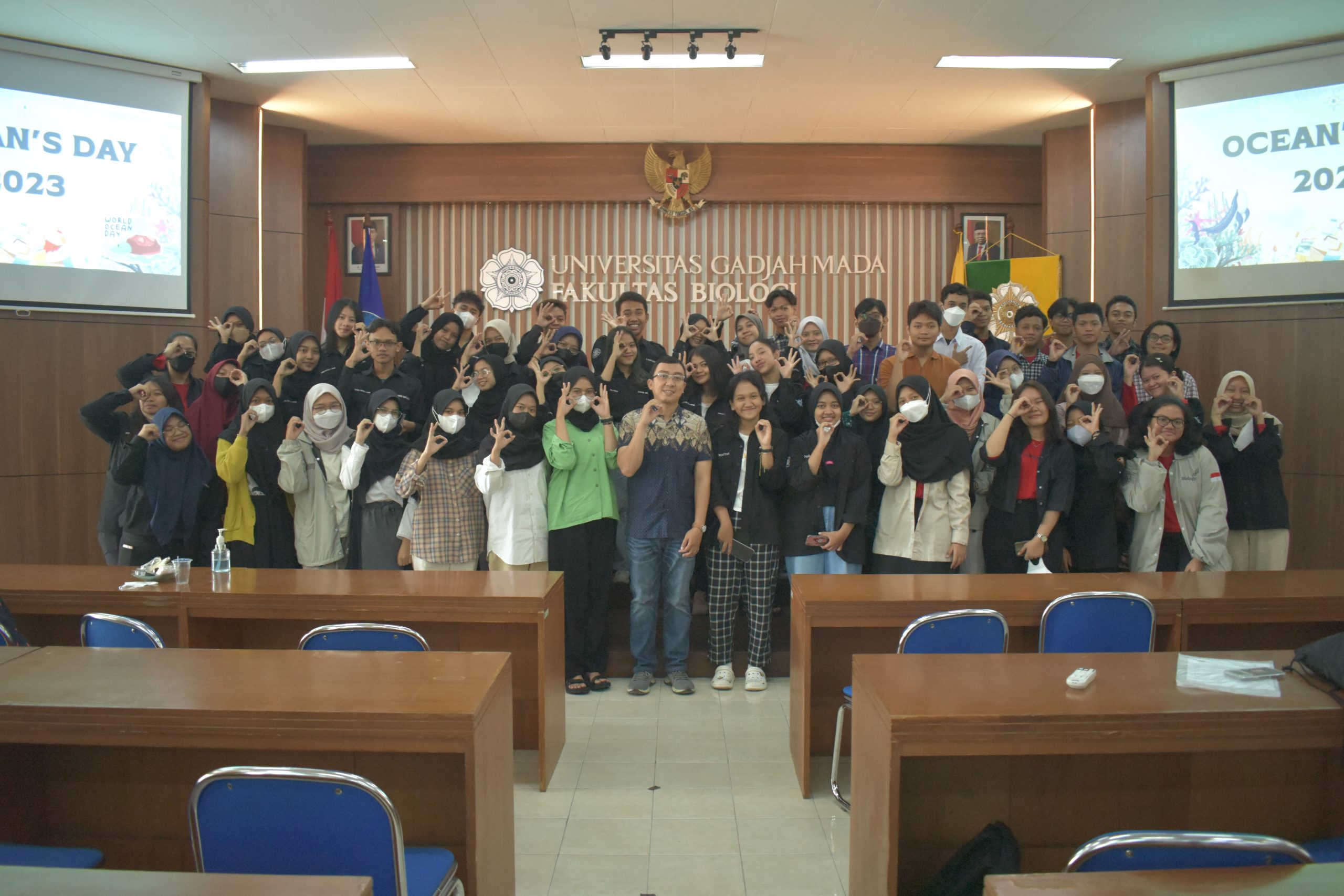
Sunday, 4 June 2023 Oceans Day 2023 was held by the Marine Studies Group of the Faculty of Biology UGM as part of their participation in World Ocean Day on June 8 and was attended by 56 members of Marine Study Group and 18 volunteers from Faculty of Biology UGM. Ocean Day 2023 has the theme “Stop Plastic Waste Polluting the Sea” and comprised two main activities: a seminar and beach cleanup.
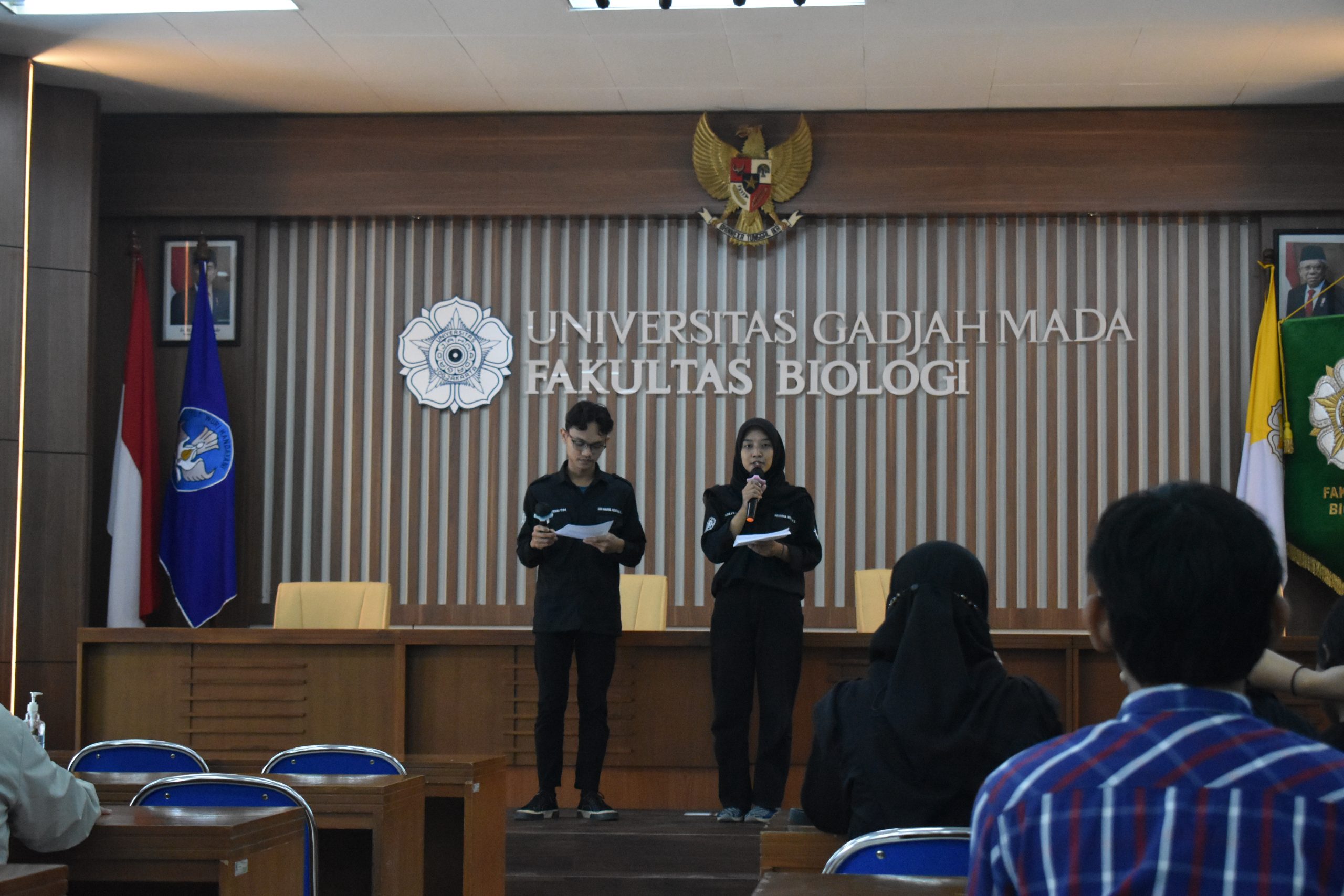
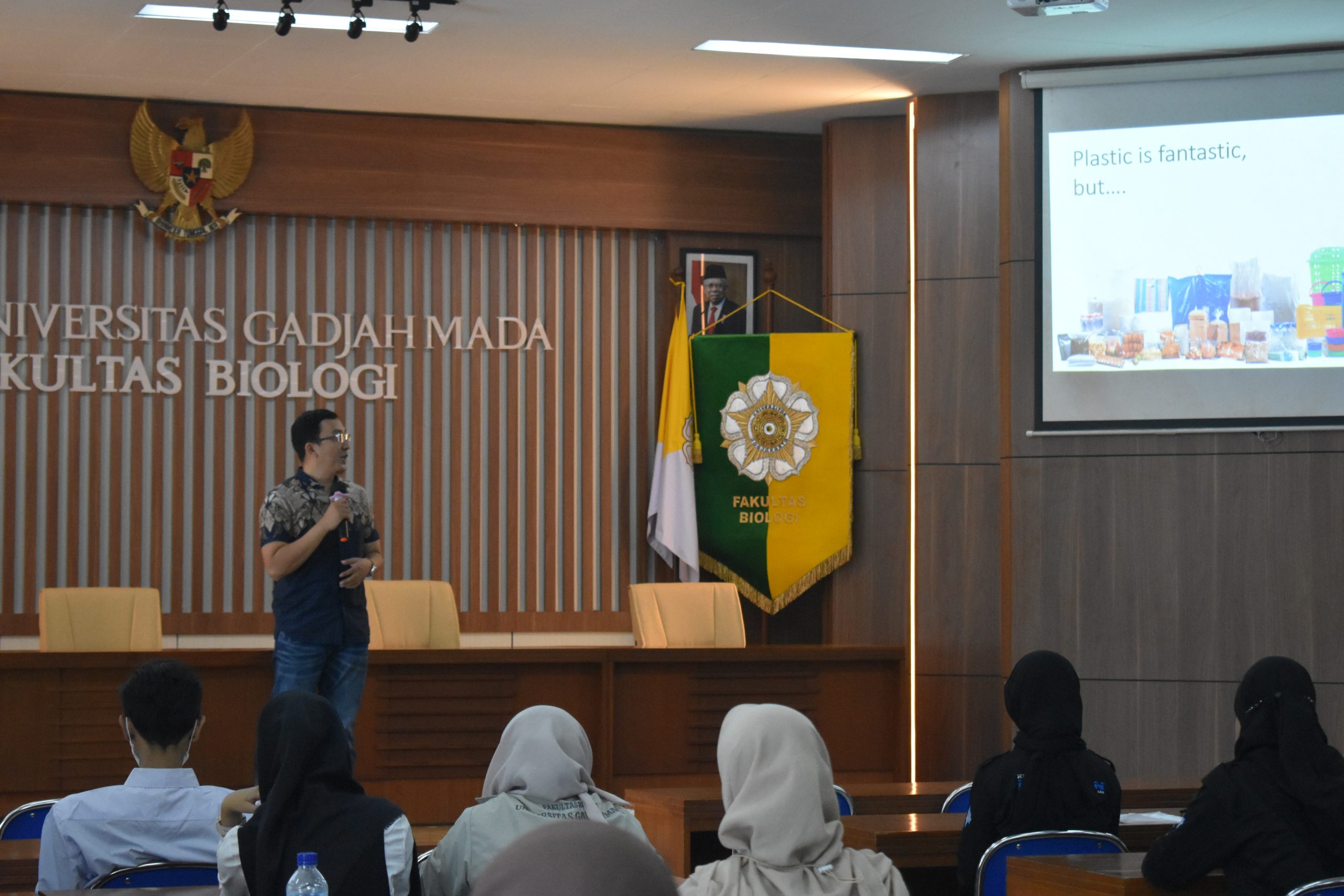
The Seminar began at 08.30 to 11.00 at the auditorium of Biology Tropika and was guided by Renisha Windy Puspita Sari (DXXII) and Ahmad Aris B. R. (DXXIII). The seminar began with a welcoming speech from Filda Mega AYU as chairperson of the committee and A. Najib Dhiaurahman , the chairperson of Marine Study Group. Then the seminar continued with a presentation on plastic waste management to reduce water pollution and its solution through marine biology by Tyas Ikhsan Hikmawan, M.Sc., Ph.D. followed by discussion.
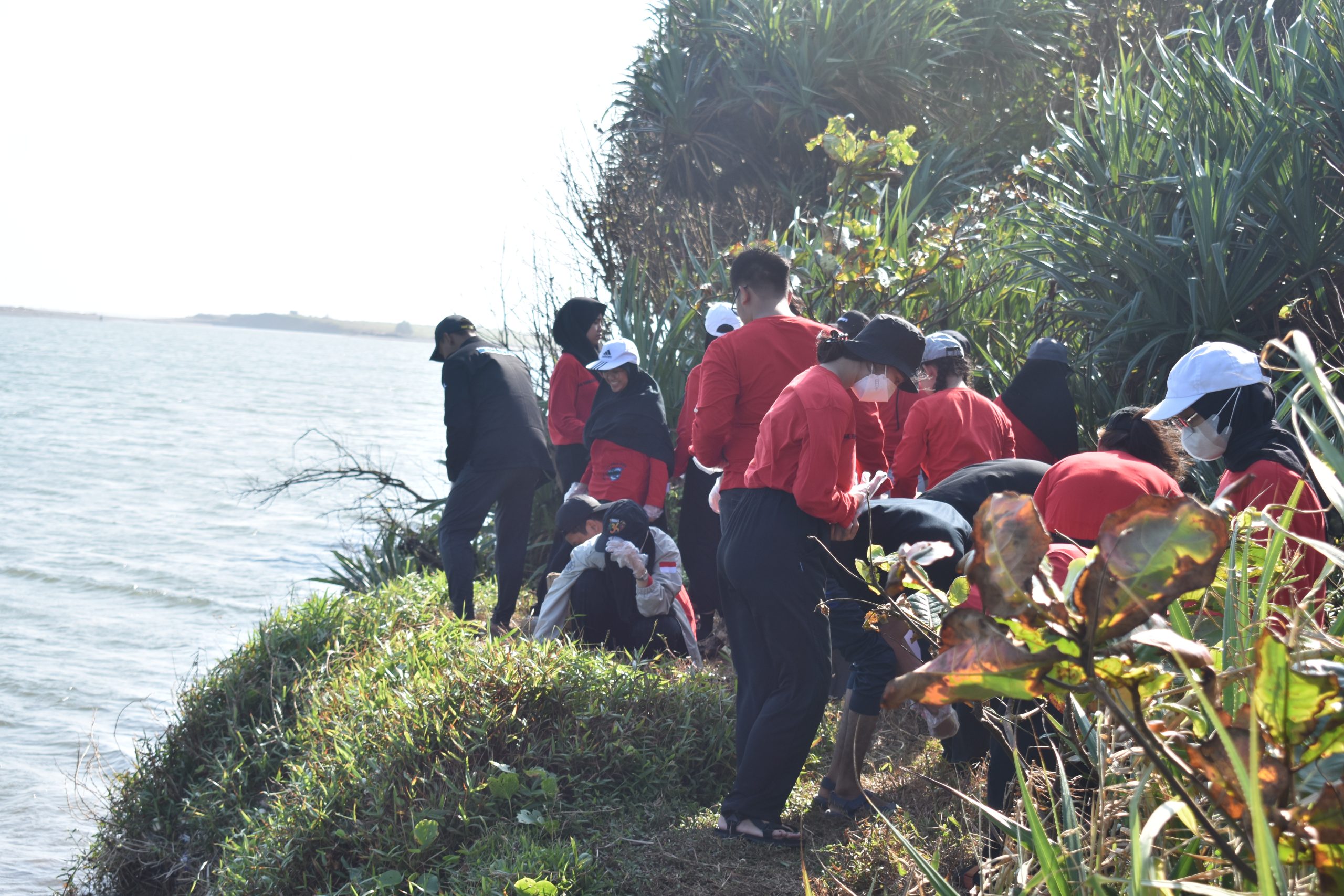
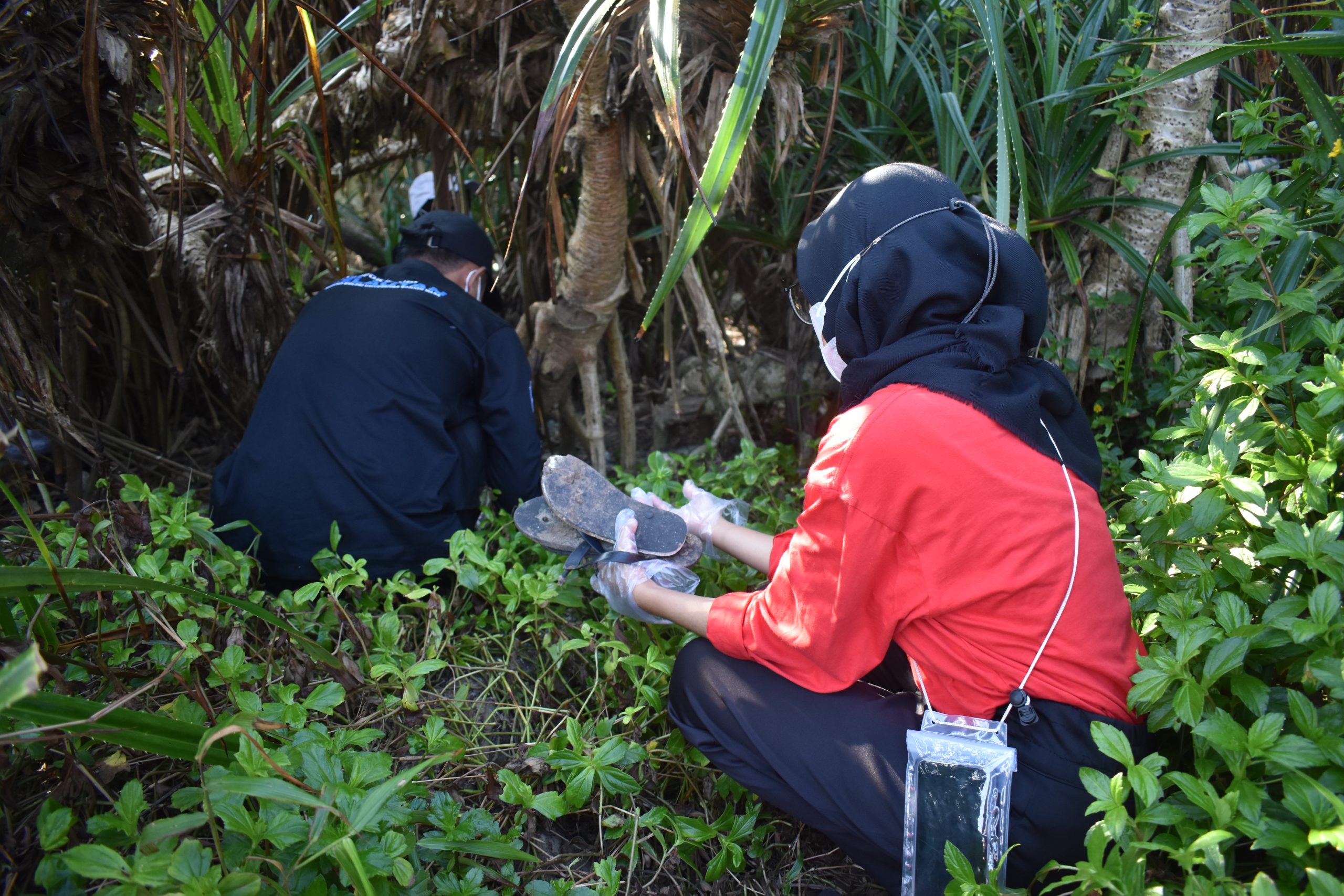
The next series of activities was beach clean-up at Baros Beach which took place 13.00 WIB to 16.00 WIB. This beach cleaning activity is a volunteer activity carried out directly on the shores of Baros Beach, collecting scattered waste in the area and educating about marine waste management.
May the knowledge and experience that has been given at Oceans Day 2023 not stop at this event alone, but be accepted and implemented continuously by all participants , and shared with anyone. Eternal and unlimited, invincible and powerful, such is the ocean. Together, let’s save the seas from all damage and pollution because this can be a real action to protect future generations. Happy World Sea Day! Cheers to Jay KSK!
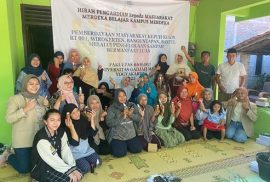
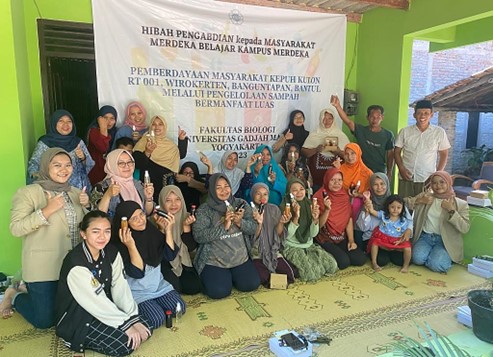
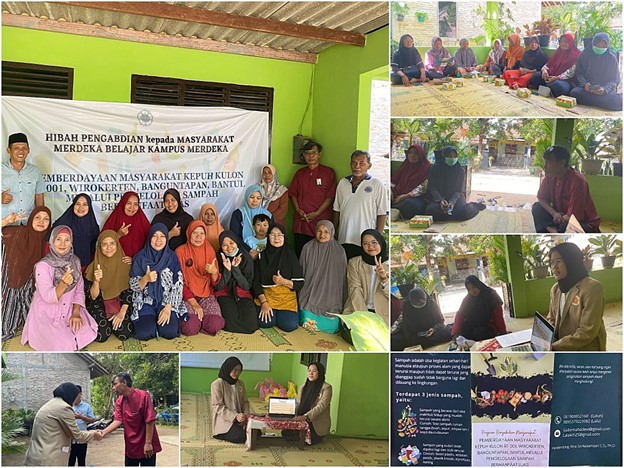
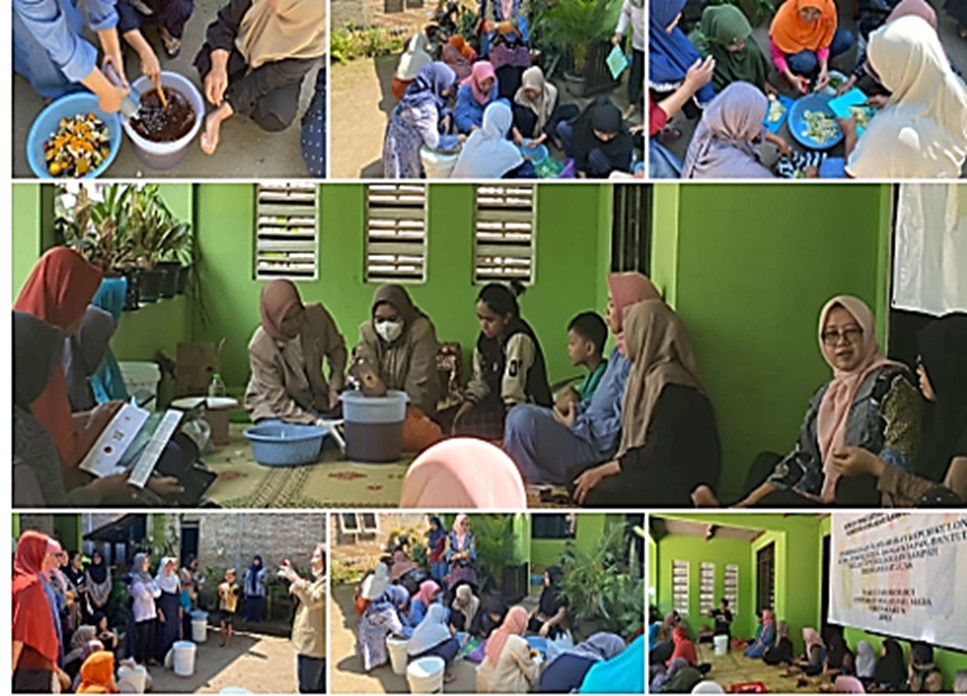
In order to introduce waste management techniques, the team of Pengabdian Kepada Masyarakat – Merdeka Belajar Kampus Merdeka (PkM MBKM) Faculty of Biology 2023 chaired by Rina Sri Kasiamdari, S.Si., Ph.D. and involved two students namely Galuh Kirana Mahadewi and Laila Uswatun Chasanah have carried out activities related to organic waste management in Dusun Kepuh Kulon RT 001, Wirokerten, Banguntapan, Bantul. This activity is planned to take place in 2 semesters, starting with a socialization event which have been held on Sunday 14 May 2023 from 09.00 to 10.30 WIB at the house of the neighborhood head of RT 001, Mr. Zamzuri. This socialization activity was attended by 15 participants of RT 001 and the head of Hamlet. In her greetings, Ms. Rina said that the MBKM PkM activity was the second year of the MBKM PkM Program at RT 001 Kepuh Kulon. The Waste Management theme is a program that is expected to be applied by people in their homes or in their environment. Head of the hamlet, Mr. Sunartana conveyed the importance of household-scale waste management. This is because a lot of garbage has accumulated in various places due to garbage dumps that can no longer accommodate waste. In this socialization activity, it was explained the meaning of waste, types of waste, examples, as well as how to process waste into more useful items.
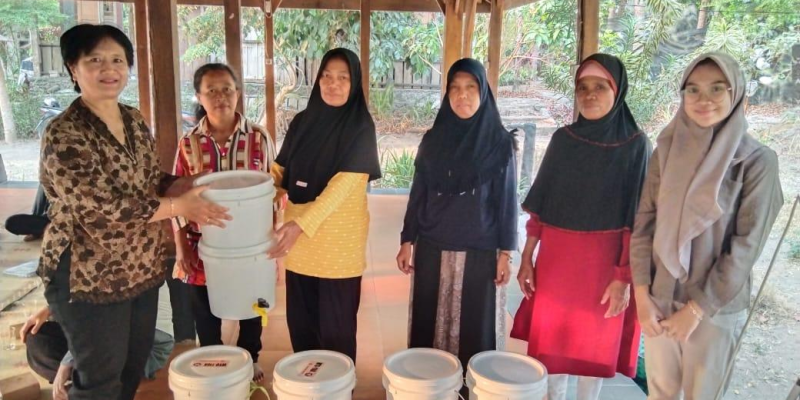
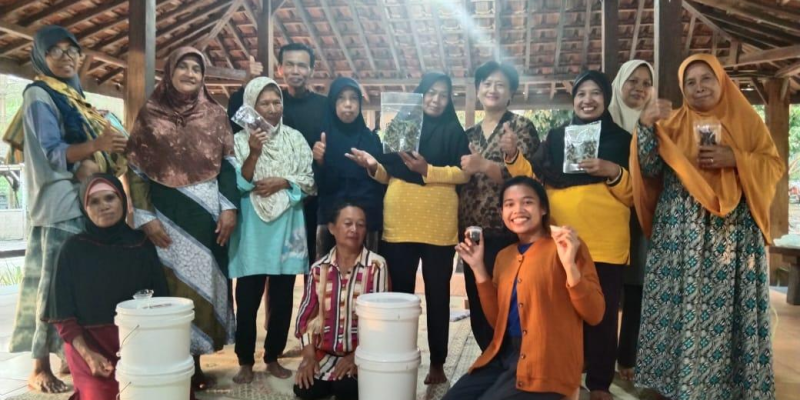
After the socialization activities were carried out, then practical activities were carried out in managing household organic waste into compost and eco enzymes. This activity was held on Sunday, 21 May 2023 from 09.30 to 11.00 WIB at the house of the neighborhood head of RT 001, Mr. Zamzuri. This activity was attended by 23 participants consisting of women from Kepuh Kulon RT 001. Before doing the practice, Galuh and Laila demonstrated how to make compost and eco enzymes from household waste. In this activity, Rania Naura Anindhita, a student at the UGM Faculty of Biology, introduced her product to the participants who attended. Eco Lindi is a liquid that neutralizes the smell of garbage, the smell of garbage sprayed by Eco Lindi will disappear within 10 minutes. During the practice of making compost and eco enzymes, the community was divided into four groups, one group consisting of 5 to 6 people and each group carried out independent practices. The waste used comes from household waste collected a few days before. At the end of the activity, the MBKM PkM team distributed EM4, molasses, and Eco Lindi to the participants that attend, so they could re-practice making the compost and eco enzyme at their homes. Eco Lindi that is distributed can be sprayed to remove the smell of household waste, chicken coops, or cattle houses. This PkM MBKM activity will be continued from July to November with the utilization of household waste into more useful materials.
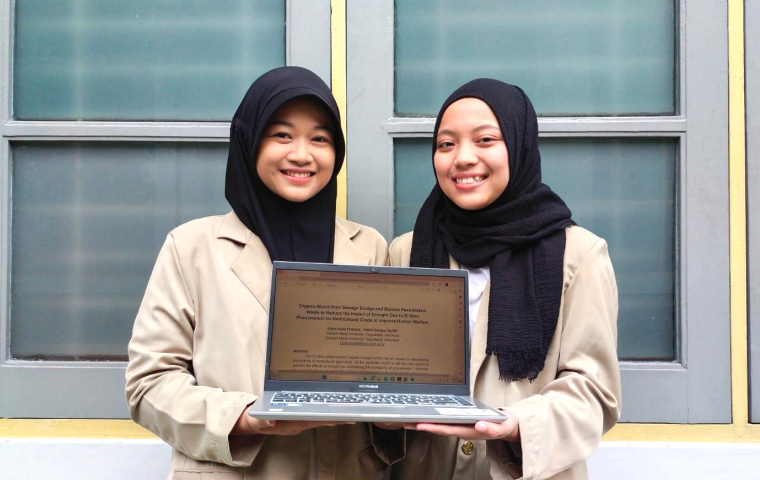
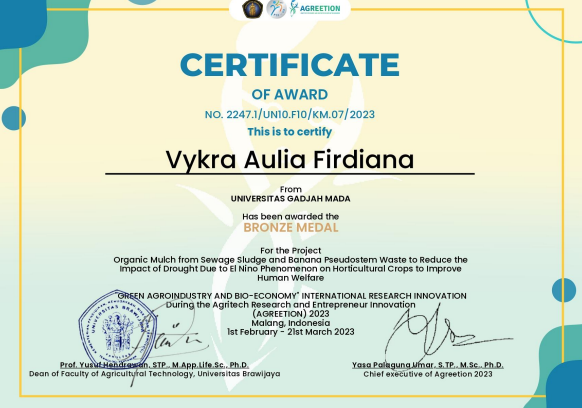
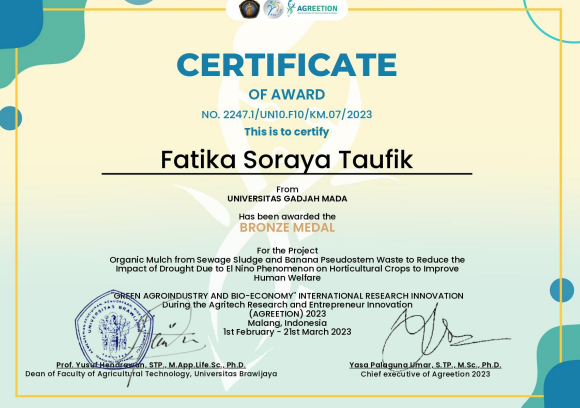
Two Biology students Class of 2019 who are members of the “Organic Sheet Mulch” team under the guidance of Dwi Umi Siswanti, S.Sc., M.Sc. won a bronze medal on March 21, 2023 in an international scientific work competition. The team chaired by Vykra Aulia Firdiana with one member, namely Fatika Soraya Taufik took part in the Agritech Research and Entrepreneurship Innovation (AGREETION) competition which was held in cooperation with several organizations at the Faculty of Agricultural Technology, University of Brawijaya, including the Agritech Research and Study Club (ARSC), Agritechno Business Center (ABC), Agricultural Industrial Technology Student Association (HIMATITAN), Agricultural Engineering Student Association (HIMATETA), and Agricultural Product Technology Student Association (HIMALOGISTA). This competition takes place from 1 February 2023 to. 21 March 2023 and was successfully attended by 243 teams from three countries (Indonesia, Malaysia and the Philippines).
The big theme that was carried out in this competition was “Development and Innovation on Sustainable Agro-Based Industry Technology to Achieve Human Welfare” with 4 sub-themes. In this competition, Vykra and Soraya compiled a scientific work on the sub-theme “Green Agroindustry and Bio-economy” entitled “Organic Mulch from Sewage Sludge and Banana Pseudostem Waste to Reduce the Impact of Drought Due to El Nino Phenomenon on Horticultural Crops to Improve Human Welfare”. The problem behind the preparation of this scientific work is the statement by the National Disaster Management Agency (BNPB) and the Meteorology, Climatology and Geophysics Agency (BMKG) regarding an increase in drought up to three times worse due to an increase in the El Nino index which is predicted to occur in mid-2023. This has the potential to further increase puso (parched) due to drought which has long been a problem for farmers despite the low El Nino index.
In this scientific work, sewage sludge and banana leaf waste are used as organic mulches which are able to maintain soil water content during the drought phase so that soil moisture is maintained. The organic materials contained in this mulch innovation also add to the role of mulch as a supplier of additional nutrients to the soil to support optimal plant growth. The use of these two materials is an effort to utilize biowaste and create a green agroindustry. The hope is that this innovation can be used as a reference in anticipating and reducing puso due to drought