Tegalrejo, 11 December 2025
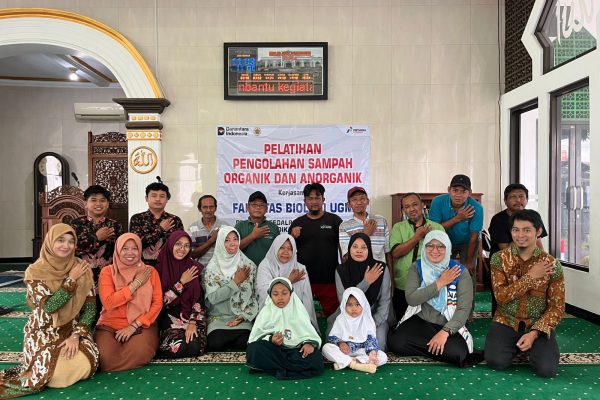
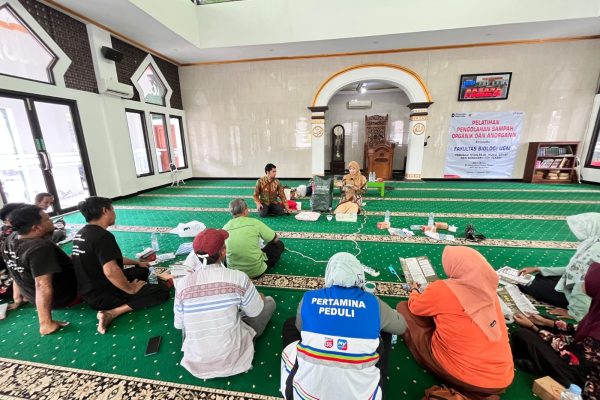
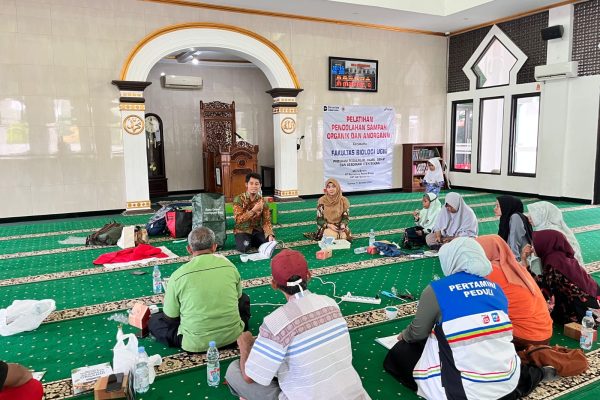

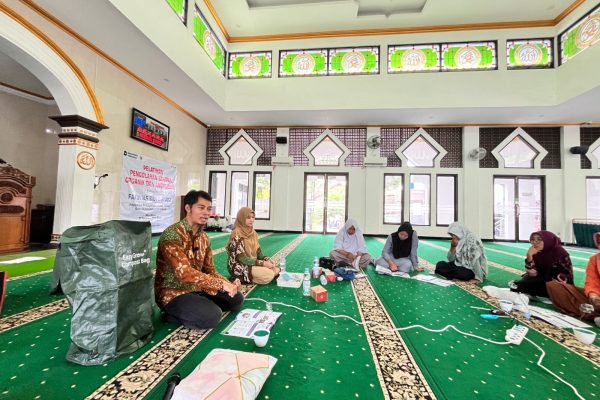


The Faculty of Biology, Universitas Gadjah Mada, in collaboration with PT Pertamina Patra Niaga AFT Adi Sumarmo through its assisted program Tegalrejo Hijau, Sehat, dan Berdikari (Teh Sekar), held a community service activity titled “Training on Organic and Inorganic Waste Processing” on 11 December 2025 in Tegalrejo. The training was attended by 14 participants who are members of the Miguno Waste Bank.
he training aimed to enhance the community’s capacity in proper waste sorting and processing, as well as to support environmental self-sufficiency in the Tegalrejo area. Two speakers from the Faculty of Biology UGM delivered the materials: Mrs. Novita Yustinadiar, S.Si., M.Si., who presented the topic of inorganic waste processing, and Mr. Jamal Musa Holle, S.Si., M.Env.Sc., D.Phil., who explained organic waste processing techniques.
The event began with a pre-test to assess participants’ baseline knowledge regarding waste management. During the training sessions, participants received theoretical explanations and practical demonstrations on household waste processing techniques applicable to daily activities. The training concluded with a post-test to evaluate participants’ improvement and the effectiveness of the program.
Throughout the training, participants practiced creating various recycled products, such as crafts made from plastic bottles and the making of sofa cushions and bean bags using shredded plastic fillers. This activity aimed to utilize low-value plastic waste by transforming it into economically valuable products while also reducing harmful practices such as burning plastic waste. In the organic waste processing session, participants learned compost-making using the Berkeley method (layering technique in compost bags) and organic waste processing using maggots in a maggot box.
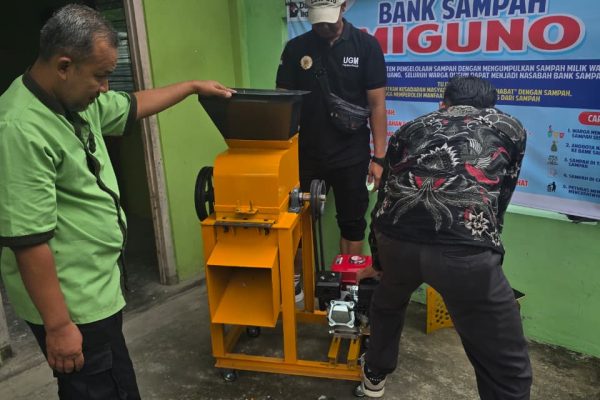
As part of the support for empowering the Miguno Waste Bank, one unit of a plastic waste shredding machine was donated to assist in processing plastic materials used as filler for sofa cushions and bean bags. Participants also received brochures and practical guides on organic and inorganic waste processing that are easy to follow and implement independently.
This training directly supports several indicators within the Sustainable Development Goals (SDGs). Contributions to SDG 3 (Good Health and Well-Being) are reflected in efforts to improve environmental quality and reduce health risks associated with improper waste management. Educational materials delivered by the speakers, along with the pre-test and post-test mechanisms, reinforce SDG 4 (Quality Education). From an environmental perspective, the activity supports SDG 6 (Clean Water and Sanitation) by reducing pollution potential, and strengthens SDG 11 (Sustainable Cities and Communities) by fostering environmentally conscious communities. Additionally, the training promotes SDG 12 (Responsible Consumption and Production) by improving practices of waste sorting, reuse, and recycling. The implementation of composting techniques aligns with SDG 13 (Climate Action) by helping reduce greenhouse gas emissions from organic waste. Overall, this activity exemplifies the implementation of SDG 17 (Partnerships for the Goals) through strong collaboration between the Faculty of Biology UGM, the Teh Sekar Program, and PT Pertamina Patra Niaga AFT Adi Sumarmo in advancing sustainable community empowerment.