Yogyakarta, July 7, 2026 – The Biodiversity Curator Professional Program (PKKH), Faculty of Biology, Universitas Gadjah Mada (UGM), held its annual academic workshop on Tuesday (7/7/2026) in a hybrid format at the UGM University Club. The workshop served as a forum to evaluate the existing learning process and formulate strategies for improving educational quality and graduate competencies.
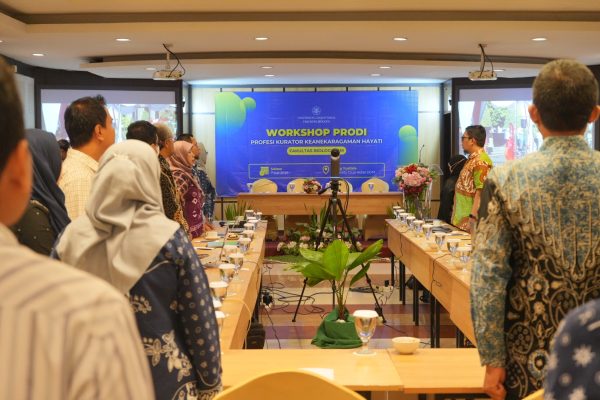
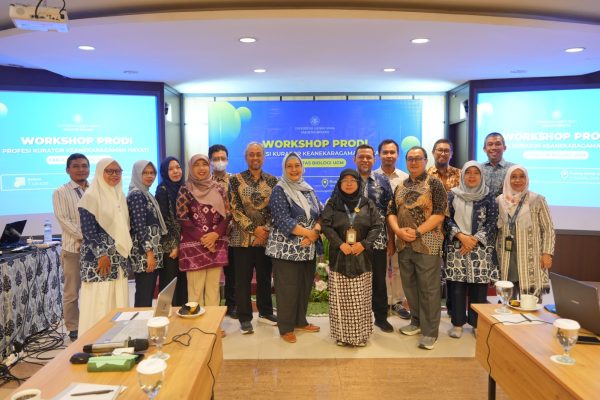
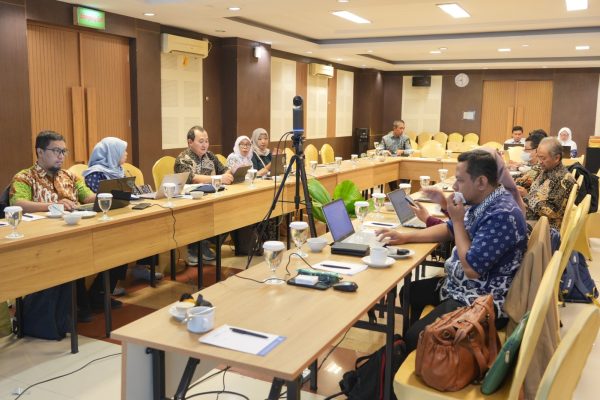
The workshop was attended by lecturers of the PKKH Program from the Faculty of Biology UGM and partner institutions, including the National Research and Innovation Agency (BRIN) and WWF Indonesia. Alumni, students, and educational support staff also participated in the event. The involvement of these stakeholders reflects the program’s commitment to developing a participatory, adaptive curriculum that meets the evolving needs of the biodiversity conservation profession.
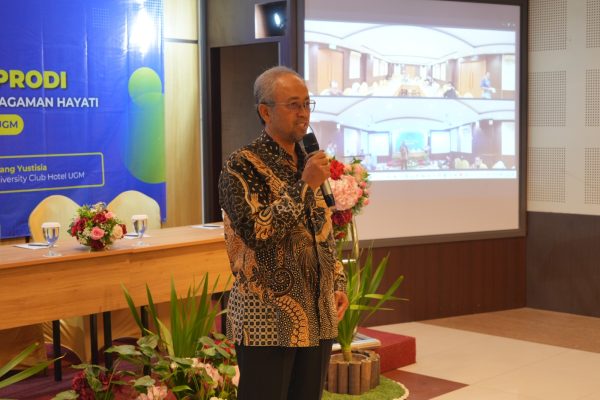
In his online opening remarks, the Dean of the Faculty of Biology UGM, Prof. Dr. Budi Setiadi Daryono, M.Agr.Sc., expressed his appreciation for the continuous commitment of the academic community to evaluating and improving the learning process. He emphasized that educational innovation is a strategic effort to produce graduates who are highly competent, adaptable, and well prepared to address future challenges in biodiversity conservation.
Meanwhile, the Vice Dean for Academic and Student Affairs, Prof. Dr. Bambang Retnoaji, S.Si., M.Sc., explained that the workshop aimed to formulate and reach a consensus on restructuring the learning system of the PKKH Program. The proposed changes are based on several strategic considerations, including the growing interest in the professional program from stakeholders across Indonesia, particularly from Sulawesi, Sumatra, and various research institutions; the Ministry of Higher Education, Science, and Technology’s regulations supporting distance learning; and the need to better align the learning process with the sequential competencies required of professional biodiversity curators.
Under the new curriculum, the PKKH Program will adopt a semi-block learning system, in which all theoretical courses are delivered first through a hybrid format combining face-to-face instruction with synchronous and asynchronous online learning. These courses will then be followed by intensive, face-to-face practical sessions conducted within a designated period. This approach enables students to develop a comprehensive conceptual understanding before engaging in integrated practical training. Furthermore, the new learning model promotes a transdisciplinary approach, allowing graduates not only to acquire knowledge from multiple disciplines but also to synthesize that knowledge into the core competencies required of professional biodiversity curators.
The Head of the Biodiversity Curator Professional Program, Prof. Dra. Tuty Arisuryanti, M.Sc., Ph.D., stated that the semi-block learning system will be implemented beginning in the First Semester of the 2026/2027 Academic Year. She explained that the curriculum revision is a follow-up to the evaluation of the previous academic year’s learning process and incorporates valuable input from lecturers, alumni, students, and external stakeholders.
Previously, theoretical courses and practical sessions were conducted concurrently and did not fully follow the sequential competency framework of the curator profession. Through the semi-block system, students will first complete all theoretical coursework before applying their knowledge in integrated practical training that follows the professional competency pathway, beginning with curation planning, followed by collection acquisition and documentation, collection analysis, and finally collection preservation and maintenance.
The workshop also featured presentations by the coordinators of the four competency blocks, who introduced the revised learning structure and course content. During the discussion sessions, participants identified several overlapping topics and areas where the sequence of learning materials could be improved. Consequently, adjustments were made to the organization and sequence of course materials to ensure a more systematic, logical, and competency-based learning experience.
Through this workshop, the Biodiversity Curator Professional Program reaffirmed its commitment to continuously improving its educational system in response to advances in science, the evolving demands of the professional workforce, and the dynamic field of biodiversity curation. The implementation of the semi-block learning system is expected to enhance learning effectiveness, strengthen graduate competencies in line with stakeholder expectations, and support the development of more flexible educational pathways, including the Recognition of Prior Learning (RPL) scheme.
This initiative also contributes to the achievement of the United Nations Sustainable Development Goals (SDGs), particularly SDG 4 (Quality Education) through competency-based curriculum innovation and educational quality enhancement; SDG 14 (Life Below Water) and SDG 15 (Life on Land) through the development of professional expertise in the documentation, management, curation, conservation, and sustainable utilization of aquatic and terrestrial biodiversity; and SDG 17 (Partnerships for the Goals) by strengthening collaboration among universities, research institutions, conservation organizations, alumni, and other stakeholders in advancing professional education.