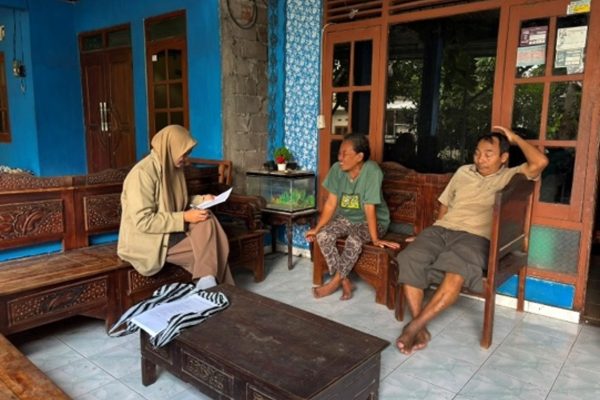
The Faculty of Biology, Universitas Gadjah Mada (UGM) reaffirms its commitment to supporting collaborative community empowerment through the 2026 Waste Management Community Service (Pengabdian kepada Masyarakat / PkM) Team, chaired by Dr. Ardaning Nuriliani, S.Si., M.Kes., alongside the Wedomartani Partner Village. The program commenced with a waste management survey in Wedomartani Village through questionnaires distributed on June 25, 2026. This activity aimed to provide an initial overview of the waste management practices currently implemented within households and the surrounding environment. A total of 50 respondents from the hamlets (Padukuhan) of Pokoh, Wonosari, Saren, Pucanganom, and Tegalrejo participated in this activity.
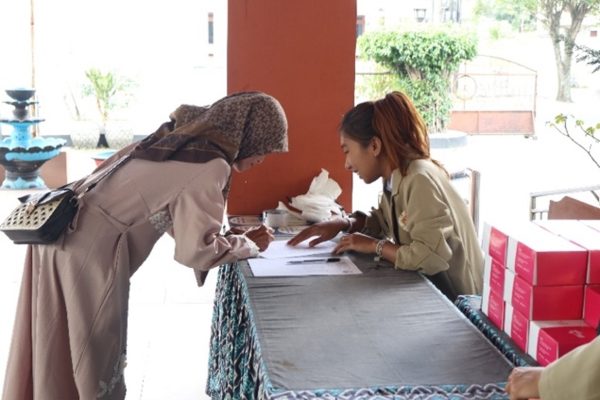
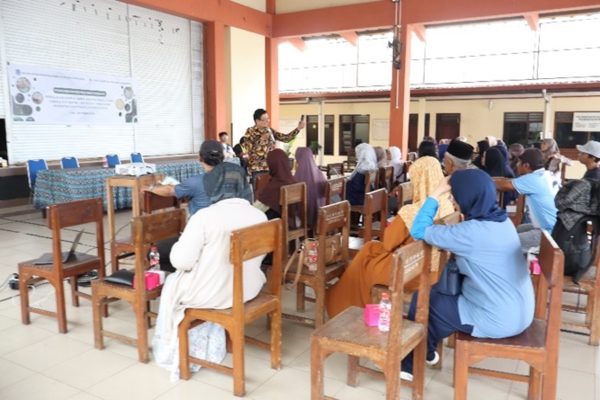
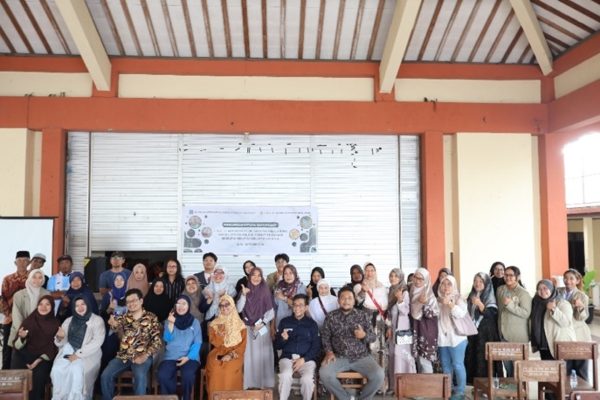
Subsequently, as a follow-up, the PkM Team—comprising several lecturers and active students from the Undergraduate (Bachelor’s), Master’s, and Doctoral programs of the Faculty of Biology UGM—collaborated with the KKN-PPM UGM Period 2, 2026 Adhinata Ngemplak Team under the supervision of Prof. Dr. Rarastoeti Pratiwi, M.Sc., Ph.D. organized an educational extension on organic waste management through the cultivation of maggots or Black Soldier Fly (BSF) larvae to support Good Health and Well-being (SDG 3) on July 19, 2026. This activity was attended by community representatives from each hamlet. The educational material on maggot cultivation was delivered by Mr. Sukirno, S.Si., M.Sc., Ph.D., a lecturer at the Faculty of Biology, UGM with expertise in entomology and Black Soldier Fly (BSF) cultivation. This initiative is expected to serve as an initial step in reducing organic waste while simultaneously increasing its economic value.
The event commenced with an opening, joint prayer, and welcoming remarks from the Wedomartani Village Secretary (Carik), R. Rohmad Gunawan Hardono, S.Pd., and the Director of the Village-Owned Enterprise (BUMKal), Mr. Iskandar, S.E., M.E. They stated that the Wedomartani Village highly appreciates this program as it is considered a viable solution to address the waste management issues faced by the residents. Prof. Dr. Rarastoeti Pratiwi, M.Sc., Ph.D., emphasized the importance of building public awareness that both organic and inorganic waste possess economic value when managed properly. Meanwhile, Dr. Ardaning Nuriliani, S.Si., M.Kes., explained that the collaboration between the Faculty of Biology UGM and Wedomartani Village has been established for more than 5 years through various community empowerment programs, such as utilizing vacant land, poultry farming, physical and mental health education, and waste management. This year’s theme was selected as an effort to support a healthier environment while creating economic opportunities for the community through waste management, supporting SDG 3 (Good Health and Well-being), SDG 12 (Responsible Consumption and Production), and SDG 11 (Sustainable Cities and Communities).
During the main session, Mr. Sukirno, S.Si., M.Sc., Ph.D., presented material regarding BSF characteristics, maggot cultivation techniques, the benefits of the resulting products, and business opportunities that the community can develop. He also introduced the stacked bucket (ember tumpuk) method as a household-scale maggot cultivation technique that is easy to implement, affordable, and highly manageable. Furthermore, maggot cultivation can yield by-products in the form of maggot residue (kasgot) and liquid organic fertilizer, which hold economic value. The presentation lasted for 1.5 hours and was enthusiastically received by the residents through discussions and a Q&A session. In addition to the maggot cultivation extension, this activity also provided education on recycling plastic waste and tarpaulins to increase the added value of inorganic waste. This session was delivered by the KKN-PPM Unit YO-040 Team. The residents were introduced to various utilization opportunities for plastic bottles, food packaging, and used tarpaulins, which can be processed through the recycling industry network to generate economic value.
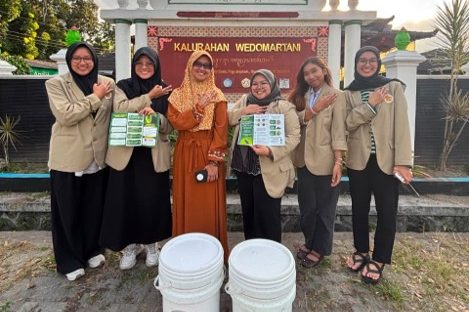
As a form of support for the implementation of the organic waste management program, the Waste Management PkM Team handed over 12 sets of maggot cultivation buckets to five hamlets—Pokoh, Wonosari, Saren, Pucanganom, and Tegalrejo—and one sub-village (dusun), Pajangan. Each hamlet and sub-village received two bucket sets, which are expected to serve as the initial step toward independent organic waste management by the residents. In addition, pamphlets containing information on maggot cultivation were distributed to serve as a reference for the community. This program also serves as a tangible manifestation of the UGM Faculty of Biology’s support in achieving the Sustainable Development Goals, specifically SDG 3 (Good Health and Well-being), SDG 4 (Quality Education), SDG 8 (Decent Work and Economic Growth), SDG 11 (Sustainable Cities and Communities), SDG 12 (Responsible Consumption and Production), and SDG 17 (Partnerships for the Goals).
Contributors: The 2026 Waste Management PkM Team of the Faculty of Biology UGM, chaired by Dr. Ardaning Nuriliani, S.Si., M.Kes., and the KKN-PPM YO-040 Adhinata Ngemplak Team, supervised by Prof. Dr. Rarastoeti Pratiwi, M.Sc., Ph.D.