• UGM
  • Simaster Portal
  • IT Center
  • Webmail
  • KOBI
  • English
    • Bahasa Indonesia
Universitas Gadjah Mada Universitas Gadjah Mada
Faculty of Biology
  • ABOUT US
    • History
    • Organization
    • Vision and Mission
    • Lectures and Staff
      • Lecturers
      • Adjunct Professor
      • Supporting Staff
    • Facility
      • Laboratories
      • Research
      • Library
      • Museum
      • Mental Health Consultation
      • Disability
  • EDUCATION
    • Undergraduate Program
      • Graduates Learning Outcome
      • Academic Callendar
      • Course
    • IUP
    • Profession Program
      • What is the Professional Study Program in Biodiversity Curator (PKKH)?
      • Admission for New Students of the Biodiversity Curator Profession Program Study
      • Information and FAQ Study Program of Biodiversity Curator Profession
    • Master Program
      • Master Program in Biology Description
      • Curriculum Structure Master Program
    • Doctoral Program
      • Vision, Mission, Objectives, Targets, Competencies, and Learning Outcomes
      • Admission Requirement for Program Doctor in Biological Sciences
      • Admission: What Documents to be prepared?
      • Curriculum
    • Regulations
    • Accreditation & Quality Assurance
  • RESEARCH
    • Journal of Tropical Biodiversity and Biotechnology
    • Berkala Ilmiah Biology
    • Research
    • Publication
  • Community Service
    • Waste Management
  • STUDENTS & ALUMNAE
    • Student Organizations
    • Prospective Career Opportunities
    • SUMMER COURSE
    • Alumnae
  • Home
  • Post by
  • page. 5
Post by :

ichsan.risalba

Faculty of Biology UGM and Faculty of Science, The University of Melbourne, Establish Dual Degree Partnership

CooperationNews Release Monday, 25 August 2025

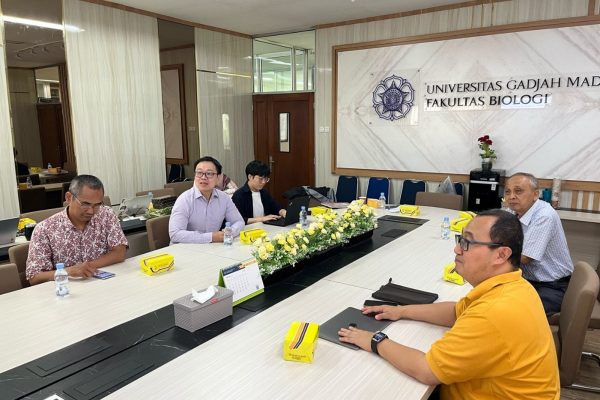
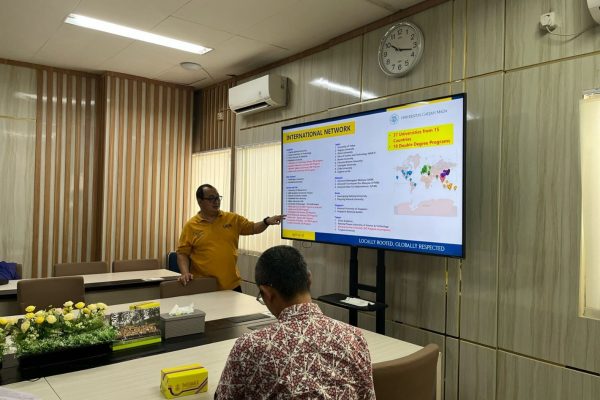
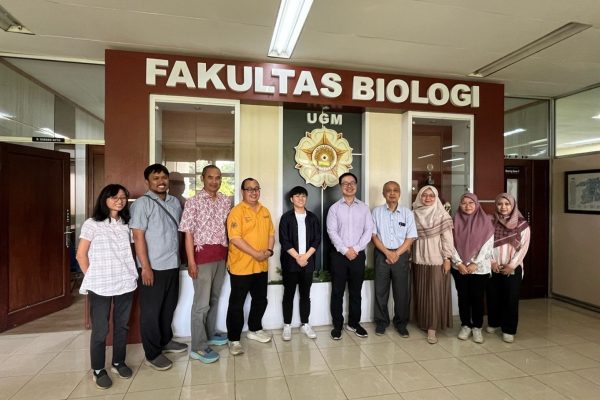
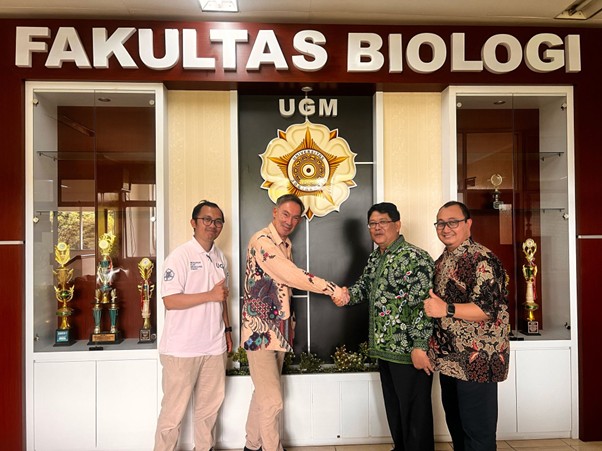
Yogyakarta, August 25, 2025 – The Faculty of Biology, Universitas Gadjah Mada (UGM), held a collaborative discussion with the Faculty of Science, The University of Melbourne, on Monday, August 25, 2025, at the KPTU Meeting Room, Faculty of Biology UGM. The meeting focused on strengthening academic collaboration through the establishment of dual degree programs at both undergraduate and postgraduate levels.


From the Faculty of Biology UGM, the discussion was attended by the Dean, Prof. Dr. Budi Setiadi Daryono, S.Si., M.Sc.; Vice Dean for Research, Community Service, Collaboration, and Alumni, Dr. Eko Agus Suyono, M.App.Sc.; Head of Undergraduate Program, Sukirno, S.Si., M.Sc., Ph.D.; Head of the International Affairs Office, Dr. Nur Indah Septriani, S.Si., M.Sc.; Secretary of the International Affairs Office, Dr. Matin Nuhamunada, S.Si., M.Sc.; as well as staff members from the Research, Community Service, Collaboration, and Alumni Unit: Dhimas Willy Saputro, S.I.P., Annisa Mawarni, S.Si., and Anysah Nur Fauziyah, S.Si.

Representing the Faculty of Science, The University of Melbourne, were Professor Willa Huston, Associate Dean for Global Engagement; Holly Wright, Recruitment Officer; and Riyantisa Fikautsara, Chief Communications Officer of The University of Melbourne in Indonesia.
The discussion centered on the Indonesia Partnership Proposal, which outlines several dual degree schemes, including:

  • Bachelor of Science Advanced (Honours) 2+2 Dual Degree
  • Master of Agricultural Sciences 1+1 Dual Degree
  • Master of Food Science 1+1 Dual Degree
  • Master of Biotechnology 1+1 Dual Degree
Both parties welcomed the collaboration and agreed to develop a matching curriculum to align academic standards and ensure the smooth implementation of the programs.

This collaboration marks a significant step for the Faculty of Biology UGM in strengthening its international network with one of the world’s leading universities.

About The University of Melbourne

Located in Melbourne, Victoria, Australia, The University of Melbourne is ranked #19 globally and #1 in Australia in the QS World University Rankings 2026. Its Faculty of Science comprises the School of Agriculture, Food and Ecosystem Sciences; School of BioSciences; School of Chemistry; School of Geography, Earth and Atmospheric Sciences; School of Mathematics and Statistics; School of Physics; and the Melbourne Veterinary School, offering 43 research areas and 50 study programs. For more than 120 years, the faculty has been a pioneer in scientific discovery and analysis, building strategic partnerships with industry and government.

Dean of the Faculty of Biology UGM, Prof. Dr. Budi Setiadi Daryono, S.Si., M.Sc., emphasized, “This collaboration is a milestone in the internationalization journey of the Faculty of Biology UGM. Through partnership with a world-ranked institution like The University of Melbourne, we hope to open greater opportunities for students and researchers to contribute in addressing global challenges in biology.”

This partnership also aligns with the Sustainable Development Goals (SDGs), particularly SDG 4 (Quality Education) and SDG 17 (Partnerships for the Goals). Thus, the collaboration not only strengthens the academic reputation of both institutions but is also expected to nurture a new generation of young scientists ready to face the complexities of scientific advancement and sustainable development in the future.

UGM Biology Graduate Student Explores Forensic Science at the Police Forensic Laboratory Center in West Java

News Release Monday, 25 August 2025

Rindu Aurantika, a Master’s student from the Faculty of Biology at Universitas Gadjah Mada (UGM), took part in an internship at the Forensic Chemistry and Biology Division, specifically in the Biology-Serology Subdivision, at the Police Criminal Investigation Agency’s Forensic Laboratory Center (Puslabfor Bareskrim Polri) in Sentul, West Java. The internship ran from July 1st to 31st, 2025, under the academic supervision of Prof. Dr. Niken Satuti Nur Handayani, M.Sc., and field supervision by Riski Suranto, S.Si. This internship program was not only joined by UGM students but also involved participants from Universitas Negeri Jakarta (UNJ), Universitas Diponegoro (UNDIP), and Universitas Brawijaya (UB).


Over five weeks, the internship was designed in stages to help students understand the full forensic examination process, from the beginning to the end of the program. In the first week, students were introduced to the organizational structure of Puslabfor, the role of the Biology-Serology Subdivision, and administrative tasks like archiving forensic reports from police departments across Indonesia. This initial stage showed that archiving is not just paperwork—it plays a critical role in legal processes.
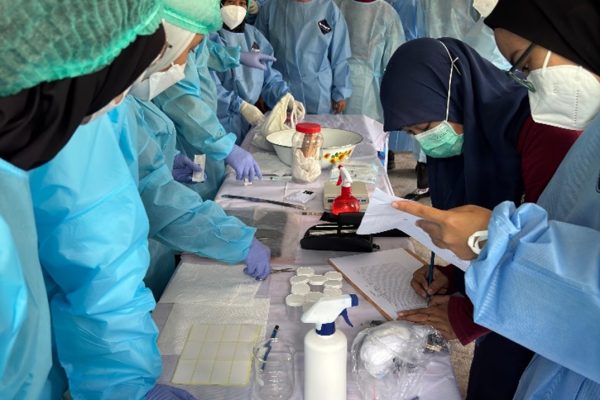
In the second week, students got to know the various labs within the Biology-Serology Subdivision, including the serology lab, human DNA lab, non-human DNA lab, and microbiology lab. In the third week, students participated in examining biological evidence such as bloodstains, semen, hair, and body tissue. They also worked with other items often found at crime scenes, like clothing, tissues, drink bottles, cigarette butts, and more. During the fourth week, the focus shifted to more complex samples like bones and nails. Students also conducted genetic analysis using a Genetic Analyzer based on capillary electrophoresis technology. In the fifth week of the program, students repeated DNA extraction procedures and learned how to input DNA data into the detainee database system. The program ended with the preparation of a final report summarizing everything they had learned during the month-long internship.

This experience was a valuable opportunity for Rindu’s academic journey. “Internship at Puslabfor allowed me to see how biological science is applied in real-world of forensics. Each step, from serology testing to DNA interpretation, requires a high level of accuracy because the results directly impact criminal investigations,” she shared. Beyond improving her technical skills in forensic biology, the internship also helped strengthen her discipline and sense of responsibility. It is hoped that programs like this will support the growth of forensic science in Indonesia, through better education and research opportunities. [Author: Rindu Aurantika]

Faculty of Biology UGM Explores Master’s Double Degree Collaboration and Follow-Up on Doctoral Double Degree with Leiden University

News Release Monday, 25 August 2025

Leiden, 14 August 2025 – The Faculty of Biology, Universitas Gadjah Mada (UGM), continues to strengthen its international network through a leadership visit to the Graduate School of Science, Leiden University, the Netherlands. The delegation was represented by the Dean of the Faculty of Biology, Prof. Budi Setiadi Daryono, M.Agr.Sc., Ph.D., together with the Vice Dean for Research, Community Service, Collaboration, and Alumni Affairs, Dr. Eko Agus Suyono, M.App.Sc.


The Faculty of Biology UGM delegation was warmly welcomed by Prof. dr. Erik Danen, Dean of the Graduate School of Science, along with academics including Prof. Paul Kessler, Myrtille Koerselman, and Annas Rabbani, M.Sc., a lecturer of the Faculty of Biology UGM who is currently pursuing his doctoral studies at Leiden University.

During the meeting, both parties discussed the development of a double degree program at the master’s level as well as the acceleration of a doctoral double degree program with the support of LPDP scholarships. The discussion also highlighted the continuation of research collaboration through the Indonesia-Netherlands University Consortium for a Sustainable Future (INUCoST), particularly with Prof. Paul Kessler, who has long been a strategic partner of the UGM Faculty of Biology.

This initiative aligns with the commitment of the Faculty of Biology UGM to support the achievement of the Sustainable Development Goals (SDGs), especially Quality Education (SDG 4), Partnerships for the Goals (SDG 17), and Industry, Innovation, and Infrastructure (SDG 9). Through continuous international collaboration, the Faculty of Biology UGM seeks to contribute to improving the quality of higher education, strengthening global research networks, and developing life science-based solutions to address global challenges.

Journal Management Discussion between the Faculty of Biology UGM and Universitas Pattimura

News Release Friday, 22 August 2025

Yogyakarta, August 20, 2025 – The Faculty of Biology, Universitas Gadjah Mada, welcomed a visit from the Journal Division of Universitas Pattimura as part of efforts to strengthen networks and share experiences in managing scientific journals within higher education institutions. The meeting took place on Wednesday, August 20, 2025, at the KPTU Meeting Room, Faculty of Biology UGM.


From the Faculty of Biology UGM, the discussion was attended by the editorial team of the Journal of Tropical Biodiversity and Biotechnology (JTBB), namely Dr. Miftahul Ilmi as Editor-in-Chief, Dr. Ardaning Nuriliani as Managing Editor, and Salwa Shabria Wafi, S.Tr.Li as Administrator and Copyeditor.

Meanwhile, the delegation from the Journal Division of Universitas Pattimura was led by Dr. Pieter A. Riupassa, Head of the Rumah Jurnal Universitas Pattimura and Editor of Jurnal Rumphius. The delegation also included other editors, namely Mr. Yopi A. Lesnussa, M.Sc., Editor-in-Chief of Jurnal Barekeng; Mr. Taufan Talib, M.Sc., Editor-in-Chief of Jurnal Jupitek; and Mr. Berny Tomasouw, Editor of Jurnal Barekeng.

The program began with a brief presentation by Dr. Miftahul Ilmi, who explained the management strategies of the Journal of Tropical Biodiversity and Biotechnology (JTBB), including its achievements as well as ongoing challenges in maintaining publication quality and attaining international indexing. This was followed by a sharing session from representatives of the Journal Division of Universitas Pattimura, who discussed the dynamics and challenges of managing journals at Universitas Pattimura.

The discussion focused on improving publication quality and developing effective journal management strategies, both internally among editorial teams and externally in collaboration with faculties and universities. The meeting also served as a platform to exchange insights on the challenges and opportunities of scientific journal management at the institutional level.

In addition to strengthening collaboration between universities, this activity contributes to the achievement of quality education through the enhancement of scholarly publications as learning resources (SDG 4), while also supporting the advancement of scientific infrastructure and research innovation in Indonesia (SDG 9). The presence of both institutions in this forum also reflects the spirit of partnerships for sustainable development through inter-institutional collaboration (SDG 17).

Through this activity, it is expected that closer cooperation between Universitas Pattimura and Universitas Gadjah Mada will be fostered in advancing the quality of scientific publications in Indonesia, while also supporting the role of higher education institutions as centers of knowledge development with international reputation.

Contributor: Salwa

Guest Lecture Highlights Cutting-Edge Zebrafish Research in Heart Development

News Release Friday, 15 August 2025

The Faculty of Biology, Universitas Gadjah Mada, had the honor of hosting Dr. Cecilia Winata, Head of the Zebrafish Developmental Genomics Laboratory at the International Institute of Molecular and Cell Biology, Warsaw, for a guest lecture titled “Understanding the Heart Using Zebrafish as a Model Organism.” Held on Thursday, August 14, 2025, the event brought together faculty members, researchers, and students to gain insights into the genomic and molecular underpinnings of heart development.


Dr. Winata emphasized the critical importance of understanding heart development, especially in relation to congenital heart disease—one of the most common types of birth defects. Using zebrafish as her model organism, she showcased how this tiny aquatic vertebrate has become a powerful tool in cardiac research. Notably, zebrafish share a comparable heart rate with humans, making them a relevant system for exploring cardiovascular biology.

During the lecture, Dr. Winata shared key findings from her lab:

  • The dynamics of the cardiomyocyte transcriptome and chromatin landscape: Her team mapped out the changing gene expression patterns and chromatin architecture throughout heart development, revealing the timing and regulation of key developmental processes.
  • Insights into the pacemaker system: By profiling the transcriptome of the sinoatrial ring—the zebrafish heart’s natural pacemaker—Dr. Winata uncovered both conserved and novel genetic programs, highlighting parallels with human heart rhythm regulation.
  • Molecular blueprint of the secondary pacemaker: Genomic and physiological analyses of the atrioventricular canal exposed the genetic framework that defines this lesser-known pacemaker region, providing new understanding of how rhythmic contractions are coordinated.
  • The role of single nucleotide polymorphisms (SNPs): Dr. Winata underscored the importance of SNPs in shaping individual susceptibility to congenital heart defects and arrhythmias, underlining the potential of personalized medicine.

The lecture concluded with an open invitation from Dr. Winata to collaborate. She expressed keen interest in working with researchers and students from the Faculty of Biology and welcomed those interested in joining her lab in Warsaw to explore zebrafish-based research further.

This event not only deepened understanding of heart development but also laid the groundwork for international research collaboration, reinforcing the Faculty’s commitment to advancing biomedical science through global partnerships.

Faculty of Biology UGM Supports Capacity Building for Educational Laboratory Technicians at Polbangtan Yogyakarta Magelang

News Release Friday, 15 August 2025

The Politeknik Pembangunan Pertanian (Polbangtan) Yogyakarta Magelang held an In-House Training (IHT) for Educational Laboratory Technicians (PLP) on August 12–13, 2025. The event, held at Polbangtan Yoma, Jl. Kusumanegara No. 2, Tahunan, Umbulharjo, Yogyakarta, was officially opened by Sevi Melati, SP., M.Sc., a Young Expert PLP representing Polbangtan Yogyakarta Magelang, and attended by nine PLPs. On this occasion, Sevi Melati emphasized that this training is a strategic step to strengthen PLP competencies, ensure laboratory management is conducted in accordance with standards, and guarantee safety and service quality in laboratories to support Quality Education (SDG No. 4).


The speakers from the Faculty of Biology, Universitas Gadjah Mada delivered the materials in a comprehensive and practical manner. On the first day, Dr. Ardaning Nuriliani, S.Si., M.Kes. presented Standard Operating Procedures (SOP) for Laboratory Equipment Usage and Occupational Health and Safety (OHS) in the Laboratory. Meanwhile, Eka Mega Sampurna, A.Md. conducted a session on Laboratory Equipment Maintenance and Calibration, accompanied by Practical Equipment Usage Simulation to strengthen participants’ understanding through hands-on learning. These topics directly and indirectly contribute to ensuring Good Health and Well-Being (SDG No. 3). On the second day, Dr. Maryani, M.Sc. delivered a session on Laboratory Management, including Inventory Equipment Recording and Reporting. She also guided participants in the Preparation of Plant Tissue Samples, including roots, stems, and leaves. All sessions were designed to be interactive, combining theory, discussion, and practice, enabling participants to master technical skills while also understanding managerial aspects of laboratory work to support Quality Education (SDG No. 4).

The implementation of this IHT demonstrates Polbangtan Yoma’s commitment to supporting the capacity building of PLPs so they can manage laboratories effectively, safely, and efficiently in line with the goal of providing Quality Education (SDG No. 4). The skills gained by participants are expected to not only support practicum and research activities but also strengthen the role of laboratories as centers of learning and innovation in agriculture, which is closely related to Responsible Consumption and Production (SDG No. 12) and Life on Land (SDG No. 15). The IHT program was concluded by Asih Farmia, SP., M.Agr.Sc., who expressed the hope that this training would bring great benefits to the PLPs. Furthermore, the participation of the Faculty of Biology, UGM in supporting this activity is expected to initiate collaboration between Polbangtan Yoma, to be formalized in a Memorandum of Understanding, thereby accelerating the achievement of Partnerships for the Goals (SDG No. 17). (Contributors: Ardaning Nuriliani, Maryani, Eka Mega Sampurna).

Faculty of Biology UGM, Leipzig University, and Badr University Host International Summer Course on One Health

News ReleaseStudent Activities Thursday, 14 August 2025

Leipzig, 10–22 August 2025 – The Faculty of Biology, Universitas Gadjah Mada (UGM), together with Leipzig University, Germany, and Badr University, Egypt, organized the International Summer Course Program on One Health, bringing together students and lecturers from multiple countries. This program is a collaboration between UGM’s Faculty of Biology, the Institute of Animal Hygiene and Veterinary Public Health at Leipzig University, and Badr University.
The two-week program was attended by 10 undergraduate students from both the International Undergraduate Program (IUP) and Regular Program of the Faculty of Biology UGM, along with 22 students from Badr University and Leipzig University, as well as academic teams from all three institutions. Dr.rer.nat. Abdul Rahman Siregar, M.Biotech., also accompanied UGM students throughout the course activities.


During the barbecue session, the Dean of the Faculty of Biology UGM, Prof. Dr. Budi Setiadi Daryono, and the Vice Dean for Research, Community Service, Collaboration, and Alumni Affairs, Dr. Eko Agus Suyono, joined the event alongside Prof. Adel from Badr University, Dr. Ahmed Abd El Wahed, and Prof. Uwe Truyen from the Institute of Animal Hygiene and Veterinary Public Health at Leipzig University.


The International Summer Course on One Health aims to enhance interdisciplinary understanding of the interconnectedness of human, animal, and environmental health, while fostering collaborative research and global knowledge exchange. The program supports the achievement of SDG 3 (Good Health and Well-Being), SDG 4 (Quality Education), and SDG 17 (Partnerships for the Goals).

Faculty of Biology UGM and Leipzig University Initiate Doctoral Double Degree Program

CooperationNews Release Thursday, 14 August 2025

Leipzig, 13 August 2025 – The Dean of the Faculty of Biology, Universitas Gadjah Mada (UGM), Prof. Dr. Budi Setiadi Daryono, together with the Vice Dean for Research, Community Service, Collaboration, and Alumni Affairs, Dr. Eko Agus Suyono, and Dr.rer.nat. Abdul Rahman Siregar, M.Biotech, paid an official visit to Leipzig University, Germany.


During a meeting with the Faculty of Life Science, Leipzig University, both institutions discussed the initiation of a Double Degree program at the doctoral level, linking UGM’s Faculty of Biology with Leipzig University’s Faculty of Life Science. The meeting was attended by Prof. Ahmed Abd El Wahed and Prof. Uwe Truyen from the Institute of Animal Hygiene and Veterinary Public Health, Professor Dr. Marc Schönwiesner as Dean of the Faculty of Life Science, and representatives from Leipzig University’s Office of International Affairs.

This program is expected to serve as a strategic step to expand international academic networks, enhance the quality of education and research, and strengthen UGM’s role in advancing integrated knowledge in education and biodiversity-related research. The initiative is also aligned with the achievement of SDG 4 (Quality Education) and SDG 17 (Partnerships for the Goals).

Faculty of Biology UGM Welcomes Dutch Biotechnology Expert to Explore Clove Conservation Collaboration

News Release Thursday, 14 August 2025

Yogyakarta, 12 August 2025 – The Biotechnology Laboratory of the Faculty of Biology, Universitas Gadjah Mada (UGM) welcomed Dr. Mei-Lei Tan, a biotechnology expert specializing in plant cell culture, who is also the Managing Director and owner of Crea Nova Consultancy, the Netherlands. She was accompanied by Yogyakarta-based artist, Ipeh Nur. Their visit was warmly received by Dr. Wahyu Aristyaning Putri, Head of the Biotechnology Laboratory, and Prof. Dr. Endang Semiarti, M.Sc., M.Sc., a distinguished researcher in plant biotechnology and cell culture.


The visit, which took place on Tuesday afternoon (12/8), aimed to explore potential collaboration in developing hybrid clove varieties brought by Ipeh from Ternate as part of conservation efforts. The Biotechnology Laboratory expressed strong support for this collaborative initiative. During the discussion, Prof. Endang shared insights into various hybrids developed through protoplast fusion methods and CRISPR-Cas9 technology, particularly for the conservation of Indonesia’s native orchids.

Dr. Mei expressed her enthusiasm for the discussion, emphasizing the importance of conserving biological resources and transferring knowledge to future generations to ensure the sustainability of preservation efforts.

Through this meeting, it is expected that research collaboration can be established to develop biotechnological innovations that not only safeguard valuable plants such as cloves and orchids but also contribute to the achievement of the Sustainable Development Goals—specifically SDG 4 (Quality Education) through youth capacity building in science, SDG 12 (Responsible Consumption and Production) through sustainable management of biological resources, and SDG 15 (Life on Land) through the protection and restoration of terrestrial biodiversity.

From Zimbabwe to Yogyakarta: Ruru’s First Steps Toward a Master’s Degree in Biology at UGM

News Release Thursday, 14 August 2025

When Ruvarashe Rambwawasvika—known to friends as “Ruru”—arrived in Yogyakarta at the end of October last year, she carried with her not only a suitcase but also a wealth of experience and a clear vision for the future. The 26-year-old master’s student from Zimbabwe is now charting her academic path at Universitas Gadjah Mada (UGM), supported by the prestigious Kemitraan Negara Berkembang (KNB) scholarship.

A Strong Scientific Foundation

Ruru earned her Bachelor’s degree in Biological Sciences from the University of Zimbabwe, later serving as a Biosafety Officer at the National Biotechnology Authority of Zimbabwe for nearly two years. This role deepened her commitment to safeguarding public health and reinforced her desire to specialize further.
The KNB scholarship offered her both tuition and living support, along with a mandatory period of Indonesian language and cultural immersion. Before beginning her master’s program, she participated in orientation sessions organized by the Faculty of Cultural Sciences, which paired her with Indonesian speakers to help navigate daily life—from shopping to understanding everyday terms.

Choosing UGM

Ruru’s decision to study at UGM was shaped by both research and recommendation. “I considered other Indonesian universities through friends and social media,” she recalls, “but UGM’s strong biology department stood out.” Encouragement from peers about Indonesia’s peaceful atmosphere and supportive academic environment helped seal her decision.

Adapting to a New Environment

Moving from a country with four distinct seasons to Indonesia’s warm, tropical climate required some adjustment, but Ruru has embraced the change. She praises the kindness of the local community and the willingness of people to help.
Language posed its own challenges—lectures are largely in Bahasa Indonesia—but her professors have been flexible, allowing her to complete assignments and exams in English. The gradual pace of language instruction has also eased the transition.

Daily Life and Culinary Discoveries

Food has been both a comfort and an adventure. Back home, maize-based fufu (sadza) is a staple, and while sourcing white maize in Yogyakarta is expensive and infrequent, she occasionally receives supplies through contacts in Malang. She enjoys cooking with her Malawian roommate but also appreciates campus lunches and Indonesian dishes like nasi goreng. While the sweeter flavor profile was unfamiliar at first, she has grown fond of it over time.

Passion for Parasitology

Ruru’s academic interests lie in parasitology with a biomedical focus. Her undergraduate research examined the prevalence of Babesia canis and Ehrlichia canis, two canine blood parasites. She has observed that, compared to the focus on viruses, bacteria, and fungi, parasitology—especially related to blood and waterborne parasites—remains underexplored.
Over the next two years, she aims to sharpen her skills in biochemistry and molecular laboratory methods, using Indonesia’s biodiversity as a comparative research context with Zimbabwe. She appreciates UGM’s access to parasitology experts, sequencing facilities, and visiting professors from countries like Japan, China, or European countries, which could open pathways for her eventual PhD.

Wellbeing and Community

Like many international students, Ruru faced moments of homesickness, but strong community support and a steady daily routine helped her settle in. Her best memories so far are of inclusivity and the consistent support she has received from both peers and faculty.

Looking Ahead

After completing her master’s degree, Ruru plans to return to Zimbabwe to work as a researcher and lecturer—ideally at her alma mater. She hopes to contribute to her department’s growth, advance environmental management practices, and collaborate with organizations like the Environmental Management Agency of Zimbabwe.
Her journey is a testament to the power of academic exchange, cultural adaptability, and a clear sense of purpose. As she navigates the laboratories and lecture halls of UGM, Ruru is not only building her own future but also paving the way for stronger scientific collaboration between Zimbabwe and Indonesia.>
1…34567…68

Accreditation

Recent Posts

  • Preserving Indonesia’s Spice Heritage: INUCoST Team of the Faculty of Biology UGM Holds Herbarium-Making Workshop with Leiden Experts and Industry Practitioners
  • From Village to Village: Optimizing Superior Local Chicken and Catfish Seedlings in Tegalrejo Hamlet, Ngresep Village, Boyolali Regency
  • Faculty of Biology UGM and Australian National University Extend Double Degree Collaboration and Explore New Strategic Partnership Opportunities
  • Faculty of Biology UGM Introduces Medicinal Plants to Strengthen Science Literacy Among SDN Pusmalang Students
  • Synergy Between the Faculty of Biology UGM, KOBI, YIBI, and WWF in Strengthening National Biodiversity Research
Universitas Gadjah Mada

UNIVERSITAS GADJAH MADA

FACULTY OF BIOLOGY
Teknika Selatan Street, Sekip Utara,
Yogyakarta 55281
biologi-ugm@ugm.ac.id
Phone/Fax: +62 (274) 580839

About us

  • History
  • Organization
  • Vision and Mission
  • Staff

Student Affairs

  • Student Service
  • Student Organization
  • Submission for Practical Field Work
  • Permission Field Research
  • Permission Thesis/Disertation

academic

  • Academic Regulations
  • Academic Anonncement

Accreditation

  • Image 1
  • Image 2
  • Image 3

© 2024 FACULTY OF BIOLOGY UNIVERSITAS GADJAH MADA

KEBIJAKAN PRIVASI/PRIVACY POLICY

[EN] We use cookies to help our viewer get the best experience on our website. -- [ID] Kami menggunakan cookie untuk membantu pengunjung kami mendapatkan pengalaman terbaik di situs web kami.I Agree / Saya Setuju