Universitas Gadjah Mada organized one of its annual events commemorating its 74th anniversary, the UGM Outstanding Individuals Awards Night 2023. The event took place on Wednesday, November 15, 2023, at Grha Sabha Pramana UGM. Dr. Andi Sandi Antonius Tabusassa Tonralipu, S.H., LL.M, the Secretary of UGM, reported that 72 individuals were honored at the UGM Outstanding Individuals Awards Night 2023. The categories of recognition included outstanding alumni, exemplary faculty and researchers, best publications, community service, Outstanding Lecturer UGM-Level, knowledge dissemination through documentary videos, innovative learning via MOOC, MBKM (Merdeka Belajar Kampus Merdeka) program coordinators, Outstanding staff, and Outstanding students.The Rector of UGM Prof. dr. Ova Emilia, M.Med.Ed., Sp.OG(K)., Ph.D., expressed that the purpose of these awards was to motivate and appreciate UGM’s alumni, community, and all units at the university that have demonstrated outstanding contributions and performance, benefiting UGM and impacting the wider society.
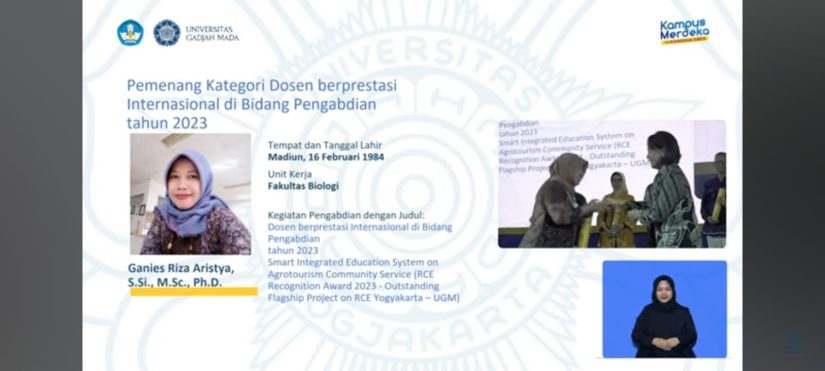
The Faculty of Biology at UGM had a moment of pride as one of its lecturers, Ganies Riza Aristya, S.Si, M.Sc., Ph.D., was among the recipients. She received the award for Outstanding International Lecturer in the Field of Community Service. This recognition was earned through the “Smart Integrated Education System of Agrotourism Community Services” project, previously awarded as an Outstanding Flagship Project in the RCE (Regional Centre of Expertise) Awards for Innovative Projects on Education for Sustainable Development (ESD) 2023. The program highlighted agricultural potential in Sendangsari and Sidomulyo villages in Pengasih, Kulon Progo, involving UGM’s Community Service Program (KKN) team to build agriculture-based sustainable tourism villages. The contribution and participation of stakeholders and residents from both villages were key factors in the success of the program. Ganies Riza Aristya, S.Si, M.Sc., Ph.D expressed that the UGM Outstanding Individuals Award was an acknowledgment of the team’s efforts, particularly the KKN UGM student team, showcasing strategic issues, dedication, and synergy with the community. Furthermore, she hoped for continuous innovation, growth, and collaborative problem-solving in UGM’s community service activities, aiming to produce solutions collectively for societal challenges.
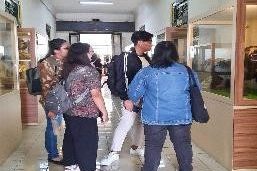
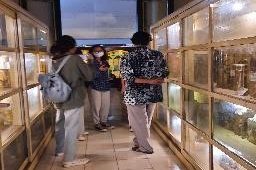
Thursday, 16 November 2023, the museum of biology received a student visit from the biology education study program, Faculty of Teacher Training and Education, Sanata Dharma University, Yogyakarta.The visit consisted of 38 attendees, including 30 students (practicum participants), 6 assistants, and 2 professors, marking the first visit after the COVID-19 pandemic. The visit was part of practicum activities for the Animal Structure, Development, and Function course. The visit was warmly welcomed by the museum’s collection caretaker, FX. Sugiyo Pranoto, who oversees the vertebrate animal collection. The visit involved observing and discussing the preserved vertebrate animal collection on display in the museum’s exhibition area.
Assistant Christo Ray Arta expressed that the visit to the Museum of Biology aimed to observe the characteristics of vertebrate animals, study taxidermy and skeletons, and enhance their knowledge gained from prior literature studies, providing valuable insights for their upcoming practical work involving specimen preservation. The student was divided into 8 teams, and as part of the practical visit, each group was tasked with creating an educational video. “It’s great to see biological specimens like preserved wet and dry vertebrates, and it’s amazing to witness the variety of species on Earth in real life.” expressed Handri, one of the students.
The Museum of Biology offers a comprehensive collection that serves as a valuable learning resource for students, as highlighted by accompanying lecturer Yoanni Maria Lauda Feroniasanti, M.Si (Nia), who is also an alumnus of the UGM Faculty of Biology. She mentioned, “We scheduled a visit to the Museum of Biology to see specimens that are rarely or challenging to find, such as structures, morphology, bones, taxidermy, and wet specimens, as our facilities for preservation are limited.” The next practical session will involve creating skeletal specimens, hence the preliminary visit to the Museum to enhance their understanding by examining examples of skeletal structures and preservation methods like taxidermy models. The output from this activity is educational videos. This is to encourage students, as future educators, to create educational content that can be uploaded to social media. However, these videos will undergo review and evaluation by lecturers to ensure accuracy and avoid misinformation before being uploaded. Approved videos related to such external activities will be uploaded to the study program’s website. The visits to the museum of Biology will be scheduled annually, Nia, was impressed with the comprehensive collection and the well-maintained and neatly arranged preservation, despite a few areas needing cleaning. The hope is to incorporate digital technology elements (IT) into each room to make it more engaging, such as simulation displays or self-searching facilities. It’s expected that the available collection information will not only include specimen names, types, curators, but also tell the stories behind these collections, including their discovery locations, unique characteristics, and other relevant details.
The Museum of Biology, despite its limitations, continuously strives to improve and attract visitors by enhancing its facilities and infrastructure, creating thematic spaces, enriching information, conducting collection research, planning public programs, and considering innovations to accommodate visitors with special needs. The aim is for every visitor to leave with a memorable experience and renewed enthusiasm for learning, as expressed by the Museum’s managers, Ida Suryani and Murdianto.
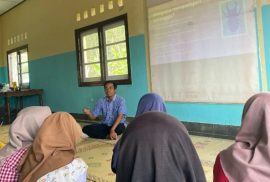
Entomology Study Group (KSE) held The Entotalk with the theme “Opportunities in Employment, Research and Advanced Study in Entomology” , this activity is conducted with the aim of enhancing the knowledge of KSE members and honing their skills in entomology. Featuring R. Hanindyo Adi, S.Si., M.Si. As the speaker, this event took place at Wisma Merbabu, Kaliurang, as part of the hatchery training series. The session, commencing at 12:45 PM WIB, was moderated by Sheva Rimma Dhanty (KSE XXIII). Throughout the activity, all attending members actively listened and comprehended the material presented by the speaker.
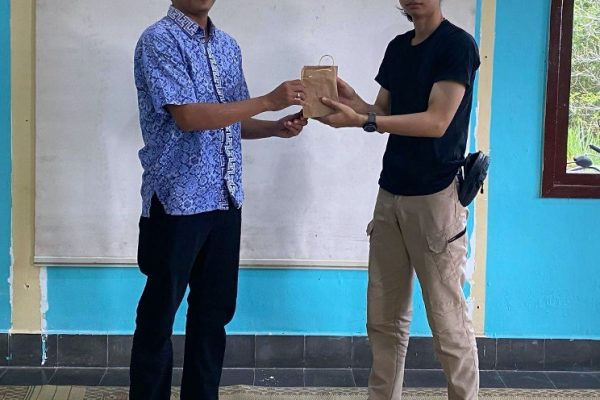
The Entotalk series commenced at 12:45 with an opening by the moderator. Following the introduction, an interactive session covered various topics including job opportunities for entomologists, research ideas in entomology, and more comprehensive studies in the field. After the discussion session, several attendees actively posed questions to the speaker during the Q&A segment. The Entotalk agenda concluded at 14:15, concluding remarks were made by the moderator along with the presentation of tokens of appreciation to the speaker. [Author: KSE]
The Merck Young Scientist Award (MYSA) 2023 has announced the top 12 semifinalists on October 25, 2023. The MYSA program aims to engage young scientists in discussions, idea sharing, scientific research development, and collaboration to create new breakthroughs, while also recognizing the dedication of scientists in developing sustainable solutions to meet the healthcare needs of Indonesia’s society. Additionally, MYSA seeks to inspire and encourage young scientists to innovate in life sciences and provide solutions to various health challenges. This program, in its fifth year running since 2018, collaborates with the Research Organization for Life Sciences and the Environment, the National Research and Innovation Agency (BRIN), and Universitas Gadjah Mada, who act as the judging panel to provide optimal assessments of the participants.
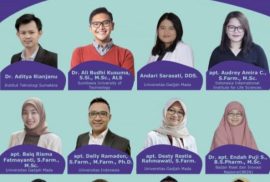
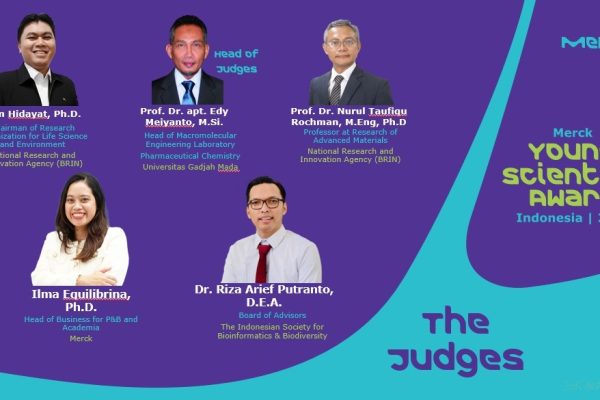
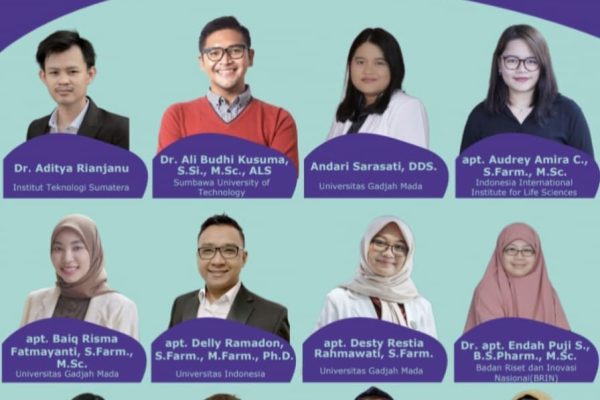
The 12 semifinalists of the Merck Young Scientist Award (MYSA) 2023 come from various institutions including Institut Teknologi Sumatera, Sumbawa University of Technology, Universitas Gadjah Mada, Indonesia International Institute for Life Sciences, Universitas Indonesia, National Research and Innovation Agency (BRIN), IMERI FKUI, and PT Bio Farma. Participants were selected by a judging panel led by Prof. Dr. apt. Edy Meiyanto M.Si from the Faculty of Pharmacy, Universitas Gadjah Mada, including Iman Hidayat., Ph.D, Prof. Dr. Nurul Taufiqu Rochman., M.Eng., Ph.D from the National Research and Innovation Agency (BRIN), Ilma Equilibrina., Ph.D from Merck, and Dr. Riza Arief Putranto., D.E.A from The Indonesian Society for Bioinformatics & Biodiversity.
Through rigorous evaluation, Sigit Dwi Maryanto., S.Si., M.Sc from the Faculty of Biology, Universitas Gadjah Mada emerged as one of the top 12 semifinalists. His research focuses on the efficiency of nutrient absorption in palm oil. In general, Sigit Dwi Maryanto., S.Si., M.Sc explained that his research will yield short-term downstream products related to molecular markers for nutrient efficiency in palm oil, while the long-term target is nutrient-efficient palm oil progenies. This research significantly contributes to palm oil production.
The culminating event will take place on November 23, 2023, in Jakarta. During this final event, the 12 finalists will present their research, and the winners will be announced. Therefore, Sigit Dwi Maryanto., S.Si., M.Sc hopes to deliver the best performance during the presentation and bring home victory, thereby enhancing the reputation of the Faculty of Biology, Universitas Gadjah Mada. (Vita Meylani, PhD Program Student, First Semester 2023, Faculty of Biology).
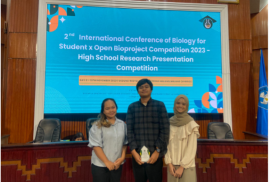
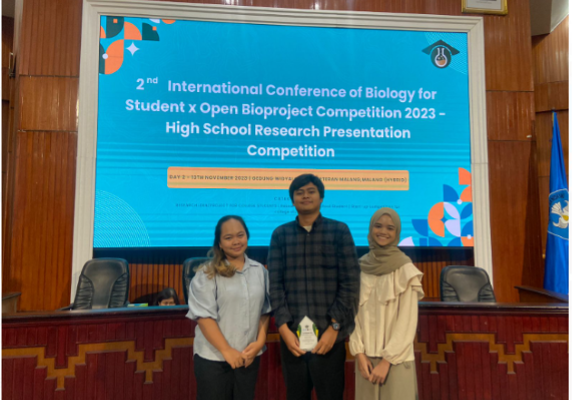
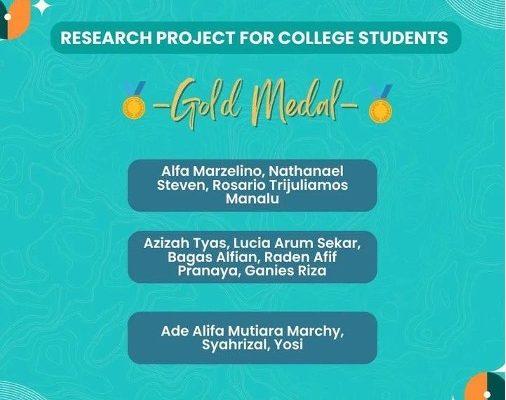
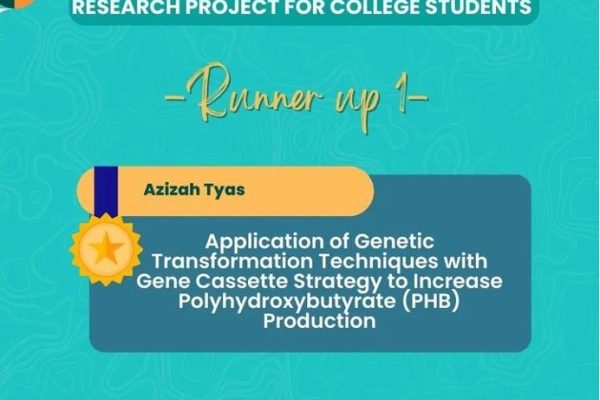
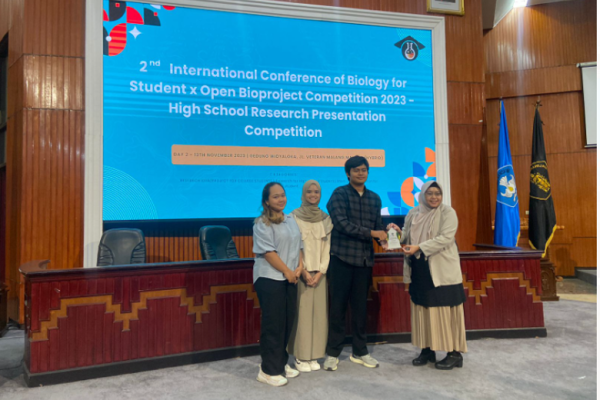
Biology student at Faculty Biology UGM made another achievement by winning gold medal for Research Project for College Student and Runner Up-1 for Grand Award Research Project for College Student in 2nd International Conference of Biology for Students (ICOBIOS) x Open Bioproject Competition (OBC) 2023 at Brawijaya University on 12-14 November 2023. This achievement was achieved by a team from Laboratory of Genetics and Breeding, comprised of Azizah Tyas Nugrahanty (Biologi 2020), Bagas Alfian Dwiaryanda (Biologi 2020), dan Lucia Arum Sekar Meysari (Biologi 2020) under guidance Ganies Riza Aristya, S.Si., M.Sc., Ph.D in collaboration with Raden Afif Pranaya Jati, S.P., M.Sc from Indonesia Bioinformatic Institute (INBIO-Indonesia).
The 2nd International Conference of Biology for Students (ICOBIOS) x Open Bioproject Competition (OBC) 2023 has the theme ”Inovative Approach in Investigating Biological Problem through Multidisciplinary Research and Startup” aimed to accelerate collaboration and enhance understanding of various biological aspect for young researchers. The competition was held from July to November 2023 and had several stages, including abstract submission, abstract announcement, proposal submission, presentation and ceremonial event.
The Poly-hydroxy butyrate (PHB) team is examining the issue of biodegradable plastic due to the fact that the development of plastic nowadays is inseparable from modern human life and will grow continuously every year. In addition, various efforts have been undertaken and are being made, one of which is to find alternatives for conventional plastics that are more environmentally friendly and sustainable. Based on these challenges, Azizah, Bagas, and Lucia focus on developing organisms as effective and efficient producers of PHB by utilizing genetic transformation technology. Until now, the PHB team has successfully combined synthetic genes constructed into plasmids into bacterial cells as candidates for naturally producing PHB microbes. This solution is expected to become an alternative to conventional plastics. Furthermore, the team and supervisors also hope that this research will evolve continuously every year to create a comfortable environment without conventional plastics. [Authors: Azizah Tyas Nugrahanty, Bagas Alfian Dwiaryanda, and Lucia Arum Sekar Meysari]
The Museum of Biology is a museum managed by the Faculty of Biology at Universitas Gadjah Mada, Yogyakarta, since 1956. Originating from the ideas of Prof. drg. RG Indrayana and Prof. Ir. Moeso Soeryowinoto, the establishment of this museum began with the merging of the Zoologicum Museum managed by Prof. drg. RG Indrayana and the herbarium collection managed by Prof. Ir. Moeso Soeryowinoto. In 1969, under the initiative of the Dean of the Faculty of Biology, Ir. Suryo Adisewoyo, and coinciding with the Dies Natalis of the Faculty of Biology UGM, the Biology Museum was inaugurated at Jl. Sultan Agung No.22, Mergangsan Subdistrict, Yogyakarta.
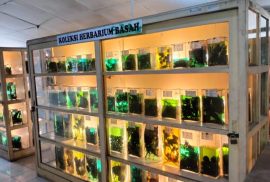
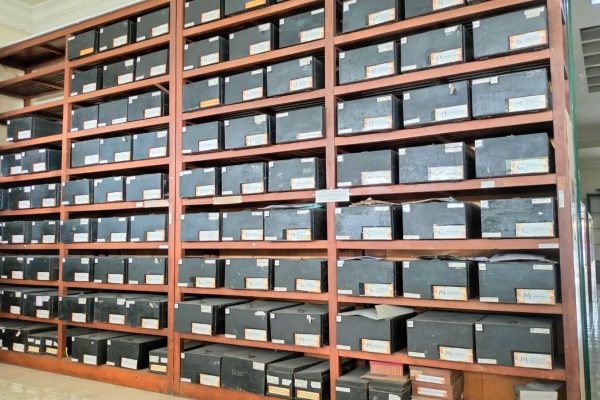
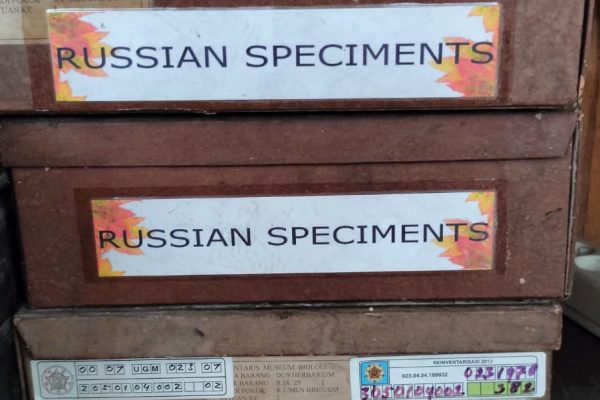
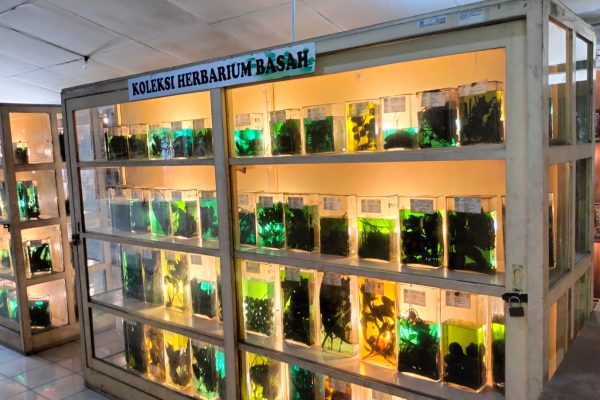
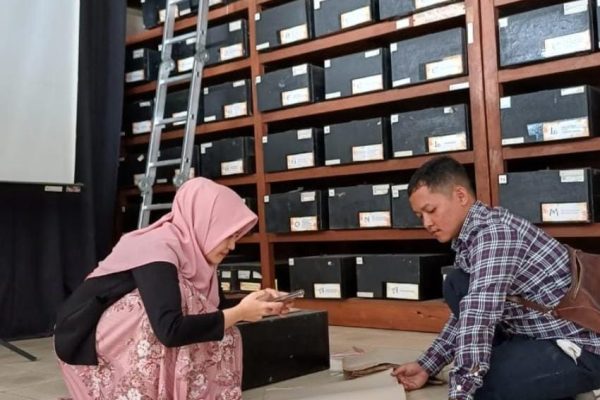
The museum, with a concept of biological education, research, and community service, houses collections such as skeletons, animal fossils, plant specimens, wet herbarium, and dry herbarium. In the dry herbarium storage, there are more than 3000 plant specimens, both indigenous and foreign. According to Fahmi, one of the Museum of Biology’s curators, a comprehensive specimen data collection is currently underway for digitalization purposes. “Every day, students come for data collection purposes and assist in the maintenance of dry specimens by replacing paper in the aging herbarium,” said Fahmi. He also mentioned a special box containing voucher specimens from the USA and Russia. Additionally, there are about 1000 wet herbarium specimens in the form of preserved fruits and flowers. In addition to plant specimens, there are also fossils and preserved animals, each with information on display.
The Museum of Biology is open to students and the general public every day during museum hours. Monday to Thursday, it is open from 08:00 AM to 04:00 PM WIB, Friday from 08:00 AM to 03:00 PM WIB, and Saturday-Sunday from 08:00 AM to 02:00 PM WIB. In addition to being used as an educational attraction, this place is also utilized for the research of several students and professors. The Appreciation Award for the Sustainability and Maintenance of Cultural Heritage Buildings and Cultural Heritage in 2023 from the Yogyakarta City Culture Office is proof that the management of this museum is well-regarded. The well-maintained museum supports educational facilities for various groups.”
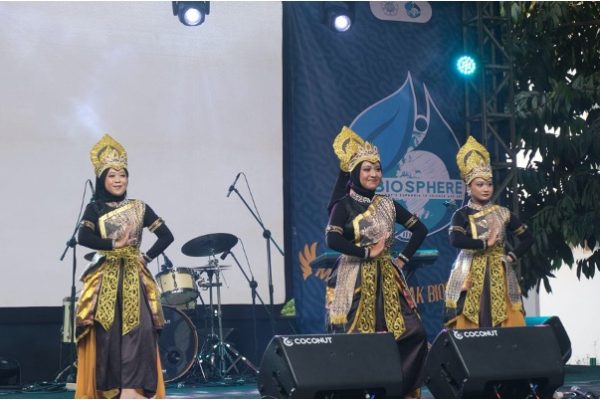
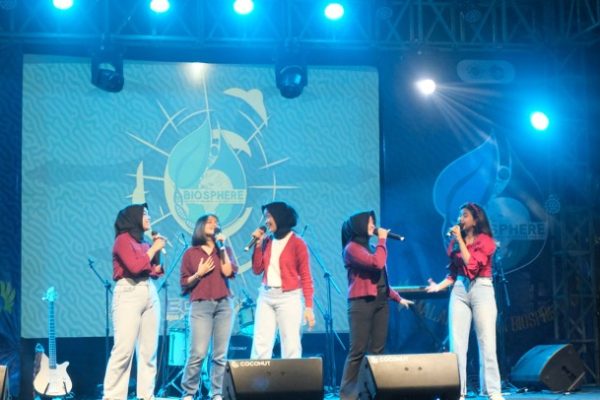
The Closing Ceremony and the Culminating Night of BIOSPHERE#6, themed “The Hustle Story from Empire of Underland,” successfully took place on November 12, 2023 from 3:00 PM to 8:45 PM WIB at the Faculty of Biology, Universitas Gadjah Mada and was attended by 135 spectators. The event commenced with an opening by the MCs, Fauzi (2020) and Rima Arvisya (2022), followed by a performance of the Laskar Gebrar Dance by postgraduate students of the Faculty of Biology, UGM. This was followed by an address from Daffa Patria Putra Dewanto, the Chairperson of BIOSPHERE#6.
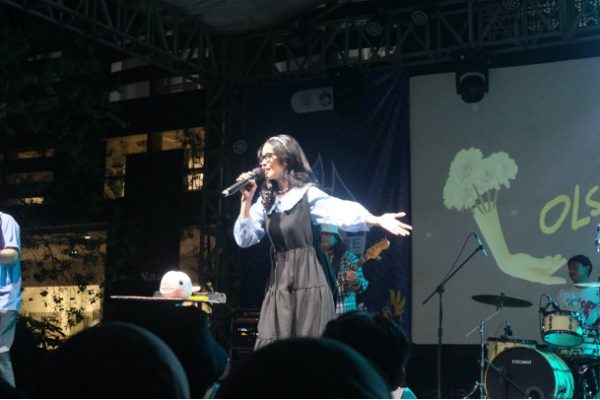
In addition to the postgraduate student performances, there were other performances by undergraduate students from the Faculty of Biology, including Paradisea with a modern dance, Biotimbre, and Syrinx, delivering a captivating musical performance. Subsequently, there was a announcement and distribution of prizes for the winners of the internal competition of BIOSPHERE#6. The event concluded with a closing statement from Prof. Dr. Budi Setiadi Daryono, M.Agr.Sc, the Dean of the Faculty of Biology, Universitas Gadjah Mada, and was enlivened by Olski as the guest star.
The Culminating Night of BIOSPHERE#6 was vibrant, fueled by the enthusiasm of the students from the Faculty of Biology, UGM. The event proceeded in a conducive, safe, and orderly manner until its conclusion. The successful execution of the Culminating Night marked the official closure of the entire BIOSPHERE#6 series. Therefore, it is hoped that all committee members and spectators can appreciate themselves after this long journey and continue to explore and develop their own potentials. [Author: BIOSPHERE Committee]
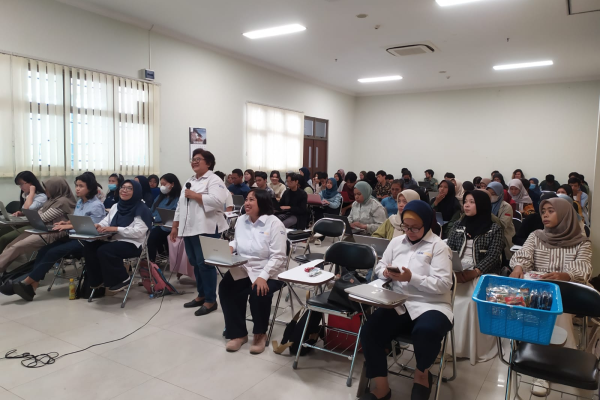
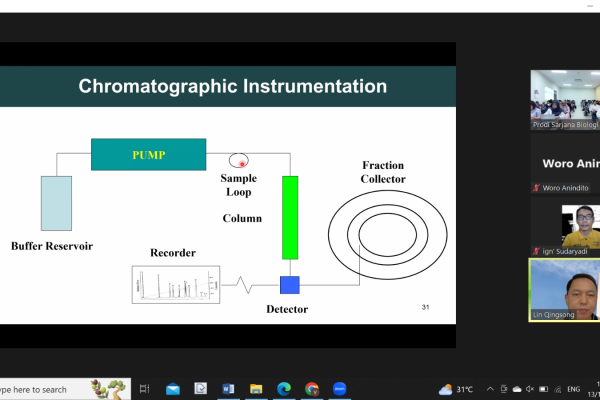
The Biochemistry Laboratory of the Faculty of Biology Universitas Gadjah Mada conducted the internationalization of the technical biochemistry course by inviting two foreign lecturers to deliver lectures in a hybrid format. The hybrid lectures were conducted four times, featuring Dr. Lin Qingsong from the Department of Biological Sciences, National University of Singapore, Singapore, and Dr. Mohd Zuwairi Bin Saiman from the Institute of Biological Sciences, Faculty of Sciences, Universiti Malaya, Malaysia.
Dr. Lin Qingsong delivered lectures on November 6 and 13 titled “Protein Isolation and Detection.” The first lecture covered protein isolation and purification techniques using chromatographic methods, while the second lecture focused on methods for protein analysis such as affinity chromatography, SDS Page, Western blot, and Elisa. Additionally, Dr. Mohd Zuwairi Bin Saiman delivered a lecture on November 20 titled “What is Chromatography and How Does It Work?” and on November 27 with the topic “What is Metabolomics All About?”.
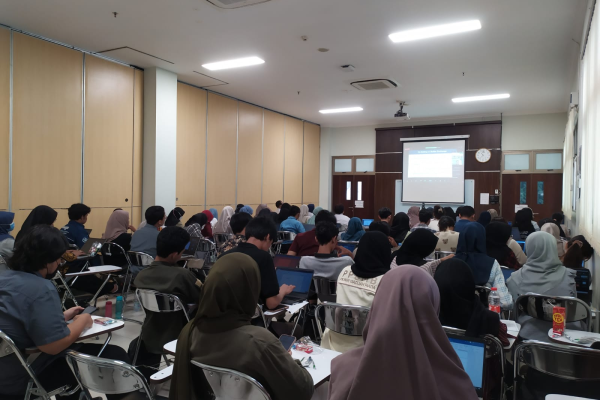
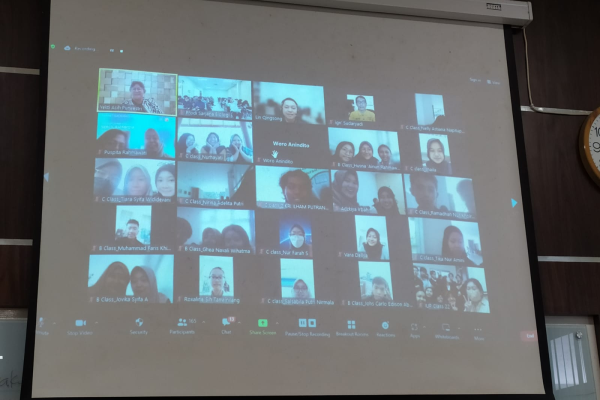
The technical biochemistry course is a compulsory course for third-semester students, divided into four parallel classes totaling 250 students. The hybrid lectures were conducted where one class attended in person in room 2, while other classes followed the lectures online. After attending the lectures, students were required to create resumes. Students showed great enthusiasm for these lectures and actively engaged with the foreign lecturers by asking questions both directly and through the chat feature. This hybrid class is expected to enhance students’ competencies and broaden their understanding of the academic environment abroad. Additionally, it is hoped that this initiative won’t just stop here but will continue through research and academic collaborations with foreign institutions.
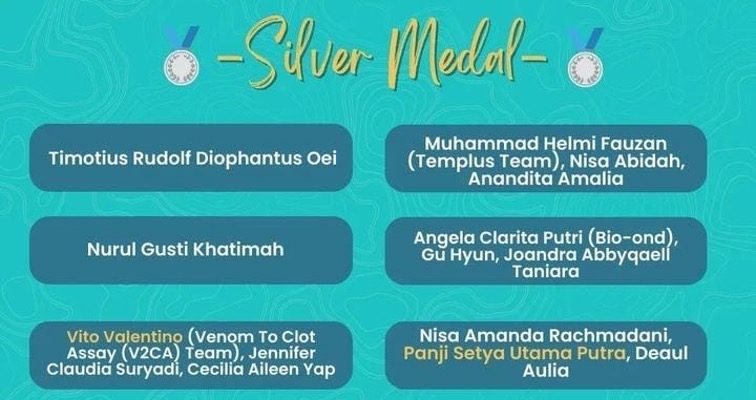
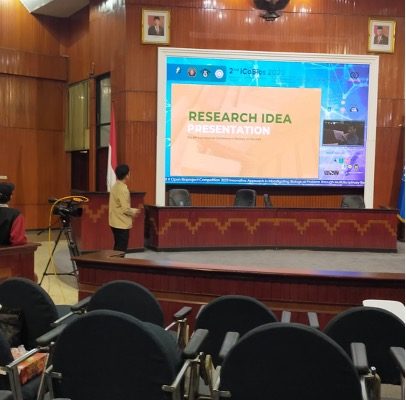
Biology student at Faculty Biology UGM made another achievement by winning silver medal for research idea proposal in 2nd International Conference of Biology for Students (ICOBIOS) x Open Bioproject Competition (OBC) 2023 at Brawijaya University on 12-14 November 2023. This achievement was achieved by Templus team, comprised of Muhammad Helmi Fauzan (Biologi 2020), Nisa Abidah (Biologi 2021), and Anandita Amalia (Biologi 2021) under guidance Dr. Miftahul Ilmi, S.Si., M.Si. in collaboration with Aditya Aryandi an alumnus from Faculty Biology in 2010.
The 2nd International Conference of Biology for Students (ICOBIOS) x Open Bioproject Competition (OBC) 2023 has the theme ”Inovative Approach in Investigating Biological Problem through Multidisciplinary Research and Startup” aimed to accelerate collaboration and enhance understanding of various biological aspect for young researchers. The competition was held from July to November 2023 and had several stages, including abstract submission, abstract announcement, proposal submission, presentation and ceremonial event.
Team Templus addressed the issue of stunting, which is not only rooted in a lack of socialization within communities but also in the insufficient variety of nutrients in daily meals, especially for micronutrients such as vitamin A. On the other hand, the presence of tempe as an affordable food source in Indonesia with sufficient nutrition could be an alternative for food fortification. Therefore, one solution proposed by Team Templus to address the stunting issue is fortifying tempe through genetic engineering using the fermentation agent Rhizopus oryzae induced with precursor genes for carotenoids by Mucor circinelloides.
Though initially encountering confusion in method construction, Team Templus successfully completed the proposal, hoping that the offered solution could likely progress to the research stage and succeed in testing. Subsequently, this solution is anticipated to serve as an alternative to reducing stunting rates in Indonesia. [Author: Anandita Amalia]
The National Higher Education Standard Regulation requires the implementation of education based on learning outcomes, also known as Outcome-Based Education (OBE). One of the goals of OBE implementation is to respond to the challenges of Industry 4.0 by providing Education 4.0 that prepares students to utilize their abilities, attitudes, knowledge, and skills to solve real-world problems. The expected outcome is that graduates are ready to apply their abilities according to the needs of Industry 4.0. The university anticipates a high absorption of graduates in the industrial world, contributing significantly to society and the country. Another impact is to meet the requirements for obtaining international accreditation, which can enhance the university’s reputation and global educational quality recognition.
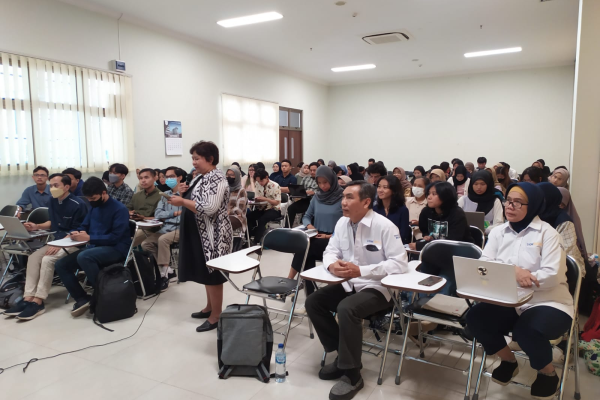
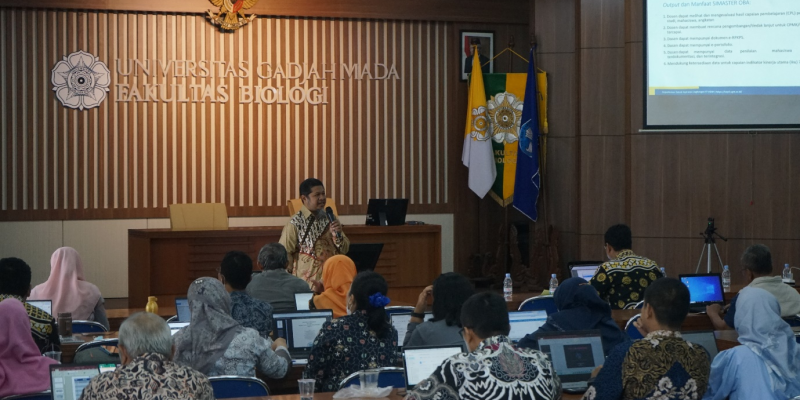
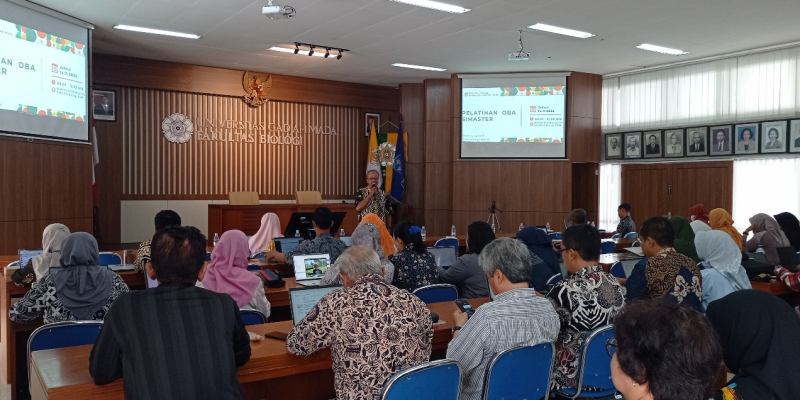
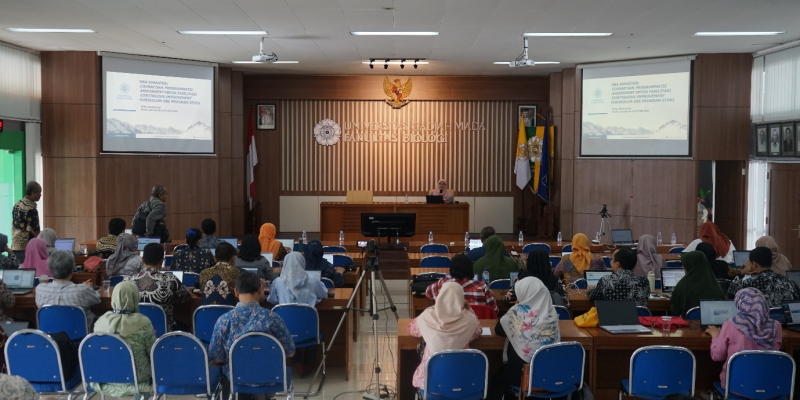
To support the implementation of Outcome-Based Learning (OBE) and contribute to SDG no. 4 (Quality Education) in the Faculty of Biology UGM, on Tuesday, November 14, 2023, the faculty of Biology organized the OBA SIMASTER Training session with speakers Dr. Widya Wasityastuti, M.Sc., M.Med.Ed., Ph.D. from the University’s Quality Assurance and Reputation Unit (SPMRU), along with Akhmad Aminullah, S.T., M.T., Ph.D. supported by Budi Saptono, S.Kom. from the Directorate of Information Technology (DTI UGM). The event took place in the Tropical Biology Auditorium at the Faculty of Biology UGM and was attended by all lecturers from the faculty, both in-person and virtually.
The event began with an introduction by the MC, Asrindon, S.Ikom., followed by remarks from Dr. Bambang Retnoaji, M.Sc., the Vice Dean for Academic Affairs and Student Affairs, officially opening the training. The training was divided into theoretical sessions presented by Dr. Widya Wasityastuti, M.Sc., M.Med.Ed., Ph.D., and practical sessions on using OBA SIMASTER guided by Akhmad Aminullah, S.T., M.T., Ph.D., and Budi Saptono, S.Kom. The theoretical aspects covered in the training included the concepts of Outcome-Based Education (OBE), assessment methods, course portfolios, and an introduction to using OBA SIMASTER. During the practical sessions using OBA SIMASTER, participants were guided through the process of compiling course portfolios from start to finish.
The materials presented in this training provided a deeper understanding and insight into course portfolios and the use of the OBA SIMASTER tool to support OBE implementation. Interactive discussions ensued regarding creating comprehensive and effective course portfolios that facilitate the implementation of OBE. The training aimed to provide an understanding of using OBA SIMASTER to facilitate easier course portfolio compilation. With this outcome-based assessment information system, it is expected that the monitoring and quality assurance processes in learning can be more measurable and well-documented, thereby realizing the Faculty of Biology UGM as a robust and high-quality educational institution (SDGs no. 16 and 04).