• UGM
  • Simaster Portal
  • IT Center
  • Webmail
  • KOBI
  • English
    • Bahasa Indonesia
Universitas Gadjah Mada Universitas Gadjah Mada
Faculty of Biology
  • ABOUT US
    • History
    • Organization
    • Vision and Mission
    • Lectures and Staff
      • Lecturers
      • Adjunct Professor
      • Supporting Staff
    • Facility
      • Laboratories
      • Research
      • Library
      • Museum
      • Mental Health Consultation
      • Disability
  • EDUCATION
    • Undergraduate Program
      • Graduates Learning Outcome
      • Academic Callendar
      • Course
    • IUP
    • Profession Program
      • What is the Professional Study Program in Biodiversity Curator (PKKH)?
      • Admission for New Students of the Biodiversity Curator Profession Program Study
      • Information and FAQ Study Program of Biodiversity Curator Profession
    • Master Program
      • Master Program in Biology Description
      • Curriculum Structure Master Program
    • Doctoral Program
      • Vision, Mission, Objectives, Targets, Competencies, and Learning Outcomes
      • Admission Requirement for Program Doctor in Biological Sciences
      • Admission: What Documents to be prepared?
      • Curriculum
    • Regulations
    • Accreditation & Quality Assurance
  • RESEARCH
    • Journal of Tropical Biodiversity and Biotechnology
    • Berkala Ilmiah Biology
    • Research
    • Publication
  • Community Service
    • Waste Management
  • STUDENTS & ALUMNAE
    • Student Organizations
    • Prospective Career Opportunities
    • SUMMER COURSE
    • Alumnae
  • Home
  • Post by
  • page. 8
Post by :

ichsan.risalba

Spice Research Team of INUCoST, Faculty of Biology, UGM, Undertakes Exploration in East Kalimantan

News Release Monday, 11 August 2025

The spice research team WP (Work Package) 2, coordinated by Prof. Dr. Budi Setiadi Daryono, M.Agr.Sc. in the INUCoST (Indonesia-Netherlands Universities Consortium for Sustainable Futures) platform, has been exploring spices in East Kalimantan. The initial phase of the spice exploration focused on the buffer zone of the Nusantara Capital City (IKN), including the Samarinda City and four districts in Penajam Paser Utara Regency. The exploration, conducted from July 30 to August 3, 2025, collaborated with lecturers and researchers from the Faculty of Mathematics and Natural Sciences, Mulawarman University, and coordinated with the research team from Leiden University, Prof. Dr. rer.nat. Paul Kessler and Roderick Boumann.


The spice exploration on the first day began with a visit to the Wanariset Herbarium in Samboja subdistrict, Kutai Kartanegara district. During the visit, discussions were held, and spice specimens from the herbarium collection were recorded. These activities provided a wealth of information about spices and traditional medicinal plants used by the people of Kalimantan. This information was crucial as initial data for spice exploration, particularly in East Kalimantan. Spice documentation is conducted by observing the herbarium’s various collections, including dried specimens, spirit specimens, and living collections planted around the area. Additionally, the team had the opportunity to directly observe and study the drying process of specimens for the herbarium collection.

A Focus Group Discussion (FGD) was held with partners and relevant agencies to initiate the exploration of spices in the city of Samarinda, East Kalimantan. Attendees included Mr. Rahmadona, a representative of the Dayak tribe, the Forestry Department of East Kalimantan, the Nature Conservation Agency (BKSDA) of East Kalimantan, the Dean and Vice Dean of Mulawarman University, and the Research and Community Service Institute (LP2M) of Mulawarman University. The FGD began with a presentation by the spice team leader, Prof. Dr. Budi Setiadi Daryono, M.Agr.Sc., on the definition of spices, global spice distribution routes, and an explanation of the spice project of INUCoST Work Package 2 being implemented in East Kalimantan. The session continued with a discussion on spice diversity in East Kalimantan. The discussion outcomes were used to gather initial data on the diversity of spices existing in East Kalimantan.

The survey and data collection on spices were done by visiting various traditional markets, starting with Loa Janan and Subuh traditional markets in Kutai Kartanegara regency; Pandansari, Buton, and Inpres traditional markets in Balikpapan; and Petung and Penajam Central traditional markets in Penajam Paser Utara regency. Additionally, the team conducted surveys at several traditional herbal medicine vendors, such as herbs sellers in Argomulyo village, Sepaku sub-district, and Dapur Sehat in Waru sub-district, Penajam Paser Utara. The spice research team also had the opportunity to visit the home gardens of Paser ethnic group residents in Paser sub-district, Penajam Paser Utara. Some spices successfully documented from the Paser ethnic group include Bonglai, or Mango Ginger (Zingiber montanum (J.Koenig) Link ex A.Dietr.), Lemongrass (Cymbopogon nardus (L.) Rendle), and Kecombrang, or torch ginger (Etlingera elatior (Jack) R.M.Sm.), which were found growing abundantly in the residents’ yards.
The entire spice exploration program was successfully implemented. A total of 53 spice specimens were collected during the exploration. The specimens were then collected and preserved in both spirit and dry preservation at the Laboratory of the Faculty of Biology, Universitas Gadjah Mada. The list of spices and the specimens obtained represent crucial information for understanding the richness of Indonesia’s native spice diversity and its distribution. (MSR)
Sustainable Development Goals (SDGs):

2 : Zero Hunger

8 : Decent Work and Economic Growth

12 : Responsible Consumption and Production

15 : Life on Land

17 : Partnerships for The Goals

Focus Group Discussion: “Application of Food Irradiation to Support the Export of Indonesian Agricultural Products”, BRIN – Serpong

News Release Thursday, 31 July 2025

Nuclear Energy Research Organization – BRIN
Tuesday, July 29, 2025 | Auditorium Building 720, BJ Habibie Science and Technology Area, BRIN Serpong

The Nuclear Energy Research Organization of the National Research and Innovation Agency (BRIN) held a Focus Group Discussion (FGD) titled “Application of Food Irradiation to Support the Export of Indonesian Agricultural Products” on Tuesday, July 29, 2025, at the Auditorium of Building 720 in the BJ Habibie Science and Technology Area (KST), Serpong. The event, which ran from 08:30 to 15:30 WIB, aimed to promote the use of food irradiation technology as a strategy to enhance the competitiveness of Indonesian agricultural products in the global market, while also supporting the distribution of safe and nutritious food across the archipelago.


The discussion was opened by the Deputy for Research and Innovation Utilization at BRIN, who emphasized the importance of integrating research, policy, and industry to transform the national food system. A keynote address by Dr. Tri Mumpuni, a member of BRIN’s Steering Committee, underlined the critical role of irradiation technology in boosting food export and safety. She also addressed the issue of equitable access to research and technological infrastructure, advocating for the decentralization of irradiation facilities beyond the existing centers in Cibinong and Serpong to other regions, particularly in Eastern Indonesia where food production and export potential are significant.

The Head of the National Nutrition Agency, Dr. Ir. Dadan Hindayana, highlighted the potential of food irradiation to support national nutrition initiatives, particularly the free nutritious lunch program targeting vulnerable groups such as children from low-income families, pregnant women, and breastfeeding mothers. He emphasized the importance of high-quality food provision and sustainable organic waste processing as part of Indonesia’s upcoming national nutrition revolution and called for thorough research on the impact of food irradiation as a preservation method within this program.

The technical sessions featured distinguished speakers from both national and international institutions. Dr. Andrew Jessup, a horticultural entomologist and consultant from Australia, presented on the global market for irradiated fresh produce. He discussed how irradiation technology could be used to control fruit flies, a key challenge in horticultural exports. Since each insect species requires a specific radiation dose for sterilization, treatment protocols must be carefully tailored. He also highlighted the need to build public trust in the safety of irradiated food.

In the following session, Dra. Dwiana Andayani, Apt., from the Food and Drug Monitoring Agency (BPOM), stressed the importance of standardizing irradiation doses and complying with national and international food safety regulations. She explained that BPOM is responsible for monitoring processed irradiated food products, while the National Food Agency (BAPANAS) supervises fresh irradiated products. As of now, five processed food items have been registered as irradiated in Indonesia: cocoa powder, edible bird’s nest, frozen fish, tea, and powdered honey. All irradiated products must be labeled accordingly, following international standards.

Dr. Antarjo Dikin, a Principal Expert in Plant Quarantine at the Indonesian Quarantine Agency, provided insights into labeling procedures, the cleaning of packing facilities, and the steps involved in exporting irradiated fruits. The Nuclear Energy Regulatory Agency (BAPETEN) shared information on the licensing of irradiator facility construction and operation, radiation monitoring, and safety assurances for nuclear technology used in food applications.

From the industry perspective, Mr. Gustam, an exporter who uses food irradiation services, shared his experience in product validation, determining the effective minimum dosage, managing production costs, and fulfilling export requirements, including compliance with U.S. FDA standards for products such as tuna and salmon, which require a 3 kGy irradiation dose costing approximately IDR 800 per kilogram.

Yusra Egayanti, S.Si., Apt., M.P., Director of Food Safety and Quality Standards at BAPANAS, explained how irradiation helps extend the shelf life of fresh food by sterilizing products and eliminating pests and bacteria. Dr. Syaiful Bakri, Head of the Nuclear Energy Research Organization at BRIN, emphasized the role of research in the development of irradiation and accelerator technologies. He announced the upcoming launch of a new food irradiation facility next month, aimed at strengthening the applied research ecosystem in Indonesia. He also noted that the organization manages seven research centers focusing on both fundamental and applied research to support industrial and societal needs.

A speaker from Oneject Indonesia presented the application of electron beam technology for irradiating medical devices and food products. Su Bin, Chief Representative of China National Nuclear Corporation (CNNC) Indonesia, presented CNNC’s 70 years of nuclear experience and their strategies for integrating nuclear energy and irradiation technology into the food industry. He emphasized that different food types—such as vegetables, fruits (including mango, mangosteen, salak, and apples), bread, and ready-to-eat meals—require specific radiation doses. Proper optimization can make these foods more durable, bacteria-free, and pest-free. He also noted that irradiation is a non-invasive method that does not alter the structural or nutritional integrity of the food.

The panel discussion, moderated by Bimo Saputro, S.ST., M.Si. and Okky Agassy Firmansyah, S.T., M.Sc., was dynamic and explored diverse perspectives from technical, policy, social, and research collaboration angles. Regional government representation came from BRIDA East Kalimantan, who raised concerns about infrastructure development for irradiation facilities in their region due to limited budgets and the inefficiencies of centralized policies.

The FGD was attended by representatives from various sectors, including government institutions (BRIN, BPOM, BAPETEN, the Ministry of Agriculture, and the Ministry of Marine Affairs and Fisheries), national and multinational companies (PT Indofood, PT Unilever, PT Nestlé, PT Danone), industry associations (GAPMMI, KADIN), international organizations (IAEA, FAO, WHO, Codex Alimentarius), and leading universities such as UGM, UI, ITB, IPB, Universiras Padjajaran, Universitas Sultan Ageng Tirtayasa, Universitas Pamulang, Universitas Pertahanan, and Sekolah Tinggi Intelijen Negara (STIN). The Faculty of Biology at Universitas Gadjah Mada was represented by Novita Yustinadiar, S.Si., M.Si., a lecturer from the Laboratory of Plant Structure and Development. The involvement of academic institutions reinforced the commitment to synergize research bodies, universities, and the industrial sector to develop measurable and sustainable food irradiation technologies.

This cross-sectoral participation demonstrated strong enthusiasm for food irradiation as part of both national and global food system transformation. The event also encouraged collaborative studies by university researchers to explore irradiation impacts from various perspectives, including plant morphology, anatomy, physiology, microbiology, insect pests, biochemistry, genetic effects on food products, and implications for human health.

The discussions on food irradiation aligned with several Sustainable Development Goals (SDGs). The innovation contributes to SDG 2 (Zero Hunger) by ensuring access to safe and high-quality food, particularly in remote and disaster-affected areas. It supports SDG 3 (Good Health and Well-being) by minimizing risks from insects and pathogenic microorganisms. Through the development of irradiation infrastructure based on applied research, it advances SDG 9 (Industry, Innovation, and Infrastructure). Efficient and sustainable food processing techniques also support SDG 12 (Responsible Consumption and Production). Furthermore, the spirit of inter-agency and international collaboration embodied in the FGD reflects SDG 17 (Partnerships for the Goals), which is key to maximizing the societal benefits of nuclear technology.

Through this FGD, BRIN hopes to foster cross-sectoral consensus on the benefits of food irradiation and facilitate the development of comprehensive national standards. This initiative marks an important milestone toward establishing nuclear technology as a practical solution for enhancing Indonesian agricultural exports, reinforcing national food security, and improving public health outcomes.

Tracing 9th Century Fauna in Prambanan Reliefs, Biology Students Support Biodiversity Conservation (SDG 15)

News ReleaseStudent Activities Wednesday, 30 July 2025

SLEMAN, YOGYAKARTA – JULY 29, 2025 – In an innovative learning initiative, a group of students (Awanda Nurvi Adifa (22/497410/BI/11018), Nisrina Nibros Hasibuan (22/498667/BI/11048), and Safina Suci Samara (22/498711/BI/11049)) from the UGM Faculty of Biology has conducted a field study at the Prambanan Temple complex. The activity, part of the Research scheme of the Merdeka Belajar Kampus Merdeka (MBKM) program, focuses on identifying and analyzing the diverse fauna carved on the reliefs of the 9th-century temple.


The visit aims to reconstruct a picture of past biodiversity as depicted on the temple reliefs. Using the bio-iconography method, the students are meticulously documenting, identifying, and analyzing every animal relief found, from mammals and birds to reptiles and insects. The collected data will then be used to build a historical database of the fauna from that period.

This research activity not only has high academic value but also directly supports the achievement of the Sustainable Development Goals (SDGs).

Specifically, this initiative is highly relevant to SDG 15: Life on Land. By understanding the types of animals that once lived and were recorded in this cultural heritage, the students can provide historical comparative data. This data is crucial for understanding biodiversity changes over centuries, measuring the rate of species loss, and can ultimately form the basis for formulating more effective wildlife conservation strategies today.

Furthermore, this program is also a tangible implementation of SDG 4: Quality Education. The MBKM learning model, which takes students directly to the research object, provides a deep, contextual learning experience that goes beyond the classroom walls.

Zuliyati Rohmah, S.Si., M.Si., Ph.D. Eng., the supervising field lecturer, stated that Prambanan Temple is a priceless natural history laboratory. “The reliefs on the temple are not merely artistic decorations, but a visual archive of past ecosystems. Through the eyes of a biologist, these reliefs tell a story about the richness of fauna in their time. This is a bridge between biology, archaeology, and history that provides students with a holistic understanding,” she said.

One of the participating students, Awanda, expressed her enthusiasm. “This experience has opened our eyes to the fact that conservation is not just about the future, but also about learning from the past. Seeing the detailed carvings of langurs, deer, and various
birds on the stone made us wonder, are they all still around us today? This motivates us to be more concerned about wildlife preservation,” she said.

The results of this research are expected to be published in a scientific journal and become an important reference for researchers, archaeologists, and conservation activists in understanding the ancient Javanese ecological landscape.

Faculty of Biology UGM Strengthens International Partnership with Universiti Tun Hussein Onn Malaysia (UTHM) through Dual Degree Program Initiative

CooperationNews Release Tuesday, 29 July 2025

Pagoh, Malaysia – The Faculty of Biology, Universitas Gadjah Mada (UGM), conducted an official visit to Universiti Tun Hussein Onn Malaysia (UTHM) to discuss the implementation of a Dual Degree program at the undergraduate level (Bachelor of Science) between the Faculty of Applied Sciences and Technology (FAST), UTHM and the Faculty of Biology UGM. The visit took place from July 24 to 28, 2025, at Pagoh Branch Campus, UTHM, Malaysia.


The UGM delegation was led by Prof. Dr. Bambang Retnoaji, S.Si., M.Sc., Vice Dean for Academic and Student Affairs, and accompanied by two staff members from the Office of Research, Community Service, Collaboration, and Alumni (P2MKSA), Anysah Nur Fauziyah, S.Si., and Annisa Mawarni, S.Si.

An intensive three-day curriculum matching session was held from Thursday to Saturday, July 24–26, 2025. This process was crucial to ensure compatibility in course structures, credit loads, and learning outcomes, which are essential for the effective and equitable implementation of the dual degree program.

In addition to curriculum alignment, the discussions also involved drafting the content of the Memorandum of Agreement (MoA), which will serve as the legal foundation for the collaboration. Finalizing the MoA marks a strategic step toward establishing a strong administrative and operational framework for the dual degree program. With agreement reached on both the curriculum and the MoA content, both institutions are optimistic that the program can commence in the upcoming academic semester.

The visit concluded with an official meeting on Monday, July 28, 2025, between the UGM delegation and the leadership and academic staff of FAST-UTHM. The meeting was attended by: Assoc. Prof. Ts. ChM. Dr. Hatijah binti Basri, Dean of FAST, Assoc. Prof. Ts. Dr. Muhammad Abdul Latiff bin Abu Bakar, Deputy Dean for Research, Development, and Publication, Dr. Aqilah Binti Awg Abdul Rahman, Head of Natural Resources Program, Dr. Arney Binti Sapaat, Head of SUNR Centre, Dr. Nur Hafizah Binti Malik, Head of BWD Program, Assoc. Prof. Ts. Dr. Norazlin Binti Abdullah, Head of Department of Technology & Natural Resources, Ts. Dr. Siti Fatimah Binti Sabran, Ts. Gs. Dr. Kamarul Rahim Bin Kamarudin, Dr. Yap Jing Wei, Ts. Dr. Salasiah Binti Mohamad, Dr. Munira Binti Zainal Abidin, Assoc. Prof. ChM. Dr. Norhayati Binti Muhammad, Dr. Nor Atiqah Binti Norazlimi, Dr. Furzani Binti Pa’ee.

The Faculty of Biology UGM and FAST-UTHM have maintained a strong partnership since 2018, collaborating annually through various international activities such as student mobility programs, the International Conference on Biological Sciences (ICBS), the International Conference on Biodiversity (ICB), and the International Summer Course.

FAST-UTHM expressed strong enthusiasm for this collaboration, highlighting the shared academic vision and focus on life sciences as well as the mutual commitment to strengthening internationally recognized education.

The INUCoST Team of the Faculty of Biology Conducted High Conservation Areas Survey in The Buffer Zone of Nusantara Capital City

News Release Wednesday, 23 July 2025

Team of Working Package (WP) 1 INUCoST (Indonesia-Netherlands Universities Consortium for Sustainable Futures) which is coordinated by Prof. Dr. Ratna Susandarini, M.Sc. has successfully conducted field survey for High Conservation Value Areas in Muara Jawa Subdistrict, Kutai Kartanegara Regency, Province of East Kalimantan. The survey was conducted in July 14 – 18, 2025. The team was consisted of lecturers and students from Universitas Gadjah Mada and Universitas Mulawarman (Unmul). Team members from UGM were lecturers and students from Faculty of Biology, Center for Land Resource Management Studies, and Faculty of Forestry, while team members from Unmul were the lecturers from the Faculty of Mathematics and Natural Sciences. Field activity was consisted by Focus Group Discussion (FGD) and biodiversity survey around mangrove forest of Mahakam River Delta, Subdistrict of Muara Jawa.


FGD was conducted with university partner (Unmul) and stakeholders. Representatives of Unmul were lecturers from Faculty of Mathematics and Natural Sciences and staffs from The Governing Body for Research and Community Services of Unmul (Lembaga Penelitian dan Pengabdian kepada Masyarakat). Stakeholders invited were all stakeholders responsible for HCV valuation in East Kalimantan Province, e.g. Natural Resources Conservation Agency (Balai Konservasi Sumber Daya Alam), Office of Environmental Services (Dinas Lingkungan Hidup), Office of Forestry Services (Dinas Kehutanan), Office of Food Security, Crops, and Horticulture (Dinas Pangan, Tanaman Pangan, dan Hortikultura), and Office of Marine and Fishery (Dinas Kelautan dan Perikanan). The FGD was done to collect baseline data for biodiversity and its conservation in East Kalimantan Province, especially in Muara Jawa Subdistrict.

Field survey was done around Mahakam River Delta and the settlements surrounding. The exploration of mangrove forest was done in Muara Kembang Village (kelurahan) administrative region to understand the flora and fauna diversity in the region. Biodiversity survey was done to assess the HCV points, i.e. HCV 1 (Species Diversity), HCV 2 (Ecosystem, Landscape Level Mosaic, and Intact Forest Landscape), and HCV 3 (Ecosystem and Habitat) in Muara Jawa Subdistrict. The next field activity done was visitation to Agroforestry Community Counselor (Penyuluh Swadaya Kelompok Tani Hutan) of Mahakam Delta to gain information regarding the community empowerment done by the Agroforestry Community. The visit was done to assess the HCV 5 point (Community Needs) of Muara Jawa Subdistrict.

Another visit was done in Office of Handil II Port, Muara Jawa Pesisir Village. In the visitation, the team was conducting discussions with staffs of the Department of Transportations (Dinas Perhubungan) to collect informations regarding survey locations and informant contacts to be interviewed for HCV assessment. Visit to the Leader of the Farmer and Agricultural Affairs Community (Gabungan Kelompok Tani/Gapoktan) of the Muara Jawa Ulu Village was done to assess information regarding agricultural products and welfare of the farmers in the region. Mangrove forest exploration was conducted in administrative regions of Muara Jawa Pesisir Village and Muara Pegah Hamlet, Muara Jawa Tengah Village. Two activities were done in Muara Pegah Hamlet, i.e. flora and fauna exploration and visitation to the Community Chief (Ketua RT) to collect baseline data regarding social and economic conditions of the people of Muara Pegah Hamlet. The visits to the Leader of Gapoktan and Ketua RT was done to assess information for HCV 5 point.

The series of activities done were successfully collected important data regarding the HCV points. From the flora and fauna survey, it can be concluded that Muara Jawa Subdistrict is a highly important area for conservation. In that subdistrict, a protected species of primate could be found, i.e. proboscis monkey (bekantan/Nasalis larvatus) inhabits a specific mangrove forest found in Mahakam River Delta. Besides becoming home for the primates, mangrove forests also useful as a source of livelihood for local people around the delta. Interviews with stakeholders of Muara Jawa Subdistrict resulted in important data that represented socio-economic condition of the people in the area. (BK)

Sustainable Development Goals points:
11: Sustainable Cities and Communities
12: Responsible Consumption and Production
13: Climate Action
14: Live Below Water
15: Live on Land

Capacity Building Enhancement by BBSPJIKKP through Microbiological Testing Training on Water and Wastewater at the Microbiology Laboratory, Faculty of Biology UGM

News Release Wednesday, 23 July 2025

Yogyakarta, July 24, 2025 – The Faculty of Biology, Universitas Gadjah Mada (UGM), proudly hosted a training program entitled “Microbiological Testing of Water and Wastewater” held from July 21–24, 2025 at the Microbiology Laboratory, Faculty of Biology UGM. This activity was organized in collaboration with the Center for Standardization and Industrial Services of Leather, Rubber, and Plastics (BBSPJIKKP), Yogyakarta.


The training was attended by technical staff and laboratory analysts from BBSPJIKKP, aiming to enhance their capacity in microbiological testing for clean water and industrial wastewater in accordance with environmental quality and public health standards. The training materials covered sampling methods, culturing techniques of microbial indicators, coliform, such as Escherichia coli, and interpretation of results based on national and international regulations.

Dr.rer.nat. Abdul Rahman Siregar, S.Si., M.Biotech., as Head of Microbiology Laboratory, Faculty of Biology UGM, warmly welcomed this activity as part of the university’s commitment to academic contribution and community service in strengthening human resource capacity within the industrial sector. “We hope this training will have a real impact on improving water testing quality in Indonesia, and become the first step toward sustainable collaboration between academia and industry,” he stated.

This training also supports the Sustainable Development Goals (SDGs), specifically SDG 3: Good Health and Well-being, through the strengthening of microbiological testing as part of environmental health surveillance; SDG 6: Clean Water and Sanitation, by improving the quality of testing for both industrial and domestic wastewater; SDG 17: Partnerships for the Goals, through institutional collaboration to build capacity and share knowledge.

This initiative is a clear demonstration that synergy between higher education institutions and government agencies can drive innovation, quality improvement, and sustainability in environmental management in Indonesia.

Faculty of Biology UGM Holds International Summer Course on “Sustainable Fisheries and Marine Biodiversity Conservation”

News Release Monday, 21 July 2025

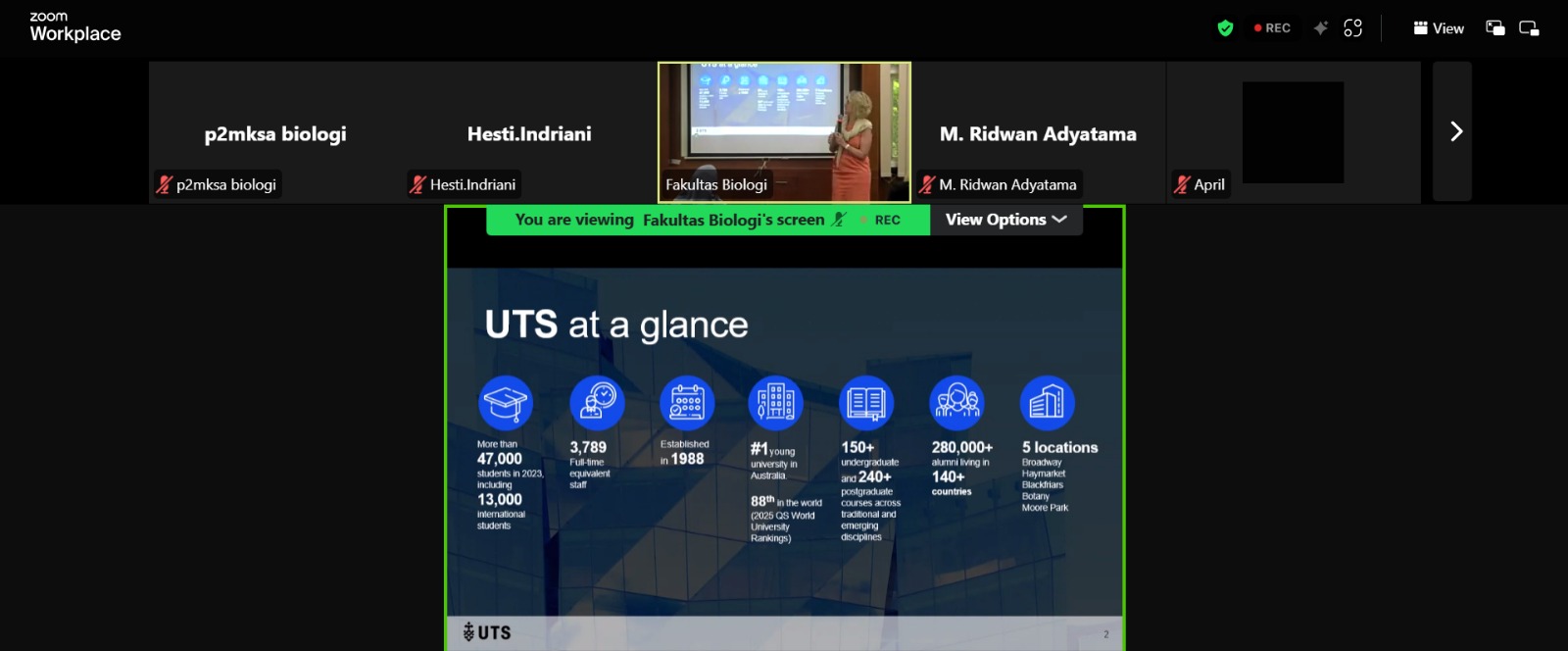
Yogyakarta, July 21, 2025 – The Faculty of Biology Universitas Gadjah Mada (UGM) officially launched the 2025 International Summer Course (ISC) under the theme “Sustainable Fisheries and Marine Biodiversity Conservation.” This annual event is part of the series for the 14th Lustrum of the Faculty of Biology. This year, the ISC is held in collaboration with the University of Technology Sydney (UTS) through funding from the New Colombo Plan, the Indonesian Language and Culture Learning Service (INCULS) of the Faculty of Cultural Sciences UGM, and UGM’s Directorate of Community Service.


Following the Indonesian Language and Culture Program held on July 1–11, 2025, and the Community Service Program (KKN) in Margoagung Village, Seyegan District, Sleman Regency on July 14–18, 2025 in collaboration with UTS, the regular ISC officially opened on Monday morning (July 21) at the Tropical Biology Auditorium, Faculty of Biology UGM. The ISC is attended by 34 participants from 6 countries and 10 universities, including the University of Technology Sydney (Australia), Chiba University (Japan), Universiti Tunku Abdul Rahman (Malaysia), Universiti Tun Hussein Onn (Malaysia), Kasetsart University (Thailand), University of the Philippines Los Baños, UGM, UIN Walisongo, Universitas Negeri Surabaya (UNESA), and Universitas Kristen Satya Wacana (UKSW).

In his opening remarks, Dr. Eko Agus Suyono, M.App.Sc., expressed his gratitude to all participants and partner universities for their involvement. As Vice Dean for Research, Community Service, Collaboration, and Alumni Affairs, he hoped the course would become a valuable experience for participants to contribute on a global scale.

Prof. Ir. Nanung Agus Fitriyanto, S.Pt., M.Sc., Ph.D., IPM, Head of the KKN Sub-directorate under the Directorate of Community Service at UGM, highlighted that this program creates opportunities for interdisciplinary study, allowing participants to approach issues from various perspectives.

Dr. Wulan Tri Astuti, S.S., M.A., Program Coordinator of INCULS, Faculty of Cultural Sciences UGM, expressed special thanks to the participants from the University of Technology Sydney for taking part in the Indonesian language learning program. “We hope the knowledge you have gained will be useful and applicable whenever needed,” she said.

Meanwhile, Prof. Dr. Puji Astuti, S.Si., M.Sc., Apt., Director of the UGM Directorate of Partnerships and Global Relations, emphasized that the program serves as an immersion opportunity that connects universities with local communities. She underlined the importance of biodiversity conservation in Indonesia, which still faces serious challenges such as overfishing, illegal fishing, and plastic pollution.

Through this program, the Faculty of Biology UGM reaffirms its commitment to nurturing a young generation that is environmentally conscious and actively contributes to global conservation efforts. This initiative also supports the achievement of the Sustainable Development Goals (SDGs), particularly SDG 14 (Life Below Water) by aiming to protect marine ecosystems and promote sustainable fishing practices. Additionally, it contributes to SDG 4 (Quality Education) by providing access to quality international education through collaborative learning across nations, and SDG 17 (Partnerships for the Goals) by fostering meaningful international cooperation.

Genomic Innovation for Health and Environmental Sustainability The 2025 National Seminar on Tropical Biology Collaborates with Jogja MultiOmics Update

News Release Sunday, 20 July 2025

On Saturday, July 19, 2025, the Faculty of Biology at Universitas Gadjah Mada successfully held the 9th Seminar Nasional Biologi Tropika (SNBT), which this year was integrated with the Jogja MultiOmics Update (JMU), an initiative by the Integrated Genome Factory (IGF). Taking place at Gelanggang Inovasi dan Kreativitas (GIK) UGM, the seminar carried the theme: “Genomic Innovation for Health and Environmental Sustainability”.


This event became a strategic event to strengthen research collaboration across institutions and sectors, along with the rapid development of multi-omics technology and the urgency of its utilization in the tropical context.

In his speech, Dean of Faculty of Biology UGM, Prof. Dr. Budi Setiadi Daryono, M.Agr.Sc., emphasized that as a megabiodiversity country, Indonesia has a great responsibility in the development of genomic technology. “We hope this seminar can create strategic synergy, research network formation, as well as policies and curricula that support the advancement of Indonesian tropical science,” he said.

Dr. Danang Sri Hadmoko, M.Sc., UGM Vice Rector for Research, Business Development, and Cooperation, said that science-based transformation requires integrative and multidisciplinary approaches. “Genomics is the entrance to answer health, environment, and bioindustry issues scientifically and collaboratively. This forum is a realization of UGM’s spirit to develop solutions from local roots with global standards,” he said.

Director of Kemendikbudristek Resources, Prof. Dr. Ir. Sri Suning Kusumawardani, S.T., M.T., highlighted the importance of human resource capacity building in genomics and bioinformatics. “We must be the main actors, not just users of technology. Academic and industrial collaboration such as with the Integrated Genome Factory (IGF) is the right step towards sustainable innovation,” she emphasized.

SNBTxJMU 2025 presented 15 national speakers in Lightning Talk and Topic Island sessions, and was attended by more than 200 participants from various backgrounds of students, lecturers, researchers, practitioners, and students from various institutions in Indonesia.

The speakers came from various institutions, including: BB Biomedicine and Health Genomics (BGSi) of the Indonesian Ministry of Health, Faculty of Medicine UGM, SITH ITB, BRIN, IPB University, to biotechnology companies such as Nalagenetics and Nusantics. The three main topics discussed in the parallel sessions were Clinical Omics, Plant & Animal Omics, and Environmental & Microbial Omics.

The event also featured a showcase of UGM’s multi-omics technology platform and industry partners, as well as introducing NGS services from IGF. Also supported by PacBio-DKSH Scientific Indonesia, Oxford Nanopore Technology- CV Dynata Creative Image, Shimadzu – PT Ditek Jaya, Sciex-Cytiva PT Laborindo Sarana, Panin Bank and Yayasan Satriabudi Dharma Setia (YSDS), as well as media partners such as Biou.id, Synbio.id, INBIO, Genbinesia, and Block71 Indonesia.

Institutions present included national and international universities such as UI, ITB, IPB, UIN, Khon Kaen University, as well as leading biotechnology institutions and companies in Indonesia such as PT Genetika Science Indonesia, PT Moosa Genetika Farmindo, PT Etana Biotechnologies Indonesia, PT Bio Farma (Persero), PT Widya Genomic Nusantara, and PT Widya Teknologi Hayati, PT Saraswanti Indonesia Genetech, PT. PathGen Diagnostik Teknologi, and also representative from Indonesian Genomic Association.

SNBTxJMU 2025 activities support the achievement of SDGs, especially SDGs 3 (healthy life) through Clinical Omics innovation, SDGs 4 (quality education) through strengthening academic capacity and curriculum, SDGs 9 (industry and innovation) through collaboration with the biotechnology sector, as well as SDGs 13 and SDGs 15 through Environmental & Microbial Omics sessions that focus on biodiversity conservation and environmental monitoring.

SNBTxJMU 2025 is expected to be an important supporting system in building a sustainable Indonesian genomics and also multiomics research and innovation ecosystem that has a real impact on society and the tropical environment.

Before the closing of the event, the best presenters were announced from the SNBT presenter participants, namely Kinasih Prayuni, M.Si. from Universitas YARSI, and Imam Bagus Nugroho, S.Si., M.Sc. from Faculty of Agricultural Technology UGM. In addition, the best pitching winner from the SNBTxJMU pre-event held by IGF was also announced, namely Assyfa Atha from IGEM UGM and Alim El Hakim from The Master of Medical Science program UGM. In order to enliven the event, appreciation was also given to participants who had participated in uploading stories through the Instagram platform.

The activity was closed by Dr. Eko Agus Suyono, S.Si., M.App.Sc., who also expressed his appreciation for the enthusiasm of the participants and the collaborative spirit that was built during the event. He also invited all participants to return to participate in the upcoming SNBTxJMU in 2026.

#GenomicInnovation #SDGsIndonesia #TropicalScience #UGMForTheNation #Bioinformatics #GenomicsForSustainability #UGMGlobalImpact #ScienceForLife #SDGs3 #SDGs4 #SDGs9 #SDGs13

Development of Superior Local Chicken Breeds through the Wedomartani Village Partnership Program

Community ServiceNews Release Friday, 18 July 2025

The Wedomartani Village Partnership Team from the Faculty of Biology, Universitas Gadjah Mada (UGM), held an socialization on Thursday, July 17, 2025, in Kalurahan Wedomartani, Ngemplak, Sleman Regency, Yogyakarta, focusing on the development of superior local chicken breeds. This activity was a follow-up initiative from the collaboration between the Faculty of Biology, UGM, and Kalurahan Wedomartani, supported by the KKN-PPM UGM Period 2 of 2025, Unit YO019 (SDG No. 17 – Partnerships for the Goals).


The socialization opened with remarks from Dr. Ardaning Nuriliani, S.Si., M.Kes., representing the Wedomartani Village Partnership Team, Faculty of Biology, UGM. On this occasion, as a speaker Dr. med. vet. Hendry Saragih, M.P., delivered a presentation titled “Selection and Production of Superior Local Chickens Based on Community Empowerment in Wedomartani, Ngemplak, Sleman.” The socialization emphasized the importance of developing superior local chicken breeds by paying attention to various key aspects such as feed quality, animal health, cage management, and maintenance practices.

During the session, the speaker provided updated and relevant information on the proper techniques for local chicken farming, beginning with the selection of high-quality breeding stock. The event, held at Kalurahan Wedomartani, was attended by the Head of Wedomartani Village (Mr. H. Teguh Budiyanto), the Village Secretary (Mr. R. Rohmad Gunawan Hardono, S.Pd.), the Director of Bumkal Wedomartani (Mr. H. Iskandar, S.E., M.E.), representative from Faculty of Biology, UGM (Prof. Dra. Rarastoeti Pratiwi, M.Sc., Ph.D.) and representatives from farmer groups across several hamlets in Wedomartani. Participants showed strong enthusiasm for the program and actively engaged in discussions and raised questions, especially regarding chicken maintenance practices.

The speaker highlighted that raising chickens offers two key benefits. First, it helps reduce household waste through the use of organic waste as chicken feed. Second, the eggs produced can improve household nutrition and help address stunting—supporting SDGs No. 2 (Zero Hunger), No. 3 (Good Health and Well Being), and No. 12 (Responsible Consumption and Production). However, to fully achieve these benefits, the chickens must be kept healthy. The speaker emphasized three main factors for raising healthy local chickens: the use of varied feed sources such as maggots and kitchen waste, proper cage management, and an appropriate vaccination program.

This outreach activity is expected to serve as an initial step toward empowering the community to independently cultivate local chicken breeds. With the knowledge gained, residents can begin applying more effective breeding and production techniques in their environment. Going forward, similar programs should continue to be implemented sustainably in order to expand their impact. It is hoped that this initiative will contribute to improving community welfare while also supporting local food security. (Contributors: Lintang Gitacahyani and Ardaning Nuriliani)

Community Service Program at Partner Village 2025: Verticulture Cultivation Education for Students of SDN Pusmalang, Wukirsari Village, Cangkringan Subdistrict, Sleman Regency #2

Community ServiceNews Release Wednesday, 16 July 2025

Wukirsari, Cangkringan – June 19, 2025

The Faculty of Biology, Universitas Gadjah Mada (UGM), held a community service activity in Wukirsari Partner Village, Cangkringan, Sleman, Yogyakarta Special Region, on Thursday, June 19, 2025. The activity carried the theme “Vertical Farming Techniques: A Sustainable Urban Farming Solution” and aimed to introduce environmental education to young students.


A total of 24 fourth-grade students from SDN Pusmalang, Sruni Hamlet, enthusiastically participated in the event. The activity began with an introduction to vertical farming techniques by Prof. Dr. Diah Rachmawati, S.Si., M.Si., who explained the importance of innovative farming methods in limited spaces as a solution for modern urban agriculture.

The session continued with a hands-on workshop led by Dr. Aprilia Sufi Subiastuti, S.Si., who guided the students in repurposing used plastic bottles as planting containers for ornamental plants. The students joyfully painted and decorated the bottles based on their own creativity, which were then installed on the school wall as both functional and decorative vertical gardens.

The event was also supported by other lecturers from the Faculty of Biology, including Prof. Rina Sri Kasiamdari, Ph.D., Dr. Dra. Maryani, M.Sc., Utaminingsih, S.Si., M.Sc., and Novita Yustinadiar, S.Si., M.Si., who actively assisted the students throughout the program.

As a form of appreciation and to promote sustainable habits, all participants received door prizes in the form of reusable tumblers, encouraging the students to reduce the use of single-use plastic bottles in their daily lives.

Through this initiative, the Faculty of Biology UGM reinforces its commitment to community empowerment while instilling environmental awareness in the younger generation. Practical education like this is expected to be the first step toward a greener and more sustainable lifestyle. This activity contributes to the achievement of the Sustainable Development Goals (SDGs), particularly SDG 4: Quality Education, SDG 11: Sustainable Cities and Communities, SDG 12: Responsible Consumption and Production, SDG 13: Climate Action, and SDG 17: Partnerships for the Goals.
1…678910…70

Accreditation

Recent Posts

  • Faculty of Biology Researchers Collaborate in eDNA Workshop for Pathogen Detection in Wildlife Trade
  • UGM–ANU Double Degree Program: Pathways to Global Academic Excellence
  • Faculty of Biology UGM Engages Doctoral Students in Academic Progress Monitoring
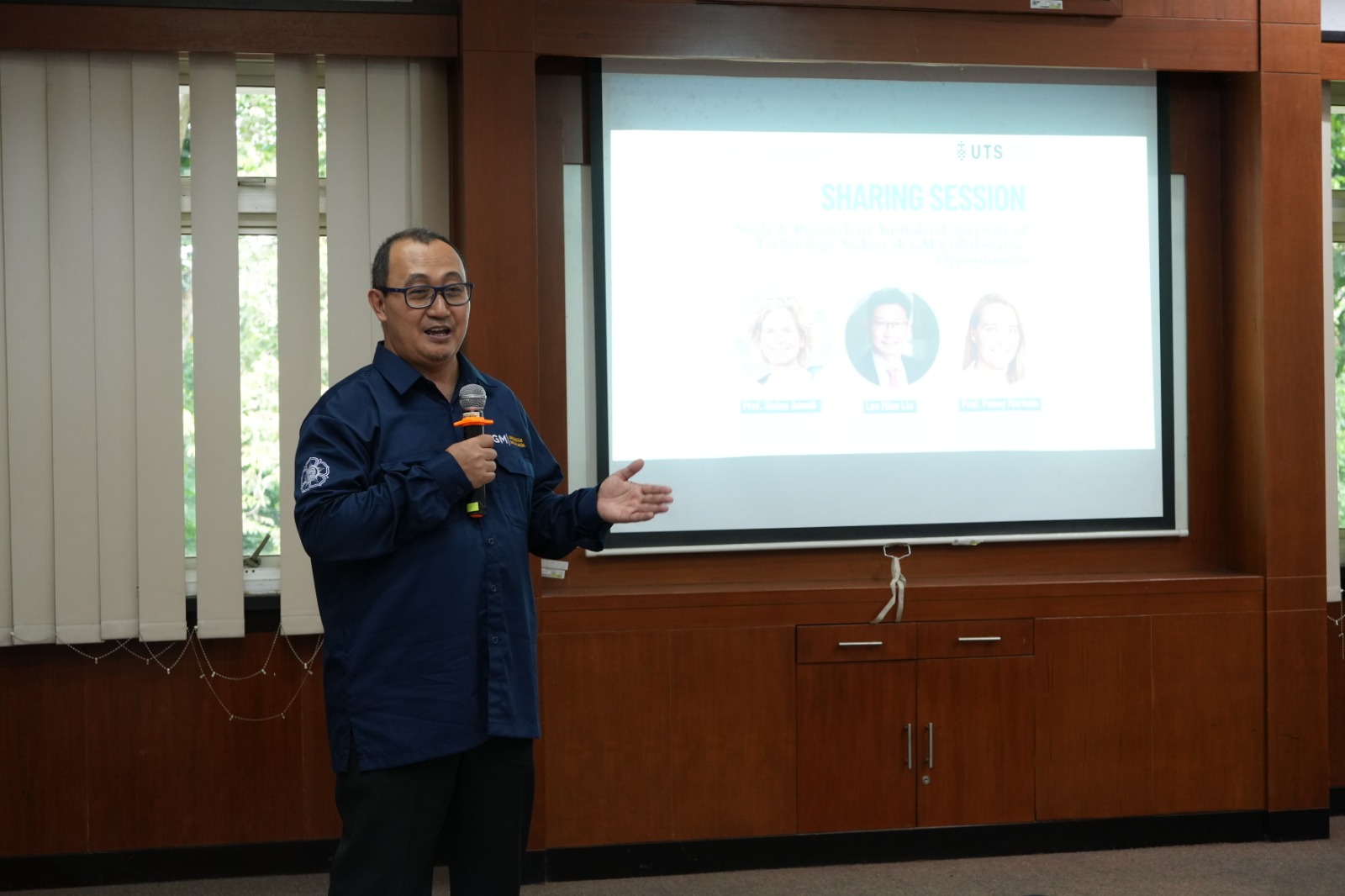
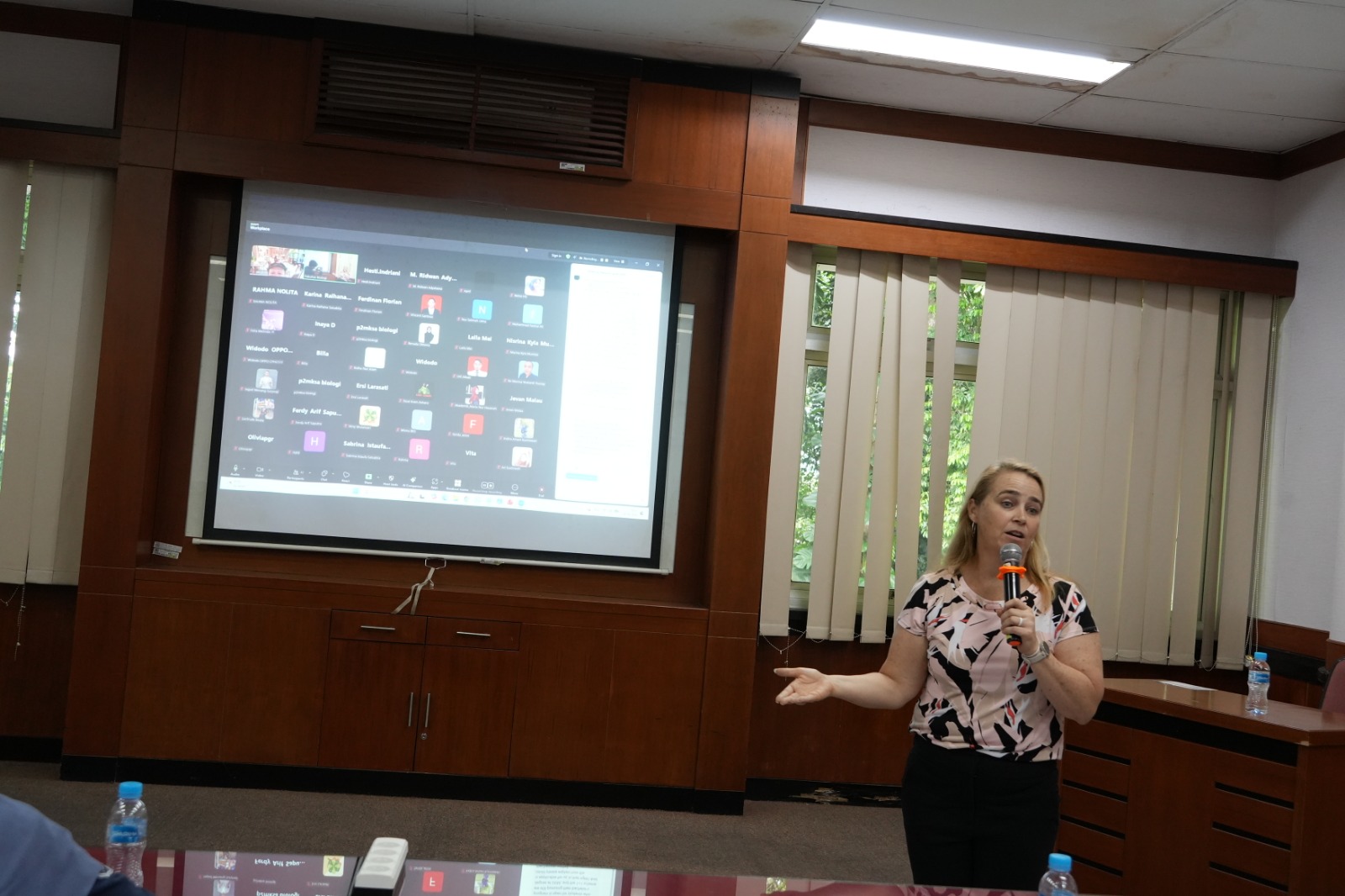
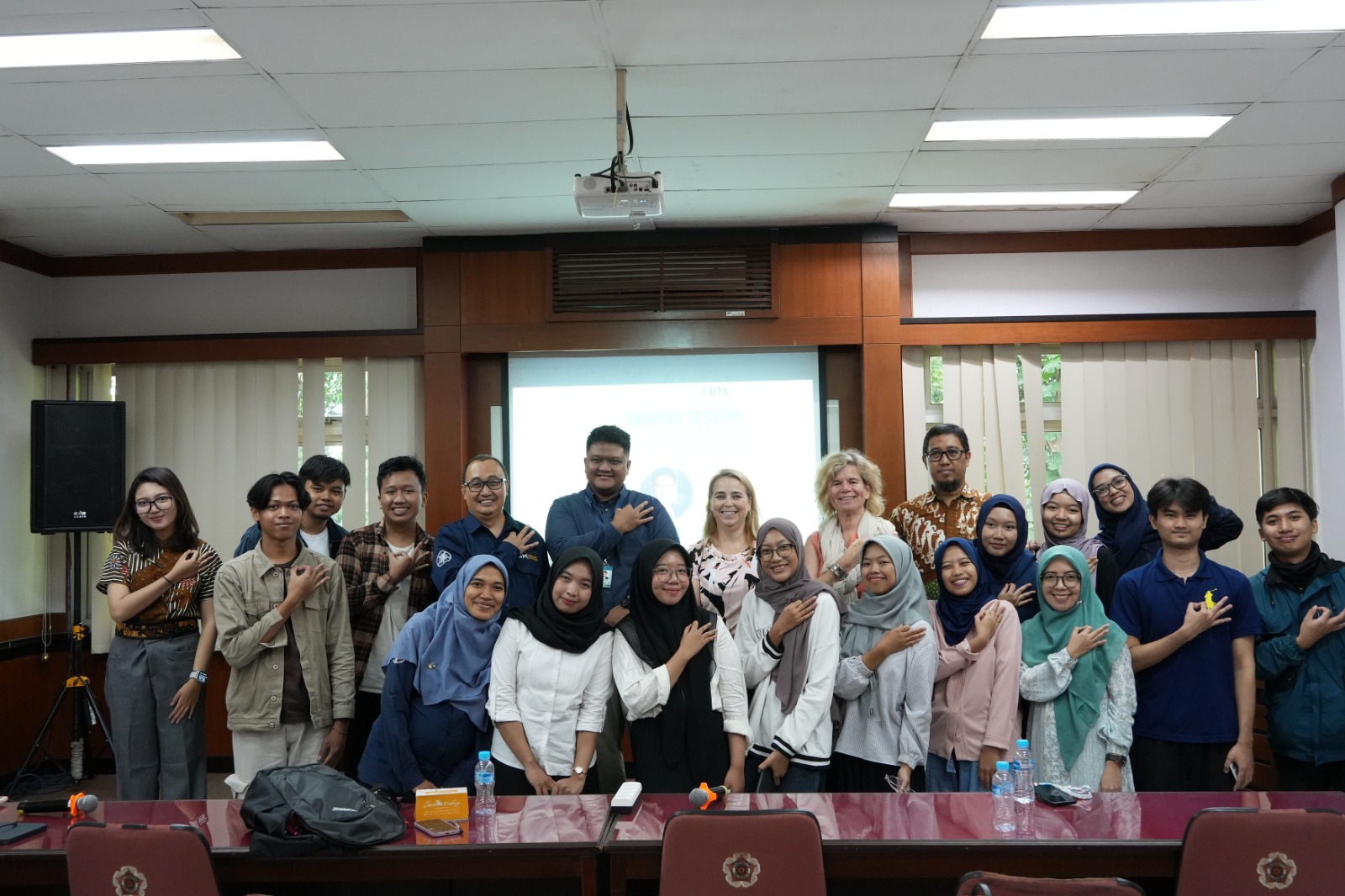
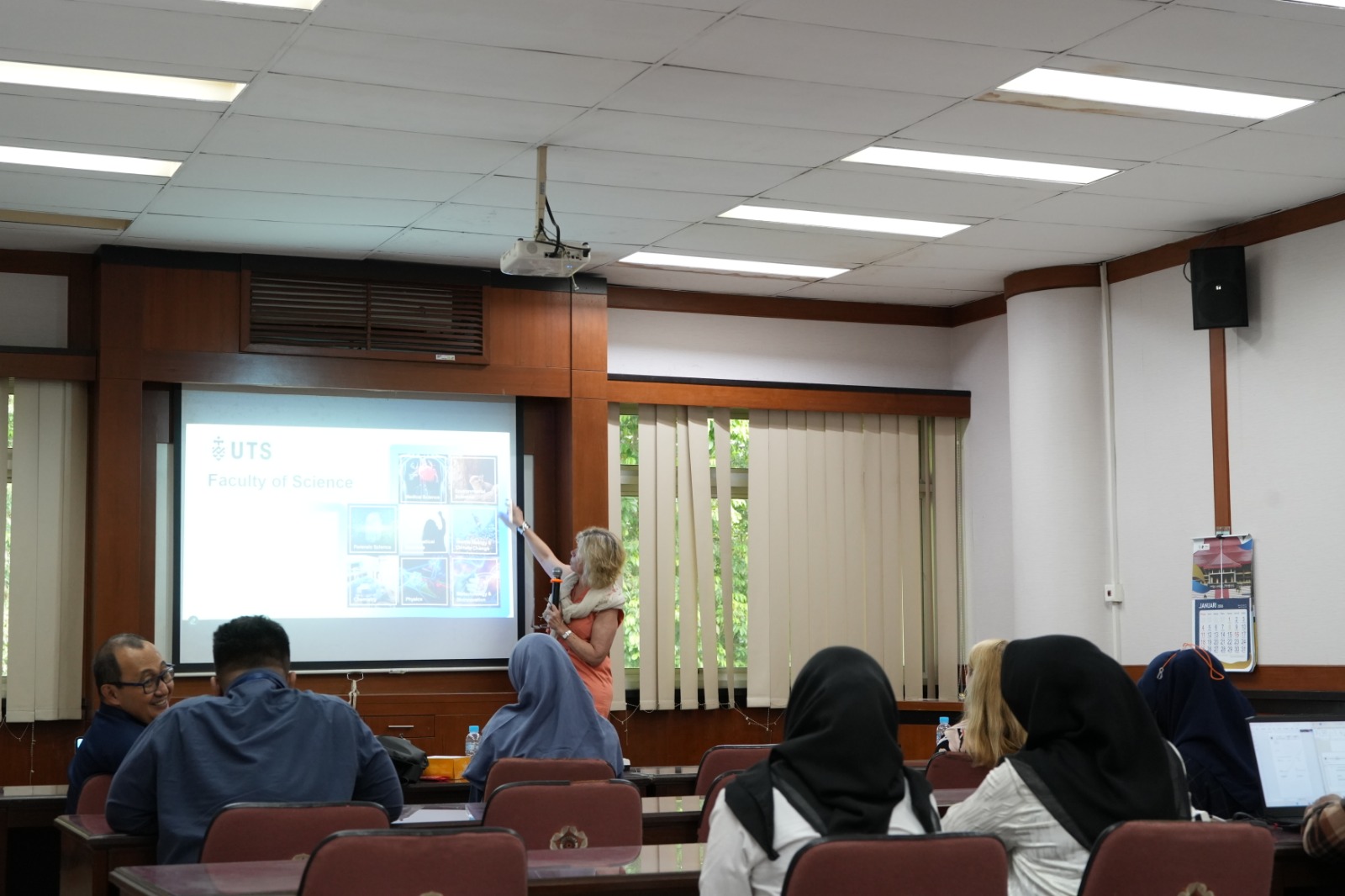
  • UGM–UTS Strengthen Academic and Research Collaboration through “Study & Research in Australia” Sharing Session
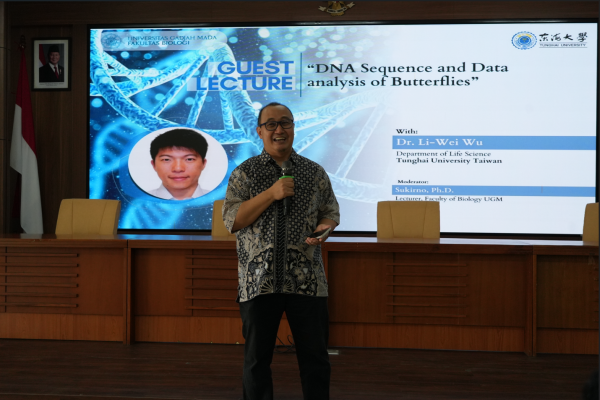
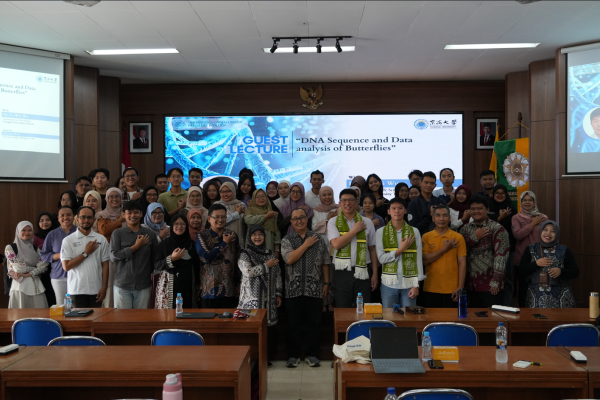
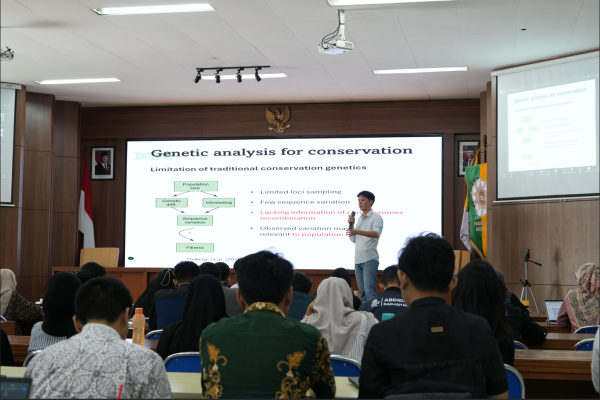
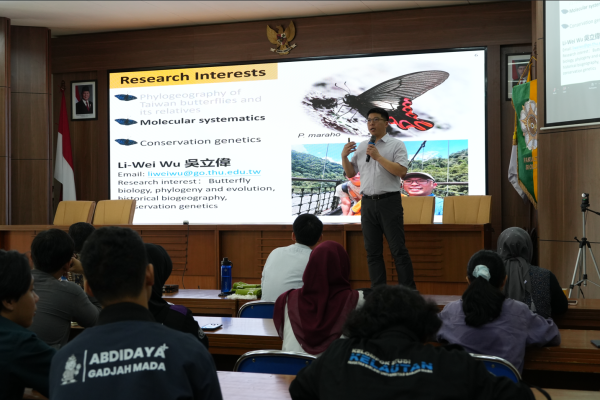
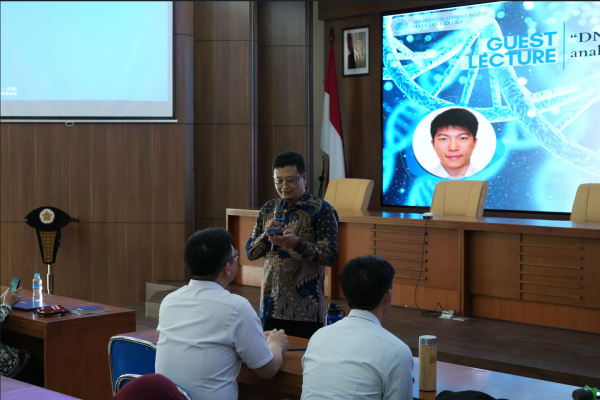
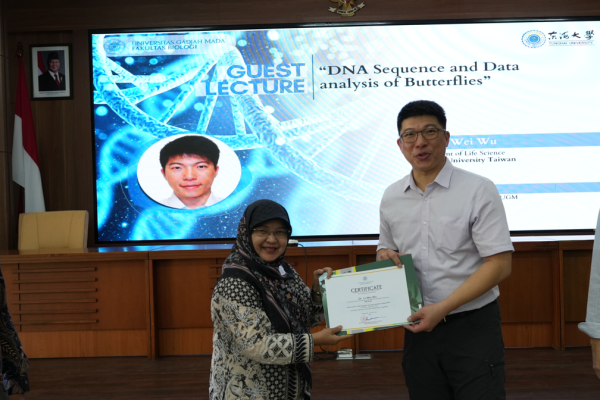
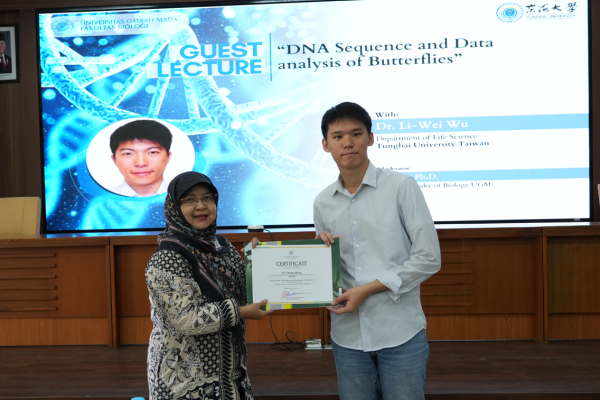
  • Tunghai University Lecturers Share Butterfly Genetics Research in Guest Lecture at UGM Faculty of Biology
Universitas Gadjah Mada

UNIVERSITAS GADJAH MADA

FACULTY OF BIOLOGY
Teknika Selatan Street, Sekip Utara,
Yogyakarta 55281
biologi-ugm@ugm.ac.id
Phone/Fax: +62 (274) 580839

About us

  • History
  • Organization
  • Vision and Mission
  • Staff

Student Affairs

  • Student Service
  • Student Organization
  • Submission for Practical Field Work
  • Permission Field Research
  • Permission Thesis/Disertation

academic

  • Academic Regulations
  • Academic Anonncement

Accreditation

  • Image 1
  • Image 2
  • Image 3

© 2024 FACULTY OF BIOLOGY UNIVERSITAS GADJAH MADA

KEBIJAKAN PRIVASI/PRIVACY POLICY

[EN] We use cookies to help our viewer get the best experience on our website. -- [ID] Kami menggunakan cookie untuk membantu pengunjung kami mendapatkan pengalaman terbaik di situs web kami.I Agree / Saya Setuju