SDGs
The Biology Teachers’ Association (MGMP) of East Java Province, in collaboration with the Faculty of Biology, Universitas Gadjah Mada, successfully organized a laboratory-based teacher competency enhancement program through a practicum entitled “Chromosome Studies in the Cell Cycle through a Cytogenetic Approach” on Monday, June 15, 2026, from 09.00–12.00 WIB at the Genetics and Breeding Laboratory, Faculty of Biology, UGM. The activity, attended by 35 biology teachers from Madrasah Aliyah (MA), provided a research-based and hands-on laboratory learning experience that enabled participants to gain a deeper understanding of cytogenetics, the cell cycle, and plant chromosome analysis through direct practice and microscopic observation.
The program began with opening remarks delivered by the Head of the Genetics and Breeding Laboratory, Ganies Riza Aristya, S.Si., M.Sc., Ph.D. In her remarks, she emphasized the importance of research-oriented biology education and laboratory experimentation as an effort to improve the quality of science education that is contextual, innovative, and oriented toward the development of scientific skills.
The first session focused on chromosome preparation practicum using shallot roots as the object for mitotic observation. The practicum was guided by instructor Denianto Agung Wicaksono, S.Si., together with laboratory assistants. During this session, participants conducted direct laboratory practice starting from root cutting, fixation treatment, maceration, chromosome staining using aceto-orcein, squash techniques, and microscopic observation of chromosome preparations. Through this hands-on laboratory approach, participants gained practical experience in observing cell division stages and understanding the fundamental principles of plant cytogenetic preparation.
During the microscopic observation session, participants successfully identified various stages of mitosis, including prophase, prometaphase, metaphase, anaphase, and telophase in shallot root meristem cells. In addition to strengthening participants’ understanding of cell cycle dynamics, the activity also introduced cytogenetic methods commonly applied in genetics and plant breeding research.
The second session continued with demonstrations and hands-on practice in constructing chromosome karyotypes and idiograms, guided by instructor Tiara Putria Judith, S.Si., together with laboratory assistants. Participants were introduced to chromosome analysis techniques using ImageRaster software, including calibration, chromosome arm length measurement, centromere position identification, chromosome morphology analysis, and idiogram construction as a visual representation of chromosome characteristics. This session provided practical insight into quantitative and systematic chromosome analysis approaches widely applied in modern cytogenetic studies.
The practicum activity “Chromosome Studies in the Cell Cycle through a Cytogenetic Approach” also contributed to the achievement of the Sustainable Development Goals (SDGs), particularly SDG 4 (Quality Education) through strengthening research- and practicum-based education, SDG 9 (Industry, Innovation and Infrastructure) through the development of laboratory and research competencies, SDG 15 (Life on Land) through increasing understanding of plant genetic diversity and characteristics, and SDG 17 (Partnerships for the Goals) through strengthening academic collaboration between higher education institutions and the Biology Teachers’ Association (MGMP) of East Java Province.
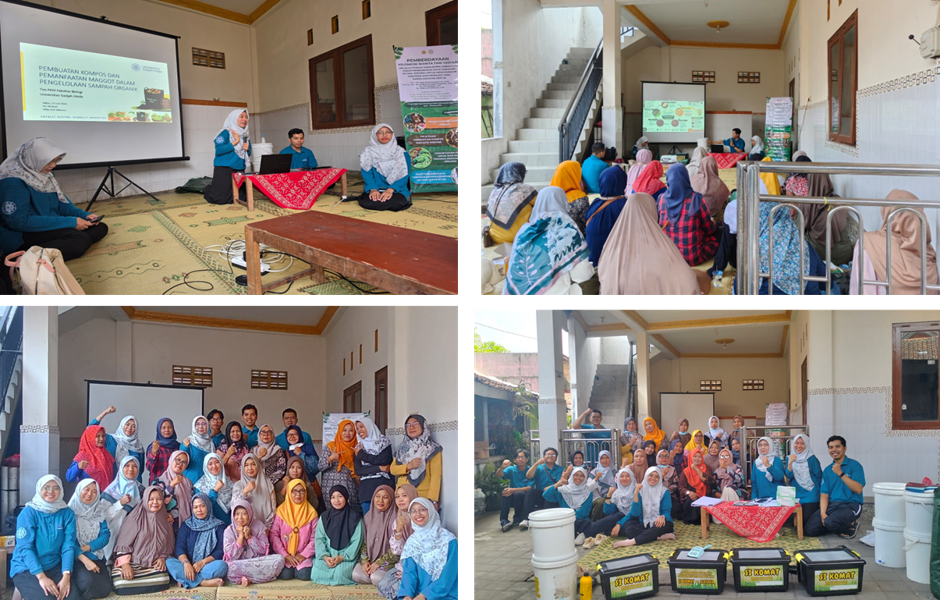
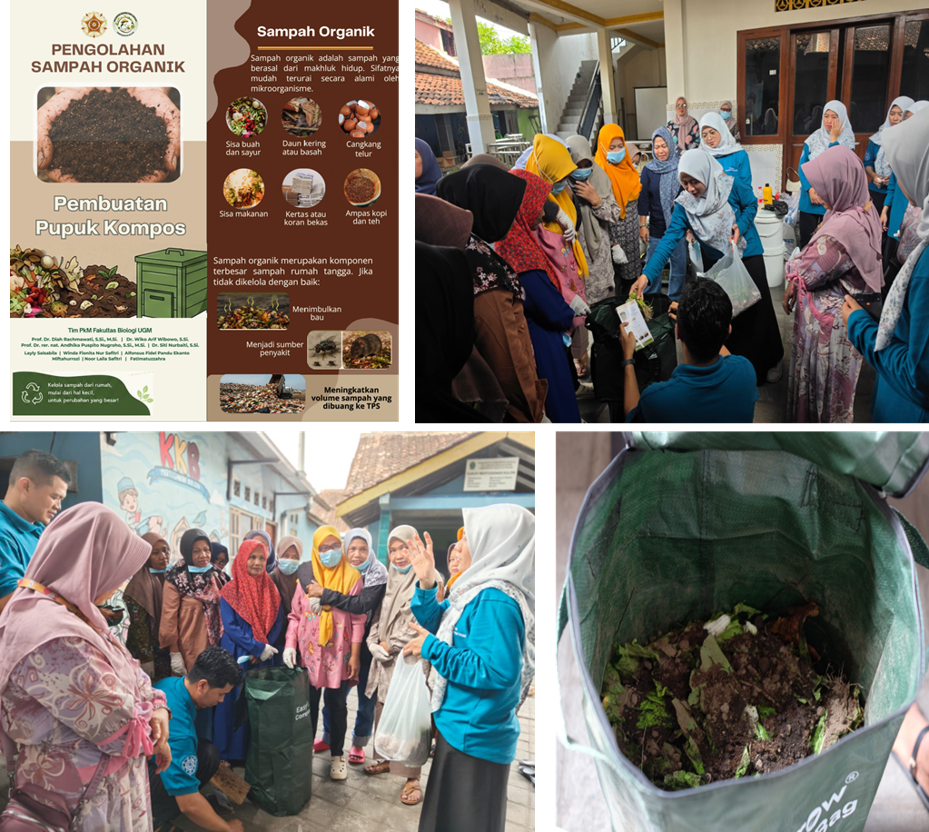
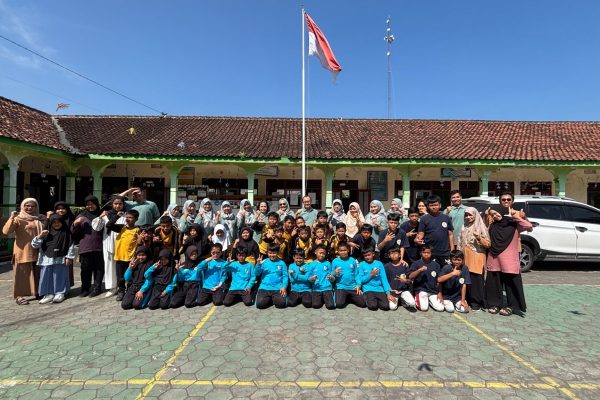
Bantul, June 13, 2026 – The Faculty of Biology, Universitas Gadjah Mada (UGM), once again demonstrated its commitment to supporting sustainable environmental development through a community service program (Pengabdian kepada Masyarakat/PkM) entitled “Organic Waste Processing into Compost Fertilizer and the Utilization of Black Soldier Fly (BSF) Maggots.” The program was conducted on Saturday, June 13, 2026, for members of the “Lestari” Women Farmers Group (Kelompok Wanita Tani/KWT) located in Mertosanan Kulon Hamlet, Potorono Village, Banguntapan District, Bantul Regency, Special Region of Yogyakarta. Through this activity, community members were introduced to simple, practical technologies for converting household organic waste into valuable, economically beneficial products.
The program commenced with welcoming remarks from the Head of the Community Service Team of the UGM Faculty of Biology, Prof. Dr. Diah Rachmawati, S.Si., M.Si., who emphasized the importance of organic waste management as part of efforts to maintain environmental quality and support sustainable development. In her remarks, Prof. Diah highlighted that organic waste constitutes the largest component of household waste and, when not properly managed, can lead to various environmental problems, including unpleasant odors, increased risks of disease transmission, and greater volumes of waste being disposed of at temporary waste collection sites. Following her remarks, the chairperson of the Lestari Women Farmers Group delivered an address expressing appreciation for the assistance and guidance provided by the Faculty of Biology UGM. It is expected that this program will enhance the members’ skills and motivation to manage household organic waste sustainably while supporting the agricultural and horticultural activities already undertaken by the group.
During the first session, Dr. Siti Nurbaiti, S.Si., delivered training on compost production to the participants. The presentation began with an introduction to various types of organic waste that can be utilized as composting materials, including fruit and vegetable scraps, leaves, coffee and tea residues, and plant-based food waste. Dr. Nurbaiti explained that compost is the product of the decomposition of organic matter by microorganisms and is rich in nutrients, making it a natural fertilizer that can improve soil fertility. Participants were also introduced to the importance of balancing “green” and “brown” materials, a key factor in producing high-quality compost.
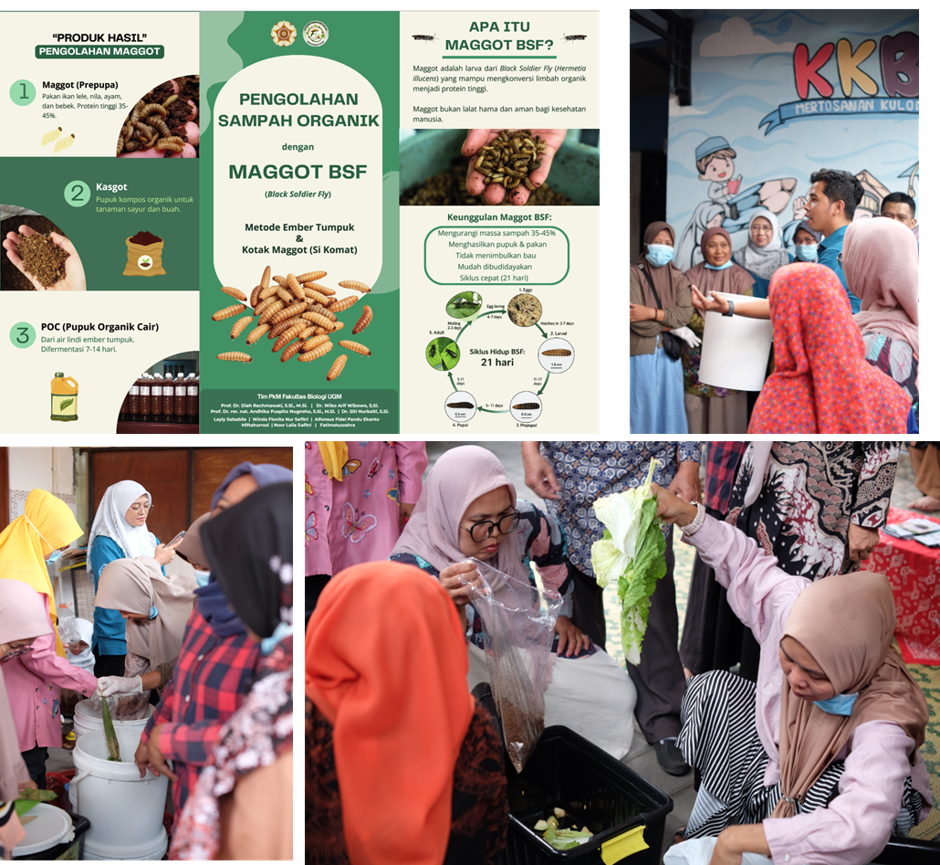
Dr. Wiko Arif Wibowo, S.Si., presented the following session, in which he discussed organic waste processing using Black Soldier Fly (BSF) (Hermetia illucens) maggots. He explained that BSF maggots are the larvae of the black soldier fly and can convert organic waste into protein-rich biomass in a relatively short time. This technology helps reduce organic waste generation and produces valuable products for the agricultural and livestock sectors. According to Dr. Wiko, BSF maggots can reduce the mass of organic waste by approximately 35–45% while generating several useful products, including maggots or prepupae as a protein source for fish and poultry feed, frass (kasgot) as a solid organic fertilizer, and liquid organic fertilizer derived from the process, which can support plant growth.
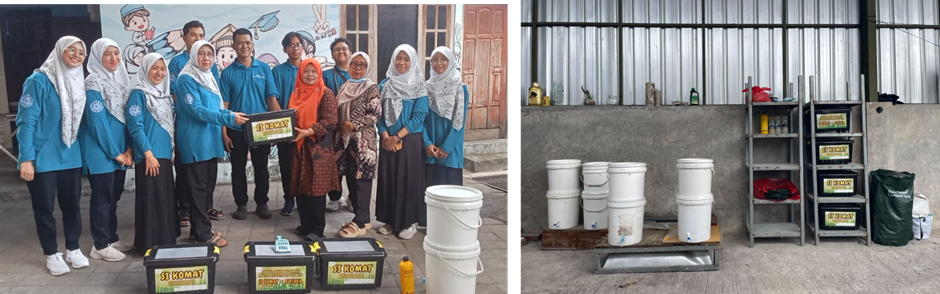
Throughout the presentations, members of the Lestari Women Farmers Group actively participated by asking questions and sharing their experiences in managing organic waste. Their contributions enriched discussions about the challenges of maintaining consistency in organic waste management practices. Following the theoretical sessions, Dr. Nurbaiti and Dr. Wiko alternated in guiding hands-on demonstrations on compost production using compost bags and BSF maggot cultivation using two methods: the stacked-bucket system and the maggot box system (Si Komat). Participants were shown each stage of the process, including the preparation of tools and materials, layering of organic waste, application of microbial activators, and maintenance techniques during composting. They were also informed about materials that should not be composted, such as plastics, metals, glass, diapers, cooking oil, bones, cigarette butts, and household chemicals, as these can inhibit decomposition.
In the stacked-bucket BSF system, participants were introduced to an organic waste-processing method that enables simultaneous harvesting of three products: maggots, frass, and liquid organic fertilizer produced from fermented leachate. Meanwhile, the maggot box method focused on producing maggots and frass through optimal moisture management of the growth medium. Participants also received practical guidance on selecting suitable feedstock materials, regulating moisture and temperature conditions, and avoiding materials that may hinder decomposition or generate unpleasant odors.
The program also incorporated an academic perspective on waste management and the implementation of circular economy principles, presented by Prof. Dr. rer. nat. Andhika Puspito Nugroho. He emphasized that community-based organic waste management is a strategic approach to reducing environmental pressures while enhancing community self-reliance in utilizing resources that are often regarded as waste. Through this approach, organic waste can be transformed into valuable products, thereby supporting the development of a more sustainable resource management system.
The implementation of the program was supported by members of the UGM Faculty of Biology Community Service Team, including Winda Fionita Nur Safitri, Layly Salsabila, Alfonsus Fidel Pandu Ekanto, and Miftahurrozi (undergraduates); Noor Laila Safitri (master’s student); and Fatimatuzzahra (doctoral student). The team actively assisted in organizing the activities, mentoring participants during practical sessions, and facilitating discussions and question-and-answer sessions.
Through this program, the Faculty of Biology UGM hopes that members of the Lestari Women Farmers Group will be able to implement the organic waste management technologies introduced during the training. Such implementation is expected to reduce household waste accumulation, improve environmental quality, and generate useful products that support agricultural activities and local economic development. In this way, waste can no longer be viewed merely as a problem but rather as a valuable resource that can be transformed into beneficial products, contributing to community welfare and environmental sustainability, in line with Sustainable Development Goal (SDG) 12: Responsible Consumption and Production.
#SDG 4: Quality Education #SDG 14: Life Below Water
#SDG 17: Partnerships for the Goals
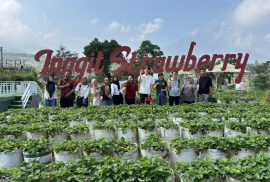
Magelang, Indonesia – Dr. Ganies Riza Aristya, S.Si., M.Sc., Ph.D. together with a research team from the Smart Genetics Research Group, Faculty of Biology, Gadjah Mada University (UGM) and international collaborators from Universiti Malaya consisting of Assoc. Prof. Dr. Tan Boon Chin, Dr. Chua Kah Ooi, and Dr. Lau Su Ee implemented genetics-based agricultural innovations and sustainable cultivation through Community Service Program Community Development Based on Applied Research and Community Empowerment with International Collaborators supported by the Equity Program of Gadjah Mada University. This program aims to improve the quality and productivity of Indonesian strawberries through the application of research technology and strengthening the capacity of farmers through international collaboration. This activity is a form of downstream research carried out by universities in order to provide direct benefits to the community while supporting sustainable agricultural development.
The program with the theme “Development of Modern Integrated Farming through Smart Genetics Breeding Program Technology to Improve the Quality and Production of Indonesian Strawberries” was held at the Inggit Strawberry Garden, Banyuroto Village, Sawangan District, Magelang Regency, Central Java. Banyuroto Village, which is located on the slopes of Mount Merapi and Merbabu, is one of the strawberry-producing areas that has developed as a community-based agrotourism destination. The potential of natural resources makes this area a strategic location for the application of research- and technology-based agricultural innovations. However, farmers still face a number of challenges in strawberry cultivation, including plant productivity that tends to fluctuate, fruit quality that is not uniform and optimal, and limited access to modern cultivation technology. Therefore, this service program is present as an effort to bridge the results of university research with the real needs of the community through the application of plant genetics technology and cultivation systems that are more efficient, productive, and sustainable.
[metaslider id=”58792″
In response to these various problems, the service team applied the Smart Genetics Breeding approach as a genetic-based plant breeding technology developed from the research results of the research team. This technology utilizes the polyploidization method to produce superior strawberry varieties that have better agronomic characteristics. The crops developed are expected to have larger fruit sizes, better quality, higher productivity, and stronger adaptability to environmental changes.
In addition to the development of superior seeds, this program also integrates the concept of Modern Integrated Farming through the application of a more measurable and data-based cultivation system. Farmers receive assistance on the use of precision agriculture technology to support more effective land and crop management. This approach is expected to improve cultivation efficiency while helping farmers make more informed decisions based on field conditions.
Collaboration with the University of Malaya is one of the important components in the implementation of this programme. One of the topics introduced by the Universiti Malaya team is the use of hydroponic systems as an alternative cultivation method that is more efficient and adaptive to land limitations. The system is considered to be able to support plant growth in a more controlled manner while increasing the efficiency of water and nutrient use. The Universiti Malaya team also shared experiences related to the management and replacement of planting media in 2-5 harvest cycles to reduce the potential for environmental pollution due to excessive use of fertilizers and support a more environmentally friendly cultivation system.
According to Dr. Ganies Riza Aristya, international collaboration provides great added value in the development of community service programs. “Through this collaboration, we not only implement the results of the research that has been developed at UGM, but also gain various new perspectives from the experiences of international partners. The exchange of knowledge is very important to produce solutions that are more innovative and relevant to the needs of farmers,” he said. This program also includes various mentoring activities for farmer groups, ranging from strengthening cultivation capacity, applying agricultural technology, to developing a more sustainable production system. Through these activities, farmers are expected to be able to increase productivity while understanding the importance of efficient resource management in agricultural business. The participatory approach applied also allows the community to be actively involved in the process of developing and applying technology.
This program is also in line with Gadjah Mada University’s commitment to supporting the achievement of the Sustainable Development Goals (SDGs). Through the application of Smart Genetics Breeding technology and more sustainable cultivation practices, this activity contributes to SDG 2 (Zero Hunger) through increasing productivity and the quality of agricultural products that support food security. This program also supports SDG 8 (Decent Work and Economic Growth) through strengthening the capacity of farmers and increasing the productivity of farming businesses which has the potential to improve community welfare. Through the synergy between research-based innovation, community empowerment, and international collaboration, this program is expected to become a model of sustainable agricultural development that provides long-term benefits to the community and supports the development of Indonesia’s more advanced and competitive agriculture.
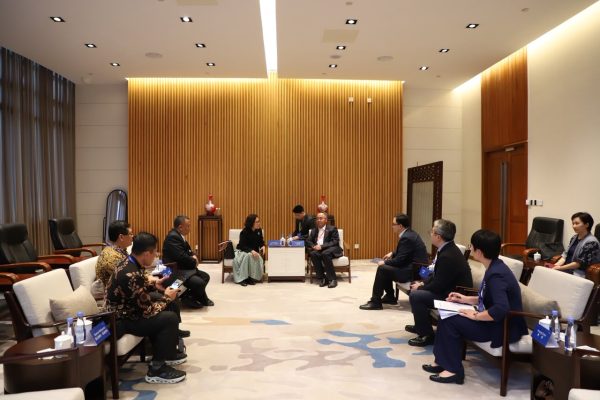
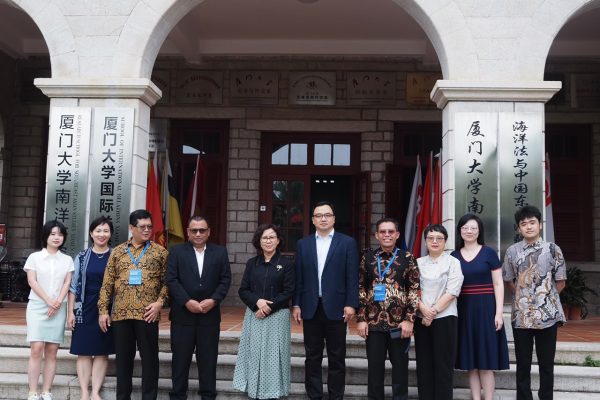
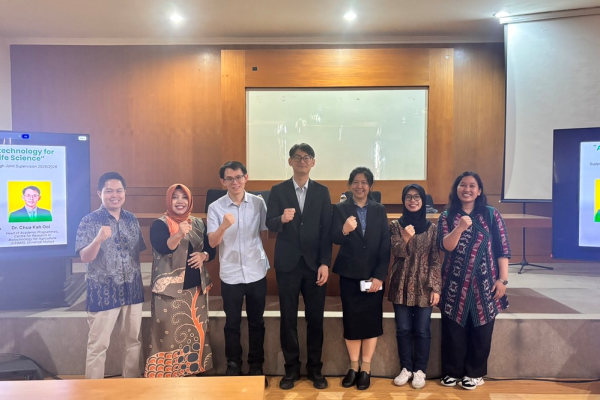
The Faculty of Biology, Universitas Gadjah Mada (UGM), has strengthened its international network through the signing of a Letter of Intent (LoI) with the Centre for Research in Biotechnology for Agriculture (CEBAR), Universiti Malaya, Malaysia, on 4 June 2026. This collaboration marks an initial step toward developing academic and research partnerships between the two institutions through a shared commitment to exploring opportunities in education, research, and human resource development.
The LoI was signed on behalf of the Faculty of Biology UGM by Dr. Budi Setiadi Daryono, M.Agr.Sc., Dean of the Faculty of Biology UGM, and by Assoc. Prof. Dr. Tan Boon Chin, Director of CEBAR Universiti Malaya. The signing ceremony was also attended by Dr. Lau Su Ee, Executive Director of UM Agroforestry, and Dr. Chua Kah Ooi, Head of Academic Programmes at the Centre for Research in Biotechnology for Agriculture (CEBAR). This agreement reflects the commitment of both institutions to strengthening collaboration in education, research, innovation, and academic capacity development through a mutually beneficial partnership.
During the exploratory meeting and LoI signing ceremony, the Faculty of Biology UGM was represented by Dr. Eko Agus Suyono, M.App.Sc., Vice Dean for Research, Community Service, Collaboration, and Alumni Affairs; Prof. Dr. Bambang Retnoaji, M.Sc., Vice Dean for Academic and Student Affairs; and Dr. Slamet Widiyanto, S.Si., M.Sc., Vice Dean for Finance, Assets, and Human Resources. The meeting served as an important milestone in opening broader opportunities for collaboration between the Faculty of Biology UGM and CEBAR Universiti Malaya, particularly in biotechnology, genomics, agriculture, and the development of advanced research technologies.
Through this LoI, both institutions agreed to explore various forms of collaboration, including the exchange of students, faculty members, and researchers; collaborative research and scientific publications; the organization of seminars, conferences, symposia, and summer courses; academic staff exchanges as visiting lecturers; adjunct professorship appointments; and the exchange of academic information and resources. These initiatives are expected to strengthen institutional capacity while enhancing the quality of education and research at both institutions.
The collaboration between the Faculty of Biology UGM and CEBAR Universiti Malaya is also one of the outcomes of the Joint Supervision Phase 2 Equity Scheme 2026, under the research project entitled “Genome Characterization and Functional Gene Analysis of Indonesian Commercial Sugarcane (Saccharum hybrid) Based on Whole Genome Sequencing to Support National Sugar Self-Sufficiency.” The project is being carried out by Master’s students of the Faculty of Biology UGM, namely Tiara Putria Judith, S.Si., Sabrina Labista Wibowo, S.Si., and Oliv Nurul Kanaya, S.Si., under the supervision of Ganies Riza Aristya, S.Si., M.Sc., Ph.D.
This partnership is aligned with both institutions’ commitment to supporting the Sustainable Development Goals (SDGs), particularly SDG 4 (Quality Education) through strengthening educational capacity and international academic exchange; SDG 2 (Zero Hunger) through research and innovation aimed at enhancing agricultural productivity and supporting national sugar self-sufficiency; SDG 9 (Industry, Innovation and Infrastructure) through the application of genomics and biotechnology in research; and SDG 17 (Partnerships for the Goals) through strengthening strategic international collaboration among higher education institutions. This partnership is expected to make a meaningful contribution to scientific advancement, food security, and sustainable development in Indonesia and beyond.
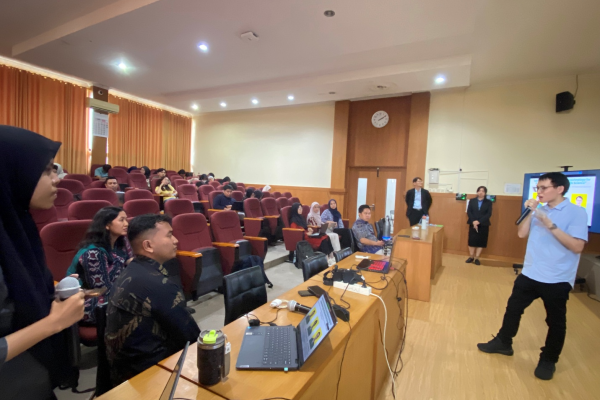
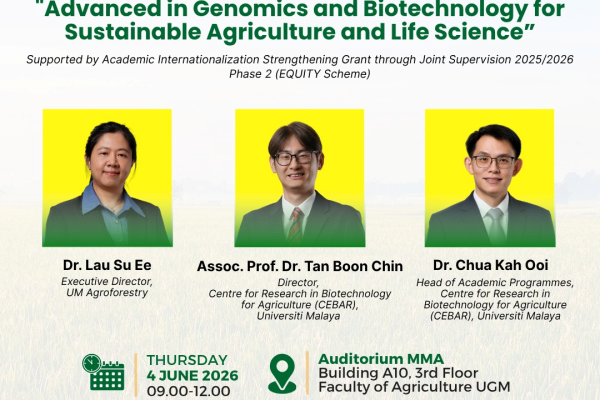
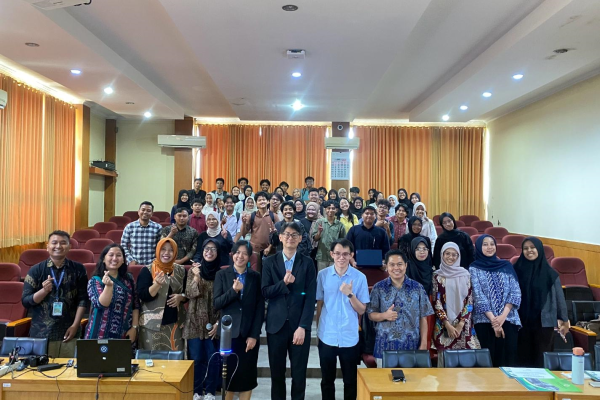
Grant Program through Joint Supervision Stage 2 Equity Scheme 2026 successfully organized a Guest Lecture entitled “Advances in Genomics and Biotechnology for Sustainable Agriculture and Life Science” on Thursday, June 4th, 2026, from 09.00–12.00 WIB at the MMA Auditorium, Faculty of Agriculture, Universitas Gadjah Mada (UGM). This activity was part of an effort to strengthen international academic collaboration while enhancing research capacity and higher education in the fields of plant omics, biotechnology, and sustainable life sciences. The grant program is led by Ganies Riza Aristya, S.Si., M.Sc., Ph.D. as the Principal Investigator (PI), with Widhi Dyah Sawitri, S.Si., M.Agr., Ph.D. as a team member.
The Guest Lecture featured three international speakers from Universiti Malaya, Malaysia, namely Dr. Tan Boon Chin, Dr. Lau Su Ee, and Dr. Chua Kah Ooi. In the first session, Dr. Tan delivered a presentation entitled “How Banana Plants Cope with Drought: Insight into Morphological and Molecular Responses,” discussing the morphological and molecular responses of banana plants to drought stress as well as the importance of genomic approaches in developing stress-tolerant crops.
Dr. Lau presented a topic entitled “Drought Responses of Pandanus and the Biostimulant Potential of Oil Palm Wood Vinegar,” which explored the drought responses of pandanus plants and the potential of oil palm wood vinegar as an environmentally friendly biostimulant to support sustainable plant growth. This presentation provided insights into the integration of biotechnology and biological resource utilization to support sustainable and climate-adaptive agriculture.
In the final session, Dr. Chua Kah Ooi presented research on bacterial community characterization and the identification of novel bacterial species in Asian weaver ants (Oecophylla smaragdina) using microbiological and molecular approaches. In addition, Dr. Chua introduced opportunities for postgraduate study programs at Universiti Malaya as well as potential international research collaborations for students and academics. The event was attended by 105 participants consisting of students, lecturers, researchers, and academics from various fields of agriculture, biotechnology, and biology. Participants showed great enthusiasm during both the presentation sessions and interactive discussions with the international speakers.
As part of the implementation of the Academic Internationalization Reinforcement Grant Program through Joint Supervision, the activity was continued with an academic discussion session related to the development of research conducted by students of the Master’s Program in Biology, Faculty of Biology UGM. Three master’s students, namely Tiara Putria Judith, Oliv Nurul Kanaya, and Sabrina Labista Wibowo, presented and discussed their research directions focusing on major omics topics in sugarcane, including genomics research development, biotechnology, and molecular approaches to support sustainable agriculture. Discussions with the international speakers served as a platform for scientific exchange, research feedback, and the strengthening of international academic collaboration in supporting the implementation of the Joint Supervision scheme. Through this activity, students gained insights into research methodology development, opportunities for cross-institutional research collaboration, as well as the enhancement of academic capacity and international scientific publication.
In addition to supporting the advancement of science and technology, this activity also aligns with the achievement of the Sustainable Development Goals (SDGs), particularly SDG 2 (Zero Hunger) through strengthening sustainable agricultural innovation, SDG 4 (Quality Education) through improving higher education quality and international collaboration, SDG 9 (Industry, Innovation and Infrastructure) through biotechnology research and innovation development, and SDG 13 (Climate Action) through studies on plant responses to drought stress as an impact of climate change.