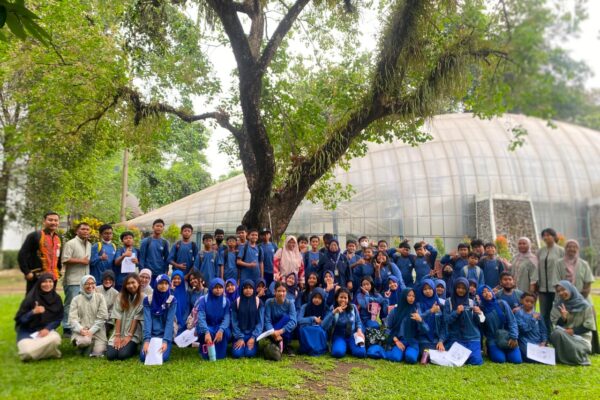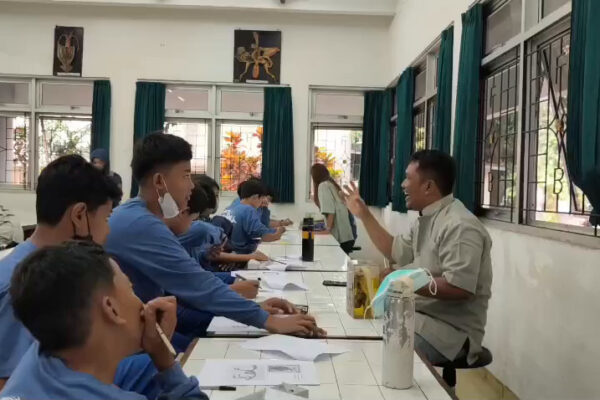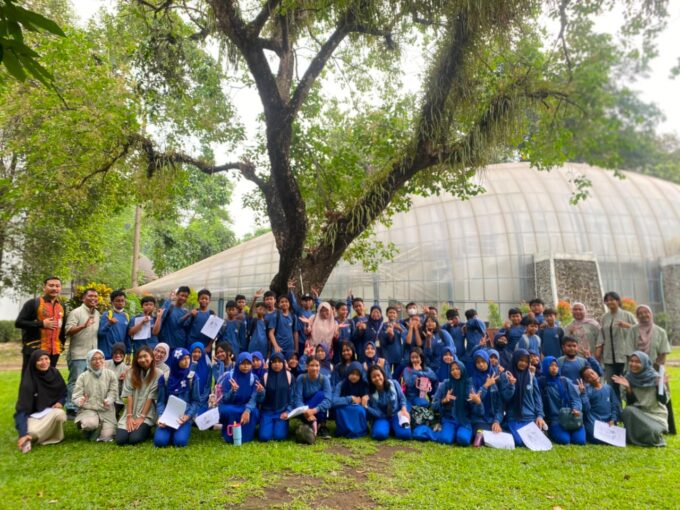
Yogyakarta, August 19, 2026 – The Faculty of Biology, Universitas Gadjah Mada (UGM), welcomed sixth-grade students from SD Negeri Deresan Yogyakarta for an outing class activity entitled the “Little Scientist Programme”, held at the Laboratory of Animal Structure and Development (SPH), Faculty of Biology UGM. The activity provided students with an opportunity to gain hands-on science learning experiences in a university environment while becoming more familiar with the Faculty of Biology UGM.
During the activity, the sixth-grade students of SDN Deresan were accompanied by Sulastri, S.Pd. (Bu Lastri) and Danang Nor Wicaksana, S.Pd. (Pak Danang) as their homeroom teachers, as well as PPL teachers from Universitas Negeri Yogyakarta. The learning activities were designed interactively, inviting students to observe various biological objects, explore animal body structures, and experience laboratory-based learning firsthand.
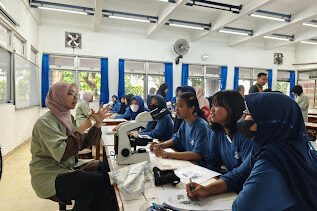
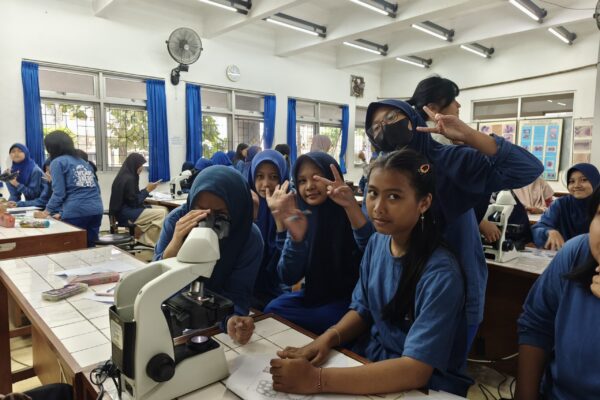
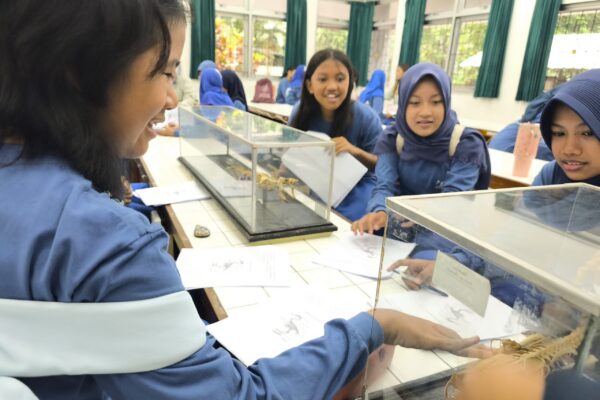
The students were introduced to a range of topics related to animal anatomy, histology, skeletal systems, and development. Through illustrations, specimens, microscope slides, and worksheets, they learned to recognize animal body structures and understand the relationship between form and function. One of the activities that particularly attracted the students’ attention was microscopic observation. With direct guidance, the students learned how to observe microscope slides and match the structures they saw with illustrations provided in their worksheets. This activity offered a concrete learning experience, showing them that the structures of living organisms can not only be studied through books but can also be directly observed using scientific instruments.
Throughout the activity, the students were assisted by undergraduate (Bachelor’s), Master’s, and Doctoral students affiliated with the Laboratory of Animal Structure and Development, Faculty of Biology UGM. The university students served as learning instructors, accompanying small groups, assisting with microscope use, explaining specimens and slides, and answering questions in simple and accessible language. The involvement of students from different academic levels also provided an opportunity for them to develop their science communication skills by communicating scientific concepts to the public in engaging ways appropriate to the audience.
The enthusiasm of the school students was evident throughout the learning process. They actively observed, discussed, completed worksheets, and asked questions about animal organs, tissues, skeletal structures, and development. Learning through direct interaction with real biological objects helped make concepts that had previously been encountered mainly in textbooks more tangible and engaging.
According to Sulastri, S.Pd. (Bu Lastri), the outing class at the Faculty of Biology UGM not only enriched the students’ knowledge but also gave them an opportunity to experience the university environment firsthand. “This activity can broaden the children’s knowledge because they are able to see UGM directly while also learning at the Faculty of Biology UGM. We hope this experience will inspire them and encourage them to aspire to continue their education at UGM in the future,” she said.
The experience of learning directly in a university laboratory is expected to broaden the students’ perspectives on science while introducing them to higher education from an early age. Through interactions with university students and exposure to the academic environment of the Faculty of Biology UGM, the school students not only gained new knowledge but also meaningful experiences that may motivate them to continue learning, pursue ambitious goals, and become more familiar with educational and career opportunities in science.
For the university students involved as assistants, the activity also served as a valuable learning experience. They were challenged to translate complex biological concepts into explanations that were simple, enjoyable, and easy for children to understand. In this way, the Little Scientist Programme created a two-way learning process: school students gained direct scientific experiences, while university students strengthened their communication, educational, and community engagement skills.
The SDN Deresan Yogyakarta outing class also supports the implementation of the Sustainable Development Goals (SDGs), particularly SDG 4: Quality Education, by providing inclusive, contextual, and experiential science learning opportunities from an early age. The activity also contributes to SDG 17: Partnerships for the Goals through collaboration between a primary school and a higher education institution to broaden access to and enrich educational experiences for younger generations.
Through initiatives such as the Little Scientist Programme, the Faculty of Biology UGM continues to open its academic environment to the wider community and introduce science in a more accessible, enjoyable, and inspiring way. From observing microscope slides and using microscopes to discussing biological phenomena with university students, these simple yet meaningful experiences are expected to foster curiosity, a love of science, and the confidence among young students to dream of becoming part of UGM in the future. [ZR]