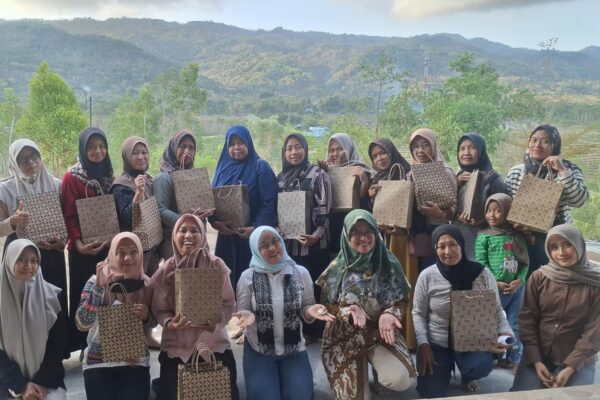
On Sunday (Sept 6), the community service team from the UGM Faculty of Biology, led by Dr. Dwi Umi Siswanti, S.Si., M.Sc., conducted a workshop on producing probiotics and biopesticides from household waste. The team included Dr. Eng. Atikah Fitria Muharromah, S.Si., M.Eng., and two students, Karina Safitri and Karina Raihana. Their community service partner, the “Al Barokah” group—led by Tri Wahyuni—brought a team of 15 members to participate in the workshop, held at Punthuk Kepuh, Nglipar.
Dwi Umi provided training on applying probiotics to produce organic fertilizer for use as a growing medium for chrysanthemums. “The microorganisms in the probiotics help accelerate the decomposition of plant litter and waste from both Al Barokah’s food production and household activities,” Dwi Umi explained. “We used to simply burn our plant litter and waste without processing it into organic fertilizer; it turns out that fertilizer made using probiotics has a high nutrient content,” Tri Wahyuni added. Dwi Umi hopes that this household waste-based organic fertilizer can be utilized as a growing medium for organic chrysanthemums, thereby supporting Al Barokah’s supply of raw materials for its chrysanthemum-based products.
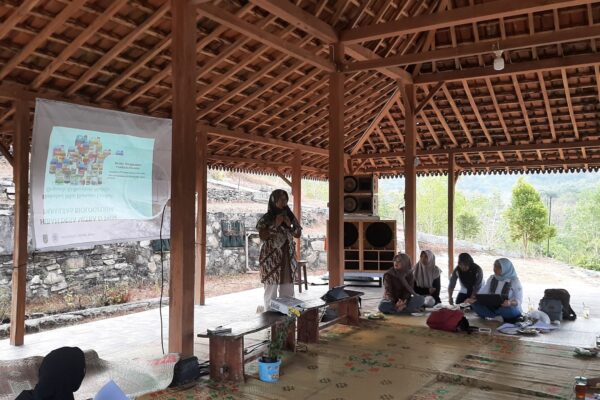
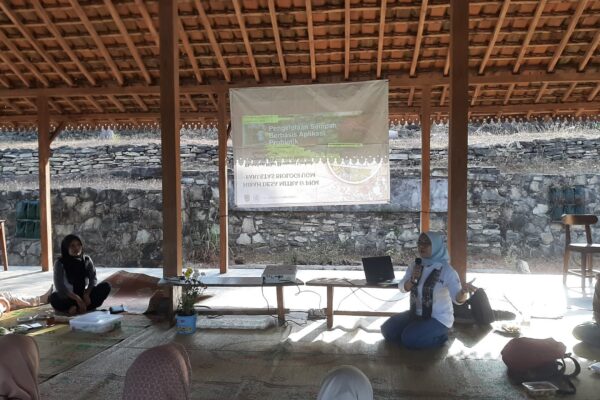
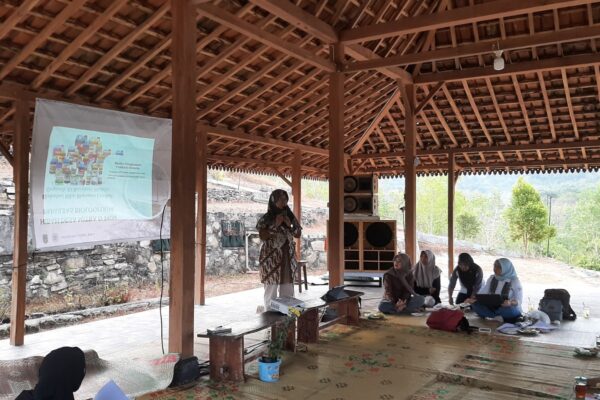
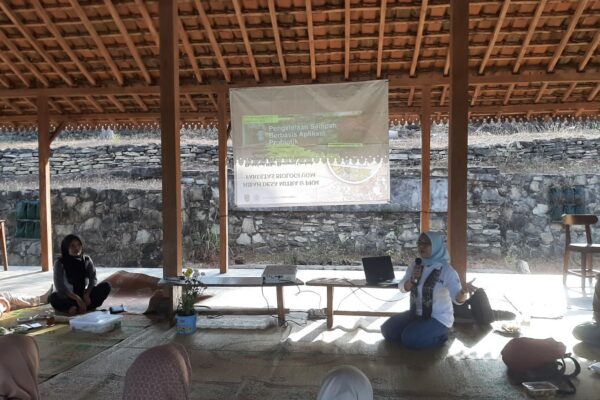
Meanwhile, Atikah provided training on biopesticides to support organic chrysanthemum cultivation. Organic chrysanthemums are a flagship product of Kedungpoh, as they can be processed into hard candy, chrysanthemum tea, chrysanthemum syrup, and chrysanthemum flower chips. Al Barokah has been producing various chrysanthemum-based products since 2023 with guidance from the Faculty of Biology’s community service team led by Dwi Umi. Atikah outlined the definition of pests, the signs of plant damage caused by plant-disturbing organisms (OPT), the importance of reducing the use of inorganic fertilizers and pesticides, and the definition of biopesticides. “Biopesticides are living organisms utilized for pest control,” Atikah said, opening her presentation. “Biopesticides can be made from neem leaves, soursop seeds, or betel leaves, ladybugs, and even chrysanthemum flowers can serve as biopesticides because they contain pyrethrin compounds,” she added.
Before concluding the workshop, the Al Barokah team committed to initiating the production of organic fertilizer from leaf litter and household waste to serve as a growing medium for chrysanthemums in both home gardens and greenhouses. This Community Service Program supports the Kedungpoh Partner Village Program (Hibah Desa Mitra), which has successfully established a greenhouse for Al Barokah. “We hope the Faculty of Biology will continue to support us in our efforts to improve our economy—specifically the home industry driven by the women of Kedungpoh,” said Tri Wahyuni, expressing her hopes.
This workshop embodies SDG 1 (No Poverty), SDG 5 (Gender Equality), SDG 12 (Responsible Consumption and Production), and SDG 17 (Partnerships for the Goals). (DUS)