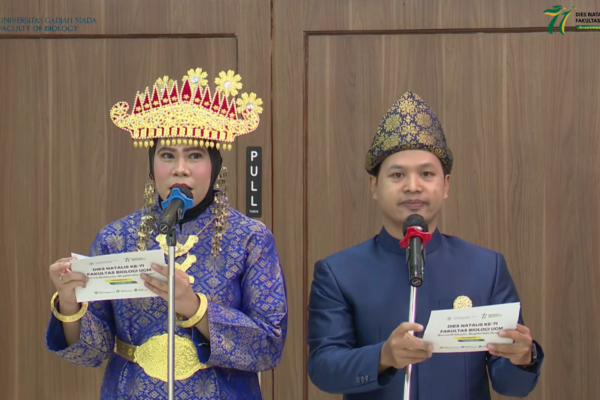
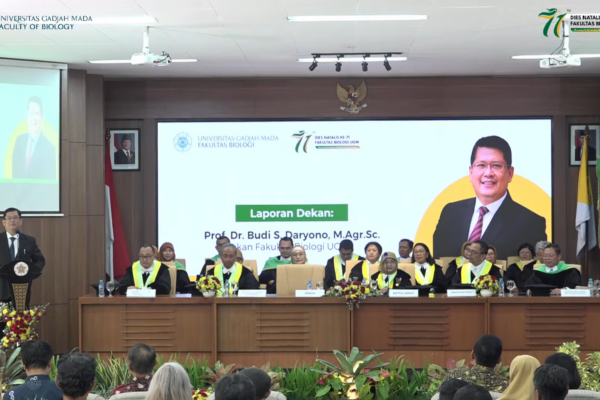
Yogyakarta, 19 November 2026 – The Faculty of Biology, Universitas Gadjah Mada (UGM), is once again hosting Research Day 2026 from Thursday to Saturday, 19–21 November 2026. This year’s event carries the theme “Life Beyond the Visible,” the event invites the public to explore the diversity of life and various biological phenomena through educational and interactive exhibitions. The opening ceremony was held on Thursday (19/11) at the Faculty of Biology UGM’s Building B Concourse.


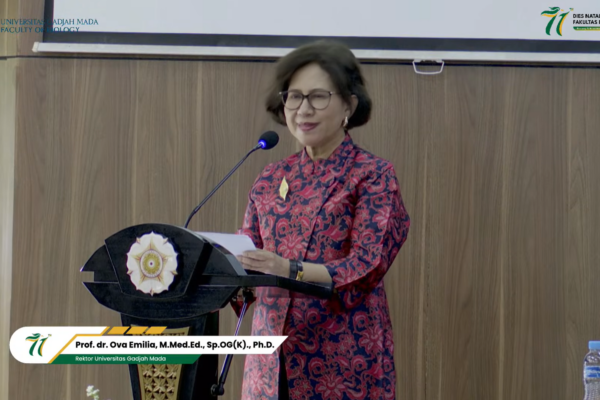
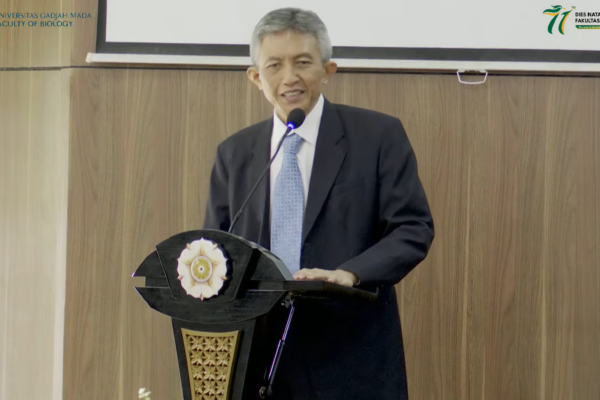
The opening ceremony commenced with remarks from Indrayanti, S.Psi., M.Si., Ph.D., Psi., Head of the Subdirectorate of Research, Community Service, Innovation, and Research Center Collaboration at UGM. In her remarks, she highlighted that UGM’s Directorate of Research continues to promote research excellence through interdisciplinary collaboration and partnerships with various institutions at both national and international levels. She expressed her hope that Research Day would serve as a platform for exchanging ideas, expanding networks, and creating broader opportunities for research collaboration.
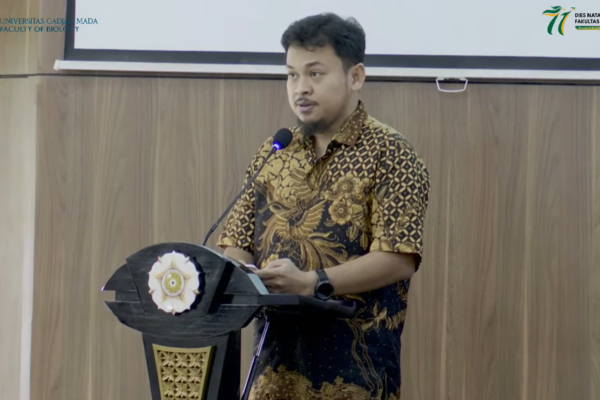
Dr. Djoko Santosa, S.Si., M.Si., Head of the Subdirectorate of Community Empowerment at UGM’s Directorate of Community Service, also attended and delivered his remarks. He emphasized the importance of research downstreaming, particularly through community service initiatives. He noted that research downstreaming should not be limited to large-scale industrial applications but can also be realized through community empowerment and the development of Micro, Small, and Medium Enterprises (MSMEs), which serve as one of the pillars of the national economy.
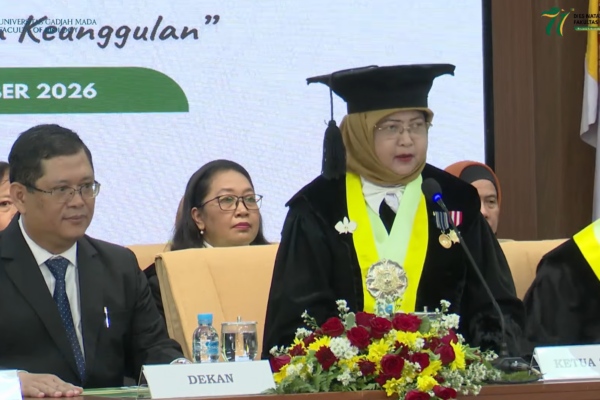
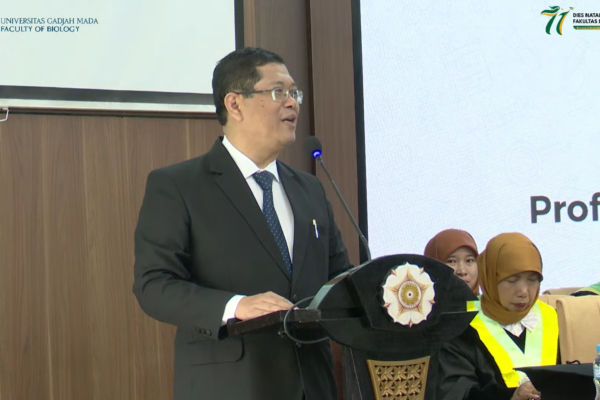
The final remarks were delivered by the Dean of the Faculty of Biology UGM, Prof. Dr. Eko Agus Suyono, M.App.Sc., who officially opened Research Day 2026. He highlighted the event’s continuous growth, which now extends beyond the Faculty of Biology’s academic community to include external participants and the wider public. This year’s participation encompasses high school students and university students from other higher education institutions across Yogyakarta. Thus, Research Day serves not merely as a research expo but also as a platform to introduce research findings to a broader audience, ensuring that research outcomes can be understood, utilized, and translated into meaningful benefits for society.
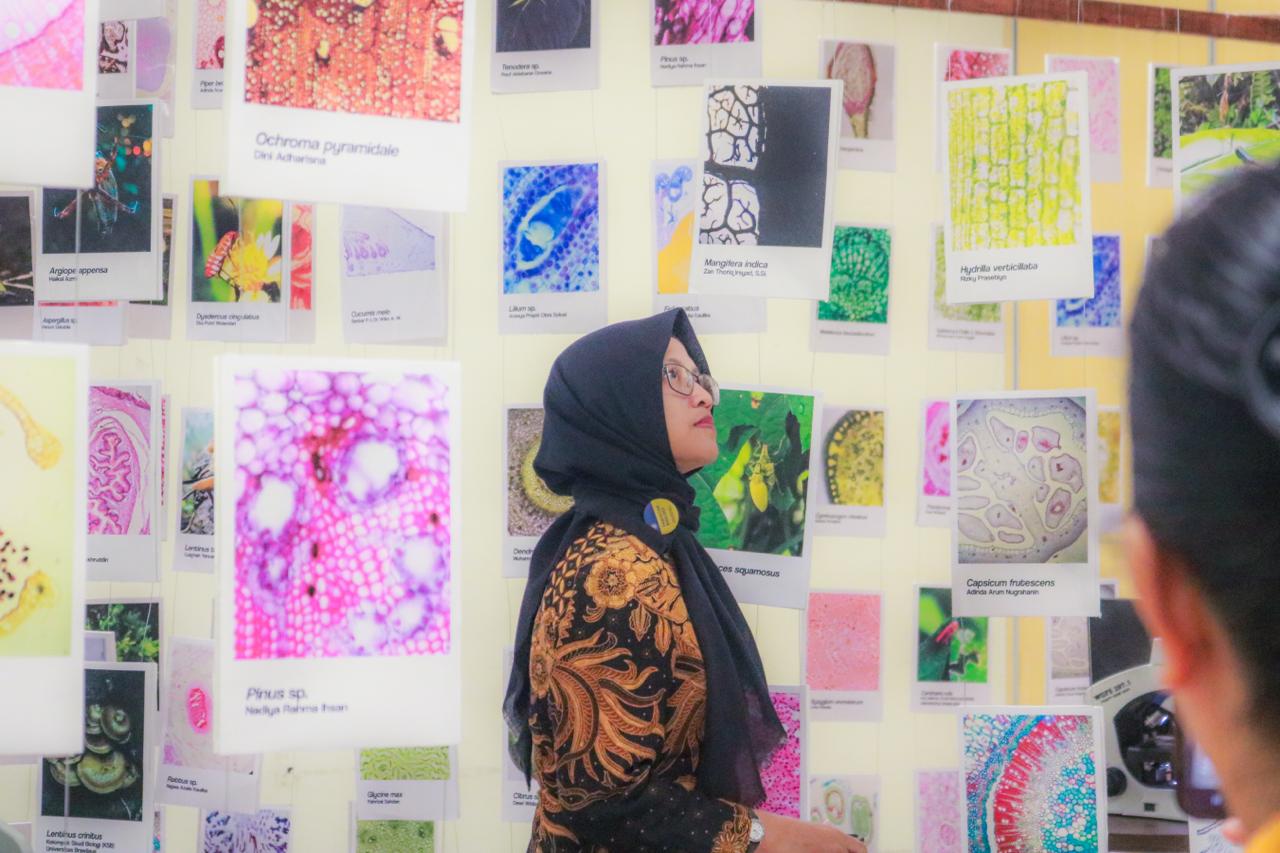
Research Day 2026 welcomes members of the Faculty of Biology UGM academic community as well as the general public, with high school students forming a significant part of the audience. Through research exhibitions, poster presentations, and various educational and interactive activities, the event aims to make research more accessible and easier for the public to understand.
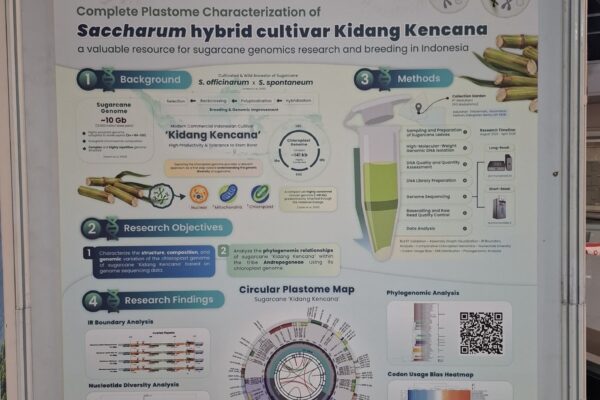
This year, a total of 105 research and community service posters have been registered for exhibition. These comprise 64 posters under the Lecturer–Student Collaboration (KDM) grant, 17 posters under the International Research and Publication Collaboration Partnership (KPPBI) grant, 15 Community Service (PKM) posters, and 9 Partner Village posters. In addition, Research Day 2026 showcases research outputs from various other funding schemes and activities, including the BIMA Regular Fundamental Research (PFR) scheme, research downstreaming and industry immersion programs, as well as students’ fieldwork projects. The diversity of works presented reflects the extensive research activities, innovations, and scientific development taking place at the Faculty of Biology UGM.
Through Research Day 2026, the Faculty of Biology UGM seeks to strengthen its research culture while fostering stronger connections between academia and society. The event reflects the Faculty’s commitment to promoting research that goes beyond generating scientific knowledge and publications, with the potential to be further developed into innovations and deliver tangible benefits to society.
In line with its commitment to sustainable development, Research Day 2026 also contributes to the achievement of the Sustainable Development Goals (SDGs), particularly SDG 4 (Quality Education) through strengthening scientific literacy and public education, SDG 9 (Industry, Innovation, and Infrastructure) through research and innovation development, and SDG 17 (Partnerships for the Goals) through enhanced research collaboration and strategic partnerships.