Arsip:
SDG 14 : Develop Life Below Water
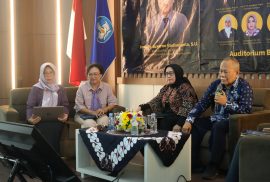
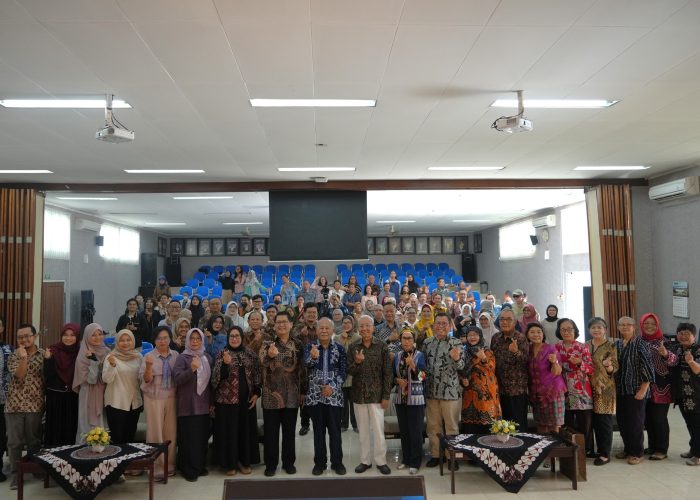
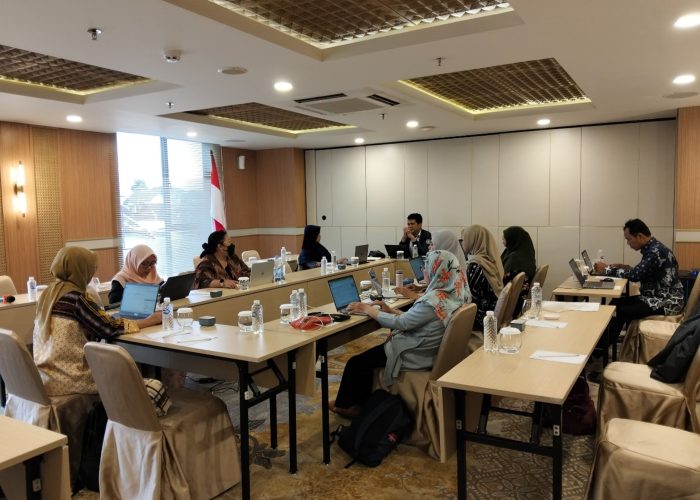
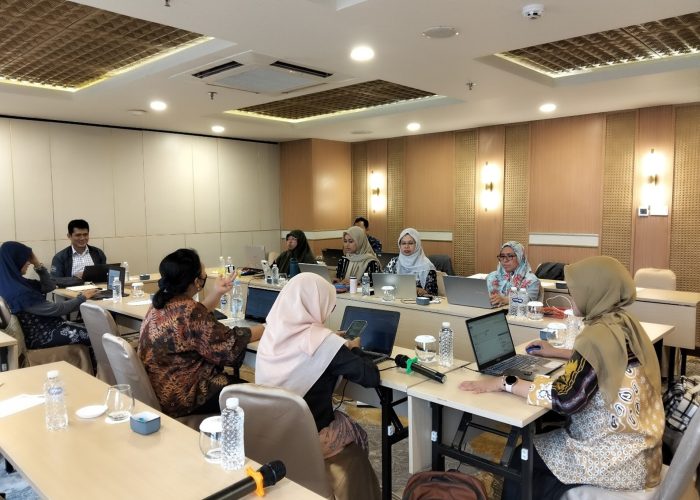
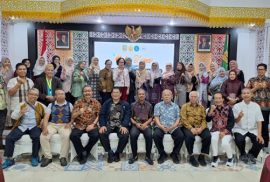
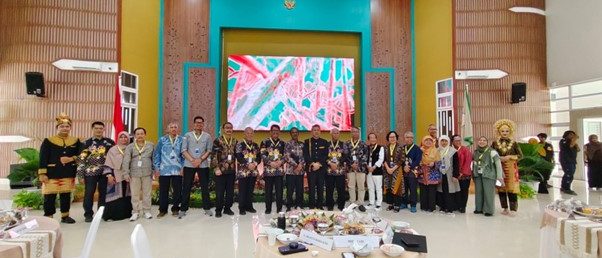
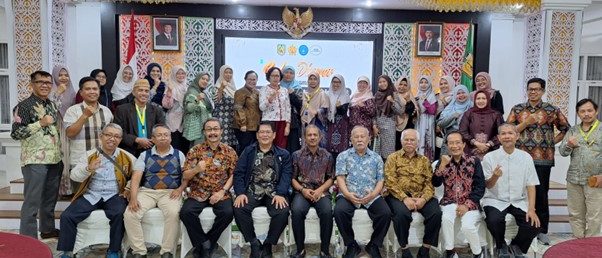
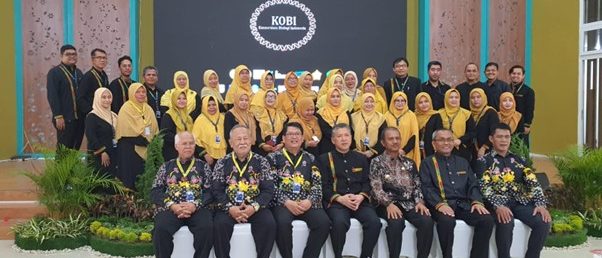
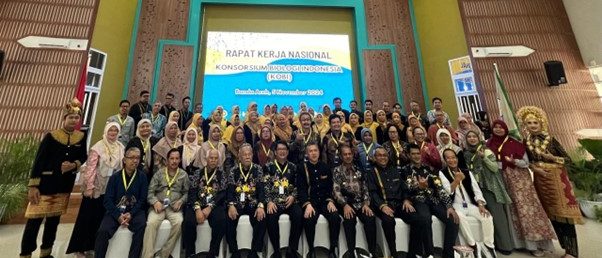
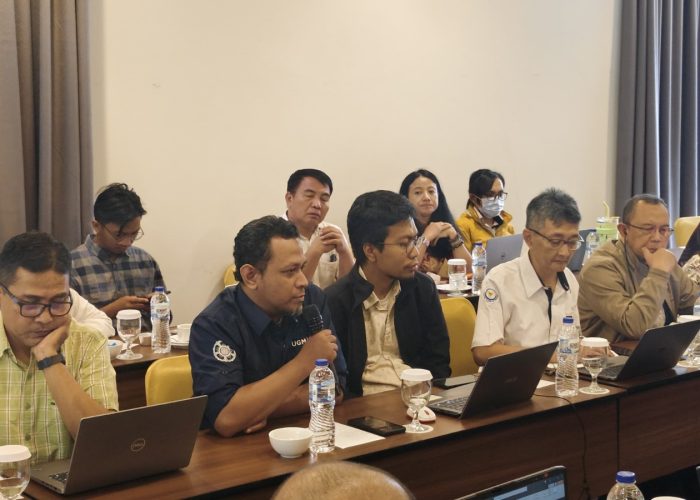
Department of Biology FMIPA Syiah Kuala University and The Indonesian Biology Consortium (KOBI) in collaboration with the Biology Study Program, FKIP, Syiah Kuala University, and the Biology Study Program, Faculty of Science and Technology, UIN Ar-Raniry Banda Aceh, has successfully held a National Meeting (Rakernas) on November 5-6, 2024 at the FMIPA Hall, Syiah Kuala University, Banda Aceh. This Rakernas was attended by 31 delegates who were representatives of Biology study programs throughout Indonesia. The delegation from the Faculty of Biology UGM itself was attended by Prof. Dr. Budi Setiadi Daryono, M.Agr.Sc., as the Dean of the Faculty of Biology UGM and also the Chairman of KOBI. In addition, along with the group, Prof. Dr. Suwarno Hadisusanto, S.U. as the Advisory Board of KOBI, Prof. Dr.rer.nat. Andhika Puspito Nugroho, S.Si., M.Si., as Secretary of KOBI and Head of the Master of Biology Program, Prof. Dr. Endah Retnaningrum, M.Eng., as Head of the Biology Doctoral Study Program, Prof. Rina Sri Kasiamdari, S.Si., Ph.D., as Head of the Biodiversity Curator Professional Program, and Sukirno, S.Si., M.Sc., Ph.D. as Head of the Undergraduate Biology Study Program.
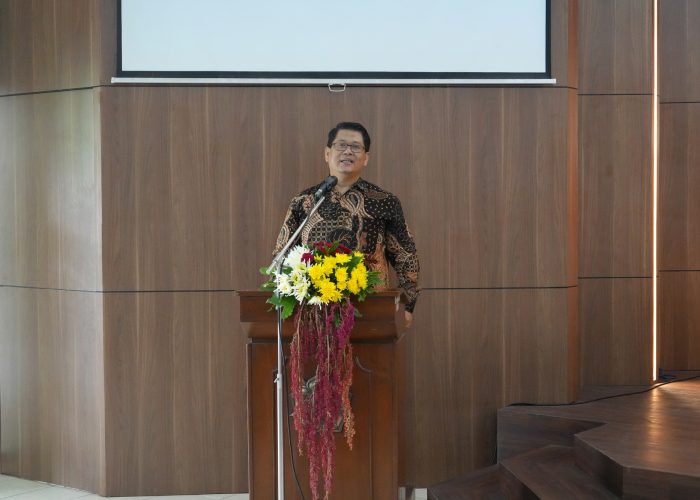
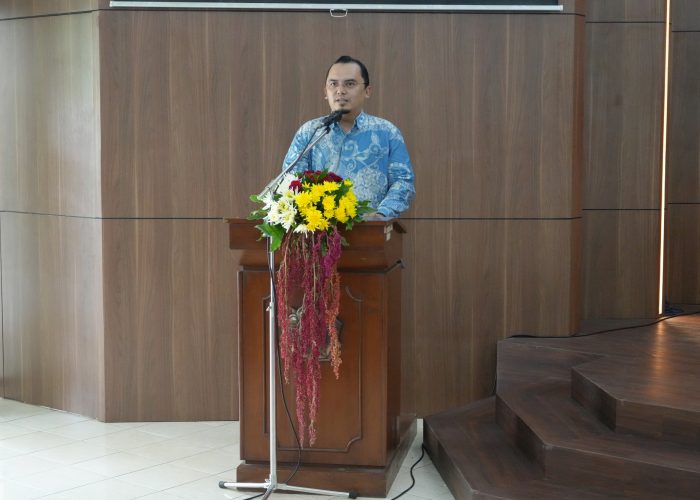
Prof. Dr. Budi Setiadi Daryono, M.Agr.Sc., in his remarks said that KOBI celebrated its 13th anniversary on September 22, 2024. KOBI has made important contributions to the development and sustainability of biodiversity in Indonesia, especially in recording biodiversity indexes. The National Meeting was opened by the Chancellor of Syiah Kuala University, Prof. Dr. Ir. Marwan. He emphasized the importance of biodiversity and sustainable management and encouraged collaboration and synergy of research cooperation between universities. Mayor of Banda Aceh Mr. Ade Surya, S.T., M.E. in his speech said that the Banda Aceh City Government hopes that the KOBI meeting will be a forum for friendship in every national working meeting and congress activity, especially in the application of the biodiversity index to support the achievement of Indonesia Emas 2045.
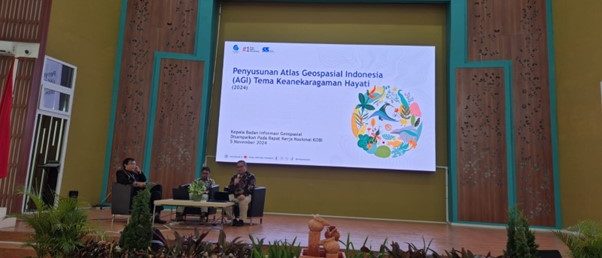
This national working meeting also held a workshop on the Initiation and Strengthening of the Biology Professional Program from the National Professional Certification Agency, Socialization of the 2024 Permendikbudristek No.44/2024 from KOBI, Living Planet Report 2024 from WWF Indonesia, the Indonesian Biodiversity Atlas Compilation Plan from the Geospatial Information Agency and the Postgraduate Curriculum Based on Academic Manuscripts based on OBE from KOBI.
This KOBI National Working Meeting is expected to not only be a forum for the exchange of knowledge and collaboration, but also to affirm KOBI’s commitment to play an active role in the Sustainable Development Goals (SDGs) program, especially improving inclusive education (SDG 4) through sustainable collaboration (SDG 17). In addition, this activity also encourages the advancement of biological science in Indonesia, especially in biodiversity conservation, including the preservation of marine ecosystems (SDG 14) and terrestrial ecosystems (SDG 15), as well as the application of biological science for environmental sustainability.
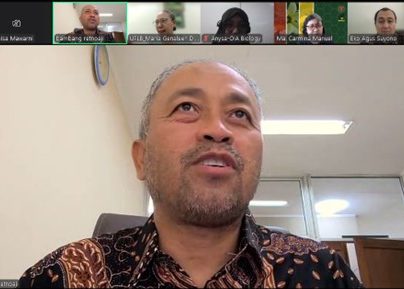
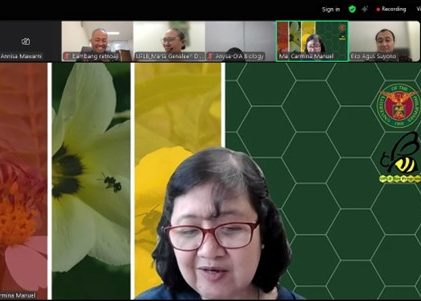
Yogyakarta, 5 November 2024 – Faculty of Biology UGM initiated a double degree collaboration with the University of Philippines Los Banos (UPLB) and the Southeast Asian Regional Center for Graduate Study and Research in Agriculture (SEARCA). This initiation was conveyed in an online meeting with Dr. Maria Genaleen Q. Diaz from the Institute of Biological Sciences Director, University of the Philippines at Los Banos (UPLB), and Dr. Mom. Carmin as IBS Graduate Program Committee. The meeting was also attended by Dr. Bambang Retnoaji as Vice Dean for Academic and Student Affairs, Dr. Eko Agus Suyono, M.App.Sc. as Vice Dean for Research, Community Service, Cooperation and Alumni Affairs and Nur Indah Septriani, Ph.D. as Head of the International Affairs Office, Faculty of Biology, UGM.
During the meeting, the initiation of a 2+2 double degree collaboration between the Faculty of Biology UGM and UPLB was discussed. Dr. Ma and Dr. Maria appreciated this initiation. Both of them said that UPLB already has a double degree program running with 13 universities in the United Kingdom and Australia, especially for double degree doctoral programs, but did not rule out the possibility of double degree collaboration for masters. The program covers the fields of genetics, botany, microbiology, and molecular biotechnology.
Dr. Eko and Dr. Bambang added that the initiation of the double degree collaboration could be supported by the SEARCA (Southeast Asian Regional Center for Graduate Study and Research in Agriculture) scholarship. It is hoped that this collaboration will attract more students to pursue their education at the two universities.
The collaboration between the Faculty of Biology UGM and UPLB is expected to be part of the Biology Faculty’s commitment to its role in sustainable development in accordance with the Sustainable Development Goals (SDGs), namely healthy living (SDG 3), inclusive quality education for all groups (SDG 4), as well as partnerships in achieve sustainable goals (SDG 17).
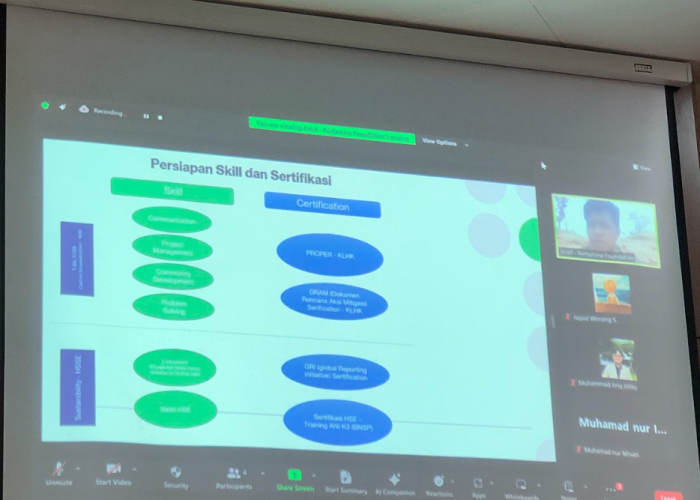
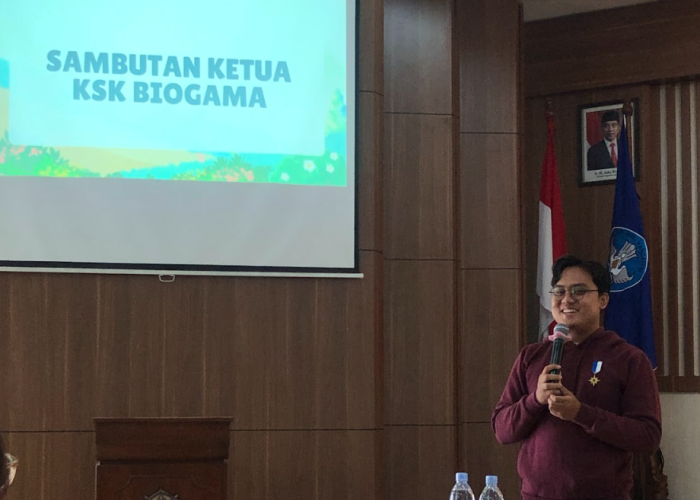
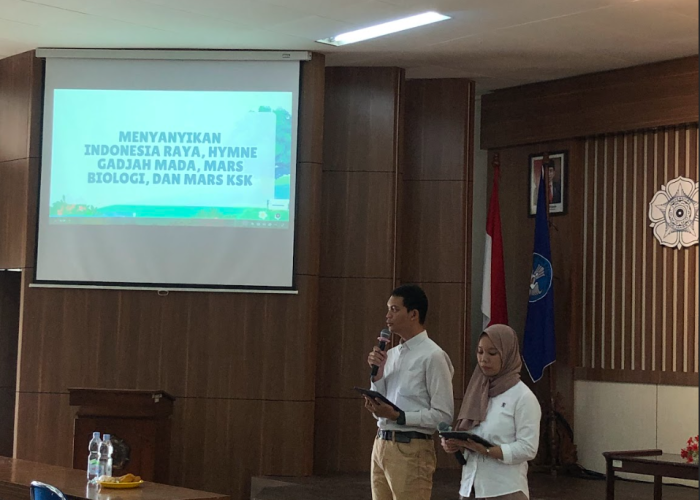
On Saturday, September 28, 2024, the Marine Study Group (KSK) of the Faculty of Biology Universitas Gadjah Mada organized the Kopdar Alumni 2024, themed “Developing Career and Further Study Plans.” This event took place at the Auditorium of the Faculty of Biology, UGM, attended by KSK Biogama members from various cohorts.
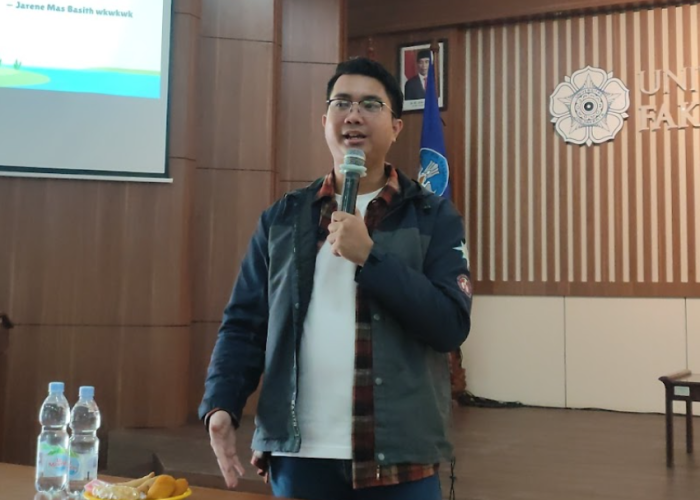
The speakers featured in this event were Basith Kuncoro Adji, S.Si., M.Sc. from the University of Birmingham, and Muhammad Arief Budhiman, S.Si. from Pertamina Foundation. They shared insights regarding their experiences after graduation, discussing topics related to further studies and career paths in environmentally focused industries. Their presentations included information on study pathways, career opportunities, and essential skills for Biology students.
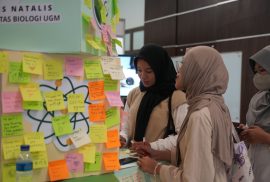
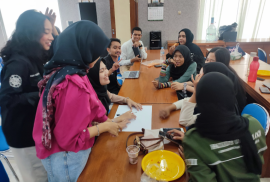
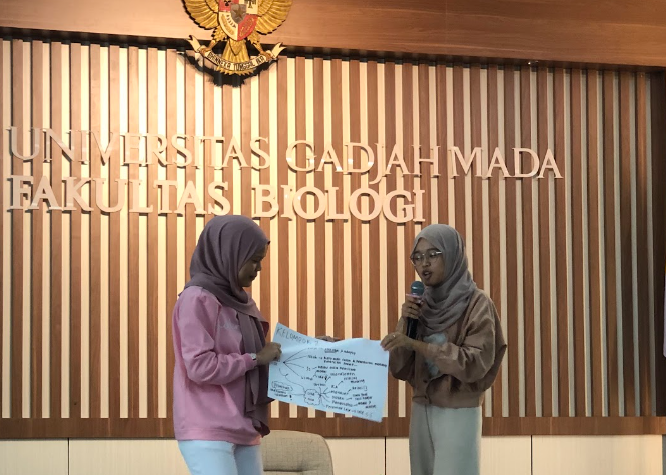
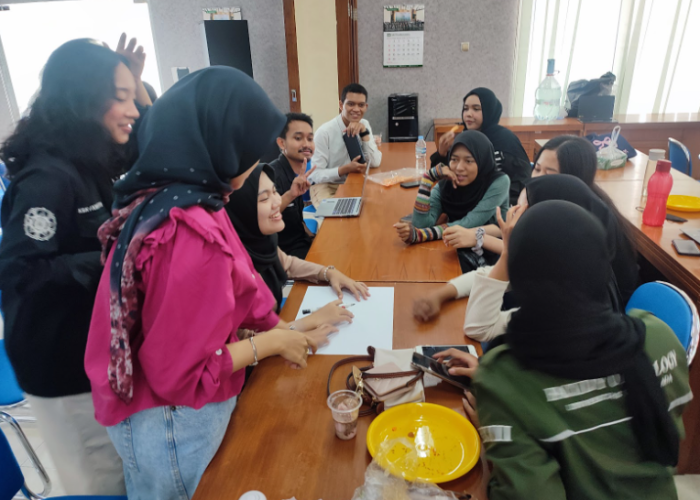
The event involved guided group discussions organized by the committee. Participants were divided into small groups to create mind maps regarding their career or further study plans. These mind maps were required to encompass information on the skills needed, career objectives, and strategies to achieve them. This group discussion lasted for 30 minutes, during which participants actively exchanged ideas and visualized their thoughts through mind mapping.
Following the group discussions, each group presented their mind maps to the speakers and the audience. The speakers provided feedback and suggestions regarding the steps that could be taken to achieve their planned career or further study goals.
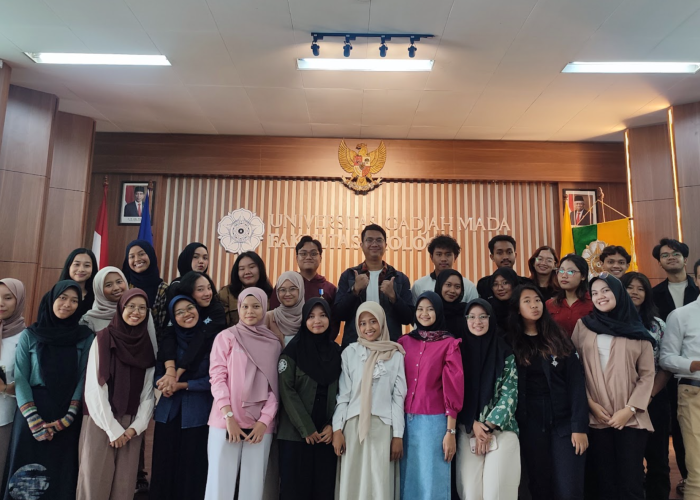
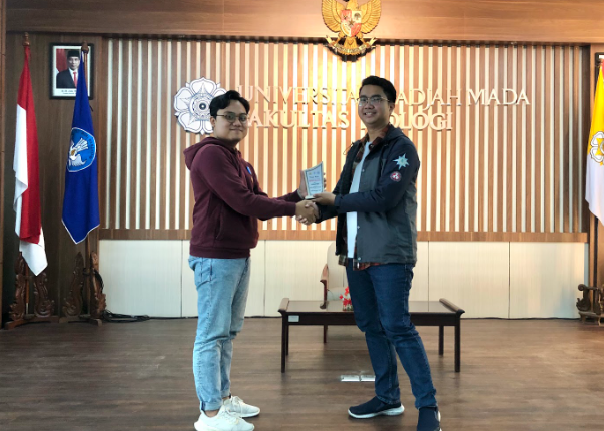
The event concluded with the presentation of mementos to the speakers in appreciation of their participation and the knowledge they shared, followed by a group photo session with all participants, both in-person and online.
[Author: KSK]
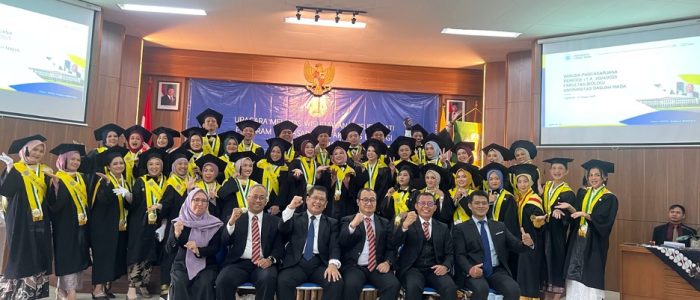
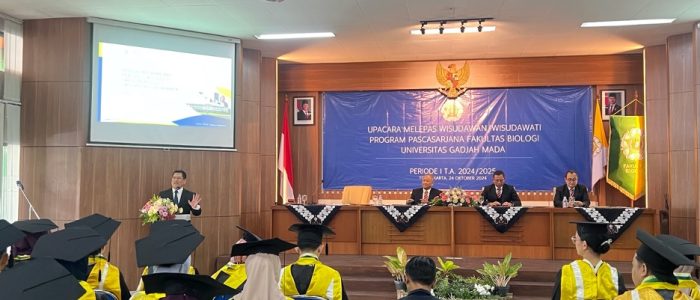
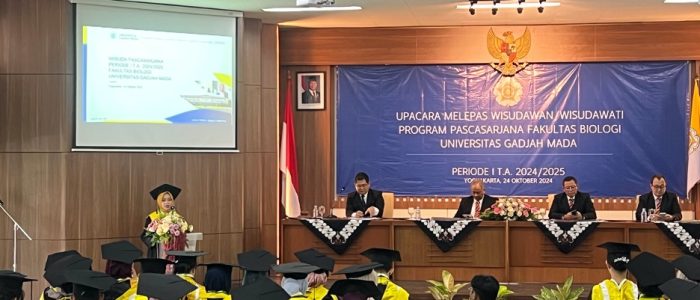
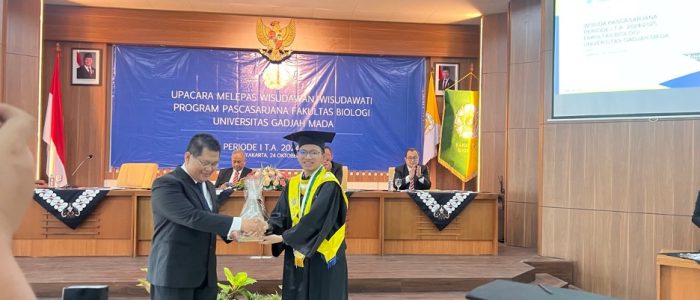
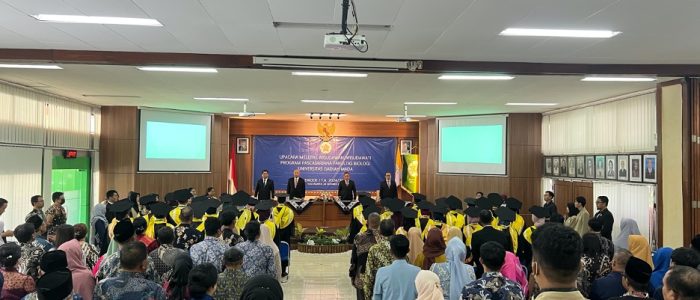
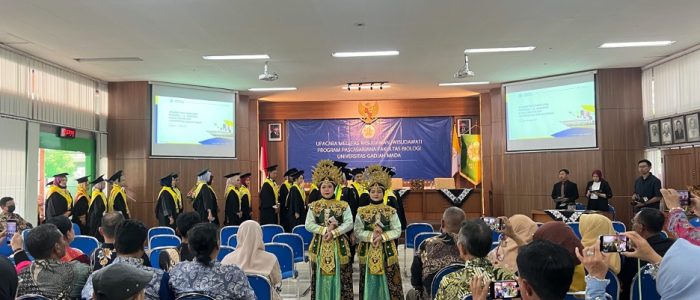
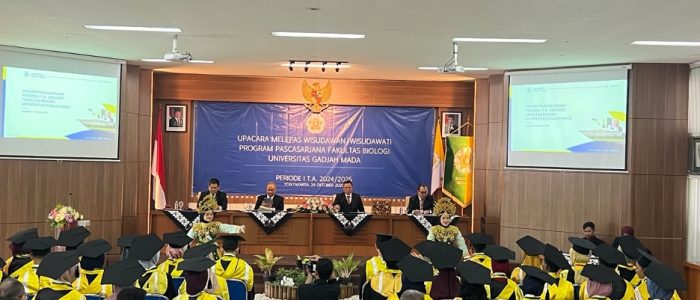
Thursday, October 24, 2024, The Faculty of Biology, Universitas Gadjah Mada, held a Graduation Ceremony for the Postgraduate Program 2024/2025 period I at 01.00 p.m. The event was attended by the Vice Dean for Academic and Student Affairs, Dr. Bambang Retnoaji, M.Sc., the Vice Dean for Finance, Assets, and Human Resources, Dr. Slamet Widianto, S.Si., M.Sc., the Vice Dean for Research, Community Service, Collaboration and Alumni Affairs, Dr. Eko Agus Suyono, S.Si., M.App.Sc., the Head of Master in Biology Study Program, Prof.Dr.rer.nat. Andhika Puspito Nugroho, S.Si., M.Si., and the Head of Doctor in Biology Study Program, Prof. Dr. Endah Retnaningrum, M.Eng. and thesis supervisor of the graduates. The ceremony was opened by the Dean of the Faculty of Biology Prof. Dr. Budi Setyadi Daryono, M.Agr.Sc., and followed by singing Indonesia Raya, Hymne Gadjah Mada, and Faculty of Biology March. The event continued with performances of the traditional dance “Sarikalayu” from Daerah Istimewa Yogyakarta.
Then, the graduation report was delivered by the Head of the Master in Biology Study Program, Prof.Dr.rer.nat. Andhika Puspito Nugroho, S.Si., M.Si.. Up to this period, the Postgraduate program of Biology UGM had graduated 138 doctoral students and 1764 master students. In the I Period of the Academic Year 2024/2025, there were two graduates for the doctoral program, Dr. Nadya Sofia Siti Sa’adah, S.Si., with cumlaude predicate, and Dr. Ainun Nikmati Layli, S.pd., M.Sc. with very good predicate. The average length of study was 3 years and 11 months and GPA of 3.95. There were 33 graduates for the master’s program with the highest GPA was 3.99.
Next, representatives of the graduates, Hayu Swari Allimi, S.Si., M.Sc., gave a speech. She expressed her gratitude to the parents, the lecturers, and all graduates for supporting their academic journey. She underscored that graduation is the beginning of a greater contribution to the field of study. As postgraduate alumni, they are expected to be leaders and solve issues in the country. She congratulated the graduates and wished their achievements would motivate them to make continuous contributions and advancements in science and technology.
The ceremony continued with a remark from the representative of the parents, Mr. Suyarto, S.T…, father of Hayu Swari Allimi, S.Si., M.Sc. He congratulated and praised the graduates for completing their studies with exceptional excellence. He extended heartfelt thanks to the faculty of biology, lecturers, and academic staff. He also reminded the graduates that their achievements are not the end of their educational journey. The path they have traveled has not been easy, but behind the difficulties, there are many opportunities for personal growth and the development of their mindset. Lastly, he expressed his hope that the lecturers would be blessed by Allah SWT for the knowledge they have imparted to the students.
The ceremony continued with a pin awarding as a sign of membership in the Faculty of Biology Family by the Vice Dean for Research, Community Service, Collaboration and Alumni Affairs, Dr. Eko Agus Suyono, S.Si., M.App.Sc., represented by graduates Dr. Nadya Sofia Siti Sa’adah, S.Si., and Muhammad Rivaldi, S.Pd., M.Sc. Following that was a speech by the Dean, Prof. Dr. Budi Setiadi Daryono, M.Agr.Sc. He congratulated the graduates and their parents. He expressed the faculty’s hope that the graduates would remain optimistic in contributing to the development of Indonesia Emas 2045. He also noted that not everyone, especially those as young as the present graduates, could complete their master’s or doctoral studies. In this period, the youngest doctoral graduate at UGM, aged 26, was from the Faculty of Biology, and thus the graduates should be grateful for their achievements. However, he reminded them not to be complacent but to continue their studies and professional pursuits.
He concluded his address with a poem: “The fruits of perseverance, patience, and strength have brought the graduates to this long-awaited day, a day that was once a dream. Families share in the pride, strengthened by the sincere prayers of parents. In the quiet of the night, prayers are offered without pause. The first step has been achieved. Strengthen the dreams and aspirations to be attained. Though change and challenges lie ahead, fear not, for you are well-prepared. Knowledge is action, and action must be guided by knowledge. To face change head-on and the dynamics of the times, clothed and embraced in comfort, nurturing one another with love and support. A spirit of togetherness is our strength. Together, we create the beauty of life. Welcome, graduates, to the family of Gadjah Mada University Alumni (KAGAMA).”
The event continued with a presentation of mementos from the graduates of Period I, Academic Year 2024/2025, represented by Giano Excelsis Pangemanan, S.Si., M.Sc., to the Dean of the Faculty of Biology UGM. The ceremony ended with a prayer by Mr. Sumarno, S.Si., M.Sc., and a group photo. [Author: KMP Biology]
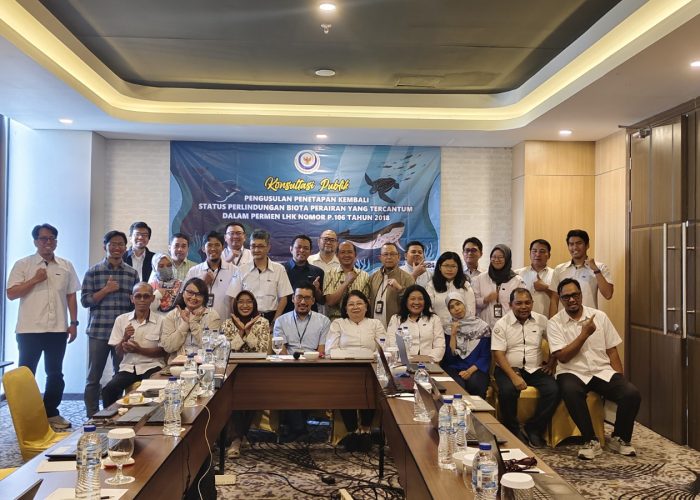
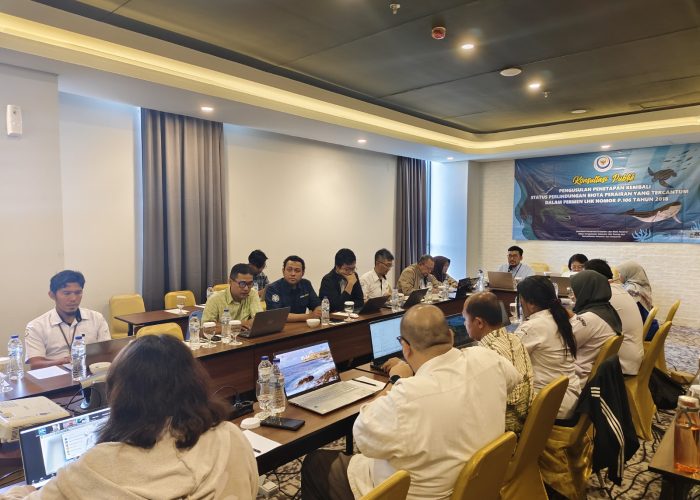
Bogor, October 23, 2024, A public consultation was held to discuss the Proposal for the Reinstatement of Protected Status for Aquatic Biota listed in the Ministry of Environment and Forestry Regulation (Permen LHK) No. P.106 of 2018. The event was organized by the Directorate General of Marine Spatial Management of the Ministry of Marine Affairs and Fisheries (KKP) at the Luminor Hotel in Bogor, and attended by various stakeholders, experts, and representatives from relevant institutions. The consultation addressed the transition of authority over protected wildlife management from the Ministry of Environment and Forestry (KLHK) to the Ministry of Marine Affairs and Fisheries (KKP).
In this meeting, Dr. Amir Hamidy, M.Sc., Director of the Secretariat for Animal Conservation and Innovation (SKIKH), and Ir. Pingkan Katharina Roeroe, M.Si., Head of the Fish Species Protection and Conservation Team at the Directorate of Marine Conservation and Biodiversity, PRL Directorate General of KKP, served as the primary presenter. They emphasized the importance of re-evaluating Indonesia’s aquatic biota protection status. The presentation included policies aligned with legal developments and current conservation needs, particularly following Law No. 32 of 2024, an amendment to Law No. 5 of 1990 on Conservation of Living Natural Resources and Ecosystems.
A key topic discussed was the shift in management authority over protected wildlife from KLHK to KKP. Participants offered insights and recommendations to support a smooth and effective transition process. Dr. Rury Eprilurahman, representing the Faculty of Biology at Universitas Gadjah Mada (UGM), contributed significant input, emphasizing the need for clear species identification in state documents and effective management during inter-ministerial authority transfer. He highlighted that accurate identification and sustainable management are critical in protecting aquatic mammals and reptiles categorized as protected species.
The meeting concluded with a signed statement of agreement, which included critical points to guide further discussions regarding the transfer of authority and the management of protected species.
This event underscored the commitment of various parties to ensuring the sustainability of Indonesia’s marine and aquatic ecosystems, safeguarding protected aquatic species in compliance with current regulations.
The public consultation on the proposed revision of aquatic biota protection status also addressed several Sustainable Development Goals (SDGs), including SDG 14: Life Below Water, SDG 15: Life on Land, SDG 13: Climate Action, SDG 16: Peace, Justice, and Strong Institutions, and SDG 17: Partnerships for the Goals.
Through this event, Indonesia demonstrated its commitment to achieving the SDGs, focusing on environmental conservation and the sustainable management of natural resources.
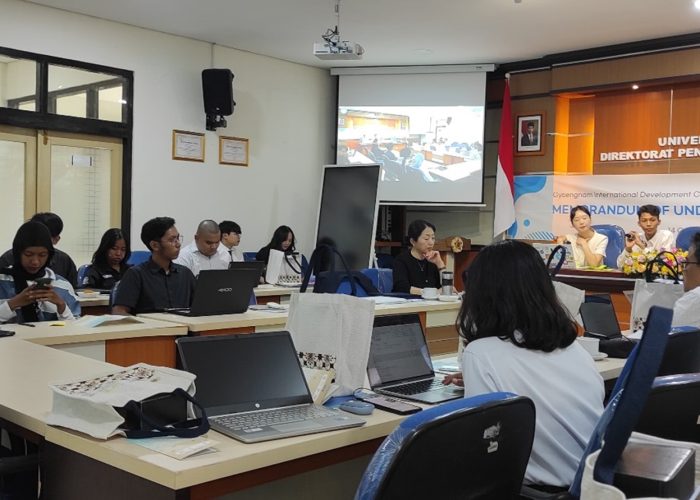
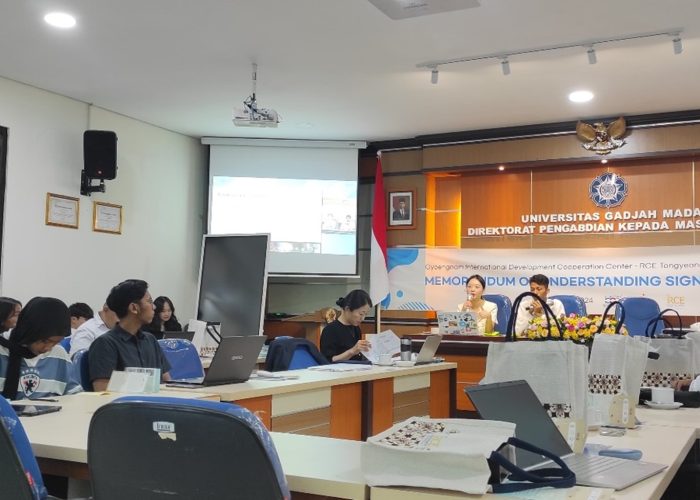
Five students from the Faculty of Biology, Universitas Gadjah Mada, namely Maidira Marsa Rabbani, Laras Ati, Dinda Luthfiani Nurul Ulya, Manika Rosalia Lysander, and Raja Steve Sudjatmiko Panggabean, joined representatives from the Vocational School, the Faculty of Economics and Business, the Faculty of Cultural Sciences, the Faculty of Social and Political Sciences, and the Faculty of Medicine, Public Health, and Nursing, UGM, to participate in discussions and training on marine debris management in the event titled “Indonesia Marine Debris Social Issue Resident Participation Awareness Improvement Capacity Building Project.” In addition to the students, this one-week event (October 14-18, 2024) was also attended by leaders and lecturers from the Vocational School, heads and staff from the UGM Directorate of Community Service (DPKM), and one of the Faculty of Biology’s lecturers, Zuliyati Rohmah, S.Si., M.Si., Ph.D. Eng., who is also a member of the KKN-PPM UGM taskforce and RCE Yogyakarta.
This event is part of a multipartite collaboration between the Vocational School, RCE Yogyakarta (under the Directorate of Community Service at UGM), RCE Tongyeong, and the Gyeongnam International Development Cooperation Center (GNIDCC) of Gyeongsang National University, South Korea. The project focuses on raising awareness and building the capacity of local communities in managing marine debris in Yogyakarta.
One of the programs carried out was training and capacity-building activities involving the communities of Karangwuni Village and Bugel Village, Kulonprogo, D.I. Yogyakarta. This project aims to raise community awareness and knowledge about the impact of marine debris and how to manage it effectively. The event also includes seminars, workshops, and community training as part of the efforts to strengthen commitment to Education for Sustainable Development (ESD) and better environmental management. This collaboration will not stop here but will continue with further training involving local residents and village leaders. The program will discuss concrete solutions to the marine debris problem in Yogyakarta and will involve more participants from various backgrounds.
This cooperation is also part of UGM’s commitment to supporting the achievement of the Sustainable Development Goals (SDGs), particularly in the areas of education, community empowerment, and the environment. This activity supports several SDGs, including SDG 4: Quality Education, SDG 11: Sustainable Cities and Communities, SDG 12: Responsible Consumption and Production, SDG 14: Life Below Water, and SDG 17: Partnerships for the Goals. By engaging collaboration between various institutions, both local and international, this project aims to create a significant impact on marine debris management.
Wildan Fadhilah Kurnia Embarks on Transformative Semester Abroad at James Cook University, Australia
Wildan Fadhilah Kurnia, a dedicated student from IUP batch 2021, Faculty of Biology, Universitas Gadjah Mada (UGM), has joined a prestigious six-month student mobility program at James Cook University (JCU) in Australia. This program is designed to provide students with invaluable international experience and the opportunity to study at one of the world’s leading universities in Marine Biology.
So far, Wildan has found his experience at JCU to be nothing short of exceptional. “The research conducted here is renowned globally across various fields, particularly marine biology, aquaculture, and paleontology,” he shared. Enrolled in courses from the Marine Biology, Aquaculture, and Earth and Environmental Sciences faculties, he has been impressed by JCU’s top-of-the-line research facilities and highly interactive classes that encourage critical thinking.
Wildan’s curriculum has provided him with hands-on fieldwork opportunities, allowing him to engage directly with the subject matter. He spent time at the Flinders River Formation, searching for fossils and studying the stratigraphy of geological formations. Additionally, he visited various aquaculture facilities, gaining firsthand insight into the day-to-day operations and the diverse species cultivated within the industry.
A highlight of his program has been a visit to JCU’s Orpheus Island Research Station, where he participated in real-time analysis of the coral reefs surrounding the island. “Each subject has its challenges, but I’ve thoroughly enjoyed my studies here and have learned a tremendous amount,” Wildan noted.
In addition to his coursework, Wildan is collaborating with Dr. Espen Knutsen, Senior Scientist and Curator of Paleontology at the Queensland Museum in Townsville, to further his ongoing thesis on fossils discovered in underwater caves.
Wildan’s journey exemplifies the transformative power of international education and research collaboration. He looks forward to applying his experiences and insights to his future endeavors. [Aulia]
Yogyakarta, September 19, 2024 – The Faculty of Biology UGM held the Open Senate Meeting in 2024 at the Auditorium of Tropical Biology with the theme “Biologi Berkarya, Biologi Mendunia” (Biology Create, Biology Goes Global). The Open Senate Meeting was also the peak event of the series of celebrations for the 69th Anniversary of the Faculty of Biology UGM. The meeting was attended by the senate, deans, lecturers, education staff and student representatives of Faculty of Biology UGM, as well as invited guests, alumni, partners, and Dharma Wanita of the Faculty of Biology UGM.
Prof. Dr. Suwarno Hadisusanto, S.U. as the Chairperson of the Senate of the Faculty of Biology UGM opened the Senate Meeting and continued with singing the songs “Indonesia Raya”, “Hymne Gadjah Mada”, and “Mars Biologi” as well as a joint prayer led by Tyas Ikhsan Hikmawan, Ph.D.
Prof. dr. Ova Emilia, M.Med. Ed., Sp.OG (K), Ph.D., Rector of Universitas Gadjah Mada also attended the Senate Open Meeting and then delivered her remarks. “Since its inception, the Faculty of Biology has had a mandate to preserve biodiversity in Indonesia, including promoting work and innovation in sustainable development,” said Prof. Ova in her remarks (19/9). The Rector also expressed her appreciation to the Faculty of Biology in initiating the strengthening of the Indonesian Biodiversity Index, Biodiversity Credit and the pioneering of the Biodiversity Curator Profession.
Next, the Integrated Genome Factory (IGF) service was launched by the Rector of Universitas Gadjah Mada, accompanied by the Dean and Chair of the Senate of the Faculty of Biology UGM and Mrs. Erlina Vera Ratu from the Satriabudi Dharma Setia Foundation. Integrated Genome Factory (IGF) is an integrated DNA/RNA sequencing service unit at the Faculty of Biology UGM. With support from Panin Bank and the Satriabudi Dharma Setia Foundation, IGF uses the long-read sequencing platform from Nanopore Technology to provide the largest sequencing service in Indonesia. The presence of IGF is expected to make UGM a pioneer university in the application of nanopore technology and open up new opportunities for research development in various fields.
Prof. Dr. Budi Setiadi Daryono, M.Agr.Sc. as the Dean of the Faculty of Biology then delivered his remarks and the Annual Report of the Faculty of Biology UGM. He explained that the Faculty of Biology has shown its position in the international arena and has succeeded in maintaining its position at 501-550 in the world for Biological Science, and is the best in Indonesia based on the QS World Ranking. Prof. Budi further explained the role of Biology that continues to develop from the fields of Evolution, Biotechnology, to Ecology, and it’s very large role in efforts to preserve biodiversity, especially in Indonesia. The Faculty of Biology also supports these efforts through the initiation of the Indonesian Biodiversity Index and the establishment of the Biodiversity Curator Professional Program. The implementation of Biodiversity Credit is also carried out together with partners of the Faculty of Biology. This is in line with support for the achievements of the Sustainable Development Program (SDGs), especially in improving the quality of inclusive education (SDG 4), handling climate change (SDG 13), preserving ecosystems on land and sea (SDG 14 and SDG 15).
The improvement of education quality in accordance with SDG 4 is also demonstrated by the Faculty of Biology which has successfully maintained ASIIN international accreditation for its Bachelor and Master programs. This year, the Faculty of Biology UGM has also successfully launched the Biodiversity Curator Profession Program with 17 students with Bachelor to Doctoral educational backgrounds. In 2024, the Faculty of Biology will send 7 students for a Double Degree program with Leeds University UK, as well as dozens of other students participating in exchange programs with the Sakura Science scheme, Student Mobility, Student Exchange JASSO, or student exchange programs organized by UGM. A total of 3 students are participating in the fast-track bachelor-master program. Student achievements also continue to increase in the international and national arenas. The Faculty of Biology continues to improve the quality of research through the support of adequate facilities, including through the procurement of assets and the PUAPT (Inter-University Center of Excellence) grant scheme for various laboratory facilities that support biological research. The support of the Faculty of Biology’s human resources is also demonstrated by the increase in the number of lecturers and professors, as well as various routine programs to improve the quality of human resources.
Furthermore, the achievements of the number of research, achievements of international publications of lecturers of the Faculty of Biology, and the development of journals published by the Faculty of Biology, including the Journal of Tropical Biotechnology and Biodiversity (JTBB) indexed by Scopus Q3 and Berkala Ilmiah Biologi which has ISSN. Data on the increase in community service and cooperation both at the international and national levels were also presented. International publications of lecturers of the Faculty of Biology have continued to increase, especially in Q1 journals in the last 3 years. In improving the quality of education, the Faculty of Biology has collaborated with various world institutions to present 33 visiting professors and 7 adjunct professors during this period. Double degree collaboration has also continued to be improved, and so far, has succeeded in sending students for double undergraduate degrees at the Australian National University, and Leeds University, as well as double doctoral degrees at Montpellier France, University of Greifswald Germany, and Boku University Austria. Various programs that support research and cooperation are implemented, including the 8th National Seminar on Tropical Biology and the 7th International Summer Course on Tropical Biodiversity and Sustainable Development which were attended by hundreds of participants from various institutions and countries, Research Day, BIOENTRI (Biology Open House and Introduction to Research Topics), as well as the first Business Gathering in collaboration with Prasetiya Mulya University and attended by dozens of partners.
The next Scientific Speech was delivered by Prof. dr. Erik H. J. Danen, Dean of Graduate School, Faculty of Science, Leiden University. He presented his latest research entitled “Advanced 3D co-culture models for mechanistic studies an
d drug testing in the context of fibrosis and cancer”. In the speech, Prof. Erik conveyed the focus of his research in the development of 3D models for cancer testing.
Furthermore, the signing of the Memorandum of Agreement regarding the Joint Doctoral Degree with the Faculty of Science, Leiden University was carried out by the Dean of the Faculty of Biology, Prof. Dr. Budi Setiadi Daryono, M.Agr.Sc. accompanied by the Chair of the Senate, Prof. Dr. Suwarno Hadi Susanto. On that occasion, Prof. Budi said that the collaboration was one of the efforts of the Faculty of Biology in increasing recognition in the international arena.
The Senate Open Meeting ended with a closing by the Chair of the Senate of the Faculty of Biology, Prof. Dr. Suwarno Hadisusanto, S.U. It is hoped that the Open Meeting agenda as part of the celebration of the 69th Anniversary of the Faculty of Biology can spark the enthusiasm of the academic community so that the Faculty of Biology can continue to develop and provide benefits to the nation and state.
Kotimah, an undergraduate student from the Faculty of Biology, Universitas Gadjah Mada (UGM), class of 2022, has secured 3rd place in the Perta Event Essay Competition organized by IPB University. The Perta Event is open to students from universities across Indonesia and aims to foster critical thinking and analytical skills in addressing major societal issues as part of the national vision for Indonesia Emas 2045.
The Perta Event carried the theme “Smart Generation, Brilliant Future,” focusing on the role of Generation Z in generating innovative solutions to challenges in various sectors, including the environment, education, technology, socio-culture, and food security. The competition commenced on August 13, 2024, and included administration selection, essay submission, and finalist presentations. Kotimah’s essay, which focused on the pressing issue of industrial pollution, particularly from synthetic dye waste, was shortlisted as one of the top five entries. She was invited to present her ideas virtually on September 17, 2024. Her essay highlighted the growing environmental threat posed by industrial pollutants, specifically the harmful impact of synthetic dyes on ecosystems.
In her proposal, Kotimah introduced a novel solution by utilizing microbes derived from the fermentation of tea and sucrose solutions as a natural dye alternative. This microbial fermentation process offers an eco-friendly and sustainable substitute for synthetic dyes, with potential applications ranging from small-scale community initiatives to large-scale industrial production. Kotimah’s innovative approach aims to reduce the environmental footprint of industrial processes while promoting sustainable practices that align with long-term ecological conservation goals.
Kotimah expressed her hope that this microbial-based natural dye technology could be adopted widely in Indonesia, contributing to a more sustainable industrial system and supporting the creation of a greener future. Her achievement reflects UGM’s commitment to developing student talent and fostering innovative research solutions to address pressing environmental challenges.
This recognition not only underscores Kotimah’s academic excellence but also highlights the Faculty of Biology UGM’s dedication to empowering students to actively contribute to sustainable environmental solutions on both national and global scales.