• UGM
  • Simaster Portal
  • IT Center
  • Webmail
  • KOBI
  • English
    • Bahasa Indonesia
Universitas Gadjah Mada Universitas Gadjah Mada
Faculty of Biology
  • ABOUT US
    • History
    • Organization
    • Vision and Mission
    • Lectures and Staff
      • Lecturers
      • Adjunct Professor
      • Supporting Staff
    • Facility
      • Laboratories
      • Research
      • Library
      • Museum
      • Mental Health Consultation
      • Disability
  • EDUCATION
    • Undergraduate Program
      • Graduates Learning Outcome
      • Academic Callendar
      • Course
    • IUP
    • Profession Program
      • What is the Professional Study Program in Biodiversity Curator (PKKH)?
      • Admission for New Students of the Biodiversity Curator Profession Program Study
      • Information and FAQ Study Program of Biodiversity Curator Profession
    • Master Program
      • Master Program in Biology Description
      • Curriculum Structure Master Program
    • Doctoral Program
      • Vision, Mission, Objectives, Targets, Competencies, and Learning Outcomes
      • Admission Requirement for Program Doctor in Biological Sciences
      • Admission: What Documents to be prepared?
      • Curriculum
    • Regulations
    • Accreditation & Quality Assurance
  • RESEARCH
    • Journal of Tropical Biodiversity and Biotechnology
    • Berkala Ilmiah Biology
    • Research
    • Publication
  • Community Service
    • Waste Management
  • STUDENTS & ALUMNAE
    • Student Organizations
    • Prospective Career Opportunities
    • SUMMER COURSE
    • Alumnae
  • Home
  • SDG 15 : Advance Life On Land
  • SDG 15 : Advance Life On Land
  • page. 2
Arsip:

SDG 15 : Advance Life On Land

Layla McKenzie: “Epic, Educational, and Memorable” – A Deakin University Student’s Exchange Story at UGM Biology Faculty

News ReleaseStudent Activities Wednesday, 17 December 2025

The Faculty of Biology at Gadjah Mada University (UGM) was proud to host Layla McKenzie, a Bachelor of Science (Environmental Science) student from Deakin University, Melbourne, Australia, who recently completed the Biology International Undergraduate Program (IUP) exchange. Inspired by basic Indonesian language lessons in primary school and geographical proximity, Layla chose UGM based on recommendations for its strong international program and the rich culture of Yogyakarta—a city she confirms is excellent for students.


Relevant Learning and Warm Interaction

Layla described her academic experience at the UGM Faculty of Biology as “great.” She enjoyed attending classes and learning from UGM lecturers, finding the campus lovely and the classrooms comfortable. Her favorite course was Environmental Science due to its high relevance to her degree in Australia. She praised the engaging topics, the assigned tasks, and the lecturer, calling the class discussions enjoyable.
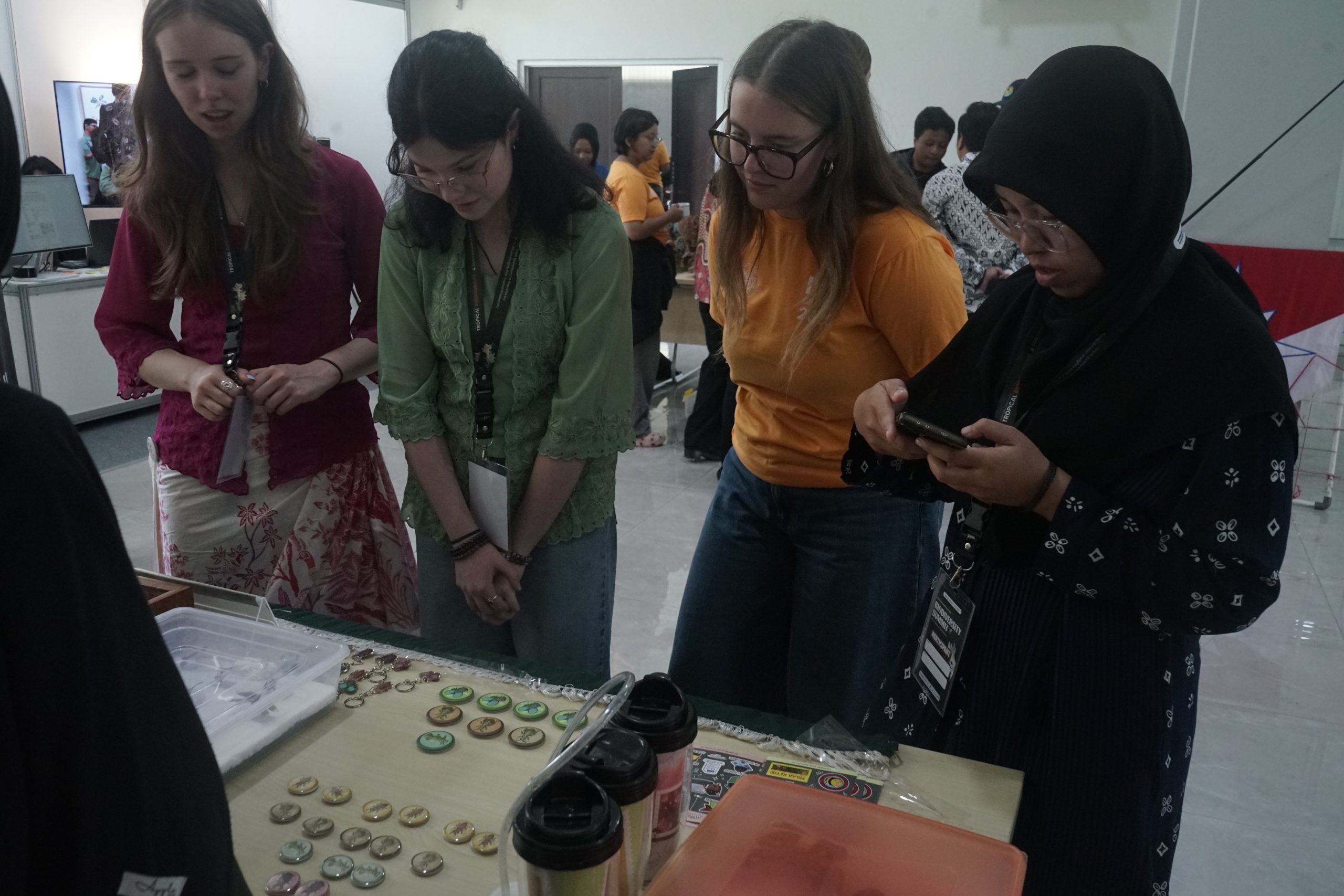
Uniquely, Layla highlighted a difference in teaching style: “I find the lecturers here are more approachable compared to my home university, and there was more engagement with the students attending the lectures.”

Falling in Love with the Culture and Warm Welcome of Yogyakarta

Layla’s first impression of Yogyakarta and UGM was one of instant adoration. She praised the beauty of the UGM campus, with its many trees and cafes perfect for studying, as well as the warmth and welcoming nature of everyone she met. The UGM Biology team was also noted for being quick to answer questions and ensuring the students had everything needed to settle in. She described Yogyakarta as a city rich in culture and history.

The local cultural experiences left a strong impression, particularly the culinary scene. Layla loved eating at local warungs and getting to know the Ibu’s (mothers) at each one, who were quick to look after her and her friends. She even has favorite dishes she called “enak banget!” (very delicious!): lotek at Jasmine Corner and nasi pecel at Warung Santai. Beyond food, she enjoyed watching dance performances and visiting the beautiful temples in the surrounding areas.

Unforgettable Moments Beyond the Classroom

When asked about an “only in Indonesia” or “only in Yogyakarta” moment, Layla mentioned the surreal feeling of sitting on the back of a Gojek at night, zooming through the streets, and reflecting on the fact that she was living in Indonesia. Another spectacular moment she recalls is seeing the lava erupt at Mount Merapi, alongside many wholesome experiences of sharing meals with local people.

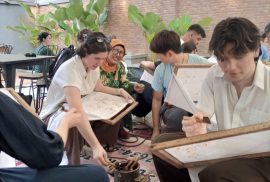
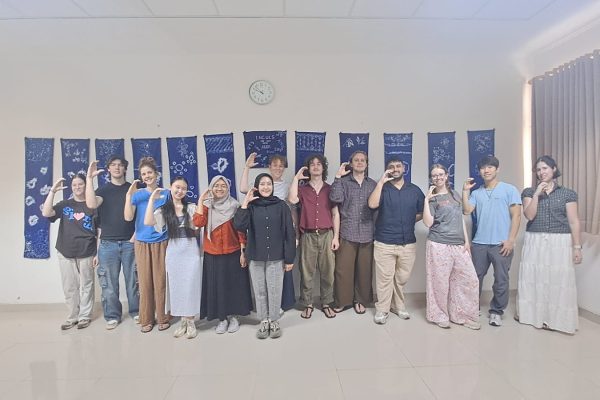
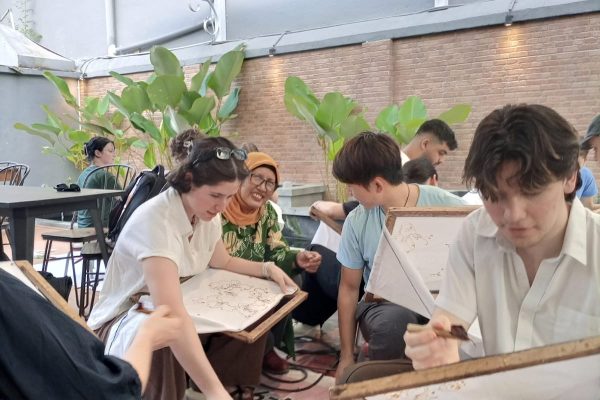
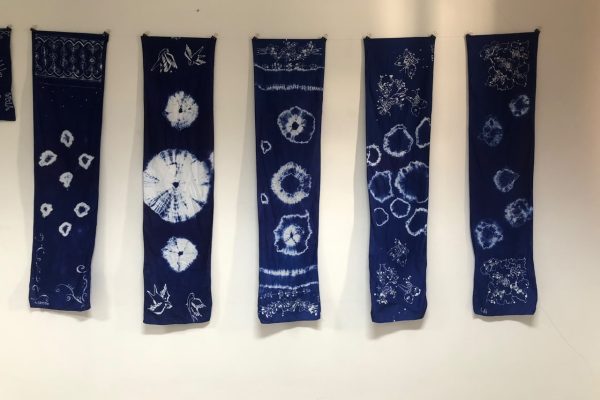
Outside of academics, Layla took the opportunity to travel extensively across Indonesia. Her trips included visiting Banda Aceh in Sumatra, seeing orangutans in Kalimantan, snorkeling at Karimunjawa, hiking at Salatiga, and witnessing the blue fire at Ijen. She also engaged in cultural activities, such as learning how to make batik and its history at Kota Gede.

Advice for Future Exchange Students

For future international students interested in the UGM exchange program, Layla offered some encouraging advice:

“Attend any social events organised by the university, and try to join some form of club. Try as much local food as you can and don’t be nervous about getting sick, it’s very aman (safe)! Make sure you say yes to any opportunity to experience or learn something new!”

Layla McKenzie summed up her entire UGM experience in three words: “Educational, memorable, and epic!”

Dissemination of Bioprospecting Development Results Highlights Sustainable Utilization of Medicinal Plants in Mount Merbabu

News Release Tuesday, 16 December 2025

Boyolali, 11–12 December 2025 — The Mount Merbabu National Park Authority (Balai Taman Nasional Gunung Merbabu) organized the Dissemination of Bioprospecting Development Results at Front One Boutique Adria, Boyolali. The event served as a platform to present research findings and scientific studies on the potential of medicinal plants in the Mount Merbabu area, supporting the sustainable utilization of biological resources.


The dissemination featured two speakers from the Faculty of Biology, Universitas Gadjah Mada (UGM): Prof. Dr. Ratna Susandarini, M.Sc. and Dr. Tri Rini Nuringtyas, S.Si., M.Sc. Participants included the Head of Mount Merbabu National Park and staff, representatives from the Environmental Agency (DLH), as well as officials from the Ministry of Environment who joined the event online via Zoom.

In her presentation, Dr. Tri Rini Nuringtyas, S.Si., M.Sc. delivered research results on phytochemical profiling and evaluation of product development potential based on Centella asiatica and Selaginella. The study highlighted the presence of bioactive compounds and the prospects for developing value-added products derived from local biodiversity.

Meanwhile, Prof. Dr. Ratna Susandarini, M.Sc. presented the results of an ethnobotanical study conducted as a scientific basis for the preparation of the Medicinal Plants of Mount Merbabu book. This research documents local knowledge related to the use of medicinal plants while contributing to the preservation of traditional knowledge in harmony with conservation efforts within the national park.

Overall, ethnobotanical and bioprospecting research on plants in Mount Merbabu provides an important scientific foundation for sustainable resource utilization and plant conservation. This activity also represents the outcome of a long-standing collaboration between the Faculty of Biology UGM and the Mount Merbabu National Park Authority in research, conservation, and biodiversity utilization. The initiative aligns with the Sustainable Development Goals (SDGs), particularly SDG 3 (Good Health and Well-being) through the development of medicinal plant potential, SDG 15 (Life on Land) through biodiversity conservation efforts, and SDG 17 (Partnerships for the Goals) through strengthened institutional collaboration.

Faculty of Biology UGM Strengthens International Collaboration with University of Brunei Darussalam, Supported by the Indonesian Embassy in Brunei Darussalam

CooperationNews Release Thursday, 11 December 2025

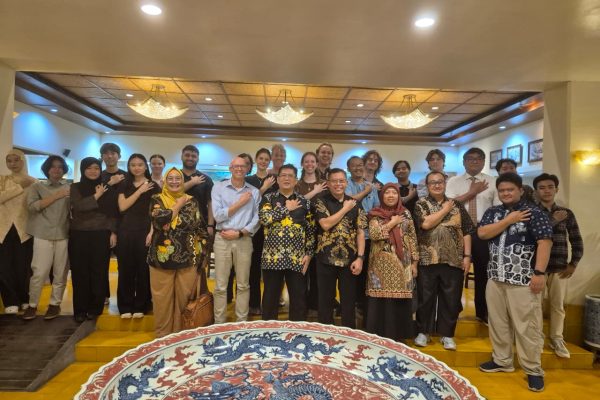
Brunei Darussalam, 9 December 2025 — The Faculty of Biology at Universitas Gadjah Mada (UGM) continues to expand its international collaboration network through a strategic partnership with the University of Brunei Darussalam (UBD), carried out with full support from the Embassy of the Republic of Indonesia (KBRI) in Brunei Darussalam. The meeting was attended by a delegation from the Faculty of Biology UGM led by the Dean, Prof. Dr. Budi Setiadi Daryono, M.Agr.Sc., accompanied by Dr. Bambang Retnoaji, M.Sc., Vice Dean for Academic and Student Affairs, and Dr. Slamet Widiyanto, M.Sc., Vice Dean for Finance, Assets, and Human Resources. The UGM delegation was warmly welcomed by the Indonesian Deputy Ambassador to Brunei Darussalam, Roos Diana Iskandar, as well as Agus Buana, Coordinator for Social and Cultural Affairs at KBRI. Meanwhile, the meeting with UBD was received by the Dean of the Faculty of Science, Lim Lee Hoon, Ph.D.; Faizah Metali, Ph.D., Programme Leader for Environmental & Life Sciences; and Dr. Ulmar Grafe from the Department of Environmental Life Sciences.


This collaboration initiative builds on the success of the 2024 student exchange program, through which the Faculty of Biology UGM hosted a student from UBD’s Faculty of Science, Nurjanah Amalia Munaf, for academic activities at UGM. During the recent meeting, both institutions agreed to strengthen cooperation in three key areas: first, the development of a two-way student exchange program between the Department of Environmental Life Sciences, Faculty of Science UBD, and the Faculty of Biology UGM; second, the implementation of joint supervision for undergraduate and master’s students from both universities; and third, the preparation of joint publications resulting from collaborative research conducted under the joint supervision scheme.

Both UGM and UBD share a strong commitment to ensuring that this collaboration opens wider opportunities for knowledge exchange, enhances research quality, and strengthens academic capacity in the life sciences. The partnership also represents a concrete contribution by both institutions toward advancing the Sustainable Development Goals (SDGs), particularly SDG 4 (Quality Education), SDG 15 (Life on Land), and SDG 17 (Partnerships for the Goals), through high-quality education, biodiversity conservation efforts, and sustainable global collaboration. With increasingly close synergy, this partnership is expected to become an important step toward more inclusive and impactful biological research and education across the Southeast Asian region.

Preserving Indonesia’s Spice Heritage: INUCoST Team of the Faculty of Biology UGM Holds Herbarium-Making Workshop with Leiden Experts and Industry Practitioners

CooperationNews Release Thursday, 4 December 2025

Yogyakarta, 3 December 2025 — The INUCoST (Indonesian-Netherlands Universities Consortium for Sustainable Futures) Team of the Faculty of Biology, Universitas Gadjah Mada (UGM), successfully held a training program titled “Hands-on Workshop: How to Make Herbarium and Identification of Nusantara Spices” on Saturday (29/11). Taking place at the Tropical Biology Auditorium, the event served as a strategic platform to promote biodiversity conservation while exploring the immense potential of Indonesia’s rich spice heritage.


The workshop was officially opened by the Dean of the Faculty of Biology UGM, Prof. Dr. Budi Setiadi Daryono, M.Agr.Sc., who also serves as the Coordinator of Work Package 2 of the INUCoST Team. In his remarks, Prof. Budi emphasized the importance of synergy between botanical sciences and industry needs to ensure the sustainability of Indonesia’s natural resources.

A key highlight of this event was the unique collaboration between international academic expertise and local industry practitioners. Serving as speakers were Prof. Dr. rer.nat. P.J.A. Kessler from Hortus Botanicus, IBL Plant Science – Institute of Biology Leiden, the Netherlands, and Asri Saraswati Iskandar, Founder of Agradaya, a social enterprise focused on the sustainable development of spices in Yogyakarta.

In the first session, Asri Saraswati Iskandar shared insights on spices from an industry perspective. She discussed the economic value and vast market potential of Indonesian spices in today’s global landscape, providing a clear picture of how biological commodities can be managed professionally while generating social impact.

The next session focused on more scientific and technical aspects with Prof. Kessler. Participants were introduced not only to plant identification theory but also engaged in hands-on herbarium preparation techniques using Nusantara spice specimens. Prof. Kessler underscored that standardized herbarium preparation is essential as a foundational taxonomic database and a valid reference for future botanical research.

This activity also aligns with several Sustainable Development Goals (SDGs), specifically SDG 4 (Quality Education), SDG 15 (Life on Land), and SDG 17 (Partnerships for the Goals). Through knowledge transfer from international experts and collaboration with industry partners, the Faculty of Biology UGM aims to strengthen human resource capacity in biodiversity conservation while fostering inclusive and sustainable global partnerships.

The enthusiasm of participants was evident from the highly interactive discussions throughout the event. By combining technical herbarium-making skills with industry perspectives, the workshop is expected to equip participants with comprehensive knowledge, empowering them to contribute to the preservation and innovative utilization of Indonesia’s spice biodiversity.

Synergy Between the Faculty of Biology UGM, KOBI, YIBI, and WWF in Strengthening National Biodiversity Research

CooperationNews Release Monday, 24 November 2025

Yogyakarta, 21 November 2025 — The Faculty of Biology, Universitas Gadjah Mada (UGM), welcomed a visit from the Indonesian Biodiversity Indicator Foundation (YIBI) together with World Wildlife Fund (WWF) Indonesia. The visit marked the official initiation of a collaborative partnership between the Faculty of Biology UGM and the Indonesian Biology Consortium (KOBI) with YIBI.


Held in the KPTU Meeting Room of the Faculty of Biology UGM, the meeting was attended by Prof. Ir. Ign. Pramana Yuda, M.Si., Ph.D., Chair of YIBI; Barano Siswa Sulistyawan, Ph.D., Vice Chair of YIBI (joining online); Prof. Dr. Jarulis, S.Si., M.Si., Secretary of YIBI; and Paskalina Th. Litaay, M.Sc., Treasurer of YIBI. Representing WWF Indonesia were Muhammad Ali Imron, Director of Forest & Wildlife WWF Indonesia, and Oki Hadian Hadadi. Also present were Saufina Athaya Putri Nugraha, S.PWK and R.A. Callysta Sevanda Calyacetta from YIBI, serving as Administrative Support and Data Statistics officers. The delegation was welcomed by Prof. Dr. Budi Setiadi Daryono, M.Agr.Sc., Dean of the Faculty of Biology UGM and Chair of KOBI, accompanied by Prof. Dr. Suwarno Hadisusanto, Advisor of KOBI, and Dr. Eko Agus Suyono, M.App.Sc., Vice Dean for Research, Community Service, Collaboration, and Alumni Affairs of the Faculty of Biology UGM.

Opening the discussion, Prof. Pramana Yuda expressed his strong support for the upcoming collaboration between YIBI and the Faculty of Biology UGM. Dean Prof. Budi likewise affirmed the Faculty’s commitment to advancing this partnership. Through this collaboration, YIBI, KOBI, WWF Indonesia, and the Faculty of Biology UGM aim to jointly develop the Indonesian Biodiversity Index (IBI), with a focus on enriching primary data sources, strengthening researcher collaboration, and expanding biodiversity research efforts across various regions in Indonesia.

WWF Indonesia Director Ali Imron emphasized that the IBI is expected to become a key instrument and an indicator capable of guiding national sustainable development initiatives.

The event continued with the official signing of cooperation agreements between YIBI and the Faculty of Biology UGM, as well as between YIBI and KOBI. Through this formalization, all parties hope to build a stronger collaborative ecosystem for monitoring, managing, and conserving Indonesia’s biodiversity, ensuring that research findings and generated data can be utilized to support policymaking, education, and ecosystem restoration in the future.

As a commitment to sustainable development, this collaboration also supports the achievement of several Sustainable Development Goals (SDGs), particularly SDG 13 (Climate Action), SDG 14 (Life Below Water), and SDG 15 (Life on Land). Moreover, it aligns with SDG 17 (Partnerships for the Goals) by strengthening synergy among academia, conservation organizations, and national institutions in safeguarding biodiversity as a foundation for the nation’s long-term prosperity.

Dr. Axel Dalberg Poulsen Discusses the Diversity of Zingiberaceae in Borneo during a Guest Lecture at the Faculty of Biology UGM

CooperationNews Release Wednesday, 12 November 2025

Yogyakarta, 30 October 2025 — The Faculty of Biology, Universitas Gadjah Mada (UGM), hosted a Guest Lecture featuring Dr. Axel Dalberg Poulsen from the Royal Botanic Garden Edinburgh, presenting an engaging topic titled “How Many Gingers Are in Borneo?” The event took place at the Tropical Biology Auditorium and was attended by lecturers and students of the Faculty of Biology UGM.


The lecture began with opening remarks from Prof. Dr. Budi Setiadi Daryono, M.Agr.Sc., Dean of the Faculty of Biology UGM, who expressed his appreciation for Dr. Axel’s visit. In his speech, Prof. Budi conveyed his hope that this event would serve as a gateway for further collaboration in research and academic exchange between the Faculty of Biology UGM and the Royal Botanic Garden Edinburgh.

In his lecture, Dr. Axel presented an overview of the Zingiberaceae family (gingers), which consists of around 2,000 species worldwide. On the island of Borneo alone, there are approximately 24 genera and 260 species. However, these numbers remain dynamic, as new species continue to be discovered and taxonomic classifications are periodically revised. Dr. Axel introduced several ginger species that he and his colleagues have encountered throughout the island of Borneo (Kalimantan).

He also highlighted the challenges in ginger research, including difficulties in collecting field samples, limited access to type localities, and constraints in molecular studies. Additionally, many older specimens have deteriorated and can no longer be used, necessitating recollection from their original locations.

Dr. Axel encouraged students to actively participate and collaborate in plant biodiversity research in Indonesia, particularly within the Zingiberaceae family. The session was met with great enthusiasm from students, who engaged actively during the interactive and inspiring discussion and Q&A.

This guest lecture not only provided valuable insight and inspiration for students but also reflected the Faculty of Biology UGM’s commitment to the Sustainable Development Goals (SDGs)—particularly SDG 15: Life on Land, through enhancing understanding and conservation of biodiversity, and SDG 17: Partnerships for the Goals, by fostering international collaboration in tropical biodiversity research.

Faculty of Biology UGM Establishes Academic Collaboration with National Changhua University of Education (NCUE), Taiwan: Double Degree and Student Exchange Programs

CooperationNews Release Saturday, 8 November 2025

Changhua, Taiwan, 6 November 2025 — The Faculty of Biology, Universitas Gadjah Mada (UGM), conducted an official visit and academic collaboration exploration with the National Changhua University of Education (NCUE), Taiwan, aimed at strengthening international partnerships in education, research, and student mobility. The delegation from the Faculty of Biology UGM was led by Prof. Dr. Budi Setiadi Daryono, M.Agr.Sc., Dean of the Faculty of Biology, accompanied by Prof. Dr. Bambang Retnoaji, M.Sc., Vice Dean for Academic and Student Affairs. Also joining the delegation were representatives from other faculties, including Prof. Roto, Ph.D., Vice Dean for Academic and Student Affairs of the Faculty of Mathematics and Natural Sciences (MIPA), Dr. Erliss Sulistyarini, Vice Dean for Academic and Student Affairs of the Faculty of Geography accompanied by Dr. Andung Bayu Sekti, and Arif Misbahul, Director of the Taiwan Center UGM.


The NCUE representatives included several key officials: Prof. Chi-Yen Huang, Ph.D., Dean of the College of Science and Director of the Center for Science Education; Prof. Yeong-Lin Lai, Ph.D., Dean of the College of Engineering; Prof. Shih-Feng Fu, Ph.D., Department of Biology; Prof. Hon-Man Lee, Ph.D., Dean of the Office of International and Cross-Strait Affairs; Associate Prof. Yang, Wen-Ren, Ph.D.; Assistant Prof. Chien-Sing Lee; Hsiu-Gui Chang, Division Head of International and Cross-Strait Affairs; and Yu-Yen Lee, Coordinator of the Office of International and Cross-Strait Affairs.

The formal meeting commenced at 10:00 a.m. Taiwan time and began with presentations from both deans. During his presentation, Dean of the Faculty of Biology UGM, Prof. Budi Setiadi Daryono, introduced the Faculty’s profile and shared potential collaboration opportunities in biodiversity, conservation, and other areas of biological sciences. The main agenda of the meeting included the signing of an academic cooperation agreement between the two institutions, focusing on the development of Student Exchange, Double Degree, Co-supervision, and Fast Track programs. This collaboration is expected to enhance academic mobility opportunities for students and lecturers, as well as strengthen cross-border collaborative research.

In addition, NCUE offered scholarship quotas for up to 48 students Faculty of Biology UGM to participate in student exchange and industrial internship programs in Taiwan. The program also provides opportunities for graduates to work directly in Taiwan under an initial two-year contract, with the possibility of extension. Prospective students are expected to have a minimum Mandarin proficiency of A2 level as a participation requirement.

Following the meeting at NCUE, the Faculty of Biology UGM delegation also made an official courtesy visit to Asia University, Taiwan, where they were warmly received by Prof. Chi-Liang Yu, Vice Dean of the Office of International Affairs, and Jeanie Mao from the same office. The discussion focused on exploring further opportunities for joint research and academic staff exchange programs.

This visit marks a significant step for the Faculty of Biology UGM in expanding its international network, enhancing global competitiveness, and providing students with broader academic and professional experiences on the international stage. The initiative also aligns with the Faculty’s commitment to supporting the Sustainable Development Goals (SDGs), particularly SDG 4 (Quality Education), SDG 17 (Partnerships for the Goals), and SDG 15 (Life on Land), through advancing biological education, fostering global collaboration, and promoting biodiversity conservation.

Faculty of Biology UGM Expands International Network through Academic Collaboration with DaYeh University, Taiwan

CooperationNews Release Saturday, 8 November 2025

Changhua, Taiwan, November 6, 2025 — As part of its ongoing commitment to strengthening global engagement and enhancing academic excellence, the Faculty of Biology, Universitas Gadjah Mada (UGM), conducted an official visit to DaYeh University, located at No.168, University Rd., Dacun, Changhua 515006, Taiwan (R.O.C.). The visit aimed to broaden international collaboration in education, research, and student mobility through various strategic programs.


The delegation from the Faculty of Biology UGM was led by Prof. Dr. Budi Setiadi Daryono, M.Agr.Sc., Dean of the Faculty of Biology, accompanied by Prof. Dr. Bambang Retnoaji, M.Sc., Vice Dean for Academic and Student Affairs. The delegation also included representatives from other faculties: Prof. Roto, Ph.D., Vice Dean for Academic and Student Affairs of the Faculty of Mathematics and Natural Sciences (MIPA); Dr. Erliss Sulistyarini, Vice Dean for Academic and Student Affairs of the Faculty of Geography; Dr. Andung Bayu Sekti; and Arif Misbahul, Director of the Taiwan Center UGM.

DaYeh University was represented by several university leaders, including Prof. Dr.-Ing. Shih-Jen Yeh, Vice President of DaYeh University; Prof. Yi-Ching Chen, Ph.D., Department of Engineering; Prof. Yi-Lin Chen, Ph.D., Department of Environmental and Safety Engineering; Prof. Daniel Yuen-The Liu, Vice Dean, Office of Foreign Affairs; and Asst. Prof. Wen-Kuang Hsu, Ph.D., Department of Medicinal Botanical and Food on Health Applications.

The meeting began with institutional profile presentations from both universities. In his presentation, Prof. Budi Setiadi Daryono highlighted the achievements and vision of the Faculty of Biology UGM in tropical biology research and education, as well as potential areas of collaboration in biodiversity, conservation, biotechnology, and biomedicine. The main discussion focused on developing joint programs such as Double Degree, Student Exchange, Co-supervision, and Fast Track schemes, followed by a tour of Dayeh University’s laboratory facilities. Both institutions also explored potential collaborative research in biomedical sciences—particularly studies on lung and ovarian cancer—as well as research in food and nutritional sciences and environmental sciences. Further discussions included projects involving zebrafish as a model organism and the development of plant tissue culture for various commodities such as roses, strawberries, and bananas.

As part of the collaboration initiative, DaYeh University offered scholarship opportunities for up to 20 students from the Faculty of Biology UGM to participate in Double Degree programs in biomedical and environmental sciences. This program provides students with valuable international academic experience and the opportunity to build professional networks in Taiwan.

This visit marks a strategic step for the Faculty of Biology UGM in expanding international partnerships, strengthening collaborative research capacity, and supporting the university’s mission of advancing higher education internationalization and global competitiveness. The initiative also aligns with the Faculty’s commitment to the United Nations Sustainable Development Goals (SDGs), particularly SDG 4 (Quality Education), SDG 9 (Industry, Innovation, and Infrastructure), SDG 15 (Life on Land), and SDG 17 (Partnerships for the Goals), through efforts to enhance the quality of biological education, promote innovative cross-disciplinary research, foster global collaboration, and contribute to biodiversity conservation and sustainable scientific development.

Profile of International Genetically Engineered Machine (iGEM) UGM 2025 Team: Winners ofthe International Synthetic Biology Competition in Paris, France

AchivementsNews Release Friday, 7 November 2025

Yogyakarta, Indonesia — The International Genetically Engineered Machine (iGEM) UGM 2025Team represents Universitas Gadjah Mada in the annual international synthetic biologycompetition held in Paris, France. The UGM iGEM Team was first established in 2021 and hascontinued to grow ever since. In 2025, the team is were supported by Anandita Amalia (Biology),Salma Rohmaniah (Biology), Erwinda Dwi Chofifah (Biology), Tsaqifa Zuhayra Emery Bagus(Biology), Nauval Rajwaa Raysendria (Biology), Geraldine Yara Amritarashmi (Biology), TanRendy (Biology), Shainna Nur Sharfina (Biology), and Pamastadewi Pryankha Hijrianto(Biology) in collaboration with 11 other people from faculty of Medicine, Faculty of Pharmacy,Faculty of Biology, Faculty of Mathematics and Natural Science, and Faculty of Agriculture.


Despite their impressive gold medal win at the iGEM Grand Jamboree 2025, the team’s journeyhas been long and full of milestones since 2024. That year, the UGM iGEM Team participated inthe Bioinformatics and Synthetic Biology Competition (BIOS) 2024, organized by synbio.id.They entered two sub-teams — Team Phytovac and Team Gamanthrax — both of whichachieved remarkable success. Team Phytovac won Best Presentation, Best Website, and theGrand Prize Winner, while Team Gamanthrax earned the Best Poster award. Both teams proudlybrought home gold medals, reflecting their dedication, teamwork, and perseverance.

Not stopping at the national level, the UGM iGEM Team also competed in the Global OpenGenetic Engineering Competition (GOGEC) 2025, an international synthetic biologycompetition. At GOGEC, the team won several distinctions, including Runner-Up for BestWritten Communication and Best Project Value, and took home the title of Best ComputationalProject.

Their molecular farming research to produce a Dengue vaccine was thoroughly documented andtransformed into a science dissemination video, earning the team a digital learning contentdevelopment grant in 2025. The proposed video, titled “Tobacco, the Heritage of theArchipelago: From Cultural Rituals to Dengue Vaccine Innovation”, was led by apt. SetyowatiTriastuti Utami, Ph.D. from the Faculty of Pharmacy, Universitas Gadjah Mada.

With all the achievements they’ve accomplished, the UGM iGEM 2025 Team stands as a symbolof passion and creativity in advancing synthetic biology. The team hopes that their innovationscan be applied widely and inclusively across Indonesia, creating a meaningful impact andcontributing to the advancement of science and prosperity of Indonesia.

Universitas Gadjah Mada Team Wins Gold Medal at iGEM 2025 Grand Jamboree

Community ServiceNews Release Friday, 7 November 2025

Yogyakarta, Indonesia — The UGM-Indonesia iGEM 2025 team announced it has won a GoldMedal in the Biomanufacturing Village at iGEM Grand Jamboree held at the Paris ConventionCentre (Porte de Versailles), France.
UGM-Indonesia’s 2025 project advances low-cost biomanufacturing of a DENV-2 Domain IIIsubunit vaccine in Nicotiana tabacum (tobacco). The team’s approach leverages salt-inducibleTYDV Rep/RepA expression systems to drive efficient protein production in plants. This effort isan avenue that could make dengue vaccination more accessible across resource-limited settings.The team’s project focuses on an everyday problem with big impact: making dengue protectionmore affordable and easier to produce. In simple terms, the students are exploring how commonplants can act like tiny factories. If successful, this approach could help lower costs and makeaccess to protection more equitable.


This achievement matters for Indonesia and beyond. Dengue affects ma

ny families every year,and solutions that are practical, safe, and scalable can strengthen public health. The UGMstudents showed how young innovators from Indonesia can contribute ideas that make a realdifference on the global stage.

The project nickname SALTY, or Salt Activated with TYDV, were supported by AnanditaAmalia (Biology), Salma Rohmaniah (Biology), Erwinda Dwi Chofifah (Biology), TsaqifaZuhayra Emery Bagus (Biology), Nauval Rajwaa Raysendria (Biology), Geraldine YaraAmritarashmi (Biology), Tan Rendy (Biology), Shainna Nur Sharfina (Biology), andPamastadewi Pryankha Hijrianto (Biology) in collaboration with 11 other people from faculty ofMedicine, Faculty of Pharmacy, Faculty of Biology, Faculty of Mathematics and Natural Science,and also Faculty of Agriculture.

This project was supported by 15 advisors, coordinated by Dr. Yekti Asih Purwestri, M.Si.(Biology), assisted by Widhi Dyah Sawitri, S.Si., M.Agr., Ph.D. (Agriculture), M. SaifurRohman, M.Eng., Ph.D. (Agriculture), apt. Setyowati Triastuti Utami, Ph.D. (Pharmacy), DewiKartikawati Paramita, S.Si., M.Si., Ph.D. (Medicine), Prof. dr. Tri Baskoro Tunggul Satoto,M.Sc., Ph.D. (Medicine), Dr.rer.nat. Abdul R. Siregar, S.Si., M.Biotech (Biology), IndraLesmana, S.Si., M.Sc. (Biology), Afif Pranaya Jati, S.P., M.Sc. (Biotechnology), Aries BagusSasongko, S.Si., M.Biotech. (Biology), Imam Bagus N., S.Si., M.Sc. (Agrotechnology), OliviaPangaribuan, S.Agr (Master Student in Agriculture), Nayaka Bagus W. A. H., S. Ked. (Alumni ofFaculty of Medicine), apt. I Made Rhamandana Putra, S. Farm (Alumni of Faculty of Pharmacy),and Adhityo W., M.Sc., Ph.D. (GSI).

The fund of this project was supported by Universitas Gadjah Mada, Panin Bank, YSDS,Rentokil, CropLife Indonesia, Forsains Edutech Indonesia, SnapGene, GSI Academy, IGF, PT.Indolab Utama, Merck, and ScienceWerke.
1234…19

Accreditation

Recent Posts

  • Sakura Science Program 2026: Strengthening Molecular Biology Skills through Intensive Laboratory Training at Yamagata University
  • BIOENTRI 2026: Open House dan Pengenalan Topik Riset Fakultas Biologi UGM Sparks Strong Academic Interest
  • Sakura Science Program 2026: 18 Members of UGM Faculty of Biology Participate in Academic Program at Yamagata University, Japan
  • An Educational Field Trip on Histology and Animal Anatomy for SMPIT Muhammadiyah An Najah Klaten Students at the Faculty of Biology, UGM
  • Faculty of Biology UGM Strengthens International Collaboration through Strategic Visit to Bard University, Egypt
Universitas Gadjah Mada

UNIVERSITAS GADJAH MADA

FACULTY OF BIOLOGY
Teknika Selatan Street, Sekip Utara,
Yogyakarta 55281
biologi-ugm@ugm.ac.id
Phone/Fax: +62 (274) 580839

About us

  • History
  • Organization
  • Vision and Mission
  • Staff

Student Affairs

  • Student Service
  • Student Organization
  • Submission for Practical Field Work
  • Permission Field Research
  • Permission Thesis/Disertation

academic

  • Academic Regulations
  • Academic Anonncement

Accreditation

  • Image 1
  • Image 2
  • Image 3

© 2024 FACULTY OF BIOLOGY UNIVERSITAS GADJAH MADA

KEBIJAKAN PRIVASI/PRIVACY POLICY

[EN] We use cookies to help our viewer get the best experience on our website. -- [ID] Kami menggunakan cookie untuk membantu pengunjung kami mendapatkan pengalaman terbaik di situs web kami.I Agree / Saya Setuju