Arsip:
SDGs
Yogyakarta, August 21, 2024 – The Faculty of Biology at Universitas Gadjah Mada (UGM) is honored to host Kantaro Okada, an exchange student from Japan whose academic journey reflects a deep commitment to environmental sustainability and global learning. Kantaro’s background in International Relations and his passion for environmental science have motivated him to participate in the student exchange program at UGM, where he is currently pursuing studies in Biology and Environmental Science.
Kantaro recognizes the challenges that come with living in Yogyakarta, including language barriers and cultural differences. However, he views these challenges as opportunities for growth, which have made him more open-minded and eager to learn. His ability to adapt and embrace a new environment is a testament to the resilience often seen in exchange students.
Supported by his family, Kantaro expressed gratitude for the unwavering encouragement from his father, mother, and younger brother. Their support has been instrumental in his decision to pursue studies abroad, reinforcing the importance of family in educational endeavors.
Kantaro’s hobbies, including watching Western movies and dramas and listening to Western music, have not only provided leisure but have also enhanced his English language skills. These interests have contributed to his broader understanding of different cultures, aiding his adjustment to life in Yogyakarta.
What sets Kantaro apart is his unconventional academic path. Despite majoring in International Relations in Toyo University Japan, his decision to join the Faculty of Biology at UGM is driven by a personal mission to combat deforestation. His father owns a furniture shop that uses Indonesian trees, which has made Kantaro acutely aware of the environmental impact of deforestation. Determined to contribute to nature conservation, Kantaro is pursuing biology to gain a deeper understanding of natural systems and explore sustainable practices.
During his time at UGM, Kantaro has expressed a particular interest in courses on Plant Biosystematics and Plant Structure and Secretory Tissue Products. He aims to gain a comprehensive understanding of biological sciences from a global perspective, which will enable him to make informed decisions that align with environmental sustainability.
Kantaro Okada’s academic journey at UGM aligns with several of the United Nations Sustainable Development Goals (SDGs), particularly:
Kantaro’s dedication to education and environmental conservation serves as an inspiration to his peers and underscores the critical role that international exchange programs play in advancing the SDGs. His journey highlights the importance of global learning and interdisciplinary approaches in addressing pressing environmental challenges.
On August 13, 2024, the Faculty of Biology UGM held a training on PCR technique at the Teaching Laboratory in Building B of the Faculty of Biology. It was attended by 30 participants and aimed to enhance their basic literacy skills in molecular biology while providing essential knowledge of modern technologies in the field. This initiative aligns with the Sustainable Development Goals (SDGs), promoting quality education and ensuring access to fundamental services in scientific training.
The event opened by Mulyanto S.T., M.M., Head of the Administration Office of the Faculty of Biology UGM and committee chair. In his opening remarks, Mulyanto emphasized the importance of this training to enhance technical skills and research within the Faculty of Biology, which would advance the quality of laboratory facilities and support research services for faculty and students.
The training featured speakers Dr. Dwi Sendi Priyono, S.Si., M.Si., a lecturer at the Faculty of Biology UGM, and apt. Ign. Adi Kurniawan, M.Farm., Director of PT Kairos Jaya Sejahtera. They shared insights on the fundamental principles of PCR, a crucial technique in genetic research and diagnostics. The training included theoretical and practical sessions on operating PCR machines, optimizing reaction conditions, and effectively analyzing results. This hands-on experience intended to equip laboratory technicians with the skills to stay at the forefront of biotechnology and health advancements while improving the technical competencies needed for diverse research activities.
This training represents a significant step toward enhancing basic literacy skills and education in biotechnology, aligning with the commitment of the Faculty of Biology to provide skilled laboratory technicians ready to face future challenges. The event ran smoothly for a day and was followed by independent work assignments at each participant’s laboratory.
On August 13, 2024, the Faculty of Biology UGM held a training on PCR technique at the Teaching Laboratory in Building B of the Faculty of Biology. It was attended by 30 participants and aimed to enhance their basic literacy skills in molecular biology while providing essential knowledge of modern technologies in the field. This initiative aligns with the Sustainable Development Goals (SDGs), promoting quality education and ensuring access to fundamental services in scientific training.
The event opened by Mulyanto S.T., M.M., Head of the Administration Office of the Faculty of Biology UGM and committee chair. In his opening remarks, Mulyanto emphasized the importance of this training to enhance technical skills and research within the Faculty of Biology, which would advance the quality of laboratory facilities and support research services for faculty and students.
The training featured speakers Dr. Dwi Sendi Priyono, S.Si., M.Si., a lecturer at the Faculty of Biology UGM, and apt. Ign. Adi Kurniawan, M.Farm., Director of PT Kairos Jaya Sejahtera. They shared insights on the fundamental principles of PCR, a crucial technique in genetic research and diagnostics. The training included theoretical and practical sessions on operating PCR machines, optimizing reaction conditions, and effectively analyzing results. This hands-on experience intended to equip laboratory technicians with the skills to stay at the forefront of biotechnology and health advancements while improving the technical competencies needed for diverse research activities.
This training represents a significant step toward enhancing basic literacy skills and education in biotechnology, aligning with the commitment of the Faculty of Biology to provide skilled laboratory technicians ready to face future challenges. The event ran smoothly for a day and was followed by independent work assignments at each participant’s laboratory.
A student from the Faculty of Biology Universitas Gadjah Mada, Ronald Wihan Pradana (Biology 2021), has achieved a remarkable achievement by winning a Gold Medal at the Nusantara Science Olympiad (OSN). The 2024 OSN, organized by the PRESMANIA Foundation (Prestasi Maju Indonesia), is a prestigious national competition that saw participation from 1,000 students representing 100 universities across Indonesia.
Ronald’s success is a testament to the rigorous preparation and innovative approach he brought to the competition, which impressed the judges and brought great honor to his alma mater. His victory was attributed to the unwavering support of his mentors, faculty, and university. “This accomplishment proves that our students possess exceptional qualities and can compete at national and international levels” Prof. Dr. Budi Setiadi Daryono, M.Agr.Sc., Dean of the Faculty of Biology UGM stated.
Ronald began his preparation in January 2024, guided by Dwi Umi Siswanti, S.Si., M.Sc. He conducted in-depth research on “Biofertilizer as a Bioremediation Agent for Zinc (Zn) Residue in Chili Plant (Capsicum Annuum L.) Fields Post-Application of Inorganic Fungicides on a Field Scale.” In addition to his research, Ronald participated in various training sessions and seminars to enhance his skills.
“The journey to OSN was not easy. I faced difficulties in understanding some complex topics in biology, a fundamental and highly intricate science that encompasses multiple aspects, including humans, plants, animals, the environment, microbiology, and more. However, with the support of my friends and lecturers, I was able to overcome these challenges,” Ronald shared.
[Author: Ronald Wihan Pradana]
Yogyakarta – Dr. Dwi Sendi Priyono, a lecturer from the Faculty of Biology at Universitas Gadjah Mada (UGM), has made a significant contribution by becoming the first and only full member from Indonesia in the Society for Wildlife Forensic Science (SWFS). SWFS is an international organization dedicated to supporting and promoting wildlife forensic science and providing competency certification for wildlife forensic scientists. Dr. Sendi is also certified in Wildlife Forensic Testing (https://www.wildlifeforensicscience.org/swfs-membership-2/?paged=22).
Indonesia is known for its rich biodiversity, unfortunately it faces serious challenges in wildlife crime. The absence of a full member from Indonesia in SWFS was previously a concern, given the urgency in addressing wildlife crime cases that frequently occur in the country. Dr. Dwi Sendi Priyono, who also serves as the Head of the Animal Systematics Laboratory in the Tropical Biology Department at UGM, has significantly contributed to various wildlife forensic cases in Indonesia. He has assisted in forensic DNA testing in multiple cases, including suspected illegal trade of rare animal body parts such as tigers, elephants, orangutans, and Komodo dragons. Among his notable contributions are DNA testing on suspected dugong bones by the Indonesian Navy’s Main Base, DNA testing of Komodo dragon samples by the East Java Regional Police, and training on wildlife DNA forensics held in various locations across Indonesia.
Dr. Dwi Sendi Priyono’s achievement as a full member of SWFS is also highly relevant to the efforts towards achieving the Sustainable Development Goals (SDGs), particularly Goal 15, “Protect, Restore, and Promote Sustainable Use of Terrestrial Ecosystems.” His expertise in wildlife forensics supports the conservation of endangered species and the prevention of wildlife crimes, which are crucial elements for global biodiversity conservation.
It hoped that this accomplishment will pave the way for more scientists from Indonesia to participate in international organizations like SWFS and enhance collective efforts to combat wildlife crime at both the national and global levels.
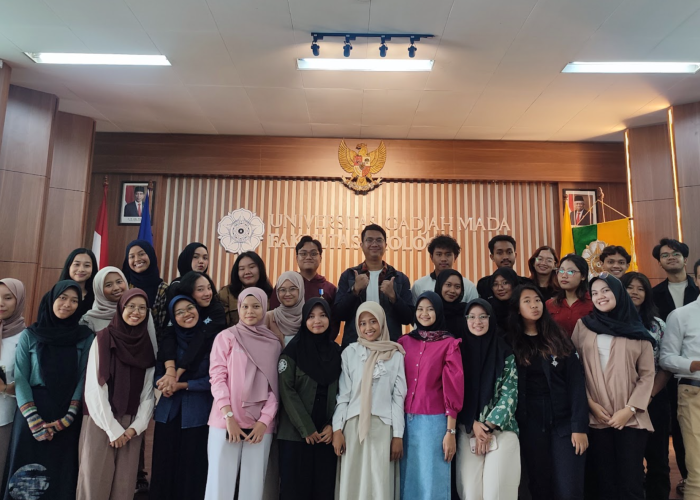
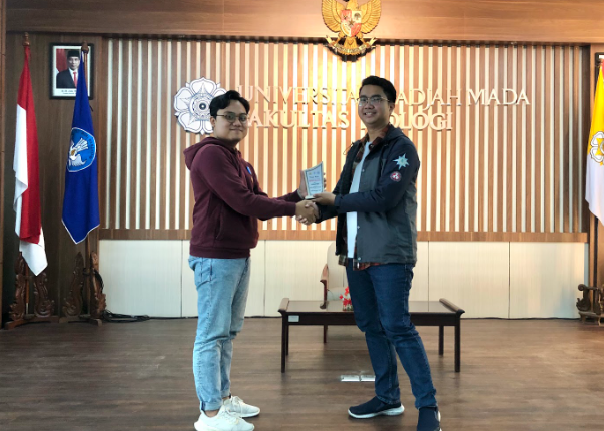
Yogyakarta, August 12, 2024 – The Faculty of Biology at Universitas Gadjah Mada (UGM) warmly welcomed student exchange participants for the 2024 odd semester in a ceremony held today. This year, the Faculty is hosting 6 students from Universiti Tun Hussein Onn Malaysia (UTHM), 1 student Universitas Brunei Darussalam, and 1 student Toyo University, Japan. The event underscores UGM’s commitment to fostering international academic collaboration and cultural exchange.
The event was attended by esteemed faculty members, including the Dean, Prof. Dr. Budi Setiadi Daryono, M.Agr., Sc., Vice Dean for Academic and Student Affairs, Dr. Bambang Retnoaji, M.Sc., and Vice Dean for Cooperation, Research, Community Service, and Alumni, Dr. Eko Agus Suyono, M.App., Sc. The presence of these key figures highlighted the significance of the student exchange program in enhancing academic excellence and promoting cross-cultural understanding.
In his opening remarks, Dean Prof. Dr. Budi Setiadi Daryono expressed his enthusiasm for the program, emphasizing that these exchanges are vital for broadening students’ horizons and equipping them with the global competencies necessary for their future careers. He also stressed the importance of such programs in contributing to the achievement of the Sustainable Development Goals (SDGs), particularly in the areas of Quality Education (SDG 4), Reduced Inequalities (SDG 10), and Partnerships for the Goals (SDG 17).
Vice Dean Dr. Bambang Retnoaji highlighted the academic benefits of the exchange program, which allows students to gain unique insights into tropical biodiversity, conservation efforts, and sustainable development practices in Indonesia. Meanwhile, Dr. Eko Agus Suyono emphasized the Faculty’s commitment to strengthening international cooperation through research and community service, in line with UGM’s vision of becoming a world-class university.
The student exchange participants will engage in various academic and extracurricular activities during their stay, including lectures, field studies, and cultural immersion experiences. These activities are designed to provide a comprehensive understanding of Indonesia’s rich biological diversity and the challenges and opportunities in sustainable development.
Thursday, August 8, 2024 – The Faculty of Biology Universitas Gadjah Mada held a workshop on Artificial Intelligence (AI) in the implementation of outcome-based education for Doctor in Biology Study Program. This event held in hybrid manner, at the Cakra Kusuma Hotel and via zoom meeting. Attended by all lecturers for the doctoral program, the workshop aimed to enhance the quality of education within the Faculty of Biology UGM.
In his opening remarks, the Dean of the Faculty of Biology UGM, Prof. Dr. Budi Setiadi Daryono, M.Agr.Sc., emphasized the importance of understanding Artificial Intelligence (AI) to support the teaching and learning process. The event continued with a presentation delivered by Prof. Luke Daniels, Ph.D., from The College of Idaho, on Development of Doctoral Program to Address Global Challenges. Prof. Daniels highlighted the need for doctoral graduates to be innovative in their fields. Therefore, curriculum development must consider the strengths that already possessed by the university while also keeping pace with developments such as the use of Artificial Intelligence (AI) to enhance the quality of learning and research.
The 2nd session was delivered by the Director of Directorate of Academic Studies and Innovation (DKIA) UGM, Dr.Agr.Sc. Ir. Hatma Suryatmojo, S.Hut., M.Si., IPU. ASEAN Eng. The presented topic was “Utilizing Artificial Intelligence in Learning and Research”. Dr. Hatma commended the quick response of the Faculty of Biology to the advancements of the AI era in supporting educational and research, as well as community services.
In his presentation, Dr. Hatma highlighted the increasingly indispensable role of AI in teaching and learning activities. He explained AI can be effectively integrated to enhance efficiency and effectiveness. A point he emphasized was the role of lecturers in overseeing the use of AI to ensure its relevance. Lecturers obliged to stimulate and encourage students to understand and deepen their knowledge through further discussion. The Vice Dean, Dr. Eko Agus Suyono, M.App.Sc., added that the Faculty of Biology UGM has already implemented the latest technology in drafting the Strategic Plan (Renstra) 2023.
The next session was conducted by the Head of the Sub-Directorate of Academic Studies DKIA UGM, Dr. Irwan Endrayanto, S.Si., M.Sc., on Simaster for Course Plan (RPKPS) and Portfolios. As an introduction, Dr. Irwan explained the standards of the learning process at Universitas Gadjah Mada, emphasizing the importance of assessment in the learning process.
Effective and efficient assessment requires well-structured RPKPS. Technology, such as the Simaster plays a role in facilitating the creation and management of the document. During this session, Dr. Irwan was assisted by Andri Andreas Priyanto and Muhammad Lathif Febriyanto, S.Pd., who guided lecturers through the practical process of filling out and preparing RPKPS and portfolios using the Simaster.
This workshop demonstrates the Faculty of Biology UGM’s commitment to enhancing the quality of education and the competence of lecturers in implementing the Tri Dharma of higher education particularly in the Doctoral Program, align with the Sustainable Development Goals (SDGs) on providing quality and inclusive education (SDGs No. 4).
Effective and efficient assessment requires well-structured RPKPS. Technology, such as the Simaster plays a role in facilitating the creation and management of the document. During this session, Dr. Irwan was assisted by Andri Andreas Priyanto and Muhammad Lathif Febriyanto, S.Pd., who guided lecturers through the practical process of filling out and preparing RPKPS and portfolios using the Simaster.
This workshop demonstrates the Faculty of Biology UGM’s commitment to enhancing the quality of education and the competence of lecturers in implementing the Tri Dharma of higher education particularly in the Doctoral Program, align with the Sustainable Development Goals (SDGs) on providing quality and inclusive education (SDGs No. 4).
On August 7, 2024, the Faculty of Biology held The Campus Induction for New Students of the Biodiversity Curator Professional Program (PKKH) for the Odd Semester of the 2024/2025 Academic Year. This event was attended by the Faculty Management, Lecturers, Laboratory Heads, and 18 new students of the PKKH program who participated in person or virtually. The event was opened by the Vice Dean for Academic and Student Affairs, Dr. Bambang Retnoaji, S.Si., M.Sc., who introduced the course lecturers and laboratory heads of the Faculty of Biology. The event continued with remarks from the Dean of the Faculty of Biology, Prof. Dr. Budi S. Daryono, M.Agr.Sc, who attended virtually. Prof. Budi expressed his hope that the PKKH program alumni would be ready to face the challenges of the workforce and contribute positively to biodiversity management.
The presentation session featured a speaker from BRIN, Prof. Dr. Ocky Karna Radjasa, M.Sc., who spoke on the theme “Challenges of Marine Biodiversity Curation.” He emphasized that Indonesia, as a global center of marine abundance and diversity, particularly with the Coral Triangle Initiative, holds the highest coral diversity in the world. This diversity necessitates expertise in managing it, such as scientific diving and biodiversity curation.
The Head of the PKKH Study Program, Rina Sri Kasiamdari, S.Si., Ph.D., explained that the goal of the PKKH program is to produce expert biodiversity curators who are excellent in their field, confident, professional, culturally aware, creative, innovative, collaborative, and embody the values of Pancasila for the welfare of the nation and country. This program also aims to expand opportunities for academics and practitioners to receive excellent professional curator education to develop competencies in collection planning, collection gathering and documentation, collection analysis, and collection care. This aligns with SDG 4, which ensures inclusive and equitable quality education and promotes lifelong learning opportunities for all. It also mentioned that the duration of the PKKH program is two semesters (1 year), with a total of 36 credits, divided into classroom lectures (36.1%) and practical/practicum sessions (63.9%).
The Vice Dean for Research, Community Service, Cooperation, and Alumni Affairs, Dr. Eko Agus Suyono, M.App.Sc., discussed the Indonesia Biologist Association (IBA), an organization that serves to unite, guide, and empower biologists in Indonesia and plays a role in enhancing the role of biologists as professional biologists, agents of change, and agents of development in the field of biology. The PKKH program is the first of its kind in Indonesia and Asia and the second in the world after Cambridge University.
The Coordinator of Academic Affairs and Student Affairs, Emi Dwi Suryanti, S.Si., M.Sc., provided material on Simaster, the system used for the learning process. The event concluded with a tour to the Biology Campus, guided by Ardita Tri Anugrah Budaya, S.Si.
Yogyakarta, 30 July 2024 – The series of activities for The 7th International Summer Course in Sustainable Development: Sustainable Bioprospecting of Tropical Biodiversity continues after the opening and lecture series which took place last Monday (29/7). The activity continued with a cultural trip and workshop which lasted from morning to evening.
At least 33 participants were enthusiastic about visiting the first destination, the Ngayogyakarta Sultanate Palace. Kraton Ngayogyakarta Hadiningrat is the official palace of the sultanate located in the center of the Special Region of Yogyakarta. The participants toured the palace area which consists of three parts; the front complex of the palace, the core complex and the rear complex of the palace. In this area, participants who come from various countries learn Javanese culture, especially Yogyakarta, which is still preserved today, starting from building architecture, royal systems, clothing, to ceremonies, and so on.
The second destination is the Sonobudoyo Museum, which is located in the same area as the Sultan Palace. Sonobuyono Museum is the museum with the most complete collection of Javanese artifacts in Indonesia, after the National Museum in Jakarta. The collection consists of ceramics from the Neolithic era, bronze crafts, a collection of wayang, keris and masks.
The journey continues to the Bantul area, DIY, to be precise at the Monggo Chocolate Museum and Factory, a premium local chocolate product that has been around for decades. The participants learned the techniques and processes for processing chocolate from beans to ready-to-eat chocolate products. Uniquely, Monggo Chocolate was founded by a Belgian citizen, Thierry, based on the lack of good quality chocolate products in Indonesia, even though Indonesia is a country that produces cocoa which is the main raw material for famous chocolates in Europe. This anxiety makes Monggo Chocolate one of Indonesia’s most popular chocolate products.
The participants then took part in a chocolate workshop at Cokelat Monggo. Each had the opportunity to make their own chocolate to take home. It is hoped that this workshop program and introduction to chocolate processing will provide new knowledge to participants regarding the bioprospection of cocoa fruit into processed chocolate with high economic value.
Yogyakarta, 2 August 2024 – The 7th International Summer Course in Sustainable Development: Sustainable Bioprospecting of Tropical Biodiversity in 2024 has finished. The closing of the Faculty of Biology UGM’s annual agenda was held at Padiku Coffee and Eatery, Sleman, Yogyakarta, attended by Dr. Eko Agus Suyono, M.App.Sc. as Vice Dean for Research, Community Service, Collaboration and Alumni Affairs as well as General Chair of the ISC Program, Mukhlis Jamal Musa Holle, M.Eng.Env., D.Phil. as Chief Executive of ISC, all lecturers and organizing committee, as well as summer course participants who have completed a series of summer courses both online and offline.
Participants from each university and country took turns presenting testimonials and experiences throughout the summer course. They expressed their appreciation and enjoyable experiences during the summer course series, especially the offline and field agendas which provided new experiences for those from different countries. Appreciation awards were then given to participants who actively participated in the activities.
The screening of the compilation video for the 7th International Summer Course in Sustainable Development agenda was then held. The participants were enthusiastic about reminiscing about the series of activities they went through together.
Mukhlis Jamal Musa Holle, M.Eng.Env., D.Phil. as Chief Executive of ISC expressed his thanks to all participants who had taken part in the summer course activities until completion. It is hoped that this summer course can be an enjoyable experience and become a forum for various experiences and stories.
Dr. Eko expressed his appreciation for the implementation of this year’s summer course, starting from the online and offline lecture agenda, exploring local culture such as the Sultan Palace and Sonobudoyo museum, various trainings, to exploring the beach and studying local bioprospecting products. The International Summer Course held by the Faculty of Biology UGM has reached its 7th year. It is hoped that in the future there will be many innovations and wider collaboration with various world universities.
Greetings from Dr. Eko also closed the ISC this year. The implementation of ISC cannot be separated from the contributions of various parties, participants and resource persons from various universities and countries, presenting themes according to their scientific fields. It is hoped that ISC can become a forum for various and expand collaboration and sustainable knowledge.