• UGM
  • Simaster Portal
  • IT Center
  • Webmail
  • KOBI
  • English
    • Bahasa Indonesia
Universitas Gadjah Mada Universitas Gadjah Mada
Faculty of Biology
  • ABOUT US
    • History
    • Organization
    • Vision and Mission
    • Lectures and Staff
      • Lecturers
      • Adjunct Professor
      • Supporting Staff
    • Facility
      • Laboratories
      • Research
      • Library
      • Museum
      • Mental Health Consultation
      • Disability
  • EDUCATION
    • Undergraduate Program
      • Graduates Learning Outcome
      • Academic Callendar
      • Course
    • IUP
    • Profession Program
      • What is the Professional Study Program in Biodiversity Curator (PKKH)?
      • Admission for New Students of the Biodiversity Curator Profession Program Study
      • Information and FAQ Study Program of Biodiversity Curator Profession
    • Master Program
      • Master Program in Biology Description
      • Curriculum Structure Master Program
    • Doctoral Program
      • Vision, Mission, Objectives, Targets, Competencies, and Learning Outcomes
      • Admission Requirement for Program Doctor in Biological Sciences
      • Admission: What Documents to be prepared?
      • Curriculum
    • Regulations
    • Accreditation & Quality Assurance
  • RESEARCH
    • Journal of Tropical Biodiversity and Biotechnology
    • Berkala Ilmiah Biology
    • Research
    • Publication
  • Community Service
    • Waste Management
  • STUDENTS & ALUMNAE
    • Student Organizations
    • Prospective Career Opportunities
    • SUMMER COURSE
    • Alumnae
  • Home
  • SDGs
  • SDGs
  • page. 32
Arsip:

SDGs

Faculty of Biology Visits Palm Oil Farmers in the IKN Area

Community ServiceHeadline Monday, 13 May 2024

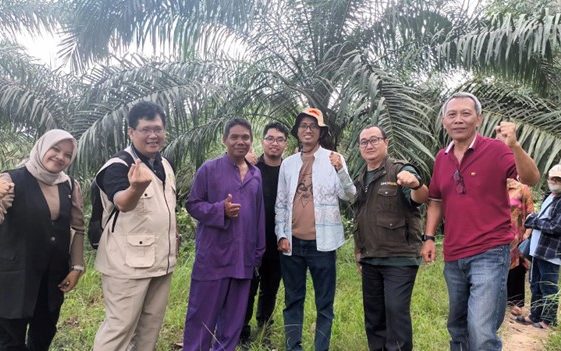
Yogyakarta, May 12, 2024 – On May 10, 2024, the Faculty of Biology at UGM visited a palm oil plantation managed by APKASINDO in Penajam Paser Utara Regency, East Kalimantan. The activity consisted of discussion and a field visit to a palm oil plantation. During the opening remarks of the visit, Prof. Dr. Budi Setiadi Daryono, M. Agr. Sc., The Dean of the Faculty of Biology UGM, stated the visit was aimed to understand the issues faced by palm oil plantations, including production challenges and the real conditions experienced by the community. He hoped that the Faculty of Biology UGM could grasp the process of palm oil cultivation from growth to its re-utilization as valuable products, especially within local communities, and foster cooperation in research, community service, and education sectors.


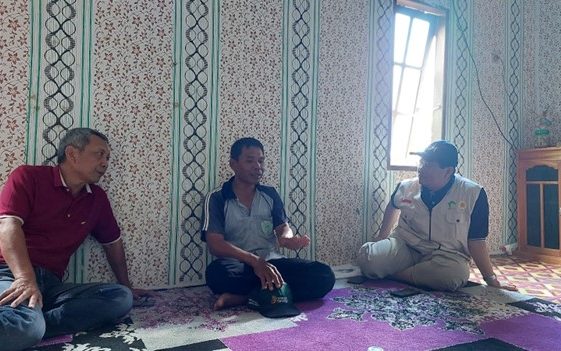
Following this, there was a discussion with Mr. La Ode Hitua Hubaisi, a palm oil farmer since 2010, an APKASINDO administrator, and the chairman of a cooperative in his district. He is part of the Setia Kawan Farmers Group, which consists of 98 members with a total plantation area of approximately 317 hectares. He mentioned that the presence of the IKN directly impacts palm oil plantations in Kalimantan, as urban expansion leads to competition with plantations. Mr. La Ode emphasized the importance of cooperatives that bridge the gap between farmers and Palm Oil Mills (PKS).

The cooperative in Penajam is the largest community cooperative partnering with PKS and has been operational for five years, even before the pandemic. This cooperative ensures that PKS fairly purchases palm oil bunches from farmers, valuing their hard work. Currently, cooperatives have been established in each district with funds collected from personal contributions, allowing farmers to collectively benefit from the profits. Mr. La Ode expressed concern over the resistance against cooperatives, although cooperatives actually benefit palm oil farmers by preventing exploitation by middlemen who collect substantial profits. Moreover, with the 2025 ISPO policy, Palm Oil Mills (PKS) are required to partner with cooperatives to facilitate both local and export marketing.”We must not give up. If we do, no one else will fight for it,” he said. Part of the cooperative’s profits is allocated to education funds. Scholarships for college are provided through the Palm Oil Plantation Fund Management Agency (BPDPKS) to 3-4 children of palm oil farmers or laborers and non-palm oil farmers. This visit opens the possibility for selected local youth contributing to the advancement of palm oil to study at Universitas Gadjah Mada.

Mr. La Ode also explained the processes of seeding, planting, maintenance, pruning, harvesting, disease management, and the production lifespan of palm oil. One of the cooperative’s programs discusses the use of a combination of organic and inorganic fertilizers. The Faculty of Biology has been using small-scale leaf and litter shredders, hoping that similar methods can be applied by palm oil farmers for pruned leaves and fronds. Next, the Faculty of Biology UGM team visit the palm oil plantation accompanied by Mr. Fauzul ‘Didiek’ Idhi and guided by Mr. La Ode, who explained the planting procedures and regulations implemented by the Penajam Farmers Group, East Kalimantan. The activity concluded with a group photo.

The visit is expected to contribute to the achievement of Sustainable Development Goals (SDGs). Through this training, we aim to address four crucial points of the 17 SDGs: SDGs 4; quality education, SDGs 8; decent work and economic growth, SDGs 9;industry, innovation, and infrastructure, and SDGs 17; partnerships for the goals. Additionally, this activity represents an IKU 6 achievement for the Faculty of Biology UGM as it involves exploring cooperation with private companies or the general public. It also contributes to education by recommending potential BPDPKS scholarship recipients and generating research ideas eligible for BPDPKS grants.This visit is expected to provide insights to the Faculty of Biology and palm oil farmers through joint discussions and enhance cooperation with partners, contributing to sustainable development beneficial for all parties involved. [UGM Palm Oil Research Team]

Presenting Spirulina sp. and Yucca schidigera as Feed Additives, UGM Biology and Animal Science Students Win Bronze Medal in National Essay Competition

AchivementsHeadlineNews Release Monday, 13 May 2024

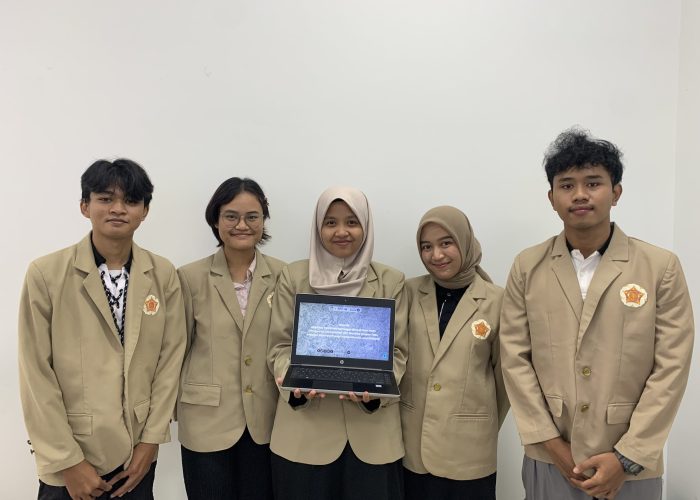
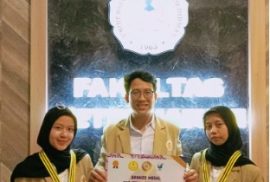
Undergraduate students from the Faculty of Biology made another achievement by winning a bronze medal in the National Essay Competition “Soedirman Event of Animal Husbandry 7.0” held on May 4-5, 2024. The team, consisting of Muhammad Syahrul Firdaus (Biology 2022), Annisa Nur Baety (Biology 2022), and Dzakiyyah (Animal Science 2023), under the guidance of Moh. Sofi’ul Anam, S.Pt., M.Sc. This national competition was organized by the Research and Development Unit of Animal Husbandry (UP3) at the Faculty of Animal Husbandry, Universitas Jenderal Soedirman, with the theme “Innovation and Creativity of Gen Z in Preventing Global Boiling Through Enhancing Climate Resilience for a Faster Recovery and Stronger Indonesia.”
The competition involved several stages, including proposal submission, preparation for presentation, and presentations before a panel of judges.


The team focused on the animal husbandry subtheme with their essay titled “The Potential of Spirulina sp. and Yucca schidigera Extracts as Feed Additives to Reduce Methane Emissions in Ruminant Livestock.” This innovation was driven by the increasing global temperatures, partly due to rising methane emissions from the livestock sector. Global warming can degrade feed quality, reduce livestock productivity, and cause diseases and death in livestock.To address these issues, the team proposed an innovative feed additive combining Spirulina sp. and Yucca schidigera. Spirulina sp. is a filamentous microalga containing 50-70% protein and 11-18% tannins, while Yucca schidigera is a plant adapted to extreme environments, containing 30-60% saponins. Using these two ingredients as feed additives, can meet livestock nutritional needs, reduce methanogen and protozoa populations in the rumen, decrease methane emissions, improve feed efficiency, and maintain livestock productivity and health.

This innovation is expected to provide a solution to the livestock sector’s challenges in Indonesia. Additionally, the team hopes that participating in this competition will inspire young Indonesians to develop creative ideas and contribute to sustainable development goals (SDGs). [Author: Annisa Nur Baety]

Four UGM Biology Faculty Students Have the Opportunity to Study Abroad through the Indonesian International Student Mobility (IISMA) Program in 2024

News Release Friday, 5 April 2024

A total of four students from the UGM Faculty of Biology had the opportunity to be accepted into the Indonesian International Student Mobility (IISMA) program in 2024. They are Abigail Yemima (Class of 2021) who was accepted at the University of Glasgow, Felix Luman Shanahan (IUP Class of 2022) who will study at the University of Groningen, Maxmillian Melvin (IUP Class of 2022) at the University of Pennsylvania, and Tan Rendy (Class of 2022) who will be having the opportunity to study at the University of British Columbia.

Abigail Yemima expressed her gratitude for being accepted into the IISMA program. At first she didn’t feel confident and wasn’t sure she would be accepted. But her efforts paid off. “I felt that this was a kickstart into a brand new chapter of my life and opened the door to many new opportunities,” said Abigail. She is very grateful and excited to have been accepted at the University of Glasgow and will make the most of it. The University of Glasgow itself is a top university offering a variety of courses, ranging from STEM to Arts and Humanities, which supports interdisciplinarity for exchange students alike. Being a member of the Russell Group, the University of Glasgow also focuses on research allowing me to connect with researchers and educators with similar interests. “I have high hopes that the supplementary courses I take and my effort to expand my network will lay the groundwork for a post-graduate degree or my career in the future”, she hopes.

Meanwhile, Tan Rendy stated that months of preparation had finally paid off when he received the announcement. Being an IISMA awardee, it definitely still feels surreal as well as exciting. “My huge gratitude to myself and those who have supported me to reach this point. One down, more to go!”, he said. For him University of British Columbia is special. Actually, it was not even on his list. But once he got to its page and did more research, he just knew what he was looking for. University of British Columbia is the one.

Maxmillian Melvin also expressed his joy and honor at being selected as one of the IISMA participants. Max, his nickname, is excited to meet and collaborate with other colleagues and experience new things abroad. “I chose University of Pennsylvania because of its renowned reputation in research which offers a ton of opportunities and resources. Furthermore, University of Pennsylvania has a diverse community that fosters innovation and interdisciplinary learning,” he said firmly.

Furthermore, Felix Luman Shanahan firmly stated that the University of Groningen was his choice. “I opted for the University of Groningen as my choice for IISMA because of its renowned reputation in economics and business studies. I have a goal to establish a sustainable biology-based business in the future, and I believe that the knowledge and skills I acquire at the University of Groningen will assist me in achieving this goal”, said Felix. According to him, apart from excellent economics and business programs, the University of Groningen has a large international student community which offers excellent opportunities to expand your network and connect with people from all over the world. “I am extremely grateful and thrilled to become an IISMA awardee, and I would like to extend my heartfelt gratitude to everyone who has supported me on this journey— my friends, lecturers, and my family”, he concluded.

Congratulations to the students receiving the Indonesian International Student Mobility (IISMA) program in 2024! Hopefully this program will further increase student experience and knowledge specifically and can support the achievement of point 4 of the SDGs related to Quality Education.

1…303132

Accreditation

Recent Posts

  • Researchers from Kangwon National University Explore Flavivirus Monitoring Strategies and Malaria Parasite Adaptation in Guest Lecture at the Faculty of Biology UGM
  • Faculty of Biology Researchers Collaborate in eDNA Workshop for Pathogen Detection in Wildlife Trade
  • UGM–ANU Double Degree Program: Pathways to Global Academic Excellence
  • Faculty of Biology UGM Engages Doctoral Students in Academic Progress Monitoring
  • UGM–UTS Strengthen Academic and Research Collaboration through “Study & Research in Australia” Sharing Session
Universitas Gadjah Mada

UNIVERSITAS GADJAH MADA

FACULTY OF BIOLOGY
Teknika Selatan Street, Sekip Utara,
Yogyakarta 55281
biologi-ugm@ugm.ac.id
Phone/Fax: +62 (274) 580839

About us

  • History
  • Organization
  • Vision and Mission
  • Staff

Student Affairs

  • Student Service
  • Student Organization
  • Submission for Practical Field Work
  • Permission Field Research
  • Permission Thesis/Disertation

academic

  • Academic Regulations
  • Academic Anonncement

Accreditation

  • Image 1
  • Image 2
  • Image 3

© 2024 FACULTY OF BIOLOGY UNIVERSITAS GADJAH MADA

KEBIJAKAN PRIVASI/PRIVACY POLICY

[EN] We use cookies to help our viewer get the best experience on our website. -- [ID] Kami menggunakan cookie untuk membantu pengunjung kami mendapatkan pengalaman terbaik di situs web kami.I Agree / Saya Setuju