Yogyakarta, June 19, 2026 – The Faculty of Biology, Universitas Gadjah Mada (UGM), organized the Training on Strategies for Developing Global Research Networks, Publishing in Reputable Scientific Journals, and Preparing Intellectual Property Rights (IPR) Registration Documents 2026 on Friday, June 19, 2026, at the Sekip Room, University Hotel UGM. The event was attended by faculty members of the Faculty of Biology as part of ongoing efforts to strengthen research capacity, scientific publication performance, and innovation outputs within the faculty.
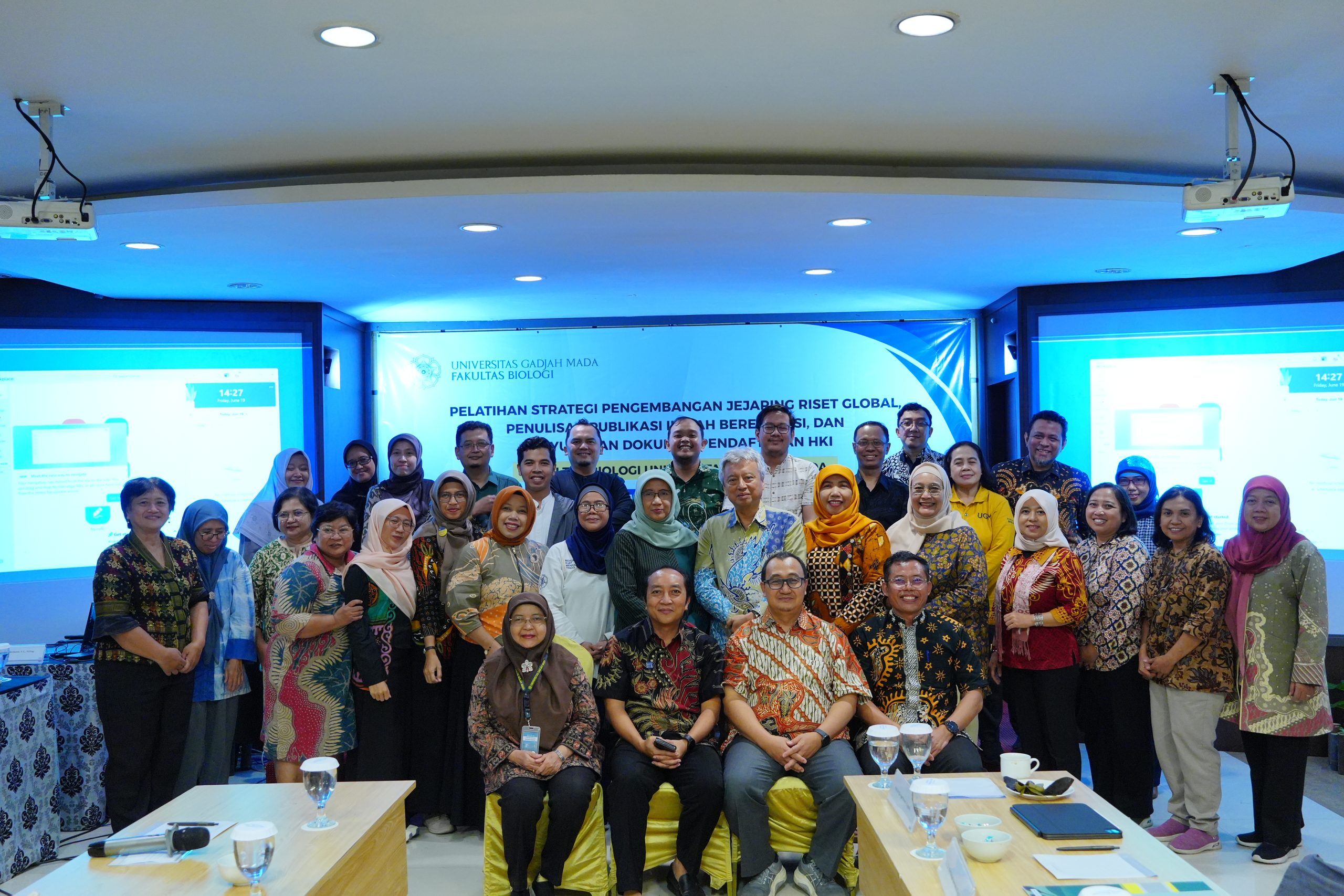
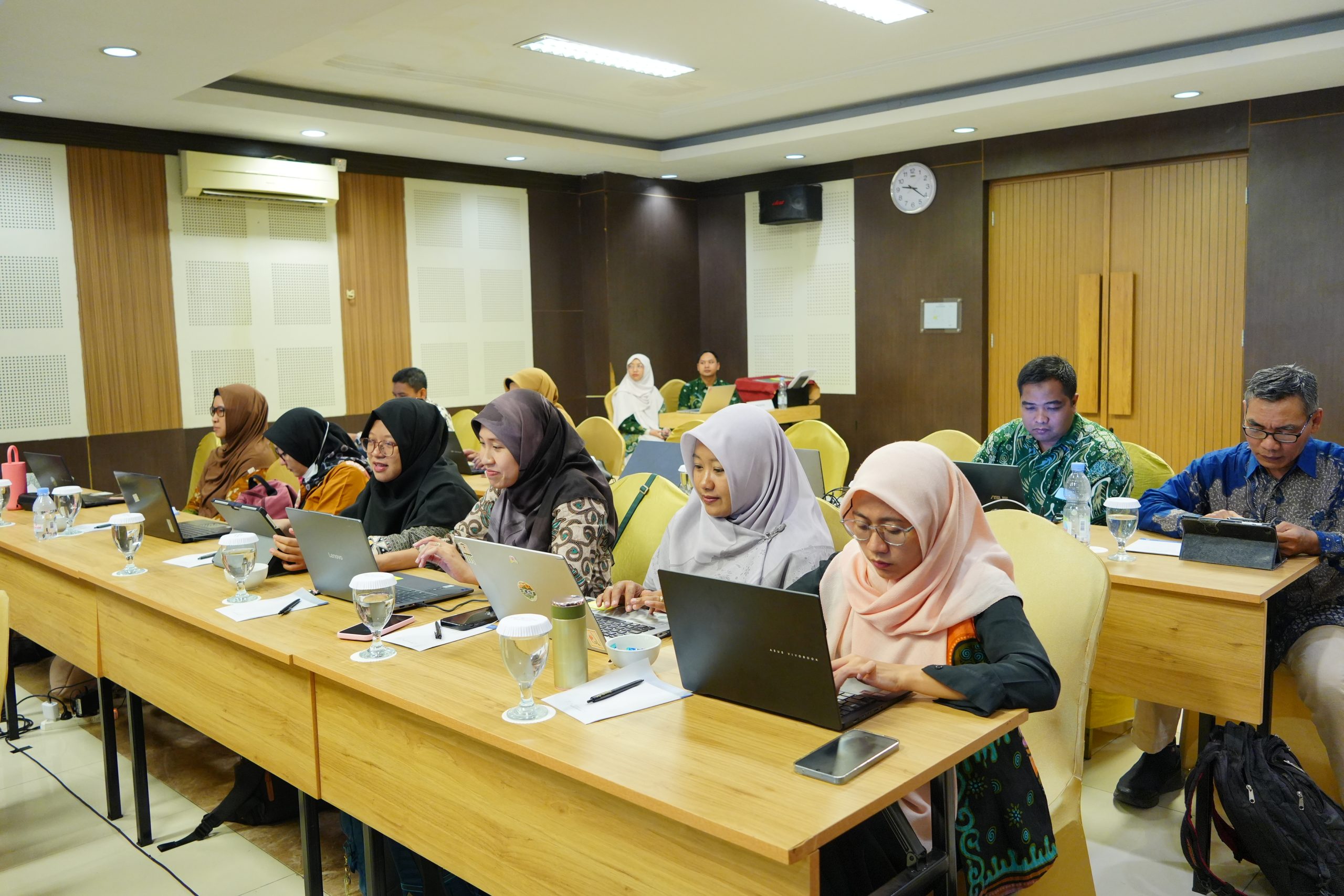
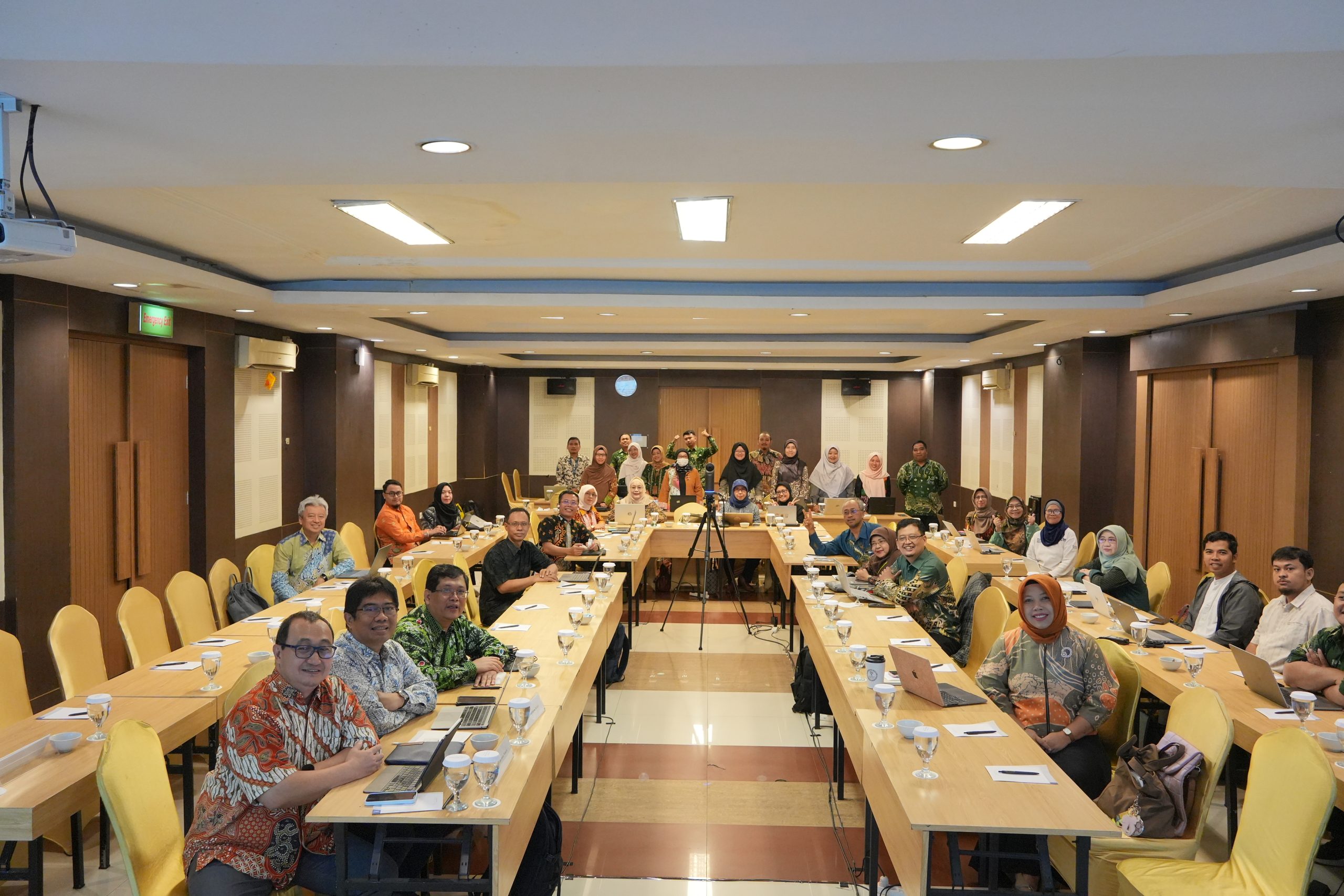
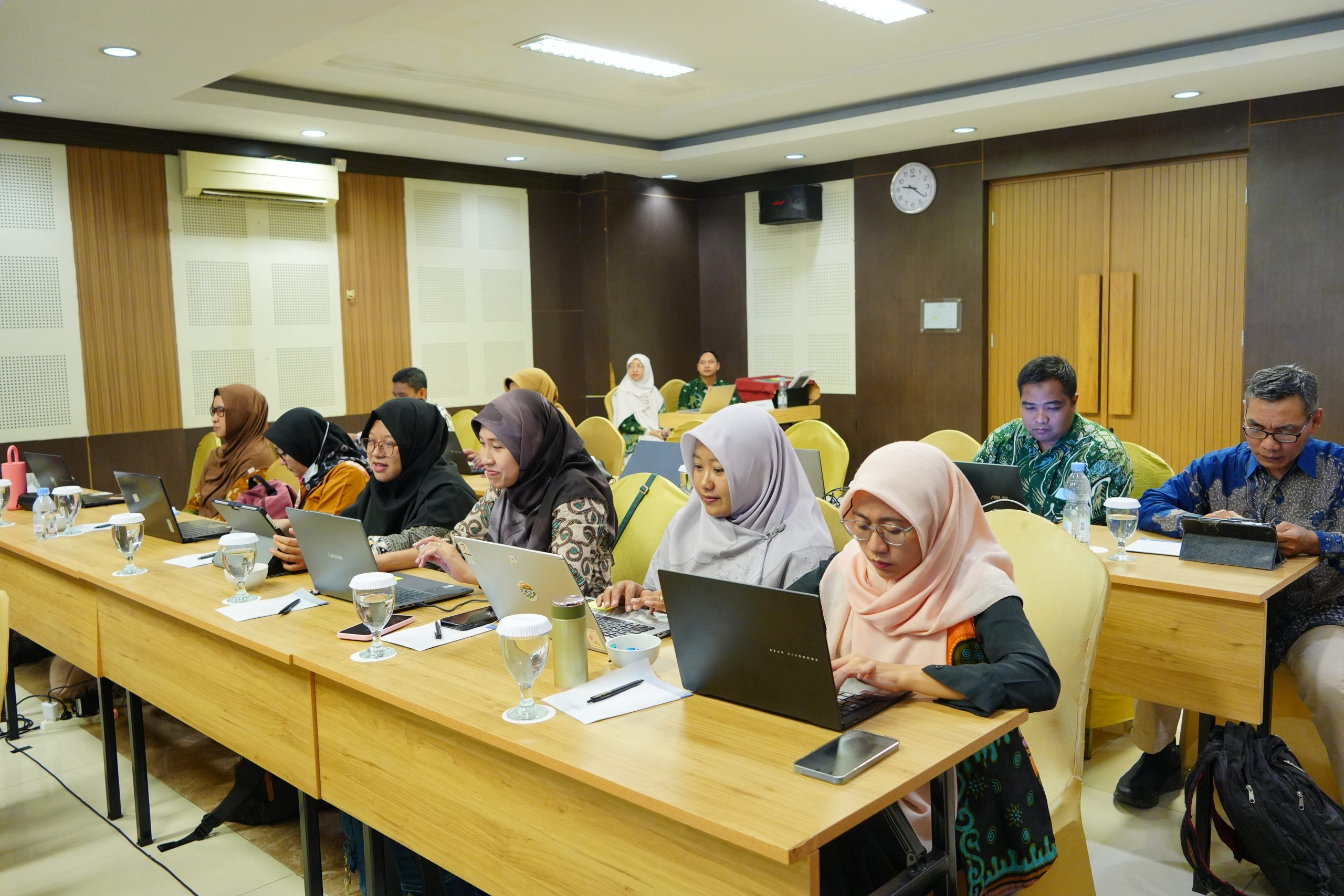
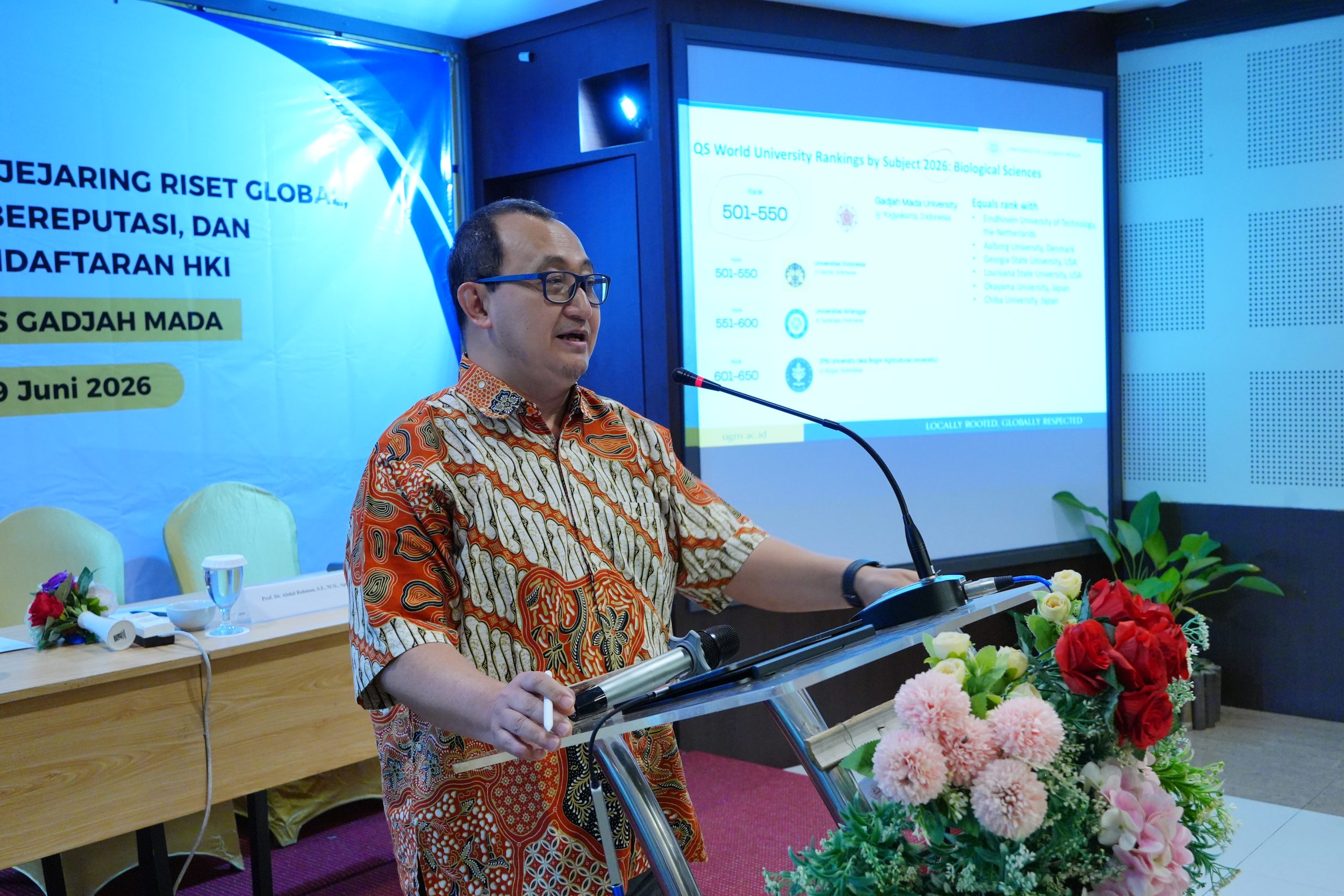
The training aimed to enhance participants’ understanding and skills in developing international research collaborations, increasing the quality and impact of scientific publications, and promoting the protection and commercialization of research outputs through Intellectual Property Rights (IPR). The program was expected to provide strategic insights and practical guidance to support the improvement of both the quality and quantity of research and academic outputs produced by the Faculty of Biology UGM.
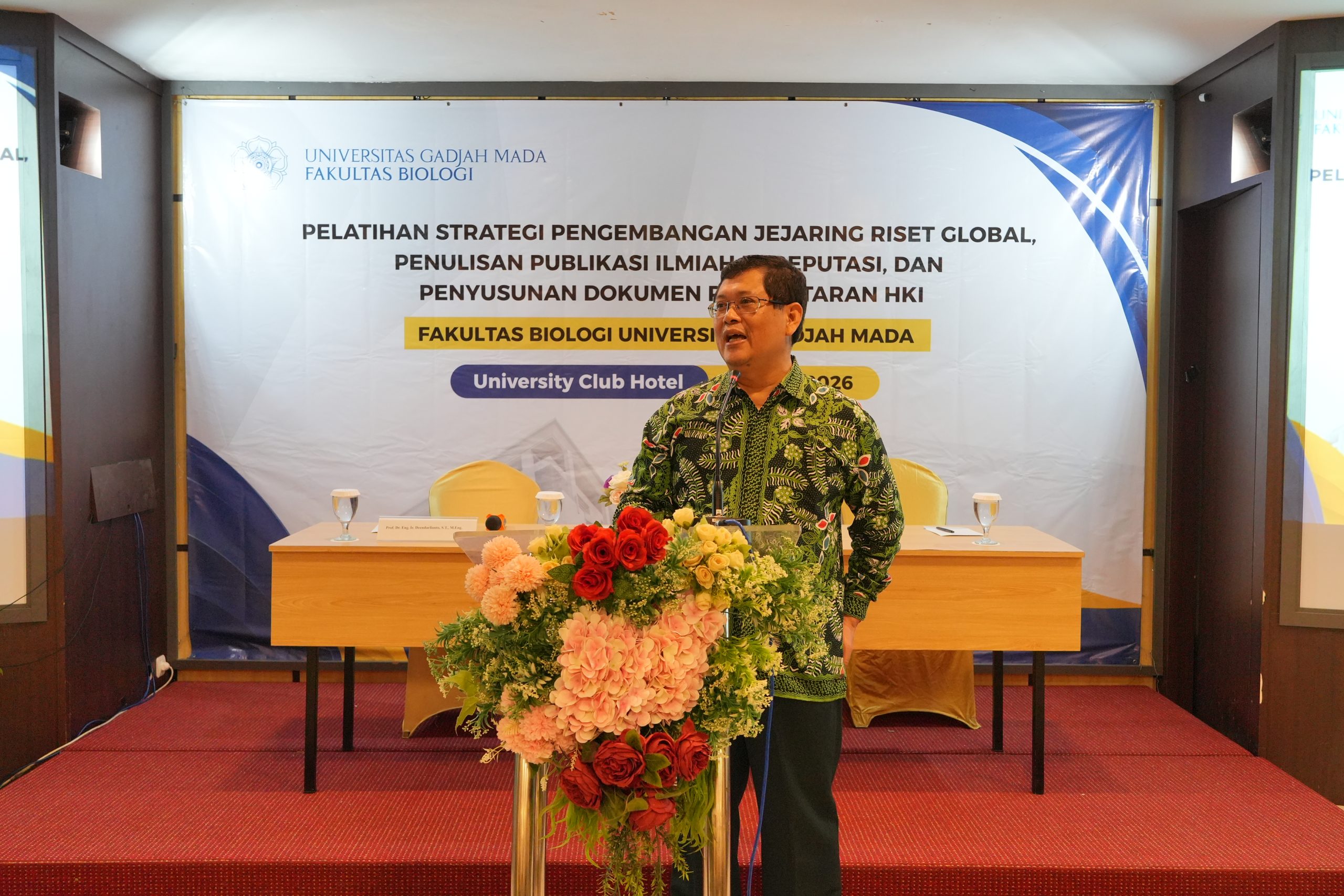
In his opening remarks, the Dean of the Faculty of Biology UGM, Prof. Dr. Budi Setiadi Daryono, M.Agr.Sc., highlighted Universitas Gadjah Mada’s achievement in the QS World University Rankings (QS WUR) 2027, where UGM advanced to the 207th position globally. While appreciating this accomplishment, he emphasized that continuous improvement remains necessary, particularly in strengthening the Faculty of Biology’s contribution to the university’s academic performance and global reputation.
The program continued with a presentation by Prof. Dr. Eko Agus Suyono, M.App.Sc., Vice Dean for Research, Community Service, Collaboration, and Alumni Affairs of the Faculty of Biology UGM. He presented the latest updates on the faculty’s research, publication, and intellectual property performance. His presentation highlighted both recent achievements and areas requiring further improvement to strengthen research productivity and publication outcomes among faculty members. The session provided a comprehensive overview of the Faculty’s current standing and future opportunities for development.
The technical sessions were moderated by Matin Nuhamunada, Ph.D. The first session featured Prof. Dr. Eng. Ir. Deendarlianto, S.T., M.Eng. from the Department of Mechanical and Industrial Engineering, Faculty of Engineering UGM, who delivered a presentation entitled Strategies for Building Collaborative Research and International Networks. Drawing on his extensive experience, Prof. Deendarlianto shared successful approaches implemented within his department to establish and sustain international research collaborations. He emphasized the importance of strategic global partnerships in enhancing research quality, visibility, and international recognition.
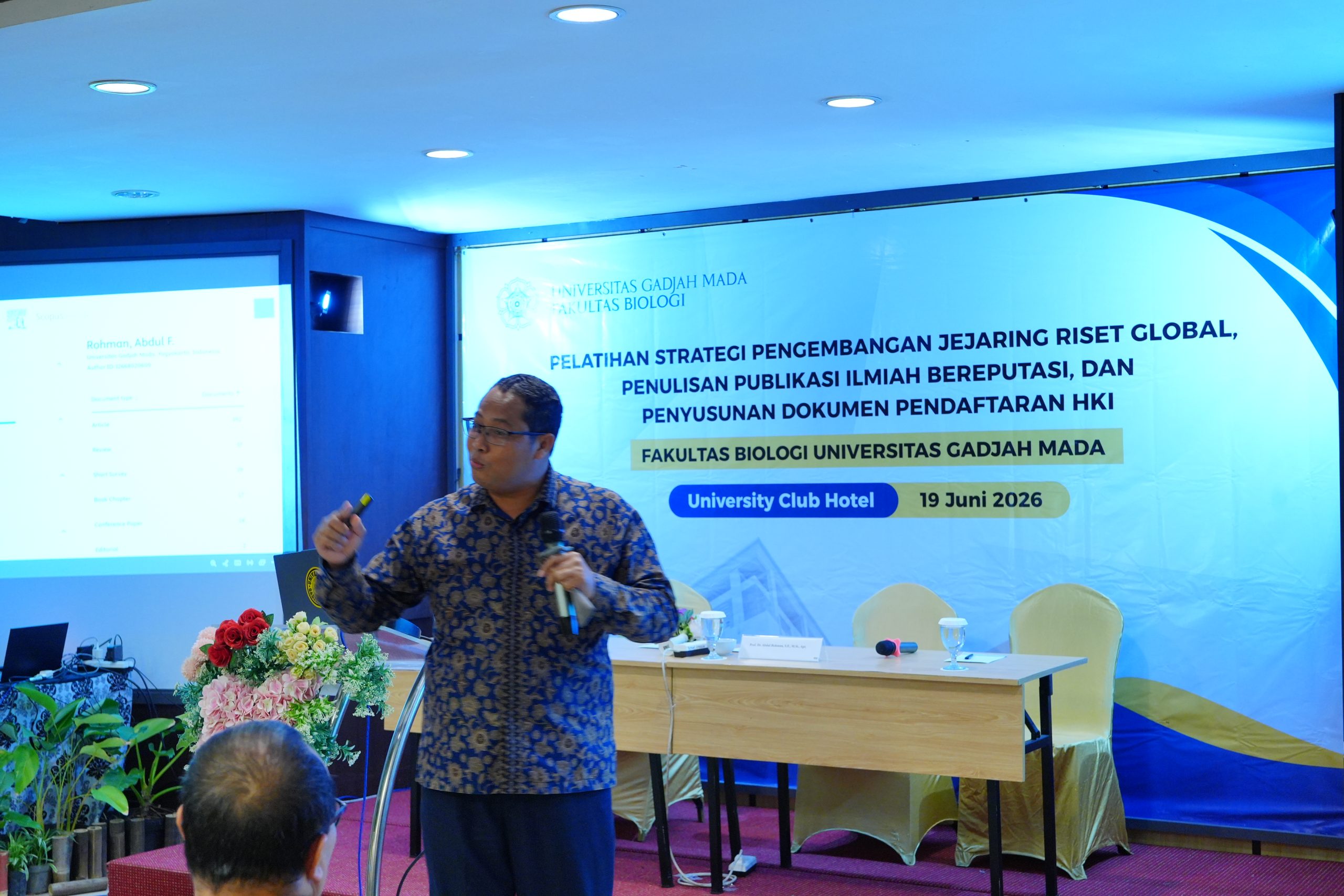
The second session was delivered by Prof. Dr. Abdul Rohman, S.F., M.Si., Apt., who presented Strategies for Publishing in Reputable and High-Impact Journals. As one of UGM’s most prolific researchers with one of the highest publication records and h-index scores, Prof. Abdul shared practical insights into improving publication performance. He also discussed publication trends at UGM, strategies for enhancing university rankings, and the importance of maintaining research integrity throughout the publication process.
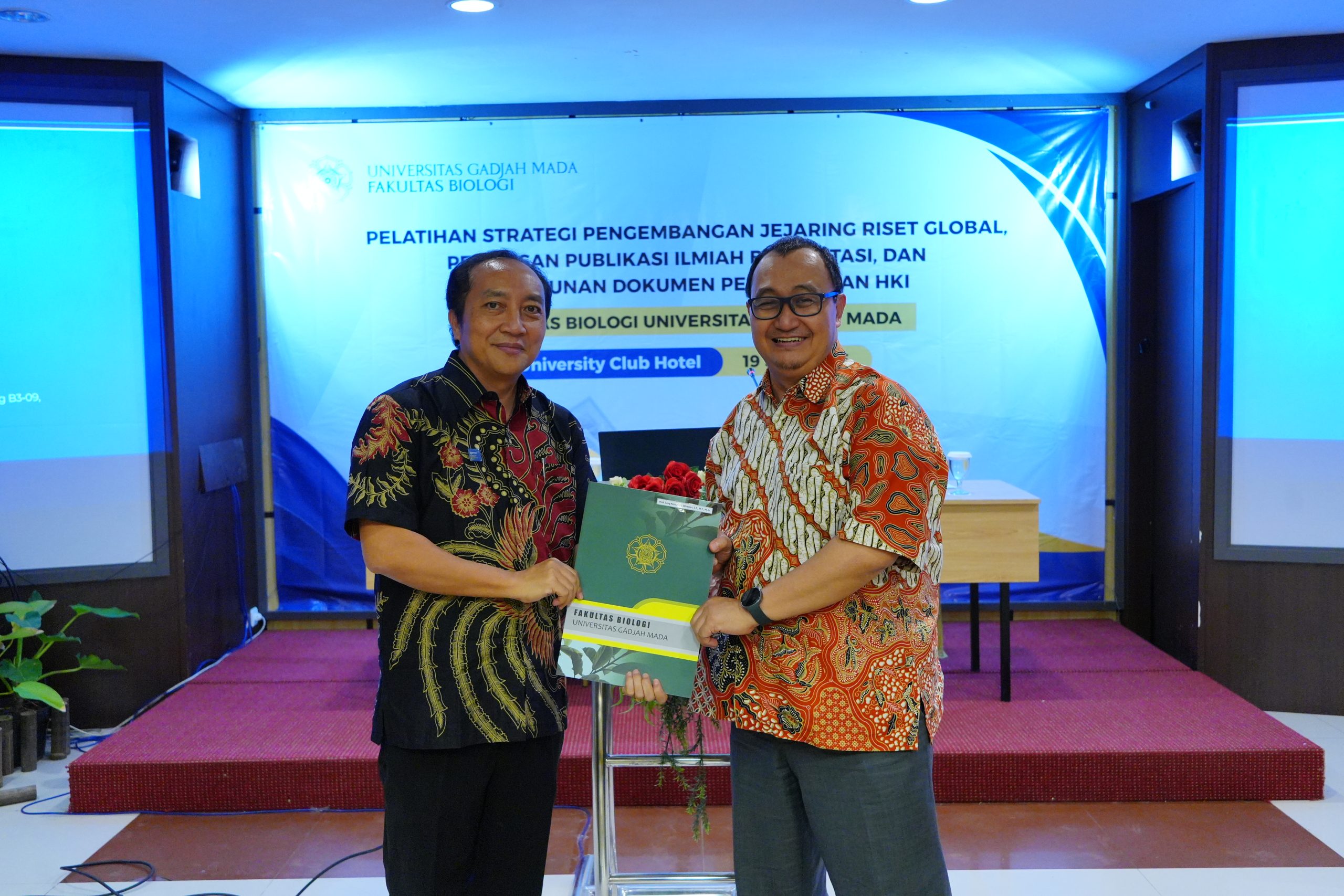
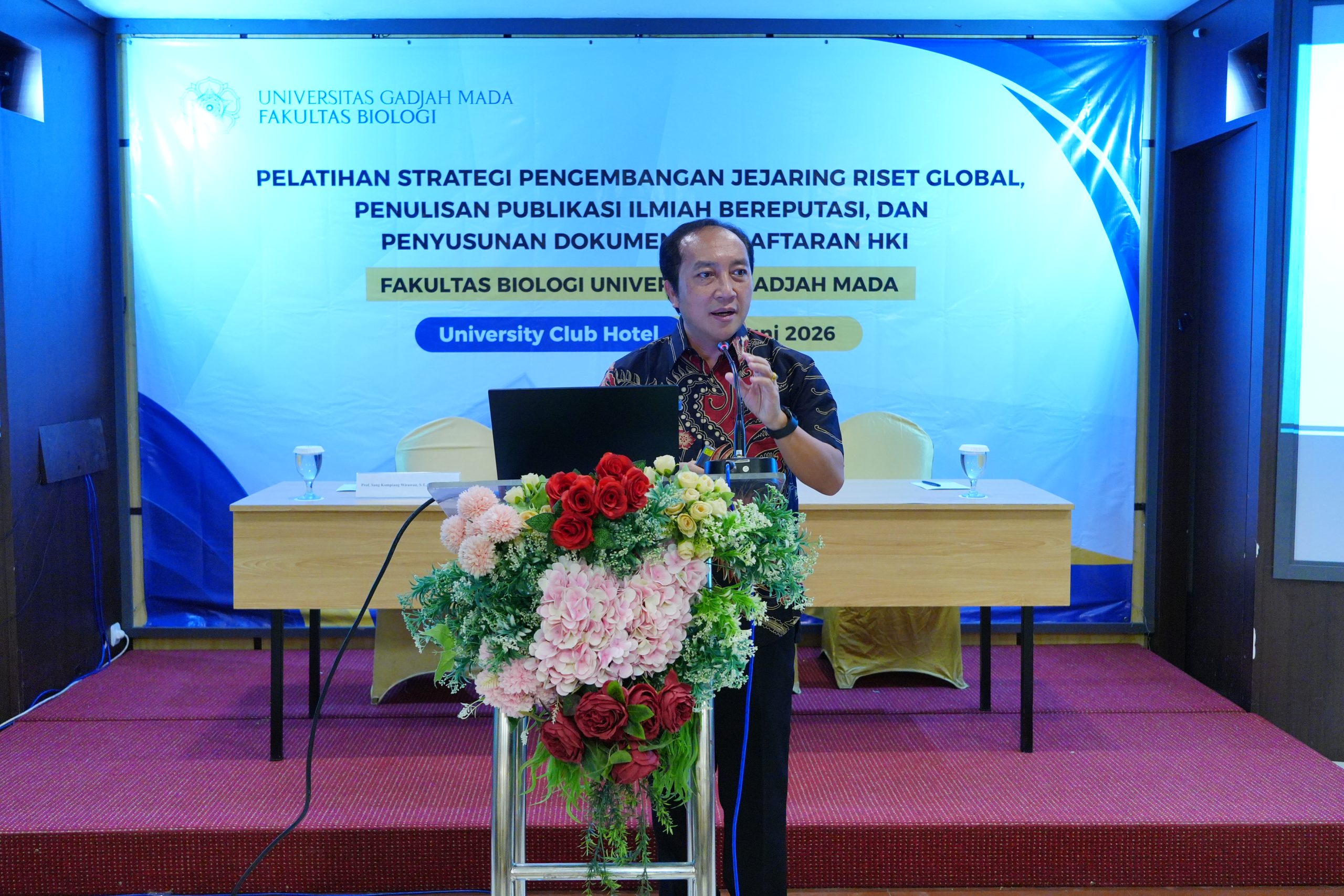
The final session, moderated by Dr. Eng. Thoriq Teja Samudra, featured Prof. Sang Kompiang Wirawan, S.T., M.T., Ph.D., Head of the Intellectual Property Management Office (IPMO) UGM. His presentation, entitled IPR Strategies: Identification, Documentation, and Registration, provided participants with an overview of intellectual property management, including the identification of potential IPR outputs, preparation of supporting documents, and registration procedures. The session underscored the importance of protecting research innovations to maximize their academic and societal impact.
Through this training program, the Faculty of Biology UGM reaffirms its commitment to fostering a strong research culture, expanding international collaboration, increasing high-quality scientific publications, and promoting innovation through intellectual property protection. These efforts contribute directly to the achievement of the United Nations Sustainable Development Goals (SDGs), particularly SDG 4 (Quality Education), SDG 9 (Industry, Innovation and Infrastructure), and SDG 17 (Partnerships for the Goals). The Faculty hopes that initiatives such as this will continue to strengthen academic excellence and generate impactful research and innovation for the advancement of science and society.