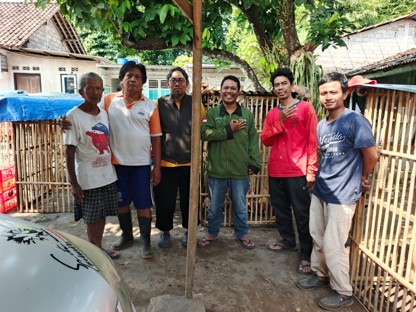
The Faculty of Biology, Universitas Gadjah Mada (UGM) has once again demonstrated its commitment to supporting community empowerment through a collaboration between the Team of Desa Mitra Wedomartani 2026 and the Team of Pengabdian kepada Masyarakat (PkM) Ayam 2026. On Tuesday, July 15, 2026, the two community service teams from the UGM Faculty of Biology implemented a collaborative program focusing on Kitchen Waste-Based Elba Laying Hen Cultivation for Good Health and Well-being (SDG 3) and Responsible Consumption and Production (SDG 12) in Wedomartani Village, Ngemplak, Sleman, Special Region of Yogyakarta. This collaboration involved several lecturers and active students from the Undergraduate, Master, and Doctoral programs of the Faculty of Biology, UGM.
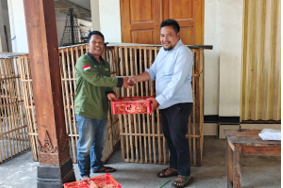
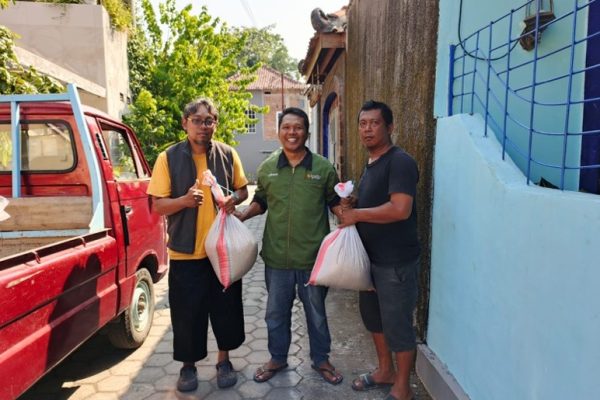
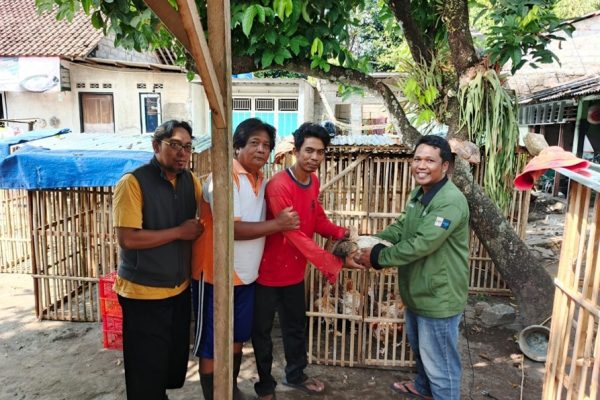
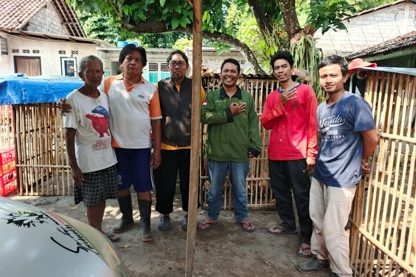
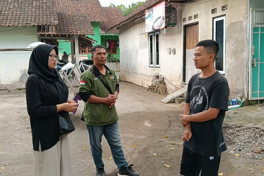
This collaboration was carried out to further enhance the positive impact experienced by the community. The Team of Desa Mitra Wedomartani activities focused on the development of alternative feed technology based on the fermentation of household food waste as an innovation to support laying hen cultivation. Through this innovation, the community will be taught how to process kitchen waste into safe, highly nutritious, and economical chicken feed, thereby reducing production costs while decreasing the organic waste generated by households. Meanwhile, the Team of PkM Ayam activities focused on improving household food security through family-scale laying hen cultivation while promoting the use of kitchen waste as an eco-friendly alternative feed raw material. Through these two approaches, the community is expected to obtain a sustainable source of animal protein, improve family welfare, and reduce household organic waste through the concept of a circular economy.
During this initial collaborative activity, the Team of Desa Mitra Wedomartani provided assistance to 6 residents from several hamlets in Wedomartani as beneficiaries, in the form of one cage package equipped with three pullet-aged (± 4 months) Elba laying hens. The beneficiaries in Wedomartani Village were represented by the Village Secretary (Carik), Mr. R. Rohmad Gunawan Hardono, S.Pd. Meanwhile, the Team of PkM Ayam distributed assistance to 5 residents of Wonosari Hamlet, Wedomartani, and 5 residents of Karang Bolong Hamlet, Sukoharjo as beneficiaries. Each family received one chicken coop package, three pullet-aged (± 4 months) Elba laying hens that have entered the ready-for-production phase, and 10 kilograms of basal feed as the initial maintenance feed. This assistance is expected to serve as capital for the community to develop household-scale laying hen farming, thereby increasing the availability of animal protein for families while providing additional income opportunities through egg sales, supporting Zero Hunger (SDG 2).
As a form of continuous mentoring, both teams have arranged a monitoring and evaluation agenda to be carried out one month after the handover of the assistance. The activities will include evaluating the development of the laying hens, further counselling on good cultivation techniques, and practical training on making fermented feed from kitchen waste. This mentoring is expected to improve the egg productivity of the Elba hens while strengthening the community’s ability to manage farming businesses independently and sustainably, which plays a role in realizing Partnerships for the Goals (SDG 17).
Through this collaboration among lecturers, students, and the community, this community service program is expected to become a science-based community empowerment model capable of improving family nutritional quality, strengthening local food security, and supporting more responsible household waste management. This program also serves as a tangible manifestation of the UGM Faculty of Biology’s contribution to supporting the achievement of the Sustainable Development Goals (SDGs), particularly SDG 3 (Good Health and Well-being) through increased community consumption of animal protein, and SDG 12 (Responsible Consumption and Production) by optimizing the utilization of kitchen waste into valuable resources.
Contributor: The Team of Desa Mitra Wedomartani 2026, chaired by Dr. Ardaning Nuriliani, S.Si., M.Kes., and the Team of PkM Ayam 2026 Faculty of Biology UGM, chaired by Prof. Dr. med.vet. Hendry T.S.S.G. Saragih, M.P.