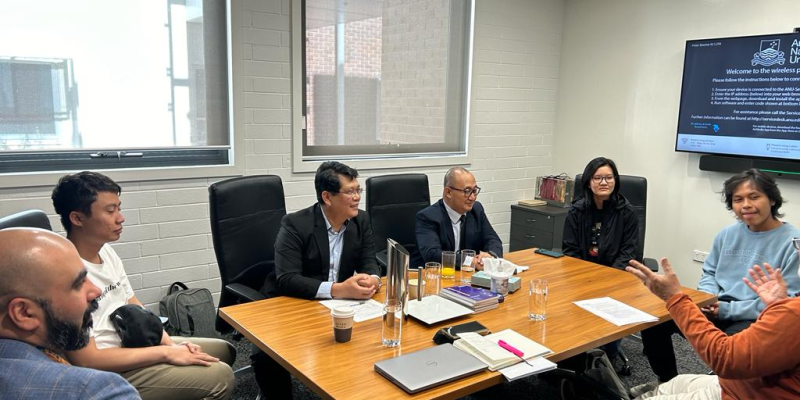
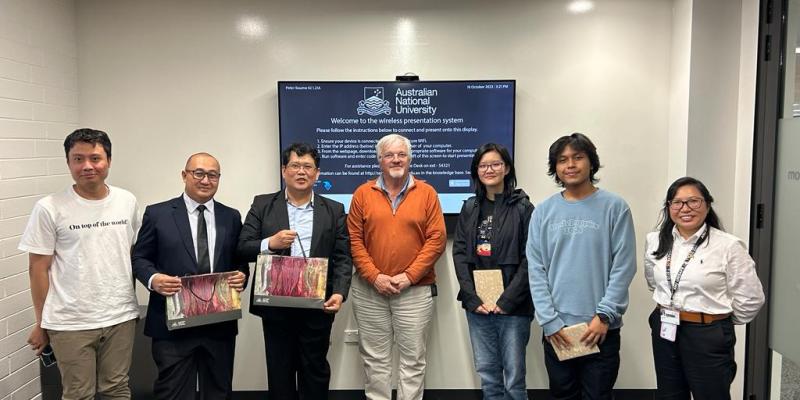
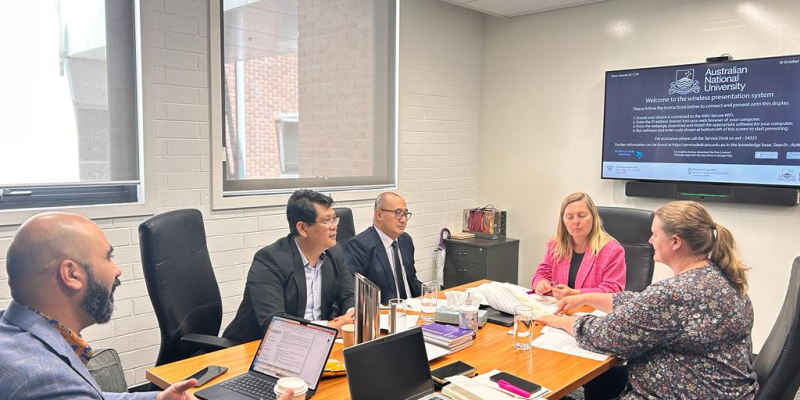
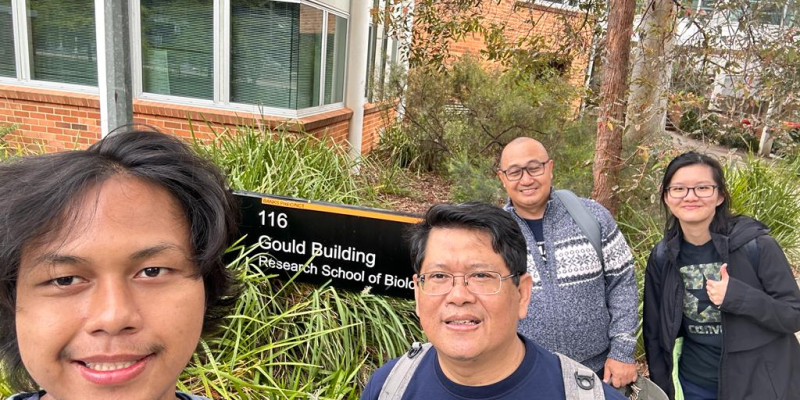
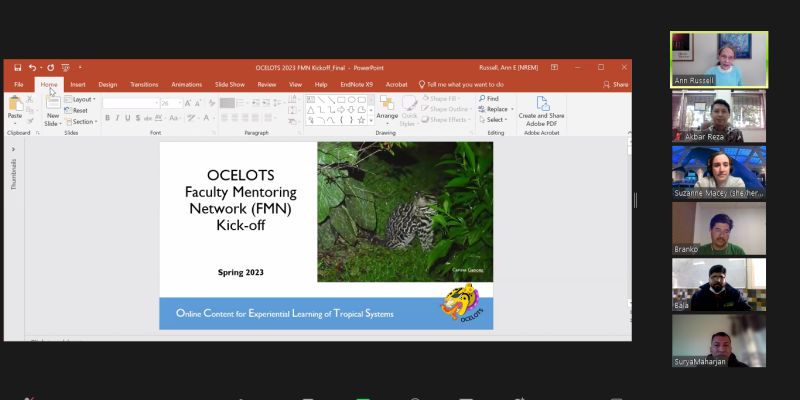
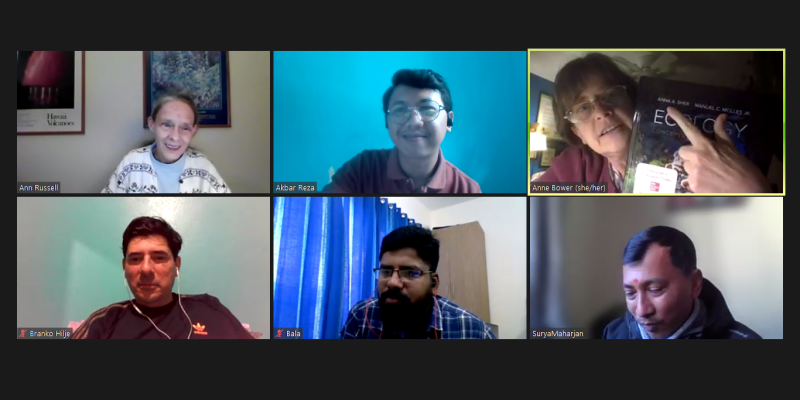
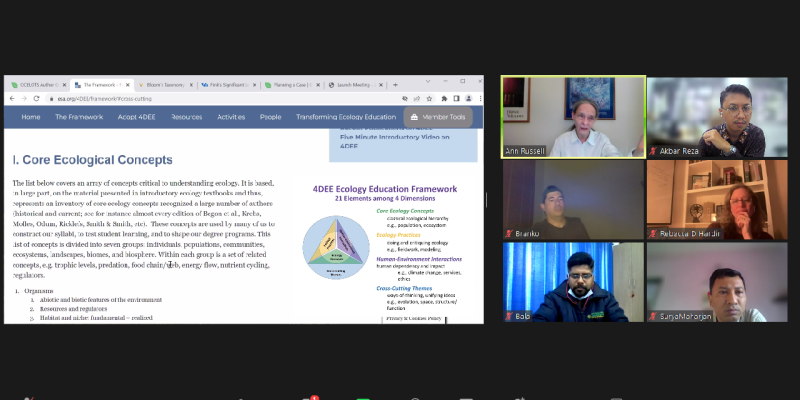
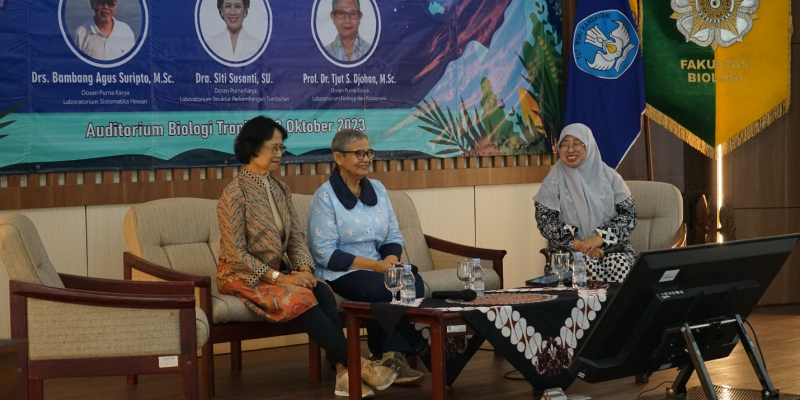
Yogyakarta, October 4, 2023 – The Faculty of Biology at UGM initiated collaboration with James Cook University (JCU), one of the universities in Australia. This meeting was a follow-up discussion after the previous discussion with James Cook University in Singapore on Thursday, August 31. The meeting was held virtually and attended by partners from James Cook University, including Cassandra Lee as the Director of Recruitment and Partnerships, Ben Ng as the Assistant Manager in International Management, Shelly Wang as the Senior Regional Manager (Europe, Central Asia & Others), and Carlie Sage as the Communications Manager, International Marketing at James Cook University Australia. From the Faculty of Biology, there were Dr. Eko Agus Suyono, M.App.Sc., the Vice Dean for Research, Community Service, Collaboration and Alumni Affairs; Dr. Bambang Retnoaji, M.Sc., the Vice Dean for Academic and Student Affairs; Sukirno, S.Si., M.Sc., Ph.D., the Head of the Undergraduate Study Program; and Tyas Iksan Hikmawan, M.Sc., Ph.D., the Secretary of the Office of International Affairs at the Faculty of Biology, UGM.
This discussion was a continuation of the discussion with James Cook University Australia after the Faculty of Biology at UGM had a discussion with James Cook University in Singapore. It is also a flexible follow-up to the collaboration so that students can choose programs at either the Australian or Singaporean campuses. Previously, the initiation of collaboration for student exchange, double degree, and joint supervision had been discussed, supported by the potential of Indonesian government scholarships (LPDP) for master’s and doctoral programs, as well as curriculum matching. The Faculty of Biology, in particular, aims to establish collaboration in the field of marine biology.
This discussion serves as a great opportunity to enhance the collaborative network between Universitas Gadjah Mada, especially the Faculty of Biology, and James Cook University Australia. It is hoped that through this collaboration, it will support the improvement of education and research at the Faculty of Biology, UGM, and provide students with increased opportunities for international learning. This collaboration is part of the Faculty of Biology’s commitment to expanding connections and partnerships with various collaborators to enhance the quality of education, in line with its support for Sustainable Development Goals for the improvement of education and the expansion of cooperation (SDG 4 and 17).
Prof. Dr. Budi Setiadi Daryono, S.Si., M.Agr.Sc., Ph.D. the Dean of the Faculty of Biology at UGM, represented UGM as the Recipient of Research and Development Funding Support from the Palm Oil Fund Management Agency (Badan Pengelola Dana Perkebunan Kelapa Sawit – BPDPKS) for the year 2023. The official collaboration was marked by a Cooperation Agreement Signing Ceremony held on Monday, September 25, 2023, from 12:00 PM to 5:30 PM WIB at Hotel JHL Soltaire, Gading Serpong, Tangerang.
The event commenced with welcoming remarks from the CEO of BPDPKS, Eddy Abdurrachman, and a speech from a representative of BPDPKS’s Research and Development Committee. This was followed by the signing of the cooperation agreement for the Palm Oil Research and Development Grant Program 2023. Heads of Research and Development Institutions and Researchers who received Research and Development Funding Support from BPDPKS for 2023 were present at the event, including the team from UGM. UGM successfully secured the BPDPKS grant for an intriguing research project titled “Development of Molecular Markers for Efficient Phosphate Nutrient Uptake in Oil Palm.” This research is led by Prof. Dr. Budi Setiadi Daryono, S.Si., M.Agr.Sc., and involves several other researchers, namely Sigit Dwi Maryanto, M.Sc., Eka Tarwaca Susila Putra, S.P., M.Sc., Ph.D., Prof. Dr. Diah Rachmawati, M.Sc., and Prof. Dr. Purnomo, MS. This research project stands as the sole project to receive the BPDPKS grant and represents UGM in this prestigious event for the year 2023.
The Palm Oil Fund Management Agency (BPDPKS) has long been committed to supporting research and development in the palm oil industry. The research funding they provide originates from the palm oil plantation sector and is used to support various research and development initiatives in the palm oil industry, while also strengthening national research institutions.
The BPDPKS Grant research demonstrates support for the implementation of the Sustainable Development Goals (SDGs) through collaborative efforts to enhance research by researchers and lecturers at the Faculty of Biology, UGM, as well as to advance education (SDG 4 and SDG 17). Additionally, this collaboration supports BPDPKS’s mission in contributing to a better economic growth (SDG 8).
The sustainability of the national palm oil industry is the primary focus of BPDPKS in supporting these research endeavors. It is hoped that the research results funded by BPDPKS will provide concrete solutions, act as problem-solving tools, and contribute to increased productivity and sustainability in the palm oil industry. The aspiration is that research funded by BPDPKS will be utilized by the palm oil industry, government, and the wider community, ultimately advancing the industry while ensuring its sustainability.
A team of undergraduate students of the Faculty of Biology at UGM, led by Firchamy Vuqi Aulia along with Annisa Nur Baety, Azra Belva Naprilian, Muhammad Syahrul Firdaus, and Ridho Nur Alam under guidance Dr. Wiko Arif Wibowo, S.Si. achieved 2nd place in the National Scientific Paper Competition. The event was organized by Brawijaya University from June 1 to September 13, 2023 with the theme “Synergizing Nation Building with Applied Technological Innovation towards Independent Indonesia,”. The competition consisted of two stages: the submission of full papers and the creation of a PowerPoint presentation, followed by a presentation by the selected finalist.
The team took the sub-theme of agro complexes, with the title “Application of Precision Farming Concept with Digital Twins Technology in Vertical Farming in the Era of Industry 5.0 to Support Sustainable Development.” The writing of this scientific paper was motivated by the declining state of Indonesia’s agricultural sector over time. This is attributed to the increasing limitation of agricultural land availability due to its conversion into residential areas caused by the growing population. Additionally, the agricultural sector in Indonesia is still managed conventionally with limited technological involvement. This is a significant factor in frequent crop failures. These events lead to an increase in import activities as the food supply from the agricultural sector in Indonesia is insufficient to meet the consumption needs of the continuously growing population. Based on these issues, The team proposed an innovation aimed at addressing these challenges. This innovation involves the implementation of vertical farming coupled with the precision farming concept supported by Digital Twins technology. Vertical farming will serve as a solution for farmers with limited land, particularly those in urban areas. However, vertical farming alone will not yield optimal results without additional innovations. Therefore, we propose an innovation to manage vertical farming using the precision farming concept. Precision farming will be implemented using geographic information systems (GIS), remote monitoring, and soil sensors as primary tools. Furthermore, this precision farming concept will be further enhanced by the integration of Digital Twins technology, which utilizes real-time virtual modeling of objects with the assistance of AI (Artificial Intelligence) and IoT (Internet of Things).
The idea put forth by this team is anticipated to be an effective and constructive solution for the agricultural sector in Indonesia. If implemented, it will have a positive impact on Indonesia’s agricultural sector, making it more advanced and capable of meeting the food needs of the Indonesian population, while also competing on a global scale in the current Industry 5.0 era. Additionally, with the innovation stemming from this idea, it is hoped that the agricultural sector in Indonesia will develop sustainably, thereby eliminating issues of land scarcity and leading to an improvement in the quality and quantity of agricultural produce.
A team of undergraduate Biology students led by Nur Farah Susilowati along with Kotimah, won first place in the National Scientific Writing Competition organized by the Biology Education Student Association of Tidar University namely “Optimizing the Ability to Conserve a Paradise of Biodiversity”. This event was conducted online with the final presentation held on August 18, 2023, and the announcement of winners on August 22, 2023. In this competition, the team were guided by Dr. Siti Nurbaiti, S.Si., addressing the sub-theme “Efforts to Address Biodiversity Degradation.” Their scientific paper was titled “Microalgae Biodiversity as a Potential Indicator of Ecosystem Quality at the Elephant Conservation Center.”
The writing of this scientific paper was motivated by the potential of microalgae to be implemented in addressing biodiversity issues in the elephant ecosystem. The aim of this scientific paper was to analyze the role of microalgae as a bioindicator, with diversity index as a parameter for the stability of a community within an ecosystem, or disturbances that occur due to environmental and biotic factors. This scientific paper was compiled using a scientific journal literacy approach, referring to the identification and calculation of the diversity of microalgae species from water and sediment samples at the elephant ecosystem. The diversity of microalgae species was used as an index of ecosystem quality, with a correlation to the characteristics of microalgae that have specific tolerance limits to physical and chemical factors, serving as bioremediation materials, food sources, bioactive substances, and containing long-chain hydrocarbons that can be utilized as an energy source. The results of this research showed varying levels of microalgae diversity as an identification of water quality at the Elephant Conservation Center, indicating the stability of its ecosystem.
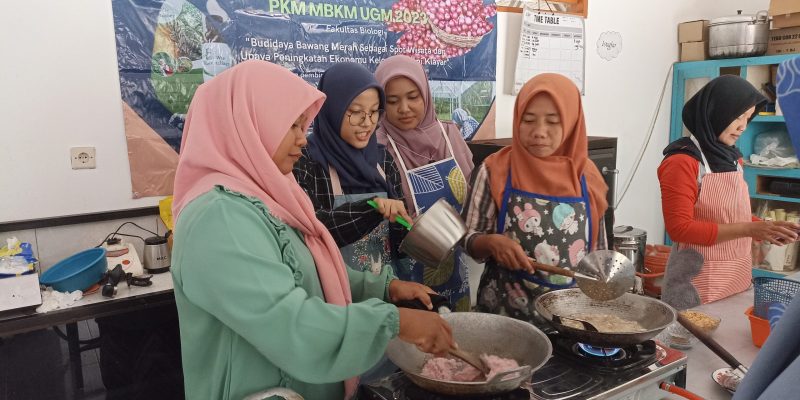
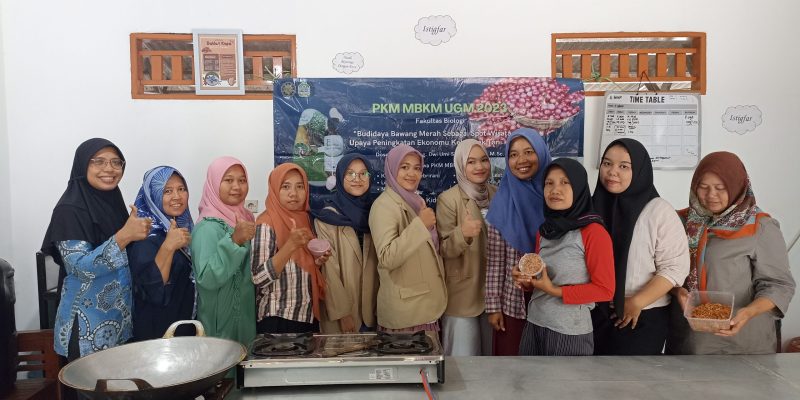
The continuation of the Community Engagement Merdeka Learning Campus Merdeka (PKM-MBKM) program in 2023, titled “Empowering the Independence of the Women Farmers Group in Kepuh Wetan Village, Wirokerten, through Oyster Mushroom Cultivation and Processing (Pleurotus ostreatus),” was conducted on Sunday, October 1, 2023. In line with the Sustainable Development Goals (SDGs), particularly in enhancing the role of women across various sectors (SDG 5), the meeting was attended by the women members of the Women Farmers Group (KWT) Amanda, with Chairwoman Mrs. Marwati present.
The session involved a presentation of the progress and evaluation of oyster mushroom cultivation that has been undertaken. The team, consisting of Ika Izma Putri, Kusnadianta Yudha Pratama, Dana Abruri, Airlangga Wibisono, and led by Prof. Dr. Diah Rachmawati, S.Si., M.Si., identified several challenges in oyster mushroom cultivation including overheated mushroom houses, low humidity, dried oyster mushrooms, baglog positioning, uneven and suboptimal mushroom growth, as well as termite infestations. To address these challenges, The Team suggested intensive watering to lower the temperature and increase humidity around the oyster mushrooms, targeted tearing of the baglogs on specific sides to promote optimal mushroom growth, darkening the mushroom house to maintain humidity, and the creation of yellow traps as termite deterrents using yellow-colored plastic bottles wrapped in adhesive-coated plastic.
Following the presentation of the evaluation results, the team and members of the Women Farmers Group Amanda collaborated in arranging oyster mushroom baglogs on shelving units within the mushroom house. A total of 265 baglogs were arranged on two tiers of shelving. These baglogs exhibited approximately 25% mycelium coverage. It is hoped that after this activity, there will be a continuation in the processing of oyster mushrooms into various products, including mushroom crisps, nuggets, and siomay, aiming to develop independent entrepreneurship within KWT Amanda and contribute to the economic growth of their community (SDG 8).
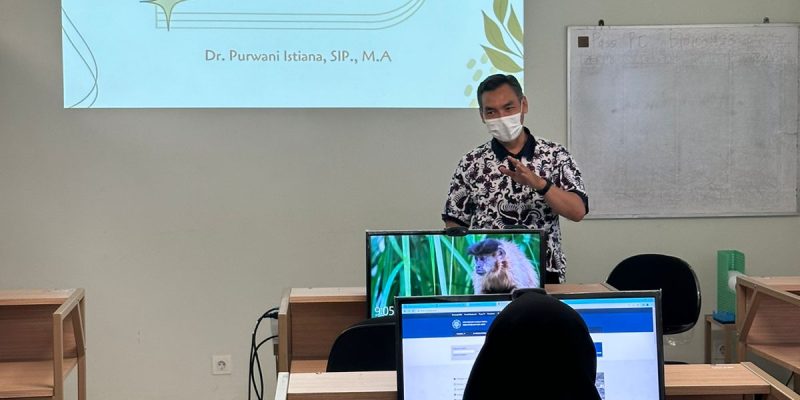
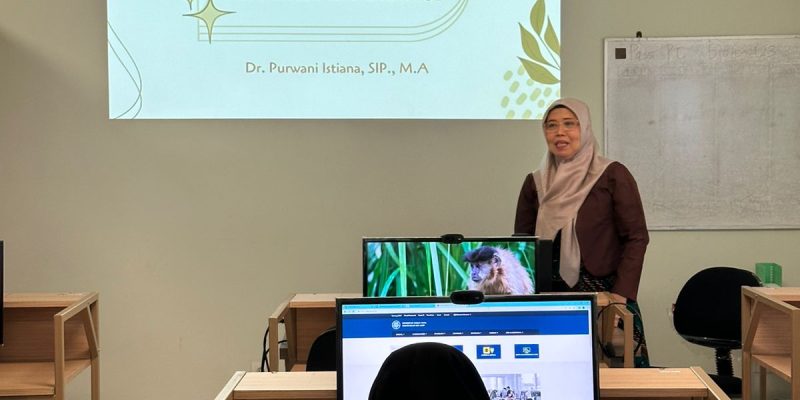
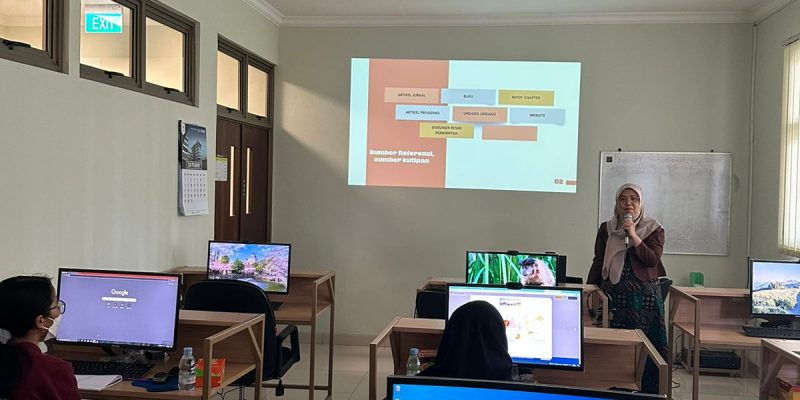
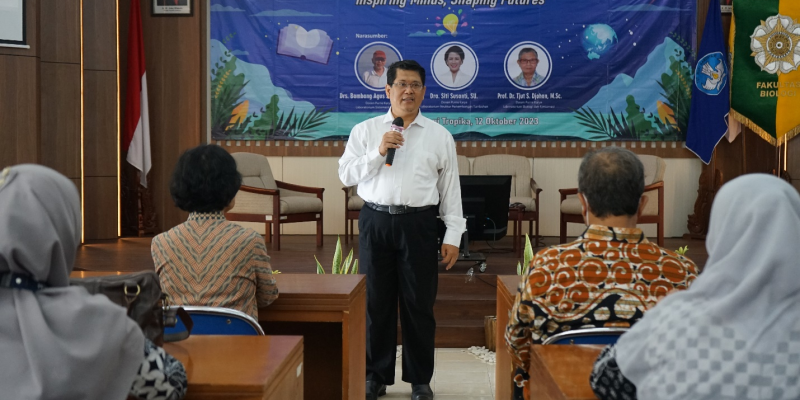
On Thursday, September 28, 2023, the Graduate Student Family (Keluarga Mahasiswa Pascasarjana – KMP) of the Faculty of Biology UGM organized the Circle II Discussion Session 1. The activity revolved around the theme “Boost Your Writing Skill,” with the aim of enhancing the writing abilities of graduate students to produce high-quality manuscripts eligible for publication in reputable journals. The event took place in Room 2 on the 1st Floor of the Sinar Mas Building at the Faculty of Biology, UGM, and was attended by 63 participants, consisting of undergraduate, master’s, and doctoral students from the Faculty of Biology, UGM.
The first day’s activities commenced at 07:45 AM WIB, guided by Faradilla, S.Si. as the MC, and began with a collective prayer to bestow blessings and extensive benefits upon the event, continued with the singing of the Indonesian National Anthem, “Indonesia Raya,” the Gadjah Mada Hymn, and the Biology UGM March. Following this, the Circle II Discussion was officially opened with a welcome speech by Dr.rer.nat. Andhika Puspito Nugroho, S.Si., M.Si., representing Prof. Dr. Budi Setiadi Daryono, M.Agr.Sc., the Dean of the Faculty of Biology, UGM, who was unable to attend. During his address, he expressed his appreciation for the Circle II Discussion event as a valuable activity that supports research publication.Dr. Andika emphasized that writing is a complex task, as it requires guidance and direction. In the graduate program, students must take the initiative to write independently. He also emphasized the importance of publishing research data in scientific journals, rather than solely considering it as a final assignment. Furthermore, he encouraged students to participate in various seminars and conferences to add to their Certificate of Academic Achievement (SKPI) issued by the faculty.
The event continued with a presentation by Dr. Miftahul Ilmi, S.Si., M.Si., on “Writing Effectively.” He emphasized that good writing should have a logical structure and flow that is easy to read. He stated that there is no magic formula for a manuscript to be accepted by reputable journals, but there are four essential criteria: an interesting and relevant theme in the field of study, well-designed research that addresses the hypothesis, valid and significant data, and clear publication writing. He also stressed the important principles of being concise, clear, and logical in writing, while cautioning against common mistakes like using convoluted and ambiguous sentences.The second part of the presentation covered the crucial steps in writing a scientific article. The speaker emphasized that authors must be aware of their target audience and the focus of the article. This includes defining the research problem, research objectives, and research conclusions. The steps in writing a manuscript start with the framework, methodology, results, discussion, introduction, title, and abstract. Additionally, meeting deadlines and seeking revisions from mentors or colleagues were highlighted.
After a short break, the discussion continued with topics on “Citation” and “Publication Ethics” by the guest speaker. They explained the importance of citations in providing context to research, presenting ideas, and acknowledging sources of information. Various sources, such as articles, proceedings, thesis books, newspapers, print media, online sources, and personal communication, can be used for citations. The speakers also discussed the significance of key articles at the beginning of the research and updating the list of references during the research process. They pointed out citation practices that need to be scrutinized, including spurious citations, biased citations, self-citing, and excluding contradictory results citations. Additionally, they highlighted publication ethics related to authorship, data falsification, plagiarism, and predatory journals.
The final session provided tips on “Submission Strategies” for articles, such as selecting a potential journal and adhering to the format specified by the target journal. Each presentation by the speakers was followed by enthusiastic questions from the audience. Questions covered topics like valid methodology selection, avoiding citation loops, authorship determination, and tips for writing cover letters to journal editors.
The activities of the first day concluded at 03:30 PM WIB with the presentation of mementos by the KMP Faculty of Biology, UGM. Finally, the event concluded with a group photo of the speakers, participants, and organizers. The Circle Discussion event is expected to become a regularly held activity to meet the needs of graduate students in Biology at UGM in terms of writing, research, and publishing scientific articles.
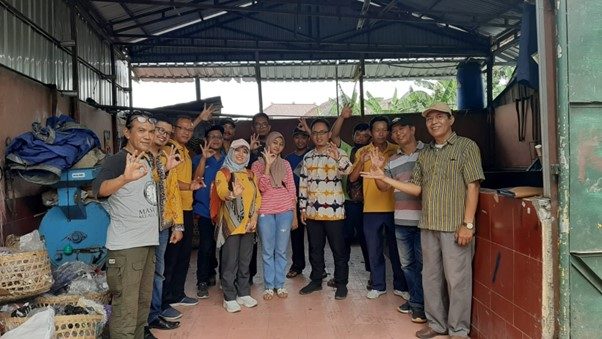
In early March 2023, the Merdeka Belajar Kampus Merdeka (MBKM) – 2023 Research Team from the Faculty of Biology at UGM, led by Dr. Bambang Retnoaji, M.Sc., along with a student named Andi Muhammad Naufal Khaeri, conducted observations on the embryonic development of eggs and the feeding of Ostriches at Mahasvin Farm, Yogyakarta. The purpose of this activity was to understand the process of breeding exotic birds, particularly Ostriches, in Yogyakarta, which is located at Mahasvin Farm.
The Mahasvin Farm exotic bird breeding group is currently making efforts to hatch exotic bird eggs, including Ostriches. These efforts aim to achieve several objectives, including the conservation of exotic animals, the development of exotic wildlife tourism for the community, and, most importantly, the enhancement of educational facilities and media for wildlife development and conservation. The potential for this endeavor is significant, and they have already succeeded in hatching various types of exotic birds. However, there are currently some challenges in maintaining the embryonic development of these exotic birds.
Based on the results of discussions and observations with partners, obstacles in the Ostrich hatching process were identified, such as the imperfections in the incubator machine and the inability of the current feed to fully meet the nutritional needs. The incubator machine currently in use is unable to reach the optimal humidity levels for the development of Ostrich embryos during the incubation process. The ideal incubation temperature for Ostrich hatching is around 36°C-38°C with a relative humidity between 20% and 30% (Brassó, et al. 2020). The incubator machine lacks an egg rotation system, so egg rotation needs to be done manually by opening the incubator door, which leads to fluctuations in humidity levels affecting embryo development, resulting in suboptimal outcomes.Therefore, in May, discussions were initiated to create a new incubator with an automatic egg rotation system that can maintain stable humidity levels within the incubator, allowing for optimal Ostrich embryo development until hatching. Additionally, efforts have been made to formulate a proper feed composition to ensure the successful breeding of Ostriches at Mahasvin Farm.
Currently, the new incubator machine has been successfully manufactured and is in the final checking phase to confirm if crucial indicators during incubation, namely temperature and humidity levels, are within the desired range. Following this verification, the research will proceed to the Ostrich egg incubation process to observe the stages of Ostrich embryo development. [Author: Andi Muhammad Naufal Khaeri]
In an effort to combat the trade of state-protected animals that threatens the sustainability of wildlife, Lecturer from the Faculty of Biology at Gadjah Mada University (UGM) have provided assistance to law enforcement agencies in the Java Bali Nusa Tenggara region in unveiling cases of crime using forensic DNA techniques.

On Monday, September 19, 2023, a joint team consisting of law enforcement officers and faculty members from the Faculty of Biology at UGM worked together to identify evidence related to illegal trade. This case has garnered attention because the evidence obtained is highly diverse, ranging from oil, animal skins, bones, wallets, to traditional Indonesian hats (peci), all suspected to be from protected animals such as tigers, leopards, clouded leopards, and elephants. Dr. Dwi Sendi Priyono, a lecturer from the Faculty of Biology UGM, coordinated the collection of DNA samples from the evidence found during the law enforcement operation. Forensic DNA techniques were then used to analyze these samples and determine the species of the evidence.
This case serves as a prime example of successful collaboration between the academic institution and law enforcement in efforts to protect endangered wildlife. Improved law enforcement and a deep scientific understanding of forensic DNA identification are expected to help reduce the illegal tiger trade in the future. The research team and law enforcement agencies are committed to continuing their cooperation in safeguarding tigers and other endangered wildlife species from the damaging effects of illegal trade. In this regard, Gadjah Mada University (UGM) supports these efforts and will continue to contribute to environmental conservation and wildlife preservation in Indonesia.
On Tuesday, September 12, 2023, the Swanting Team visited the Animal Village one of the villages under the care of the Faculty of Biology at UGM, located in RT 06 RW 16 of Kedung Banteng Hamlet, Sumberagung Village, Moyudan District, Sleman Regency, Special Region of Yogyakarta 55563. The purpose of this visit was to coordinate the implementation of the Community Service Program in the Independent Learning-Kampus Merdeka (PkM-MBKM) Scheme for 2023 Phase II. The Swanting Team was led by Laksmindra Fitria, S.Si., M.Si., and comprised six undergraduate students from the Faculty of Biology UGM, Class of 2020, namely: Nindi Putri Dwi Wardani, Lisna Nur Aini, Fathur Syahrian Ramadhani, Adiva Aphrodita, Diva Nurmalia Sentono, and Rendritio Bahar.
In Phase I (Even Semester of the Academic Year 2022/2023), the Swanting Team had conducted three activities: Eco-enzyme and Microgreens Counseling, Socialization of the Family Aware of Nutrition Program (Kadarzi), and Data Collection on the Health Level of Toddlers and Children. These activities were undertaken to anticipate the occurrence of stunting and wasting in the Animal Village, while also supporting the Indonesian government’s program to accelerate the reduction of stunting and wasting in toddlers and children, which is a priority in the National Medium-Term Development Plan (RPJMN) for 2022-2024.
In Phase II (Odd Semester of the Academic Year 2023/2024), the Swanting Team plans to continue its activities by working with the residents of the Animal Village to cultivate plants and small livestock as a means of meeting the family’s nutritional needs. The selected plants include leafy vegetables (spinach, water spinach, and pakcoi) as well as fruits (longan and starfruit). Meanwhile, the chosen types of livestock are catfish and quail.
During this occasion, the Swanting Team engaged in discussions with fifteen residents of the Animal Village, consisting of the Chairwoman of the Women’s Farmer Group (KWT), the Head of RT 06 Kedung Banteng, representatives from the Animal Village Management, and representatives from Dasawisma. The proposed activities by the Swanting Team were met with enthusiasm, and agreements were reached on the dates for the implementation of these three activities, as follows: (1) Training on cultivating vegetables and fruits on Saturday, September 23, 2023, (2) Training on catfish farming in buckets and aquaponics (budikdamber) on Saturday, October 7, 2023, and (3) Training on quail farming on Saturday, October 21, 2023.
On Saturday, September 23, 2023, the Final and Grand Final rounds of the Biology Brainiac Competition were held by the BIOSPHERE#6 Committee via Zoom Meeting, with a total of 12 teams participating. In the final round, each team took turns answering 5 questions orally via Zoom Meeting breakout rooms. Each question represented one of the five different subfields of Biology. The competition was divided into 2 sessions, each lasting approximately 60 minutes, with an allocated thinking and answering time of 10 minutes per question. The final round commenced at 07:30 AM – 11:30 AM WIB. Following the completion of the Final Round, the Grand Final Round took place from 01:30 PM – 05:30 PM WIB, featuring 5 teams that qualified from the Final Round. The Grand Final participants consisted of teams from SMAK Penabur Gading Serpong, MAS Unggulan Amanatul Ummah, SMAN 1 Blitar, SMAN 2 Tangerang Selatan, and SMAN 1 DEPOK.
During the Grand Final Round, participants were required to present a PowerPoint presentation containing material from a journal cited by the participant and approved by the committee. This was followed by a question and answer session with the examiners (lecturers from the Faculty of Biology at UGM). The Grand Final Round of the Biology Brainiac Competition BIOSPHERE#6 concluded with a closing session and the announcement of the results.
The Grand Final Round marks the culmination of the BIOSPHERE#6 Biology Brainiac Competition. The hope behind organizing the Biology Brainiac Competition is to provide a path for all students in Indonesia to learn to strive towards their dreams and aspirations in higher education, while continuously optimizing their potential through active participation and achievement.
Translate »