Changhua, Taiwan, November 6, 2025 — As part of its ongoing commitment to strengthening global engagement and enhancing academic excellence, the Faculty of Biology, Universitas Gadjah Mada (UGM), conducted an official visit to DaYeh University, located at No.168, University Rd., Dacun, Changhua 515006, Taiwan (R.O.C.). The visit aimed to broaden international collaboration in education, research, and student mobility through various strategic programs.
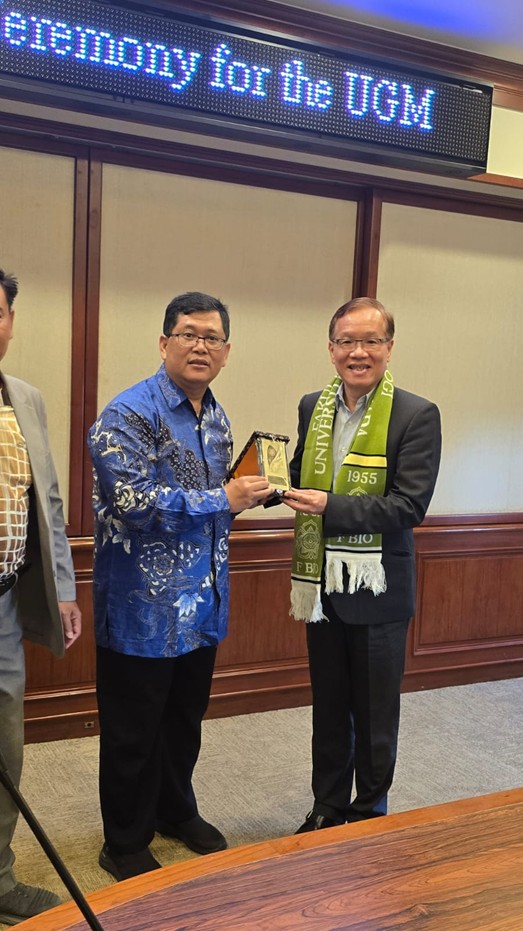
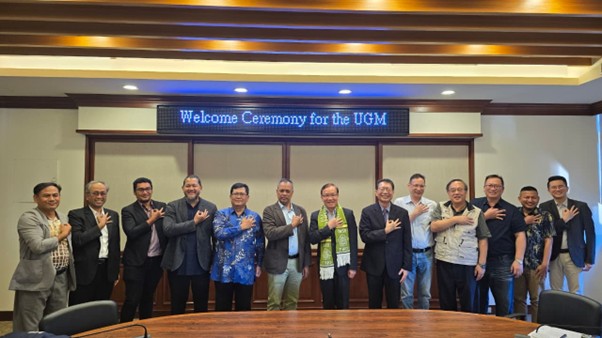
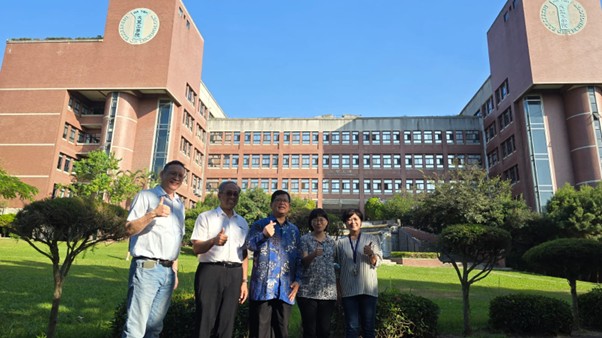
The delegation from the Faculty of Biology UGM was led by Prof. Dr. Budi Setiadi Daryono, M.Agr.Sc., Dean of the Faculty of Biology, accompanied by Prof. Dr. Bambang Retnoaji, M.Sc., Vice Dean for Academic and Student Affairs. The delegation also included representatives from other faculties: Prof. Roto, Ph.D., Vice Dean for Academic and Student Affairs of the Faculty of Mathematics and Natural Sciences (MIPA); Dr. Erliss Sulistyarini, Vice Dean for Academic and Student Affairs of the Faculty of Geography; Dr. Andung Bayu Sekti; and Arif Misbahul, Director of the Taiwan Center UGM.
DaYeh University was represented by several university leaders, including Prof. Dr.-Ing. Shih-Jen Yeh, Vice President of DaYeh University; Prof. Yi-Ching Chen, Ph.D., Department of Engineering; Prof. Yi-Lin Chen, Ph.D., Department of Environmental and Safety Engineering; Prof. Daniel Yuen-The Liu, Vice Dean, Office of Foreign Affairs; and Asst. Prof. Wen-Kuang Hsu, Ph.D., Department of Medicinal Botanical and Food on Health Applications.
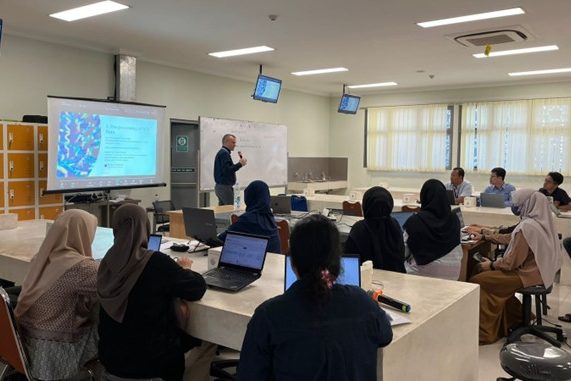
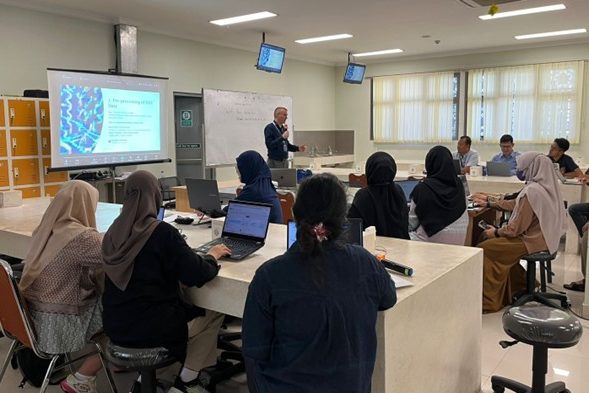
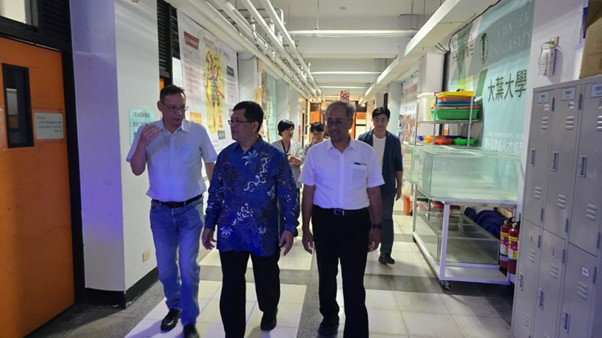
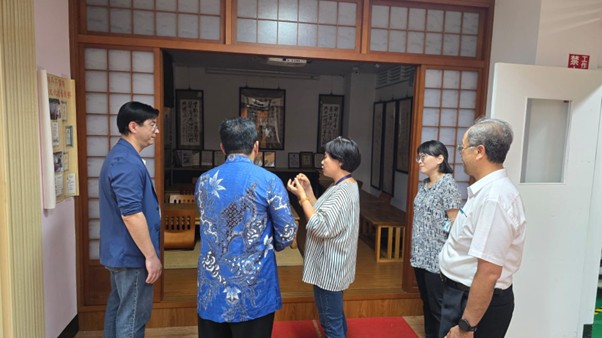
The meeting began with institutional profile presentations from both universities. In his presentation, Prof. Budi Setiadi Daryono highlighted the achievements and vision of the Faculty of Biology UGM in tropical biology research and education, as well as potential areas of collaboration in biodiversity, conservation, biotechnology, and biomedicine. The main discussion focused on developing joint programs such as Double Degree, Student Exchange, Co-supervision, and Fast Track schemes, followed by a tour of Dayeh University’s laboratory facilities. Both institutions also explored potential collaborative research in biomedical sciences—particularly studies on lung and ovarian cancer—as well as research in food and nutritional sciences and environmental sciences. Further discussions included projects involving zebrafish as a model organism and the development of plant tissue culture for various commodities such as roses, strawberries, and bananas.
As part of the collaboration initiative, DaYeh University offered scholarship opportunities for up to 20 students from the Faculty of Biology UGM to participate in Double Degree programs in biomedical and environmental sciences. This program provides students with valuable international academic experience and the opportunity to build professional networks in Taiwan.
This visit marks a strategic step for the Faculty of Biology UGM in expanding international partnerships, strengthening collaborative research capacity, and supporting the university’s mission of advancing higher education internationalization and global competitiveness. The initiative also aligns with the Faculty’s commitment to the United Nations Sustainable Development Goals (SDGs), particularly SDG 4 (Quality Education), SDG 9 (Industry, Innovation, and Infrastructure), SDG 15 (Life on Land), and SDG 17 (Partnerships for the Goals), through efforts to enhance the quality of biological education, promote innovative cross-disciplinary research, foster global collaboration, and contribute to biodiversity conservation and sustainable scientific development.