Arsip:
SDG 3 : Establish Good Health and Well-Being
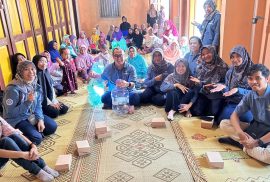
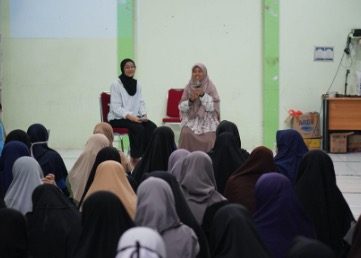
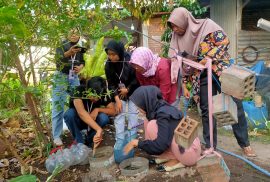
As part of its community service commitment, the Faculty of Biology UGM, in collaboration with the Indonesian Orchid Society (PAI) DIY, organized an “Orchid Cultivation Training” on September 11, 2024, at the RW62 Hall in Candi Gebang Permai, Sleman. The event targeted PKK members from Candi Gebang Permai Residential Jetis Village Sleman Regency. The training aimed to introduce orchid cultivation and care to participants, in line with the 2020-2024 National Development Goals (SDGs) related to gender equality (SDGs No.5), decent work and economic growth (SDGs No.8), responsible consumption and production (SDGs No.12), and life on land (SDGs No.15).
Over 54 enthusiastic PKK members participated, learning about orchid care, propagation, and cultivation management. The event was opened by Abdul Razaq Chasani, S.Si., M.Si., Ph.D., Head of the Tropical Biology Department, Faculty of Biology UGM, with presentations from Prof. Dr. Endang Semiarti and Dr. Ixora Mercuriani. This training was guided by an orchid expert from the Faculty of Biology UGM, the Faculty of Mathematics and Science Yogyakarta State University, students, and the Biology Orchid Study Club (BiOSC) members.
The training emphasized orchid characteristics, seed selection, watering, fertilization, pest management, and efficient cultivation techniques. This initiative aims to empower PKK members, promote local resources, and potentially create new business opportunities. The training also demonstrated effective collaboration between academic institutions and local communities.
Cervical cancer ranked second most common cancer in Indonesia, with 36,633 reported cases in 2021, and the third leading cause of cancer-related deaths. Current cervical cancer treatment is chemotherapy, radiotherapy, and surgery with side effects that can significantly reduce the patient’s quality of life. Most cases of cervical cancer are caused by HPV (Human Papillomavirus) infection, which produces E6 and E7 oncoproteins. These proteins interfere with programmed cell death (apoptosis), accelerate the cell cycle, and lead to cell immortality, resulting in cancer.
Combination Salacca zalacca (Gaertn.) Voss Seeds and Citrus maxima (Burm.) Merr. Peel Waste has shown potential as an alternative cervical cancer treatment. This discovery comes from research conducted by UGM students in the Student Creativity Program for Exact Science Research (PKM-RE). The team, consisting of Aditya Latiful Azis (Biology 2022), Asy Syifa Paras Ceria (Biology 2022), Shabrina Farras Tsany (Medicine 2021), Rahmalia Diani Saffana (Medicine 2021), and Faqih Fikri Nuryanto (Pharmacy 2023), under the supervision of Woro Anindito Sri Tunjung, M.Sc., Ph.D., has explored the potential of Salacca zalacca (Gaertn.) Voss Seeds and Citrus maxima (Burm.) Merr. Peel Waste as an alternative therapy for cervical cancer.
Salacca zalacca (Gaertn.) Voss Seeds contain potent antioxidants including polyphenols, alkaloids, and terpenoids, while Citrus maxima (Burm.) Merr. Peel Waste is rich in flavonoids and lycopene, which are cytotoxic to cancer cells. The herbal remedy derived from these two ingredients is predicted to have milder side effects.
“This research aims to utilize Indonesia’s natural resources for cervical cancer therapy. Salacca zalacca (Gaertn.) Voss Seeds and Citrus maxima (Burm.) Merr. peel wastes were selected due to their secondary metabolite content, which has potential anticancer properties. Additionally, the increasing production and consumption of Salacca zalacca (Gaertn.) Voss and Citrus maxima (Burm.) Merr. lead to organic waste issues. We hope this research offers an eco-friendly and milder side effect alternative treatment,” said Aditya, the team leader.
The research conducted for four months involved various tests, including phytochemical screening, in silico studies, anti-inflammatory activity tests, cytotoxicity and antiproliferative assays using the MTT method, inhibition of HeLa cell migration, and apoptosis tests.
The result showed the combination of Salacca zalacca (Gaertn.) Voss Seeds and Citrus maxima (Burm.) Merr. Peel Waste could inhibit inflammation, halt cancer cell migration, and trigger cell death (apoptosis).
The results of this study are expected to pave the way for cervical cancer therapy that harnesses Indonesia’s natural wealth and supports zero-waste initiatives. [Written by: Aditya Latiful Azis]
On Saturday, August 31, 2024, Bioconnect BEM Biology UGM X Red Ant Tour HMPS Biology UIN Malang successfully held at the Tropical Biology Auditorium, Faculty of Biology UGM with the theme “Expanding Relationships to Create Innovation in Organizations. The event attended by 59 members of BEM Biology UGM and 53 members of HMPS Biology UIN Malang.
Bioconnect BEM Biology UGM is a program organized by the Department of Public Relations and Networks, aimed at strengthening relationships and sharing knowledge with various organizations, both within and outside the Faculty of Biology UGM. This event served as a platform for both organizations to understand each other’s structures and work programs, evaluate performance, and foster camaraderie.
The event opened with speeches from Zulfa Mubarokatul Faiqoh, Chair of the Red Ant Tour HMPS Biology UIN Malang, and Rofina Rima Permatasari, Chair of Bioconnect BEM Biology UGM. Next were speeches from Muhammad Nurul Fathoni Adha, Chair of BEM Biology UGM, and Sherly Nafisa, Chair of HMPS Biology UIN Malang.
Following the opening session, a 90-minute Focus Group Discussion (FGD) was held, where participants exchanged ideas and experiences based on their respective organizational roles. The event continued with an ice-breaking session, tree planting at the UGM Biology Forest and an exchange of souvenirs between the two organizations. The event concluded with documentation.
The event ran smoothly without any obstacles, thanks to the hard work and collaboration of the organizing committees from both parties, ensuring the success of this collaborative event.
On Saturday, August 31, 2024, the Parasitology Division of the Animal Systematics Laboratory, Faculty of Biology, UGM, held a training session titled “Morphometric-Geometry and Comparison Techniques.” The event took place in the Upper Conference Room of the Faculty of Biology UGM. The training was attended by 29 participants, including PhD and master’s students, as well as students from the Lecturer-Student Collaboration (KDM) and MBKM programs.
The main speaker was Mr. Sidiq Setyo Nugroho, S.Si., M.Sc., M.P.H., from the Biosystematics and Evolution Research Center, BRIN, and an alumnus of the Faculty of Biology, UGM. In her opening remarks, the Chair of the Organizing Committee, Dr. Dra. RR. Upiek Ngesti W. Astuti noted that the event aimed to equip students with additional skills for conducting in-depth research and supporting scientific publications.The event was inaugurated by the Vice Dean for Research, Community Service, Collaboration, and Alumni Affairs, Dr. Eko Agus Suyono, M.App.Sc., who emphasized the importance of lifelong learning and fostering collaborative networks among participants.
The training covered the theoretical and practical Morphometric-Geometry and Comparison Techniques including wing geometry, Landmark-based, Ooutline-based, semi landmark, and the advantages and limitations of these techniques. Participants were introduced to software tools such as tpsUtil, tpsDig2, and MorphoJ and engaged in hands-on practice, including wing preparation and photo digitization of mosquito wings from the genera Anopheles, Aedes, and Culex. This training supports the SDGs’ goals especially SDGs No.3 on good health and well-being, SDGs No.4 on quality education, and SDGs No.17 on partnership for the goals.
On Friday, August 16, 2024, the BEM Biology Cabinet Padma Birawa organized the BEM Skill Sharing Moment (MOBIL) #1. The event took place at 4:00 PM in Room 1, Building B, Faculty of Biology, guided by Aditya Latiful Azis and Rima Arvisya Natania Putri. A total of 40 young BEM Biology staff members attended the event. The theme for MOBIL #1 was “Synergy in Action: Achieving More Together,” covering two main topics. The event began with a prayer and opening remarks from Field Coordinator, Achmad Nadhmi Arfa, followed by seminars.
The first seminar session featured speaker Lara Ayu Oktaviani, who presented on effective communication, time management, work professionalism, and conflict management. The session was engaging, incorporating Mentimeter to enhance participant involvement and employing the “written memory” technique to aid participants in concentrating on the material. The next session was led by Aghniya Faza Kencana and Firchamy Vuqi Aulia, who discussed the importance of SWOT analysis and its role in organizations.
The event concluded with the presentation of souvenirs to the speakers and a group photo session. It is hoped that this event could provide the young members of BEM Biology with new insights and skills.
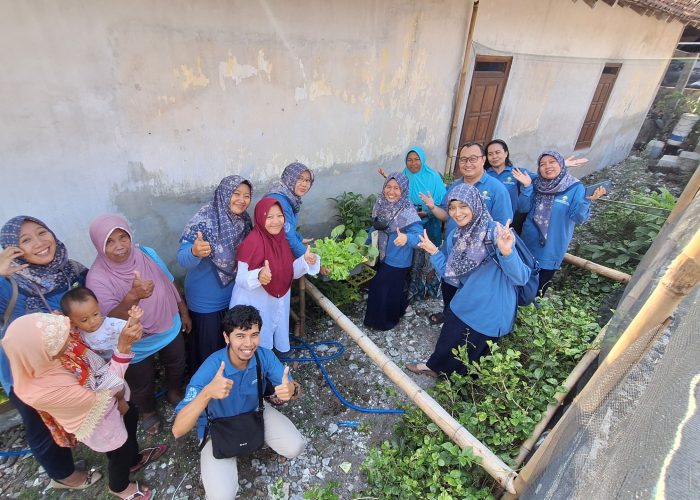
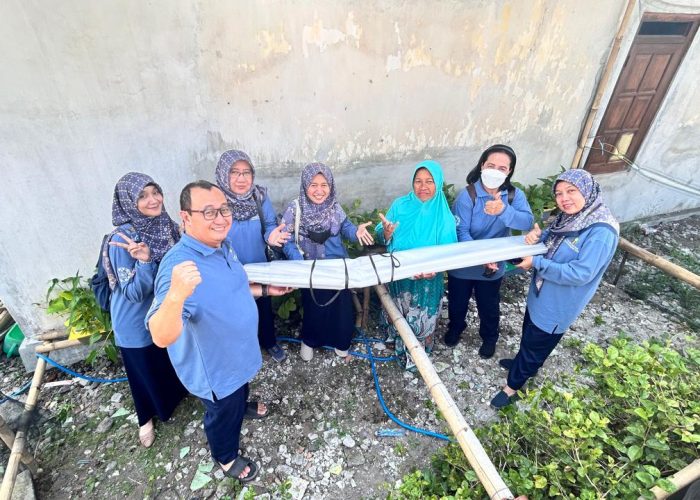
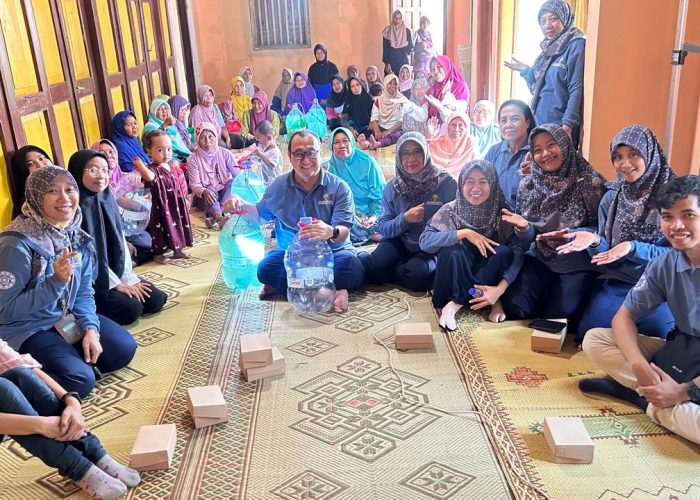
On Monday, August 26, 2024, a community service event was held in Wukirsari Village, Cangkringan District, Sleman Regency. Wukirsari Village Partner was one of the nine villages mentored by the UGM Faculty of Biology in 2024. The event was opened and moderated by Dr. Maryani, M.Sc., with remarks from Dr. Eko Agus Suyono, S.Si., M.App.Sc., a representative from the Mitra Wukirsari Village Team. The main training material was presented by Prof. Dr. Diah Rachmawati, S.Si., M.Si., on the topic of the Potential & Prospects of Hydroponic Vegetable Cultivation. Hydroponics is a plant cultivation technique that uses water as a medium instead of soil, and is distinct from pot cultivation and vertical farming techniques, offering numerous advantages and ease of setup.
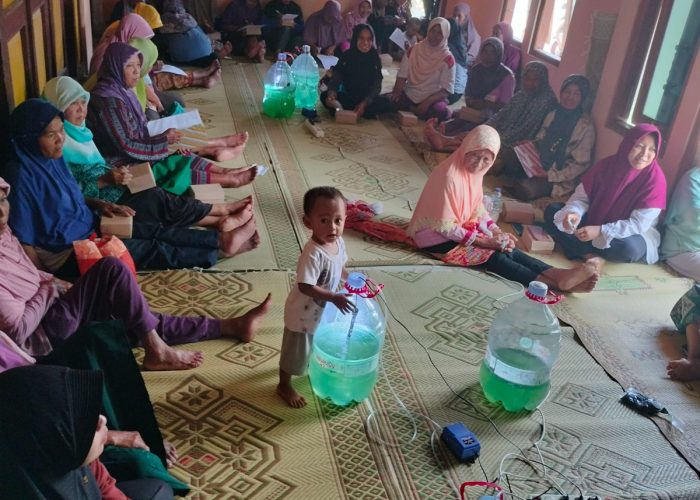
During this event, the village women of Sruni were introduced to the Wick System, a simple hydroponic method that does not use a pump and therefore incurs no electricity costs, making it cheaper and easier to set up. The plants used for hydroponic demonstration included lettuce, mustard greens, bok choy, and water spinach, though other plants such as chili peppers, tomatoes, bell peppers, beans, spinach, cucumbers, and fruit plants like strawberries and melons can also be grown hydroponically.
The advantages of hydroponic techniques include no need for large land areas, efficient water use, high productivity, no soil media, optimal nutrient conditions, reusable nutrient media, and freedom from pests and weeds. Therefore, it was hoped that the Sruni villagers would implement hydroponic techniques at home to enhance food self-sufficiency. Key factors to consider in hydroponic cultivation include the health of seedlings (healthy, green, and disease-free), media, oxygen availability, aeration, pH levels, light intensity, and temperature.
Dr. Siti Nurbaiti, S.Si. explained the steps for hydroponic plant cultivation. The first step involved preparing tools and materials, seeding, making nutrient media, and transferring seedlings into the hydroponic nutrient media. Seeding was done in rock wool for about 4-5 days. Nutrient solution preparation involved mixing solutions A and B in a 5 ml/liter ratio. Participants practiced setting up wicks in hydroponic containers, preparing nutrient media, and transferring prepared seedlings into the Wick System hydroponic media. Harvest-ready bok choy from hydroponic cultivation was displayed as a success example, inspiring participants to apply hydroponic techniques at home.
The event was attended by 27 participants from the Sruni Village PKK, divided into five groups, each guided by a faculty member. Faculty members involved included Rina Sri Kasiamdari, S.Si., Ph.D., Utaminingsih, S.Si., M.Sc., Dr. Aprilia Sufi Subiastuti, S.Si., Dr. Wiko Arif Wibowo, S.Si., and Novita Yustinadiar, S.Si., M.Si. The community was enthusiastic about practicing hydroponics, finding it easy to apply at home and capable of meeting daily food needs, thus supporting self-sufficiency in food. The event aimed to contribute to Indonesia’s SDGs: (1) No Poverty; (2) Zero Hunger; (3) Good Health and Well-being; and (12) Responsible Consumption and Production.
At the end of the event, a discussion was held on the material covered, and a quiz with door prizes was conducted, increasing participants’ enthusiasm for answering questions about hydroponic techniques. Monitoring was also carried out on the compost and liquid fertilizer production from a previous event to evaluate and ensure the community’s consistency in reducing waste burned or disposed of in landfills by converting organic waste into fertilizer.
SDGs:
#SDG 1: No poverty
#SDG 2: Zero Hunger
#SDG 3: Good Health and Well-being
#SDG 12: Responsible Consumption and Production
On Saturday, August 24, 2024, the Graduate Student Association (KMP) of the Faculty of Biology UGM held a Graduate Student Gathering (TAKSA) at the Tropical Biology Auditorium, Faculty of Biology UGM with the theme “Break Your Limit, Make Your Own Way” aimed to foster relationship among graduate students. The event commenced at 7:45 AM WIB with opening remarks from the MCs, Aryan Mustamin, S.Si., and Umu Intan Kinasih, S.Si., followed by the singing of the Indonesian National Anthem, the Gadjah Mada Hymn, and the Faculty of Biology March. Subsequently, opening speeches were delivered by Wahyul Fatwatulumam, S.Si., Chair of the KMP Faculty of Biology UGM; Dr. rer. Nat. Andhika Puspito Nugroho, S.Si., M.Si., Advisor of the KMP Faculty of Biology UGM; and Prof. Dr. Budi Setiadi Daryono, M.Agr.Sc., Dean of the Faculty of Biology UGM.
The TAKSA event was preceded with a talk show led by Dini Iman Sari, S.Si., featuring Aryo Seto Pandu Wiranto, S.Si., M.Sc. as the speaker. He highlighted the importance of stepping outside one’s comfort zone to create new opportunities. He also stressed the value of recognizing one’s strengths, staying connected with close ones, and avoiding overthinking and unnecessary fear. Additionally, he urged the audience to embrace new experiences and take courageous actions, reminding them that achieving dreams requires hard work. The talk show concluded with a Q&A session.
The event then moved on to a sharing session and the presentation of the work programs and activities of each KMP division. Afterward, participants engaged in a game using the Quizziz app to determine the top three winners. That continued with a National Insight Test (TWK) game that involved three teams. The winner of the entire game round ends with the awarding of prizes. The closing of TAKSA ended with a prayer by Emi Suhaemi, S.Si., and photo documentation.[Author: KMP]
On Saturday, August 24, 2024, the Graduate Student Association (KMP) of the Faculty of Biology UGM held a Graduate Student Gathering (TAKSA) at the Tropical Biology Auditorium, Faculty of Biology UGM with the theme “Break Your Limit, Make Your Own Way” aimed to foster relationship among graduate students. The event commenced at 7:45 AM WIB with opening remarks from the MCs, Aryan Mustamin, S.Si., and Umu Intan Kinasih, S.Si., followed by the singing of the Indonesian National Anthem, the Gadjah Mada Hymn, and the Faculty of Biology March. Subsequently, opening speeches were delivered by Wahyul Fatwatulumam, S.Si., Chair of the KMP Faculty of Biology UGM; Dr. rer. Nat. Andhika Puspito Nugroho, S.Si., M.Si., Advisor of the KMP Faculty of Biology UGM; and Prof. Dr. Budi Setiadi Daryono, M.Agr.Sc., Dean of the Faculty of Biology UGM.
The TAKSA event was preceded with a talk show led by Dini Iman Sari, S.Si., featuring Aryo Seto Pandu Wiranto, S.Si., M.Sc. as the speaker. He highlighted the importance of stepping outside one’s comfort zone to create new opportunities. He also stressed the value of recognizing one’s strengths, staying connected with close ones, and avoiding overthinking and unnecessary fear. Additionally, he urged the audience to embrace new experiences and take courageous actions, reminding them that achieving dreams requires hard work. The talk show concluded with a Q&A session.
The event then moved on to a sharing session and the presentation of the work programs and activities of each KMP division. Afterward, participants engaged in a game using the Quizziz app to determine the top three winners. That continued with a National Insight Test (TWK) game that involved three teams. The winner of the entire game round ends with the awarding of prizes. The closing of TAKSA ended with a prayer by Emi Suhaemi, S.Si., and photo documentation.[Author: KMP]
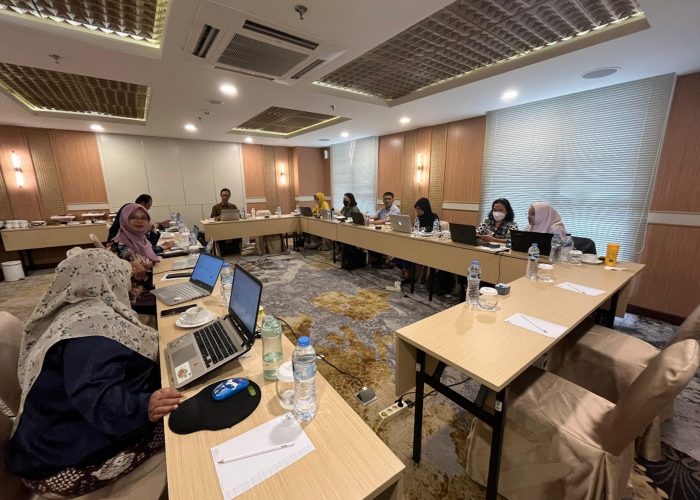
Thursday, August 8, 2024 – The Faculty of Biology Universitas Gadjah Mada held a workshop on Artificial Intelligence (AI) in the implementation of outcome-based education for Doctor in Biology Study Program. This event held in hybrid manner, at the Cakra Kusuma Hotel and via zoom meeting. Attended by all lecturers for the doctoral program, the workshop aimed to enhance the quality of education within the Faculty of Biology UGM.
In his opening remarks, the Dean of the Faculty of Biology UGM, Prof. Dr. Budi Setiadi Daryono, M.Agr.Sc., emphasized the importance of understanding Artificial Intelligence (AI) to support the teaching and learning process. The event continued with a presentation delivered by Prof. Luke Daniels, Ph.D., from The College of Idaho, on Development of Doctoral Program to Address Global Challenges. Prof. Daniels highlighted the need for doctoral graduates to be innovative in their fields. Therefore, curriculum development must consider the strengths that already possessed by the university while also keeping pace with developments such as the use of Artificial Intelligence (AI) to enhance the quality of learning and research.
The 2nd session was delivered by the Director of Directorate of Academic Studies and Innovation (DKIA) UGM, Dr.Agr.Sc. Ir. Hatma Suryatmojo, S.Hut., M.Si., IPU. ASEAN Eng. The presented topic was “Utilizing Artificial Intelligence in Learning and Research”. Dr. Hatma commended the quick response of the Faculty of Biology to the advancements of the AI era in supporting educational and research, as well as community services.
In his presentation, Dr. Hatma highlighted the increasingly indispensable role of AI in teaching and learning activities. He explained AI can be effectively integrated to enhance efficiency and effectiveness. A point he emphasized was the role of lecturers in overseeing the use of AI to ensure its relevance. Lecturers obliged to stimulate and encourage students to understand and deepen their knowledge through further discussion. The Vice Dean, Dr. Eko Agus Suyono, M.App.Sc., added that the Faculty of Biology UGM has already implemented the latest technology in drafting the Strategic Plan (Renstra) 2023.
The next session was conducted by the Head of the Sub-Directorate of Academic Studies DKIA UGM, Dr. Irwan Endrayanto, S.Si., M.Sc., on Simaster for Course Plan (RPKPS) and Portfolios. As an introduction, Dr. Irwan explained the standards of the learning process at Universitas Gadjah Mada, emphasizing the importance of assessment in the learning process.
Effective and efficient assessment requires well-structured RPKPS. Technology, such as the Simaster plays a role in facilitating the creation and management of the document. During this session, Dr. Irwan was assisted by Andri Andreas Priyanto and Muhammad Lathif Febriyanto, S.Pd., who guided lecturers through the practical process of filling out and preparing RPKPS and portfolios using the Simaster.
This workshop demonstrates the Faculty of Biology UGM’s commitment to enhancing the quality of education and the competence of lecturers in implementing the Tri Dharma of higher education particularly in the Doctoral Program, align with the Sustainable Development Goals (SDGs) on providing quality and inclusive education (SDGs No. 4).
Effective and efficient assessment requires well-structured RPKPS. Technology, such as the Simaster plays a role in facilitating the creation and management of the document. During this session, Dr. Irwan was assisted by Andri Andreas Priyanto and Muhammad Lathif Febriyanto, S.Pd., who guided lecturers through the practical process of filling out and preparing RPKPS and portfolios using the Simaster.
This workshop demonstrates the Faculty of Biology UGM’s commitment to enhancing the quality of education and the competence of lecturers in implementing the Tri Dharma of higher education particularly in the Doctoral Program, align with the Sustainable Development Goals (SDGs) on providing quality and inclusive education (SDGs No. 4).
The Entomology Laboratory of the Faculty of Biology, Gadjah Mada University held a guest lecture entitled “Baculovirus for Integrated Pest Management.” The event took place in the Upper Meeting Room of Building A and was moderated by Aryo Seto Pandu Wiranto, S.Si., M.Sc. The event was held on Wednesday, July 31, 2024, starting with remarks from Drs. Hari Purwanto, M.P., Ph.D., as the Head of the Entomology Laboratory of the Faculty of Biology. He emphasized the importance of innovative pest control strategies in increasing agricultural productivity and ensuring food security.
The event continued with the presentation of material by Prof. Said Ali Eid Elsalamouny from Cairo University, Egypt. Prof. Said delivered an in-depth presentation on the importance of using microbes, especially entomopathogenic viruses, as pest control agents in agriculture. He explained that several genera of viruses, such as Alphabaculovirus and Betabaculovirus, can effectively target pests from the order Lepidoptera, which includes many agricultural pests. Prof. Said also explained the use of Gammabaculovirus to control pests from the order Hymenoptera and Deltabaculovirus to control pests from the order Diptera. His presentation emphasized the potential of these viruses in the integrated pest management (IPM) system, which is very important for sustainable agriculture.
One of the highlights of the lecture was Prof. Said’s discussion on the mechanism of virus isolation from Olive Leaf Moth larvae, Palpita vitrealis. He explained the identification process consisting of direct observation of symptoms, observation using light and electron microscopes, and molecular techniques. This research resulted in the identification of a new type of Nucleopolyhedrovirus. To increase the effectiveness of Baculovirus as a biocontrol agent, Prof. Said explained several important factors that need to be considered, namely observation of insect behavior, timeliness in Baculovirus application, use of feeding stimulants, UV protectants, ensuring the right concentration, use of surfactants and adhesives. These factors are very important to maximize the impact of Baculovirus in pest control.
The material delivery session ended with a Q&A session, where participants actively interacted with Prof. Said, seeking further insights into the practical application of Baculovirus in agriculture. The guest lecture was closed with a group photo and participants left the event with renewed enthusiasm, understanding the important role of innovative pest control strategies in achieving food security and environmental sustainability. This event not only demonstrated progress in the field of Entomology but also strengthened the commitment of the Faculty of Biology, Universitas Gadjah Mada to contribute to the global goals of sustainable development, especially in the field of agriculture to prevent hunger (SDG 2) and a healthy and prosperous life (SDG 3) and safe for the environment (SDG 15).