Arsip:
SDG 3 : Establish Good Health and Well-Being
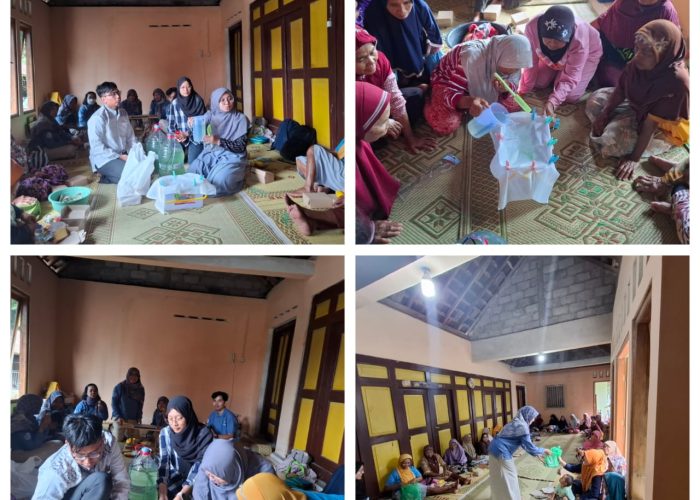
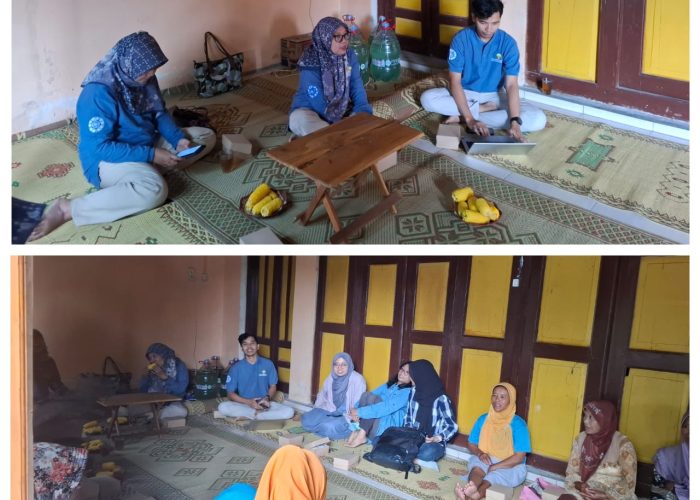
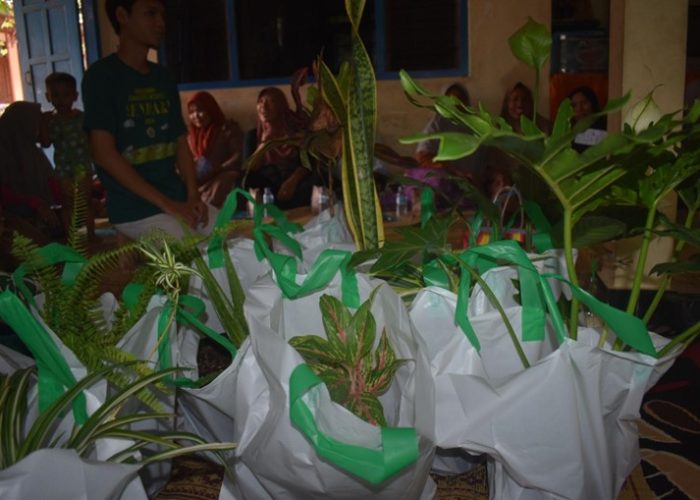
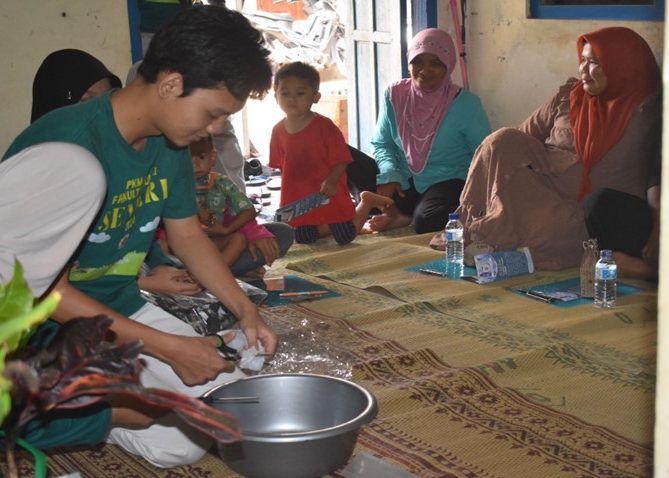
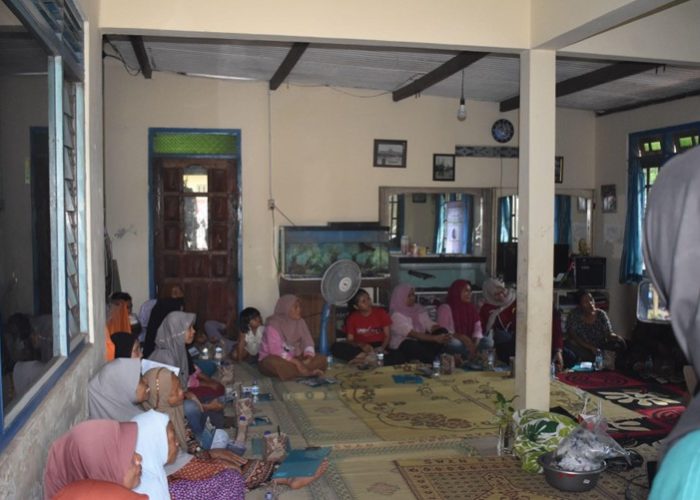
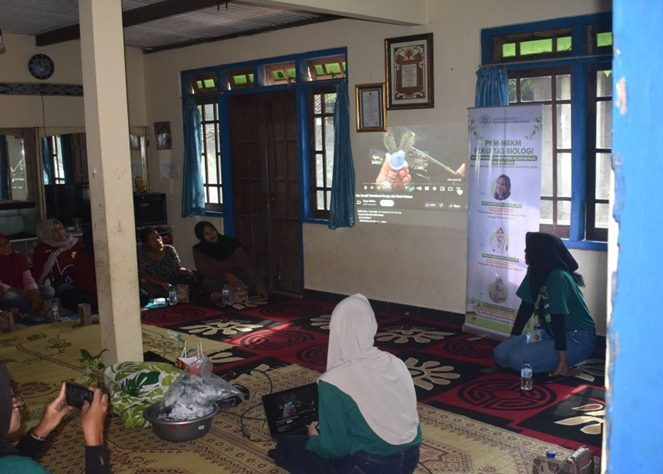
On Saturday, October 12, 2024, The Faculty of Biology organized a seminar on Environmentally Friendly Organic Waste Management with Catalytic Microbes and Biostimulant Applications in Agriculture and Horticulture at the Manukan Hamlet Meeting Hall, Condong Catur Village, Sleman. This seminar was part of the 2024 Community Service Program under the Merdeka Belajar Kampus Merdeka (MBKM) led by Prof. Dr. Endah Retnaningrum, M. Eng., with three student members: Saffanah, Fadhila Nujannah, and Sekar Alya Maharani. The event was attended by 30 members of the Women Farmers Group (KWT) from Manukan Hamlet.
The event consisted of two presentation sessions and a discussion session. The first presentation was delivered by Prof. Dr. Endah Retnaningrum, M. Eng. on Environmentally Friendly Organic Waste Management with Catalytic Microbes. She highlighted organic waste commonly disposed of through landfilling at Final Processing Sites (TPA), which still contributes to water, soil, and air pollution. Nevertheless, organic waste can be effectively processed into a more environmentally sustainable form, utilizing catalytic microbes found in the intestines of Black Soldier Fly (BSF) larvae. The organic waste management process involves sorting organic waste, adjusting the waste particle size, and maintaining BSF larvae within the organic waste until complete decomposition is achieved by the catalytic microbes in BSF larvae’s intestines.
The second presentation focused on Biostimulant Applications in Agriculture and Horticulture by Prof. Dr. Kumala Dewi, MSc.St. Biostimulants contain various supplements such as nutrients, amino acids, plant or seaweed extracts, humic acid, chitosan, and beneficial microbes (Azotobacter spp., mycorrhizal fungi, Rhizobium spp., and Azospirillum spp.). These biostimulants benefit agricultural and horticultural practices as they stimulate nutrient absorption by plants, enhance crop quality and yield, boost the activity of rhizosphere microbes and enzymes, increase hormone availability, and promote photosynthesis. Biostimulants can reduce the use of chemical fertilizers, lower greenhouse gas emissions, support green agriculture, increase community income, and contribute to the national food security program.
Following the presentations, there was an engaging discussion and Q&A session with enthusiastic participants, and the event concluded with a group photo. This seminar aligns with the Sustainable Development Goals (SDGs), especially SDGs No.6 on clean water and sanitation, SDGs No. 11 on sustainable cities and communities, SDGs No. 12 on responsible consumption and production, and SDGs No. 15 on life on land.
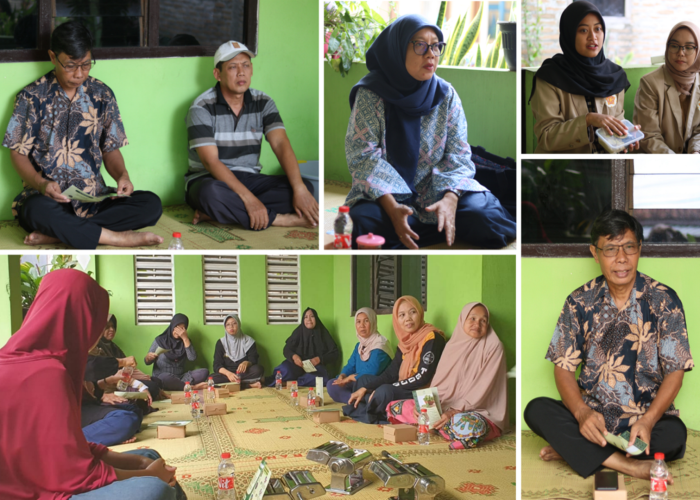
Kulon Progo, October 10, 2024—The Community Service Program (PkM) Team under DRTM Scheme Partnership of the Ministry of Education, Culture, Research and Technology, Faculty of Biology UGM led by Sukirno, S.Si., M.Sc., Ph.D. together with the student team members consisting of R. Hanindyo Adi, S.Si., M.Sc., Aryo Setyo Pandu Wiranto, S.Si., M.Sc., Puji Lestari S.Pd., Syefrina Rosyada, S.Si., and Kaifa Salwa Arrahma together with Omah JAMTRA partners, namely Mr. Yunianto Hargo Nugroho, S.Hut, Mrs. Nurdiana Setianingsih, Mrs. Suparti, and Mr. Sunu held insect knowledge training and brainstorming activities with the community of Crangah Hamlet, Hargotirto Village, Kokap Sub-district, Kulon Progo Regency to explore the potential as an entomology-based tourist village.
In this activity, the team together with Omah JAMTRA partners visited the house of Mr. Tukino as the Head of RT 47 Crangah Hamlet as a gathering place for the community. This activity was attended by residents of Crangah Hamlet totaling around 35 people, as well as community leaders including the Head of RT, Head of Hamlet, and representatives of the Hargotirto Village.
This activity was guided by Puji Lestari S.Pd as the host and continued with remarks by community leaders. Furthermore, in the core session, material was delivered entitled “Endangered Insect Conservation: Potential of Entomology Eduventure-Based Tourism Village” by Sukirno, S.Si., M.Sc., Ph.D.
The activity was continued with a discussion and brainstorming session related to the potential of Padukuhan Crangah as a tourism village. In addition, this session also held a sharing session with the manager of Omah JAMTRA, namely Mr. Yunianto Hargo Nugroho, S.Hut who provided his knowledge and insight regarding the cultivation of Samia silkworms which he has been doing for years. The series of activities were closed with lunch with residents and joint documentation.
This introduction and potential exploration activity went smoothly and the team was received with great enthusiasm by the residents. Through the presentation of this material and brainstorming, it is hoped that good cooperation will be established between Padukuhan Crangah as a place for the conservation of rare insects as well as a tourism village based on entomology eduventures.
This community service activity is expected to contribute to the Sustainable Development Goals, namely No Poverty; Industry, Innovation, and Infrastructure; and Partnership for the Goal.
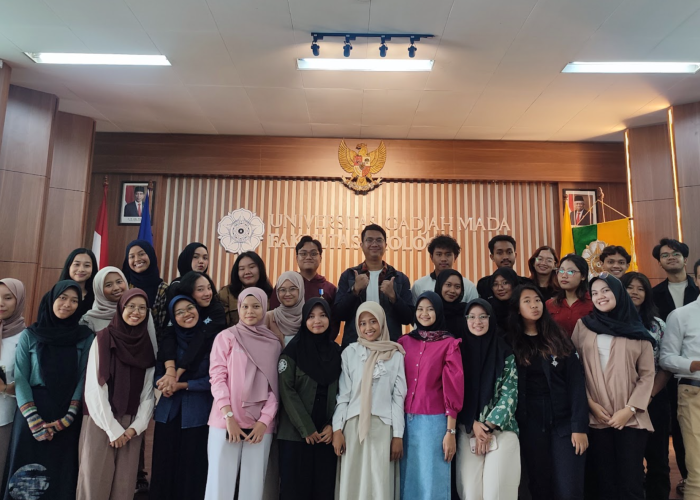
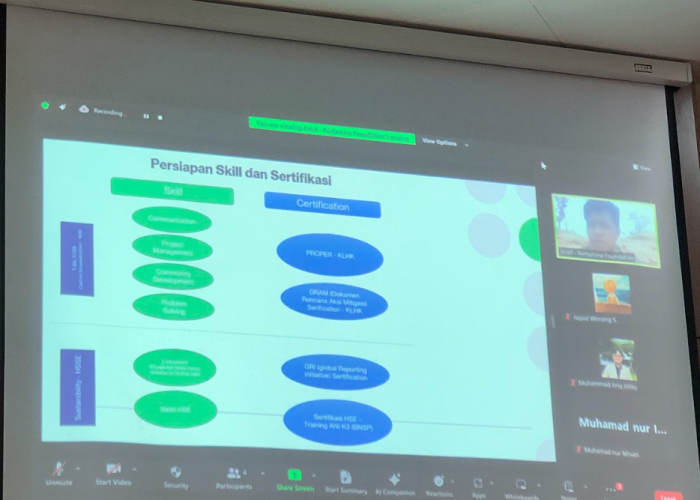
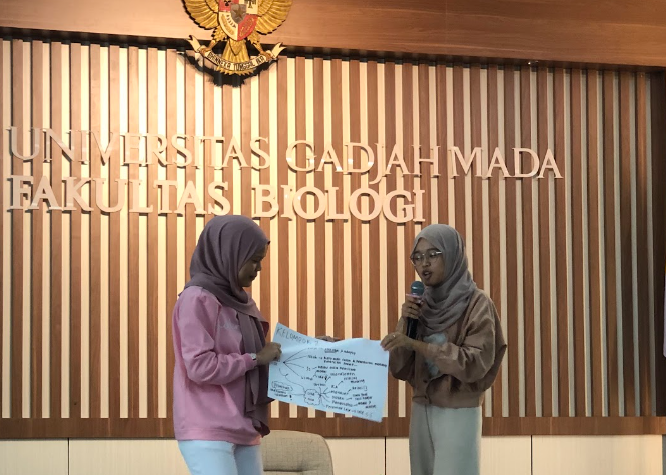
On Friday, October 11, 2024, the Faculty of Biology at Gadjah Mada University (UGM) held the third day of Biocapture (Biology Career Preparation for the Future) in the Tropical Biology Auditorium. The event commenced at 1:30 PM, guided by Feliciana Clara Henderison as moderator.
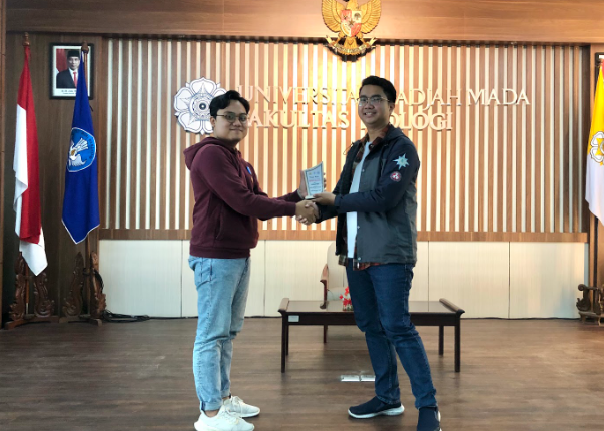
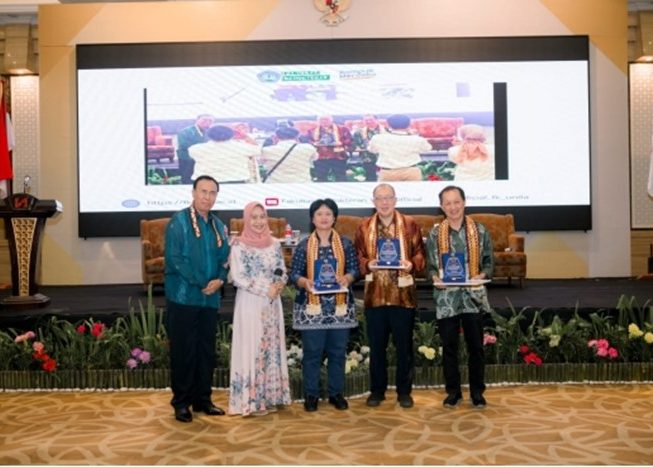
The first session, “Leaderless Group Discussion,” featured Arief Pratomo Manunggal as the speaker. This session discusses critical and analytical thinking, leadership, communication, teamwork, problem-solving, and decision-making. The session concludes by awarding certificates and mementos to the speaker.
The second session featured reflections and feedback from the participants and concluded with closing remarks delivered by the Deputy Chair of Biocapture 2024, Ganies Riza Aristya, S.Si., M.Sc., Ph.D.
On Thursday, October 10, 2024, the Faculty of Biology at Gadjah Mada University (UGM) held the second day of Biocapture (Biology Career Preparation for the Future) in the Tropical Biology Auditorium. The event commenced at 1:30 PM, guided by Soen Eliora Valerie Natania as moderator.
The first session, “How to Kick Off Your First Interview,” featured Susana Nur Kusumaningsing as the speaker. This session addressed key preparations required before attending a job interview, encompassing aspects from mindset to appropriate attire. It also provided insights into the interview process from recruiters’ perspectives, enabling participants to better understand their expectations.
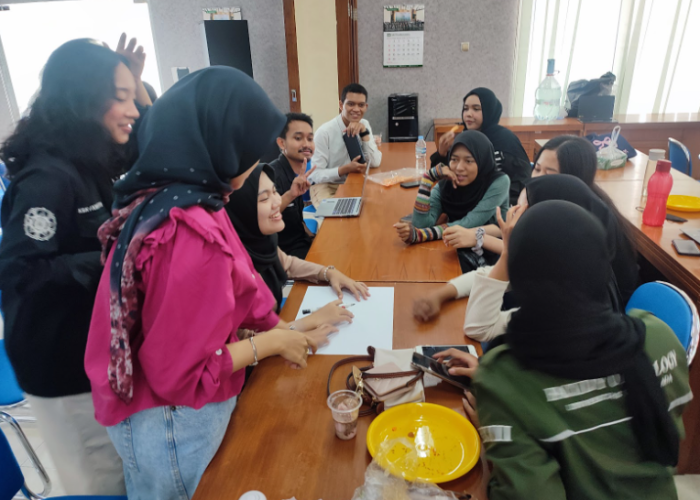
The second session, facilitated by Chandra Gupyta, continued the discussion from the previous day on “CV Lab: Tailoring Your Profile for Every Opportunity.” This session featured practical simulations, where participants were required to bring their pre-prepared CVs. Participants then organized into pairs to peer review each other’s CVs. This activity allowed participants to discern the strengths and areas for improvement in their CVs and offered constructive feedback for enhancement.
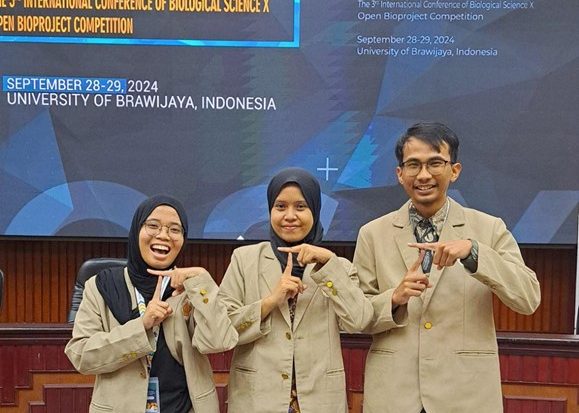
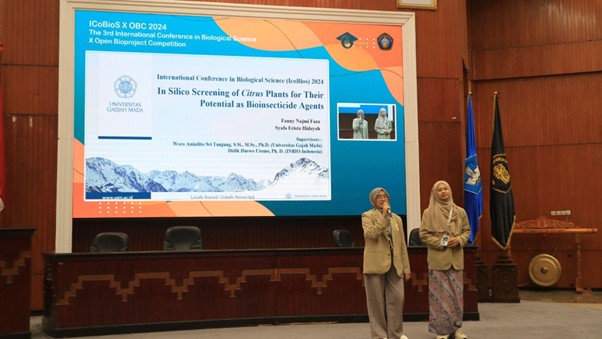
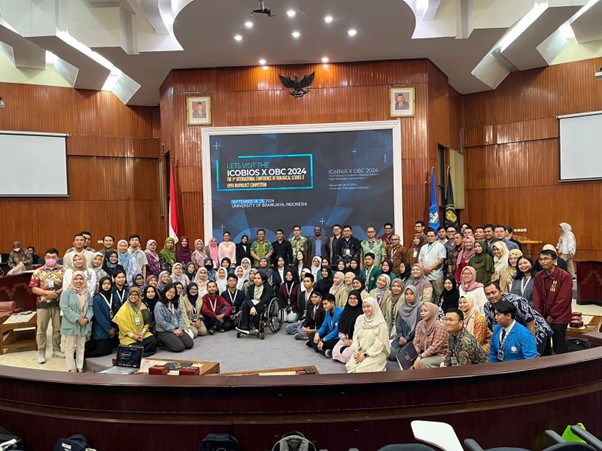
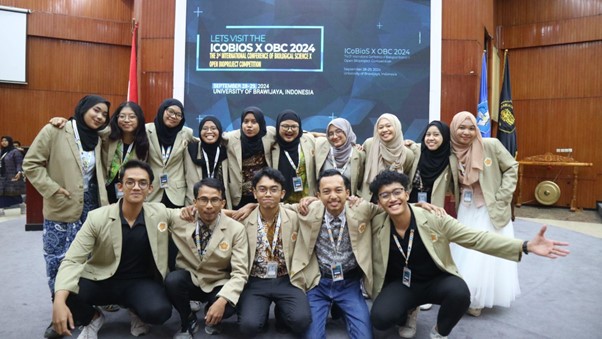
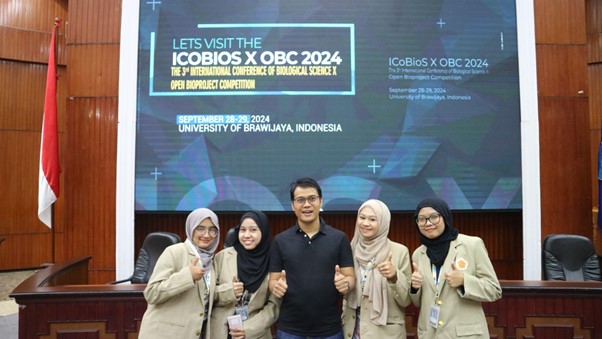
Malang, September 29, 2024 – A team of students from the Faculty of Biology, Universitas Gadjah Mada (UGM), has successfully earned a nomination at the 3rd International Conference of Biological Science x Open Bioproject Competition, held at Universitas Brawijaya from September 28-29, 2024.
The team, consisting of Angela Puspa Larasati (Biology, 2021), Abisha Yoofi Yudhatama (Biology, 2021), and Abigail Yemima (Biology, 2021), under the supervision of Yustinus Maladan, S.Si., M.Si., presented their research titled, “Design of an HIV-1 Epitope-based Vaccine from Glycoprotein-41 (Gp41) through a Bioinformatics Approach.” Their research earned them the Bronze Medal in the Research Competition for College Students category.
The study focused on developing an HIV-1 epitope-based vaccine using an in silico approach. Through bioinformatics, the team conducted epitope prediction targeting T lymphocytes and B lymphocytes, molecular dynamics simulations, molecular docking, and immune system simulations. This process resulted in a stable HIV-1 vaccine design with promising potential for further development.
Written by: Abisha Yoofi Yudhatama
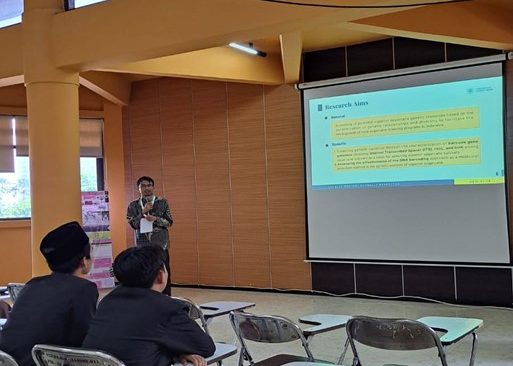
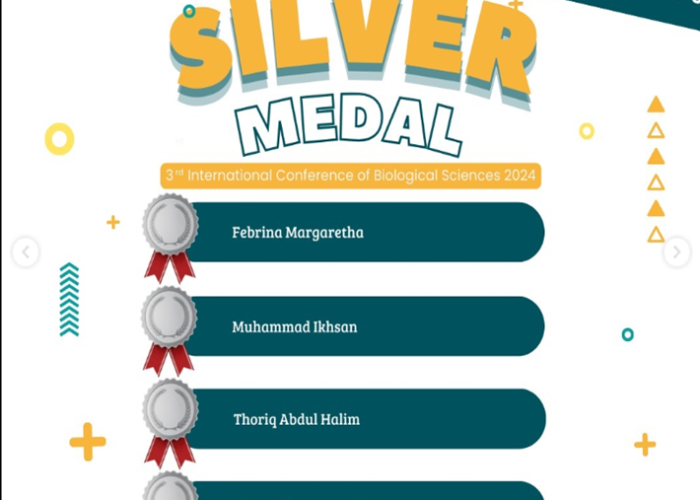
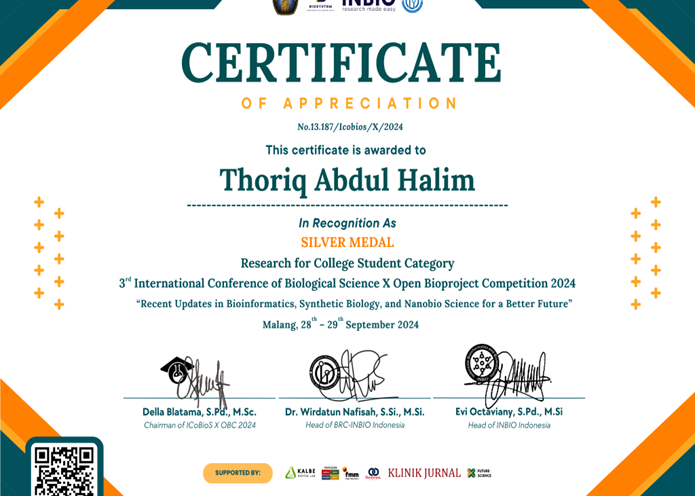
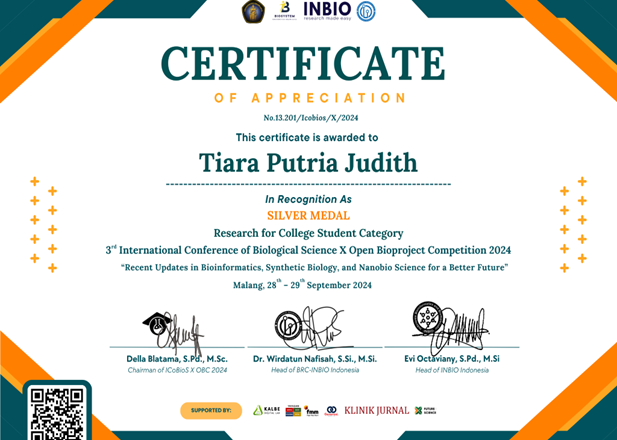
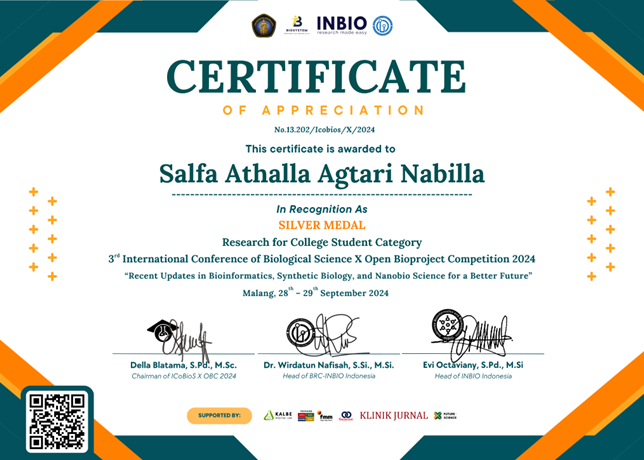
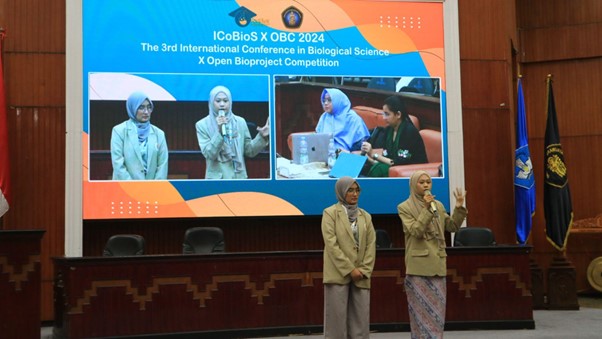
A team of students from the Faculty of Biology, Universitas Gadjah Mada, made another brilliant achievement by winning the Silver Medal in the prestigious 3rd International Conference of Biological Science (ICoBioS) 2024. The achievement was in line with the theme “Recent Updates in Bioinformatics, Synthetic Biology, and Nanobio Science for a Better Future” held at Brawijaya University, Malang, on September 27-28, 2024. This achievement emphasizes UGM’s position in the global scientific arena, especially in innovation and the latest advances in biological science. The team from the Faculty of Biology Universitas Gadjah Mada, consisting of Thoriq Abdul Halim, Tiara Putria Judith, and Salfa Athallah Agtari Nabillah, students of class 2021 under the guidance of Mrs. Ganies Riza Aristya, S.Si., M.Sc., Ph.D., presented a research entitled “Comparative Analysis of DNA Barcodes Based on Nuclear and Chloroplast Genes for Phylogenetic Reconstruction of Sugarcane (Saccharum officinarum L.) in Java Island.”
In its presentation, the team discussed the importance of sugarcane (S. officinarum L.) production, which contributes 80% to global sugar production. Although Java Island supplies 61% of national production, Indonesia only produced 2.23 million tons of sugar in 2019, while imports reached 5.46 million tons in 2021, mostly from Thailand. The low yield of sugarcane is caused by the narrowing of genetic diversity due to domestication. Challenged by the complexity of the genome and the difficulty in distinguishing morphological characters, this team used DNA barcoding techniques to analyze genetic variation in sugarcane nucleus and chloroplast DNA. This research aims to identify intra- and interspecific genetic variation among sugarcane cultivars as an effort to improve the identification of superior varieties, agricultural productivity and food security in Indonesia.
The theme and objectives of this research are in line with UGM’s SDGs, particularly in supporting point 2 on ending hunger and improving food security, and point 12 which focuses on sustainable production and consumption, through efforts to increase sugarcane productivity and reduce dependence on sugar imports in Indonesia.
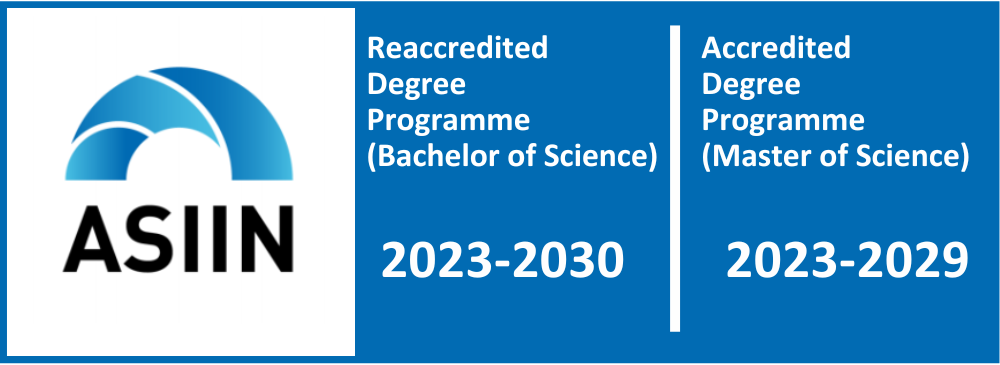
The Faculty of Biology at Universitas Gadjah Mada (UGM) is committed to providing high-quality education. It has been successfully accredited by ASIIN (Akkreditierungsagentur für Studiengänge der Ingenieurwissenschaften, der Informatik, der Naturwissenschaften und der Mathematik) for its undergraduate and master programs, as well as Excellent (Unggul) accreditation from LAMSAMA (Lembaga Akreditasi Mandiri Sains Alam dan Ilmu Formal). The faculty is preparing to achieve ASIIN accreditation for its doctoral program and LAMSAMA accreditation for its master and doctoral programs.
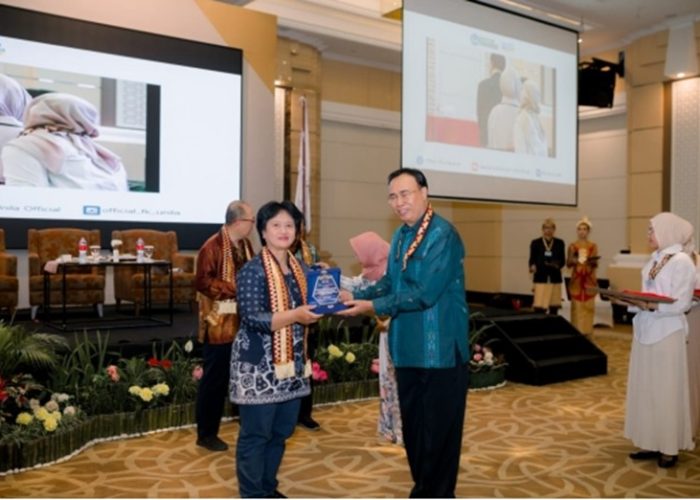
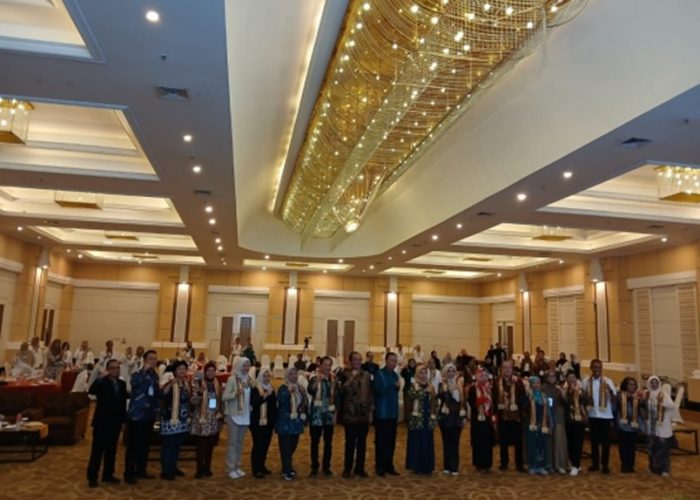
In efforts to enhance the quality of education and in preparation for ASIIN international accreditation and LAMSAMA national accreditation, the Faculty of Biology UGM conducted an integrated Internal Quality Audit (AMI) on October 9, 2024. The audit involved a team of external auditors, including Muhlisin, S.Pt., M.Agri., Ph.D., IPP (Faculty of Animal Science, UGM), Yunika Mayangsari, S.Si., M.Biotech., Ph.D. (Faculty of Agricultural Technology, UGM), Dr. Nurfitri Ekantari, S.Pi., M.P. (Faculty of Agriculture, UGM), and Dr. Widya Wasityastuti, M.Sc., M.Med.Ed., Ph.D. (Faculty of Medicine, Public Health, and Nursing, UGM). The internal audit team included Dr. Ardaning Nuriliani, S.Si., M.Kes., Dra. Tuty Arisuryanti, M.Sc., Ph.D., Prof. Dr. Diah Rachmawati, S.Si., M.Si., and Drs. Ign. Sudaryadi, M.Kes. The audit encompassed evaluations at various levels, including the faculty level, the Undergraduate Program (S1), the Professional Program for Biodiversity Curators, and the Master Program (S2) and Doctoral Program (S3).
During the AMI opening ceremony, the Dean of the Faculty of Biology UGM, Prof. Dr. Budi Setiadi Daryono, M.Agr.Sc., emphasized that the internal quality audit is a regular agenda aimed at ensuring the continuous improvement of educational quality in alignment with UGM’s vision, “Ginong Prati Dino.”
The faculty-level audit was attended by the faculty leadership, including the dean, vice deans, head of department, and academic staff representatives. Meanwhile, the program audits were attended by the head of study program, lecturer representatives, and student representatives. Upon the completion of the audit process, the findings and observations from the auditors will be further discussed in a Management Review Meeting (RTM) as a step toward enhancing the quality assurance system. This process aligns with UGM’s commitment to achieving Sustainable Development Goal No. 4, which focuses on providing quality education.
The waste problem in Sleman Regency, Special Region of Yogyakarta, has become a major challenge in recent years. This issue directly impacts the quality of life of residents, ranging from environmental pollution to health problems. In response to this urgency, the Merdeka Belajar Kampus Merdeka (MBKM) Team from the Faculty of Biology, Universitas Gadjah Mada (UGM) 2024, supervised by Dr. Ardaning Nuriliani, S.Si., M.Kes., along with team members Anida Safriyani, Nailah Aufa Khansa Darin Azhar, Rizquita Brillianti, and Safia Putri Sakanti, students of the 2021 class of the Faculty of Biology, UGM, felt the need to provide assistance related to waste management and the initiation of a Waste Bank in Dusun Pajangan, Wedomartani, Ngemplak, Sleman.
This program was carried out in collaboration with the Takmir of Masjid Jami’ Darussalam, represented by Mr. Gunardi S.Si. The program’s approach was implemented in stages, beginning with a survey to map the waste management habits of Pajangan Hamlet’s residents. The survey was conducted on September 28, 2024, involving around 40 residents, aged between 14 to 70 years. The program continued with a socialization event titled “Waste Management and Waste Bank Initiation in Pajangan Hamlet, Wedomartani, Ngemplak, Sleman” on October 5, 2024. During this event, the MBKM team explained the types of organic and inorganic waste, as well as management techniques using the 4R principles (Reduce, Reuse, Recycle, Replace). The team also presented the concept of the waste bank and the steps to initiate it. This program supports the achievement of several sustainable development goals, namely no. 3 (Good Health and Well-being), no. 6 (Clean Water and Sanitation), and no. 17 (Partnerships for the Goals).
During the socialization, the residents were very enthusiastic and showed a high interest in understanding proper waste management practices. The discussions were also filled with active participation from the residents. As an initial step for the establishment of the waste bank, the MBKM team provided several bins for separating organic and inorganic waste. The main goal was to foster awareness and initiative among Dusun Pajangan residents in sorting their waste, while also serving as the first step towards establishing a waste bank in the village. This activity is expected to increase the knowledge and awareness of the residents of Dusun Pajangan, Wedomartani, Ngemplak, Sleman regarding the importance of proper waste management in their surroundings. By applying waste management practices in daily life, residents are expected to improve their well-being, standard of living, health, and add economic value through household waste management.
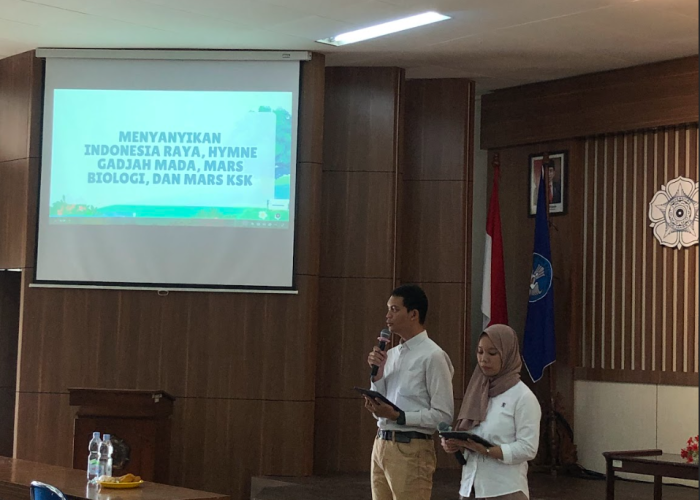
On Wednesday, October 9, 2024, the Faculty of Biology at Gadjah Mada University (UGM) held the first day of Biocapture (Biology Career Preparation for the Future) in the Tropical Biology Auditorium. The event commenced at 1:30 PM, hosted by Alifa Tafrinijiyah and Muhammad Haidar Ali, followed by the singing of Indonesia Raya, the Gadjah Mada Hymn, and the Biology March. The opening remarks were delivered by Dr. Eko Agus Suyono, M.App.Sc., Vice Dean for Research, Community Service, Collaboration, and Alumni Affairs.
The event was divided into two sessions, moderated by Raja Steve Sudjatmiko Panggabean. The first session, titled “Profiles of Alumni of the Faculty of Biology UGM and Career Planning Strategies,” featured Dr. Eko Agus Suyono, M.App.Sc., as the speaker. In this session, Dr. Eko emphasized that today was the biology era, highlighting the global demand for biologists. He also discussed various career strategies for biology graduates, providing examples from UGM Faculty of Biology alumni.
The second session was delivered by Chandra Gupyta, titled CV Lab: Tailoring Your Profile for Every Opportunity. This session focused on strategies for developing and customizing a curriculum vitae to effectively align with diverse career opportunities.
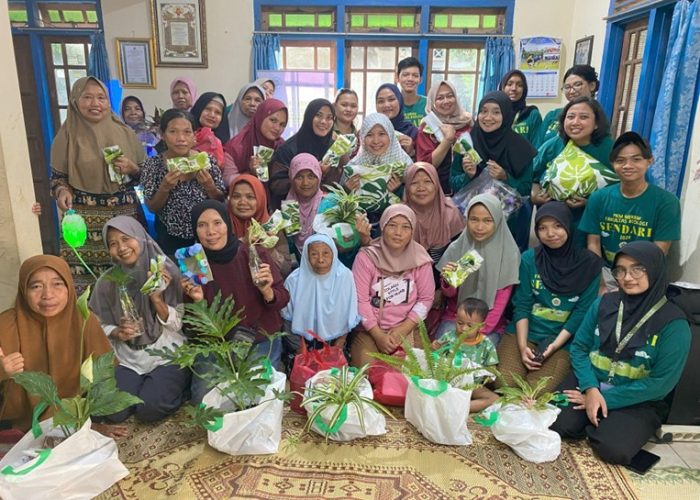
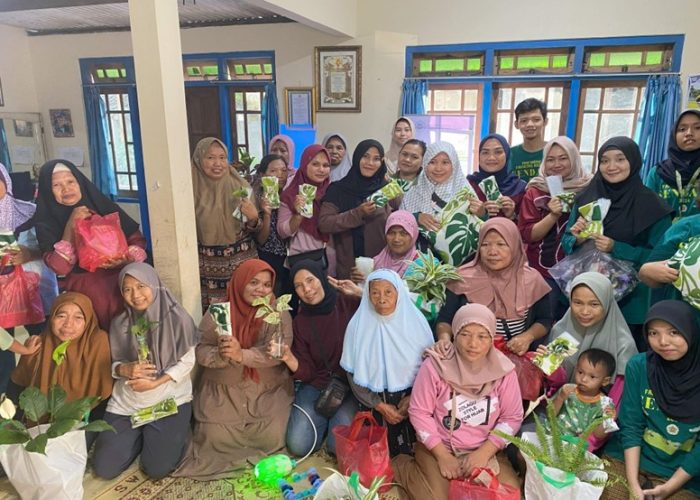
On Sunday, October 6, 2024, the Community Service Team of the Merdeka Belajar Kampus Merdeka Program (PkM MBKM) from the Faculty of Biology, Universitas Gadjah Mada, conducted a workshop in Dusun Sendari, Sleman, Yogyakarta. The workshop was led by three lecturers, Dr. Woro Anindito Sri Tunjung, M.Si. Novita Yustinadiar, and Dr. Wahyu Aristyaning Putri, along with 12 students. This program supports the Sendari Mandiri initiative, which aims to empower the community to manage their resources independently.
With the theme “Utilizing Recycled Materials and Essential Oils to Create Eco-Friendly Aromatherapy Candles,” the program introduced creative ways to recycle materials, such as unused candles and cooking oil waste, into aromatherapy candles. These candles not only help with relaxation but also serve as natural mosquito repellents. The essential oils used in the candles contain bio-insecticidal properties that can effectively repel mosquitoes while providing a soothing scent that helps reduce stress and create a calming atmosphere at home.
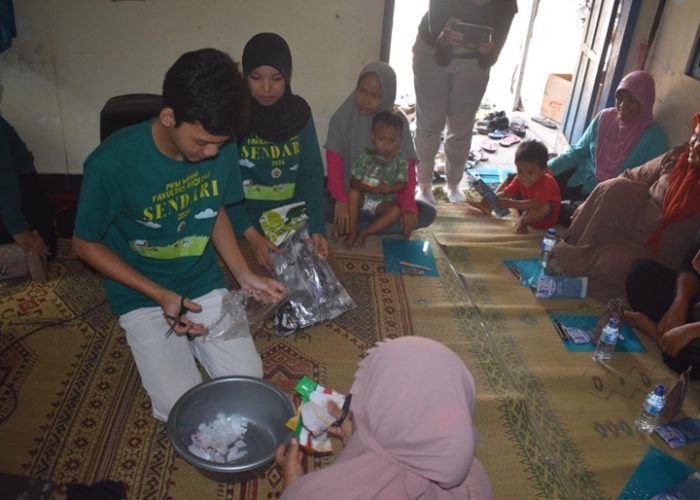
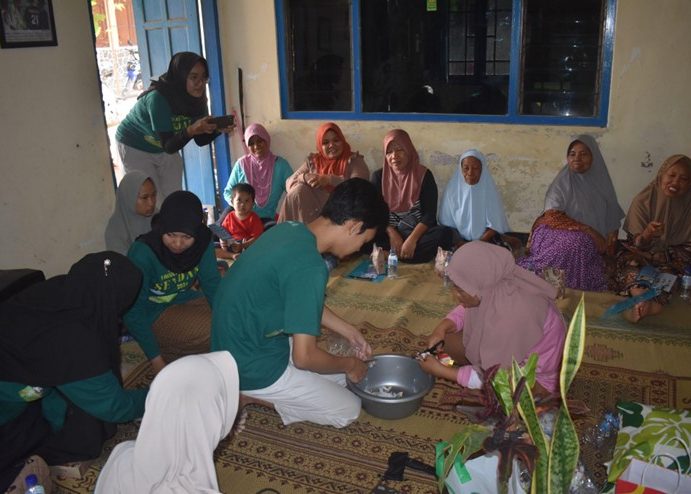
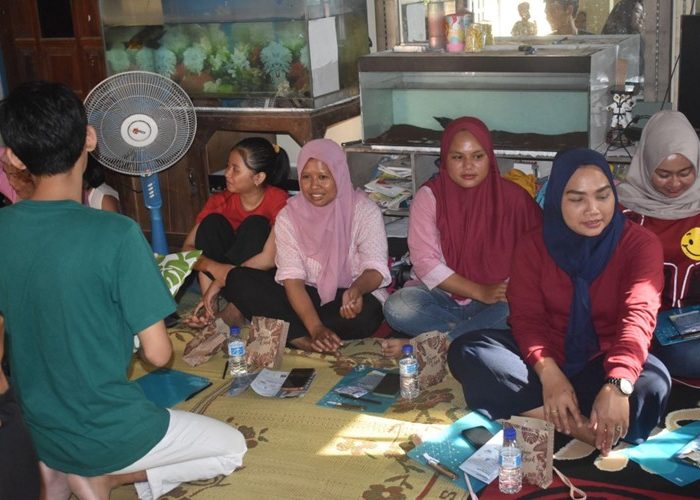
The workshop took place at RT03, RW19 Dusun Sendari, at the residence of Mr. Djijana (RT head) and was attended by 27 members of the local PKK women’s organization. The event began with a pre-test and a group prayer. Annisa Fadhilah, a student member of the PkM MBKM team, explained the process of creating eco-friendly aromatherapy candles using recycled materials such as paraffin wax, used cooking oil, and leftover crayons. The team also explained how to improve the quality of used cooking oil by using activated charcoal to absorb harmful compounds, making it safe for reuse.
During the practical session, Zahra Azkia Razzak and Zahra Fitri Annisa guided participants through the candle-making process from start to finish. Participants were provided with brochures to help them replicate the process at home.
The event concluded with a post-test, the distribution of door prizes in the form of umbrellas to 10 lucky participants, and aromatherapy candles as souvenirs for all attendees. This activity supports the Sustainable Development Goals (SDGs), particularly SDG 3 (Good Health and Well-Being) and SDG 4 (Quality Education).
The 2024 PkM MBKM Biology Faculty program aims to continue raising environmental awareness and empowering communities through sustainable and beneficial activities. With the skills provided, the community of Dusun Sendari is expected to make better use of waste materials, turning them into valuable products while promoting healthier and more environmentally friendly lifestyles.