Arsip:
SDG 4 : Provide Quality Education
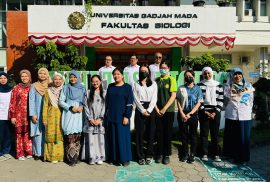
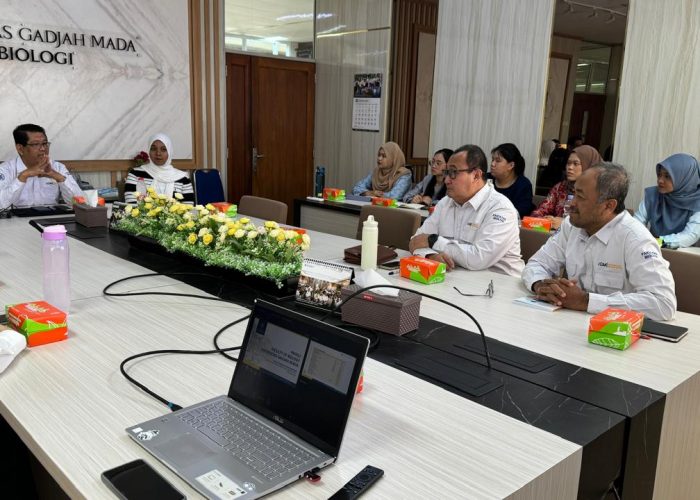
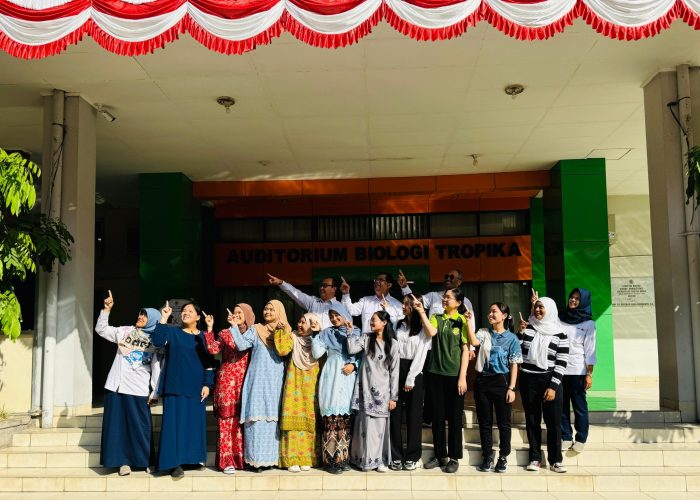
On July 16 and 17, 2024, a research team from the Faculty of Biology at Gadjah Mada University (UGM), led by Prof. Dr. Ratna Susandarini, M.Sc., conducted an ethnobotanical survey as part of a collaborative effort on the Bioprospecting of Medicinal Plants with the Mount Merbabu National Park Authority. The survey took place in the Ampel and Kopeng Resorts within the Mount Merbabu National Park.
The primary objective of this collaboration is to gather data on the use of medicinal plants by the local communities living around the national park. This initiative is crucial for the conservation of biodiversity and the sustainable use of natural resources. The research team collected information through interviews with local residents, who shared their traditional knowledge on the medicinal properties of various plants.
Following the data collection from the community, the team conducted a field survey to collect samples of the medicinal plants mentioned. This fieldwork is essential for the bioprospecting process, which aims to identify plants with potential biomedical applications. The collected samples will be analyzed in the laboratory to determine their chemical composition and potential health benefits.
Prof. Dr. Ratna Susandarini emphasized the importance of this research in contributing to the Sustainable Development Goals (SDGs), particularly in the areas of health, biodiversity conservation, and sustainable use of ecosystems. “Our work here not only aims to discover new medicinal compounds but also to promote the conservation of plant biodiversity in Mount Merbabu National Park,” she stated.
The collaboration between UGM and the Mount Merbabu National Park Authority is a significant step towards integrating traditional knowledge with modern scientific research. This approach not only respects and preserves the cultural heritage of the local communities but also enhances the scientific understanding of medicinal plants.
The Mount Merbabu National Park, known for its rich biodiversity, provides an ideal setting for this type of research. The park is home to numerous plant species, many of which have been used traditionally for medicinal purposes. By documenting and studying these plants, the research team hopes to contribute to the global knowledge of medicinal biodiversity.
The local communities play a vital role in this research. Their traditional knowledge and practices are invaluable resources for identifying plants with medicinal properties. The involvement of the community also ensures that the benefits of the research are shared with those who have preserved this knowledge for generations.
The field survey in the Ampel and Kopeng Resorts was conducted with the support of the Mount Merbabu National Park Authority, which provided logistical assistance and access to the research sites. This collaboration highlights the importance of partnerships in achieving conservation and sustainable development goals.
The findings from this research will be published in scientific journals and shared with the local communities and relevant stakeholders. This dissemination of knowledge is crucial for promoting the conservation of medicinal plants and their sustainable use.
In conclusion, the bioprospecting survey of medicinal plants in Mount Merbabu National Park is a significant initiative that combines traditional knowledge with modern science. It aims to contribute to the conservation of biodiversity, the discovery of new biomedical compounds, and the sustainable use of natural resources, aligning with the broader goals of the SDGs.
Universitas Gadjah Mada students Ribka Wijayanti and Dwina Aulia (Dentistry 2022), Anisah Qurrotu Aini (Biology 2022), and Naila Nurfadhilah (Pharmacy 2022) conducted research on the potential of Dayak onion as an antiproliferative and apoptosis-inducing agent for human tongue cancer cells – under the guidance of Prof. drg. Supriatno, M.Kes., MD.Sc., Ph.D..
Dayak onion (Eleutherine bulbosa (Mill.) Urb.) is a medicinal herb commonly used by the indigenous Dayak people and can be cultivated in various regions. Besides health benefits, this research also positively impacts the local economy. This research focuses on developing a natural therapy for tongue cancer by addressing the shortcomings of existing therapy. Plant-derived exosome-like nanoparticles, or PDENs, from Dayak onion, serve as a drug delivery method derived from Dayak onion exosomes.
“Cancer occurs due to the activity of proto-oncogenes, leading to excessive cell proliferation and the inhibition of tumor suppressor genes. We used PDENs because they have proven to inhibit proliferation and induce apoptosis in various types of cancer. Based on this, we wanted to explore its potential for tongue cancer treatment, ‘’ explained Ribka.
Ribka noted that using PDENs from Dayak onion induced apoptosis (programmed cell death) in cancer cells and reduced the number of proliferating cells.
“Dayak onions have a powerful IC50 equivalent to 38.97 ppm. This value is superior to other medicinal plants, such as soursop leaves and bajakah roots. The various therapeutic compounds in Dayak onion cannot be utilized as therapeutic agents using common extraction methods. However, with PDENs, all therapeutic compounds can be delivered to the target organ,” Anisah elaborated.
This research project was submitted as part of the Student Creativity Program in Exact Research (PKM-RE) with research funding support from the Ministry of Education, Culture, Research, and Technology (Kemendikbudristek) to conduct in-depth research and analysis on the potential of PDENs extract from Dayak onion. It hoped that this interdisciplinary collaborative research can inspire further exploration of natural potentials to improve human quality of life. [Writer: AQA]
Universitas Gadjah Mada students Ribka Wijayanti and Dwina Aulia (Dentistry 2022), Anisah Qurrotu Aini (Biology 2022), and Naila Nurfadhilah (Pharmacy 2022) conducted research on the potential of Dayak onion as an antiproliferative and apoptosis-inducing agent for human tongue cancer cells – under the guidance of Prof. drg. Supriatno, M.Kes., MD.Sc., Ph.D..
Dayak onion (Eleutherine bulbosa (Mill.) Urb.) is a medicinal herb commonly used by the indigenous Dayak people and can be cultivated in various regions. Besides health benefits, this research also positively impacts the local economy. This research focuses on developing a natural therapy for tongue cancer by addressing the shortcomings of existing therapy. Plant-derived exosome-like nanoparticles, or PDENs, from Dayak onion, serve as a drug delivery method derived from Dayak onion exosomes.
“Cancer occurs due to the activity of proto-oncogenes, leading to excessive cell proliferation and the inhibition of tumor suppressor genes. We used PDENs because they have proven to inhibit proliferation and induce apoptosis in various types of cancer. Based on this, we wanted to explore its potential for tongue cancer treatment, ‘’ explained Ribka.
Ribka noted that using PDENs from Dayak onion induced apoptosis (programmed cell death) in cancer cells and reduced the number of proliferating cells.
“Dayak onions have a powerful IC50 equivalent to 38.97 ppm. This value is superior to other medicinal plants, such as soursop leaves and bajakah roots. The various therapeutic compounds in Dayak onion cannot be utilized as therapeutic agents using common extraction methods. However, with PDENs, all therapeutic compounds can be delivered to the target organ,” Anisah elaborated.
This research project was submitted as part of the Student Creativity Program in Exact Research (PKM-RE) with research funding support from the Ministry of Education, Culture, Research, and Technology (Kemendikbudristek) to conduct in-depth research and analysis on the potential of PDENs extract from Dayak onion. It hoped that this interdisciplinary collaborative research can inspire further exploration of natural potentials to improve human quality of life. [Writer: AQA]
Diabetes mellitus (DM) is a global public health issue that can lead to macrovascular and microvascular complications. In Indonesia, the prevalence of DM among adults reaches 10.6%. Ineffective DM management can result in long-term metabolic, neurological, or vascular complications, making DM patients more susceptible to foot infections, which can increase the incidence of amputations. According to data from the Ministry of Health 2023, over one million DM patients in Indonesia have undergone foot amputations, with approximately 80% of these amputations beginning with foot ulcers. The prolonged infection of diabetic wounds is caused by high blood glucose levels, which increase bacterial proliferation. This issue exacerbated by immune system deficiencies, leading to restricted mobility and decreased daily productivity.
Based on this issue, Biology and Pharmacy UGM students Zahwa Khoirun Nisa (Biology 2022), Zatun Nithoghani Hafni (Biology 2021), Muhammad Nur Ikhsan (Biology 2021), Sekar Ayu Kusumawardani (Pharmacy 2022) and Alvian Chesyar Burhanudin (Pharmacy 2022) was developed a topical patch using two local Indonesian natural products: catfish oil and sugarcane bagasse biosilica, as an alternative treatment for diabetic wounds under guidance Dr. Adhyatmika, M.Biotech. This research, funded by the Ministry of Education and Culture, is part of the Student Creativity Program in Exact Research (PKM-RE).
The regular treatment for diabetic wounds is antibiotic therapy. However, excessive use of antibiotics can lead to antibiotic resistance, making treatment less effective. “We chose the patch formulation in this study to prevent excessive use of antibiotics while ensuring drug delivery to the wound with a more measured and controlled dosage,” said Zahwa. Hafni added that the patch formulation is also suitable for patients who cannot tolerate oral medications and avoids the first-pass effect, maintaining the bioavailability of the drug.
Catfish oil contains essential omega-3 fatty acids known to aid in wound healing. An innovation in this study involves adding sugarcane bagasse biosilica to the patch formulation. This biosilica has shown to possess antibacterial activity that supports wound healing.
The bagasse used obtained from the sugarcane milling residues at PT. Madubaru. “We collected the accumulated sugarcane bagasse, then subjected it to furnace treatment at 600°C for 1 hour. The resulting bagasse ash was then dissolved in NaOH and acidified with HCl to form a gel. This gel was then oven-dried to produce silica powder,” explained Ikhsan. The resulting biosilica was combined with catfish oil to create three formulations with different active ingredient concentrations (catfish oil: biosilica), namely F1 = 25:75, F2 = 50:50 and F3 = 75:25. “We made nanoemulsions with these three formulations, measured their particle sizes, then added gel bases to form nanoemulgel, which processed into patch preparations,” Alvian elaborated.
The patches were then tested on diabetic mellitus model rats. “We inflicted wounds on diabetic model rats and applied different treatments, including the three patch formulations. Wound diameter observed from day 1 to day 7,” Sekar said. The data showed the significant effects of the patch treatments on diabetic wound healing. Based on these conclusions, further analysis identified Formulation 1 (25:75) as the best for aiding diabetic wound healing. This research is expected to provide a theoretical foundation for developing comprehensive therapies to accelerate diabetic wound healing. With this advancement, we hope to contribute to improving the quality of life for diabetes patients and help them achieve better health and well-being. [Author: Zahwa Khoirun Nisa]
Diabetes mellitus (DM) is a global public health issue that can lead to macrovascular and microvascular complications. In Indonesia, the prevalence of DM among adults reaches 10.6%. Ineffective DM management can result in long-term metabolic, neurological, or vascular complications, making DM patients more susceptible to foot infections, which can increase the incidence of amputations. According to data from the Ministry of Health 2023, over one million DM patients in Indonesia have undergone foot amputations, with approximately 80% of these amputations beginning with foot ulcers. The prolonged infection of diabetic wounds is caused by high blood glucose levels, which increase bacterial proliferation. This issue exacerbated by immune system deficiencies, leading to restricted mobility and decreased daily productivity.
Based on this issue, Biology and Pharmacy UGM students Zahwa Khoirun Nisa (Biology 2022), Zatun Nithoghani Hafni (Biology 2021), Muhammad Nur Ikhsan (Biology 2021), Sekar Ayu Kusumawardani (Pharmacy 2022) and Alvian Chesyar Burhanudin (Pharmacy 2022) was developed a topical patch using two local Indonesian natural products: catfish oil and sugarcane bagasse biosilica, as an alternative treatment for diabetic wounds under guidance Dr. Adhyatmika, M.Biotech. This research, funded by the Ministry of Education and Culture, is part of the Student Creativity Program in Exact Research (PKM-RE).
The regular treatment for diabetic wounds is antibiotic therapy. However, excessive use of antibiotics can lead to antibiotic resistance, making treatment less effective. “We chose the patch formulation in this study to prevent excessive use of antibiotics while ensuring drug delivery to the wound with a more measured and controlled dosage,” said Zahwa. Hafni added that the patch formulation is also suitable for patients who cannot tolerate oral medications and avoids the first-pass effect, maintaining the bioavailability of the drug.
Catfish oil contains essential omega-3 fatty acids known to aid in wound healing. An innovation in this study involves adding sugarcane bagasse biosilica to the patch formulation. This biosilica has shown to possess antibacterial activity that supports wound healing.
The bagasse used obtained from the sugarcane milling residues at PT. Madubaru. “We collected the accumulated sugarcane bagasse, then subjected it to furnace treatment at 600°C for 1 hour. The resulting bagasse ash was then dissolved in NaOH and acidified with HCl to form a gel. This gel was then oven-dried to produce silica powder,” explained Ikhsan. The resulting biosilica was combined with catfish oil to create three formulations with different active ingredient concentrations (catfish oil: biosilica), namely F1 = 25:75, F2 = 50:50 and F3 = 75:25. “We made nanoemulsions with these three formulations, measured their particle sizes, then added gel bases to form nanoemulgel, which processed into patch preparations,” Alvian elaborated.
The patches were then tested on diabetic mellitus model rats. “We inflicted wounds on diabetic model rats and applied different treatments, including the three patch formulations. Wound diameter observed from day 1 to day 7,” Sekar said. The data showed the significant effects of the patch treatments on diabetic wound healing. Based on these conclusions, further analysis identified Formulation 1 (25:75) as the best for aiding diabetic wound healing. This research is expected to provide a theoretical foundation for developing comprehensive therapies to accelerate diabetic wound healing. With this advancement, we hope to contribute to improving the quality of life for diabetes patients and help them achieve better health and well-being. [Author: Zahwa Khoirun Nisa]
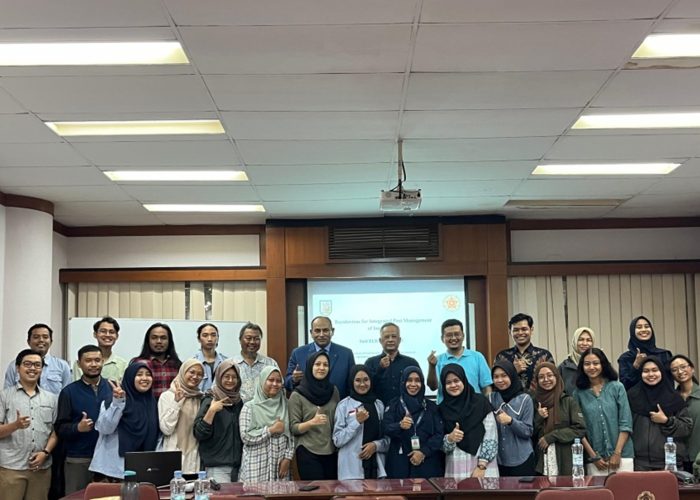
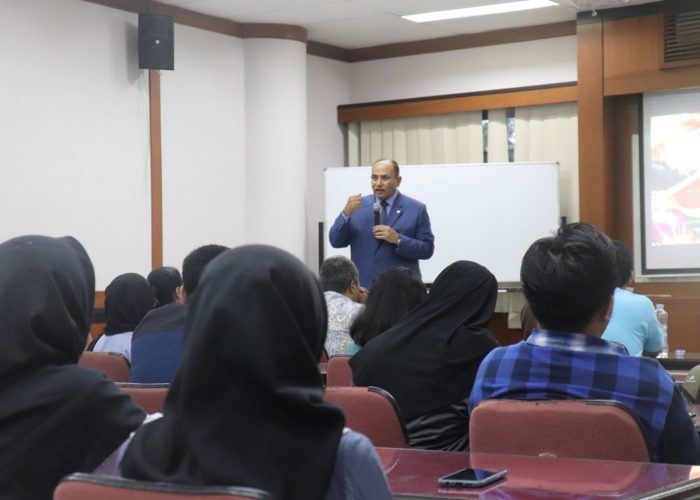
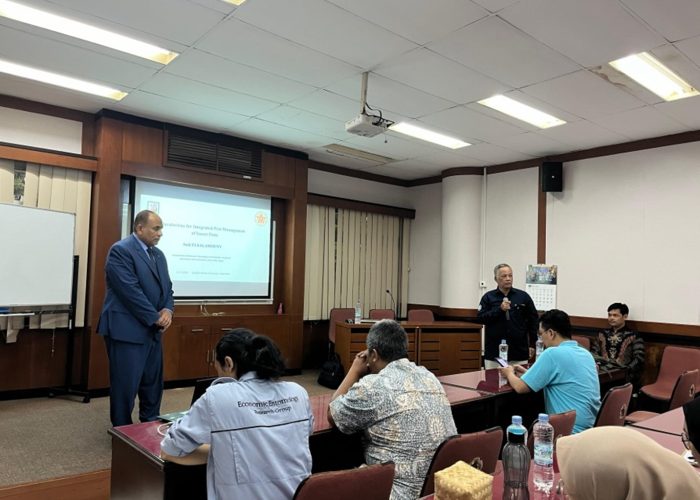
Yogyakarta, 17 July 2024 – The second lecture session in the series of the 7th International Summer Course in Sustainable Development, Faculty of Biology Universitas, Gadjah Mada was held after the opening and first online lecture session, last Monday (15/7). Dr. Nick Girkin from the School of Biosciences, University of Nottingham, United Kingdom was present as a resource person at the second session of the lecture with the title “Sustainable Tropical Agriculture” as part of the main theme of this year’s summer course, Sustainable Bioprospecting of Tropical Biodiversity.
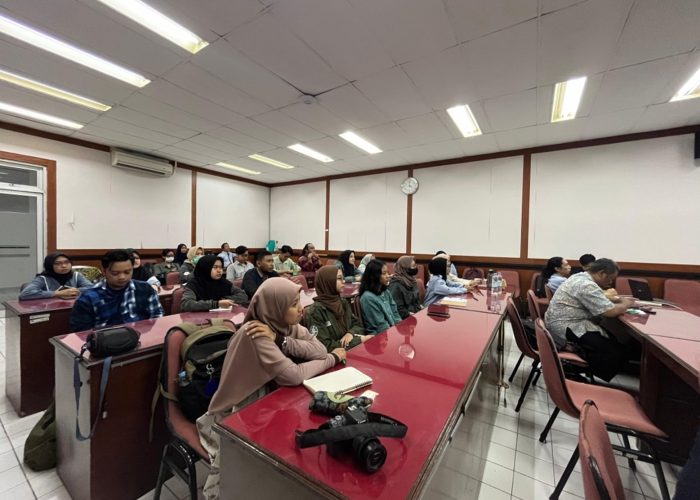
Faculty of Biology UGM lecturer as well as Chief Executive of this year’s summer course, Mukhlis Jamal Musa Holle, M.Env.Sc., D.Phil., acted as moderator for the second lecture session. He introduced Dr. Nick as a speaker from the University of Nottingham with his presentation which raised the issue of sustainable agriculture.
Dr. Nick started the lecture by asking the participants a question: what are the sustainability challenges in tropical agriculture? Dr. Nick mentioned several serious challenges to agriculture today: climate impact, soil erosion, water pollution, land use, greenhouse gas emissions, and high production costs. The urgency of this challenge leads to several main problems including climate change, food security, and carbon emission reduction targets.
Climate change, land degradation, and pests and diseases are at least a concern for the agricultural corps, including tea, coffee and cocoa plantations. This condition has impacts on reducing the quality of production, water resources, outbreaks and decreasing the population and diversity of pollinators. Dr. Nick mentioned the use of alternative fertilizers, agroforestry, ecological management and minimizing the use of pesticides as mitigation efforts. This is different with non-perennial plants such as rice, Dr. Nick said the DNDC system or DeNitrification-DeComposition) is a rice farming model that can simulate the greenhouse gases produced.
The summer course participants were enthusiastic in attending all the lectures, it is hoped that through these activities students can contribute to innovation in the development of sustainable agricultural systems while maintaining the balance of the ecosystem and biodiversity within it.
Yogyakarta, 15 July 2024 – The 7th International Summer Course on Tropical Biodiversity and Sustainable Development continues to provide inspiration and education by raising the topic “Sustainable Bioprospecting on Tropical Biodiversity.” The series of activities began with the opening which took place on Monday (15/7) afternoon which was followed by online lectures.
The International Summer Course on Tropical Biodiversity and Sustainable Development (ISC) is an annual activity regularly held by the Faculty of Biology, Universitas Gadjah Mada. In its seventh year, 37 students from 6 countries (Indonesia, Malaysia, Philippines, Japan, Pakistan and Thailand) and 12 universities will participate in all activities and 18 participants from 5 other countries (Myanmar, Netherlands, Algeria, India, and Egypt) participated in the online lecture series. ISC also involves experts from various countries to participate as speakers including from Malaysia, Great Britain, Japan, Australia, South Korea, Thailand, the Philippines, Egypt and Indonesia.
The ISC’s chief executive, Mukhlis Jamal Musa Hole M.Env.Sc., D.Phil., gave a speech at the online opening on Wednesday (15/7). He also explained series of online and offline activities that would be carried out until early August. Activities will focus on education on sustainable bioprospecting and tropical biodiversity in Indonesia.
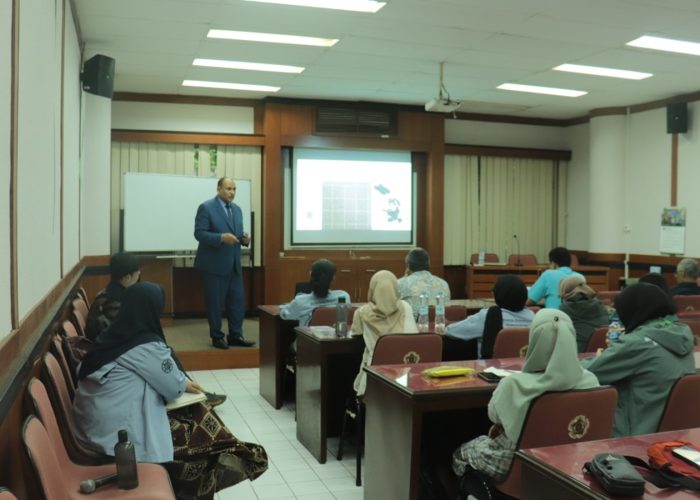
The agenda continued with an online lecture moderated by Nur Indah Septriani, S.Si., M.Sc., Ph.D. and speaker Ts. Dr. Noor Jannatun Naim Binti Jemali from the University of Malaysia Kelantan. Dr. Jan gave a lecture focusing on the prospects for forest resources. In her lecture, Dr. Jan highlighted the various functions of forests that produce wood and non-wood products. She emphasized the critical challenge of tropical forest degradation and deforestation, and noted forest loss of 90% in the last six decades. This alarming rate of deforestation underscores the importance of continued bioprospecting and conservation efforts.
This first lecture is expected to provide knowledge about the urgency of conservation and preservation of forests and ecosystems in supporting sustainable development. Efforts to support the issue of forest conservation and climate change are also being promoted through ongoing collaborative discourse between the state and universities.
Burns are injuries involving tissue damage due to contact with heat, radiation, chemicals, or electricity. Burns are challenging to heal and require patient stabilization, infection prevention, and optimal functional recovery. Burn victims are at risk of infection and systemic complications, depending on the burn’s extent and depth, the patient’s age and overall condition, and any pre-existing conditions. In Indonesia, burns have a relatively high prevalence, affecting 1.3% of the entire population.
Recognizing the significance of developing burn treatments, UGM students have developed a new approach to address this issue. They utilized yellow onion skin waste in the form of bilayer nanofiber. This research was conducted by Acenofer team consisting of Naufal Ahmad Fauzy (Pharmacy 2021) as the leader, along with four colleagues: Zulfa Nailil Muna (Physics 2022), Puspita Nur Rahmawati (Biology 2022), Tika Nur Amini (Biology 2022), and Erwinda Dwi Chofifah (Biology 2022), under the guidance of Dr. Retno Murwanti, MP, Ph.D.
“In this research, we used yellow onion skins due to their high levels of quercetin and to preserve the environment. We modified the preparation into bilayer nanofibers to enhance extract penetration into the wound and prevent infection,” Naufal explained.
The research process involved various stages, including extraction, preparation, characterization, in vivo testing, and data analysis. Characterization performed using multiple parameters, including SEM analysis, FTIR, tensile strength test, and contact angle tests. In vivo testing followed by histopathological analysis to observe the healing process within the skin layers.
“Our research showed promising results. The nanofibers were successfully produced with good quality, were not easily damaged, had appropriately sized structures, and in vivo testing showed wound closure by the preparation,” Zulfa said.
This research is expected to become an alternative treatment by leveraging Indonesia’s natural resources, with further research advancing to clinical trials and commercialization for public use. [Writer: Erwinda Dwi Chofifah]
On Tuesday, July 9, 2024, The PKM Corner Faculty of Biology conducted an online training on Presentation Preparation, featuring Astia Anelia, a 2021 Medical Student as a speaker. The training was attended by approximately 20 students from the Faculty of Biology Universitas Gadjah Mada and aimed to provide instruction, information, and share knowledge about creating PowerPoint presentations in preparation for the PKM Progress Assessment (PKP2). The event began with an opening by the MC, Layly Salsabila, followed by remarks from Dr. Dwi Sendi Priyono, S.Si., M.Si., the faculty advisor of PKM Corner 2024, and Astia Anelia.
The event continued with a presentation and training on PowerPoint creation led by Astia Anelia. She covered topics such as selecting an appealing background, choosing appropriate formats and layouts, and presenting data clearly and effectively. The session concluded with a Q&A session and an explanation of assignments by PKM Corner. In the Q&A session, the speaker shared tips and tricks related to PKP2 preparation, drawing from their experience to help participants perform well in the assessment.
A team of undergraduate students from the Faculty of Biology, Universitas Gadjah Mada, class of 2022, led by Azra Belva Naprilian, along with Kotimah and Ridho Nur Alam, won 1st Runner-Up in the essay competition AGRIXPLOSION organized by the Faculty of Agriculture, Universitas Sebelas Maret Surakarta (UNS). The competition, sponsored by Pertamina, revolved around the theme “Implementing Innovation to Reach Net Zero Emission for a Sustainable Future” featured participants from various universities across Indonesia. The competition included several stages: administration and essay submission, followed by an online presentation on Sunday, June 30, 2024.
In this competition, the biology team presented an essay titled “Utilization of Biofertilizer and Spirulina sp. as Micro-remediators in the Conservation Efforts of Acacia mangium Forests in Post-Tin Mining Ecosystems in Bangka Belitung,” under the guidance of Tyas Ikhsan Hikmawan, M.Sc., Ph.D. This innovation addresses the environmental damage caused in Bangka Belitung, the largest tin-producing region, where natural resource exploitation without maintenance efforts has led to ecosystem pollution. The essay proposed a biofertilizer formula combining various microbes capable of micro-remediation of post-mining land. Additionally, the innovation included using a combination of biofertilizer and Spirulina sp. to enhance biofertilizer as a supplementary nutrient provider for microorganisms within it.
Reclamation of post-tin mining land in Bangka Belitung is a crucial step in addressing ecosystem damage caused by mining activities. The combination of micro-remediators and the utilization of microalgae Spirulina sp. can effectively remediate heavy metals. Moreover, biofertilizers can restore essential nutrients and improve soil structure. The planting of Acacia mangium as a phytoremediator has also proven effective in restoring the balance of ecosystems in former mining lands, given its adaptability to heavy metal-contaminated soils. This innovation is expected to minimize the negative impacts of mining and support forest conservation and environmental sustainability in the region. This strategy aligns with The Sustainable Development Goals (SDGs) point 15, related to sustainable management of post-mining land, ensuring ecological recovery, and soil productivity for the future.
[Authors: Azra Belva Naprilian and Kotimah]